Follow drainage before patching
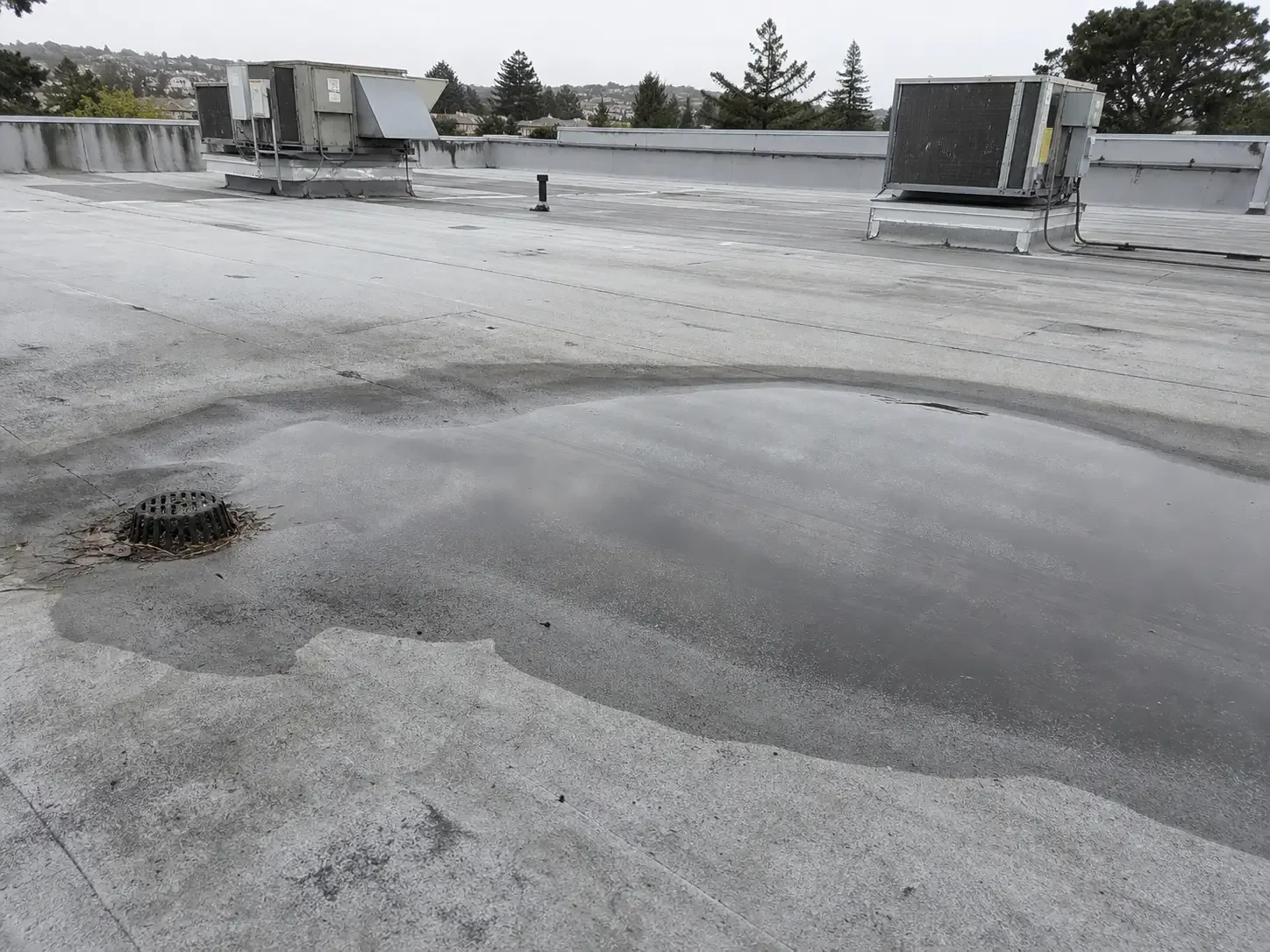
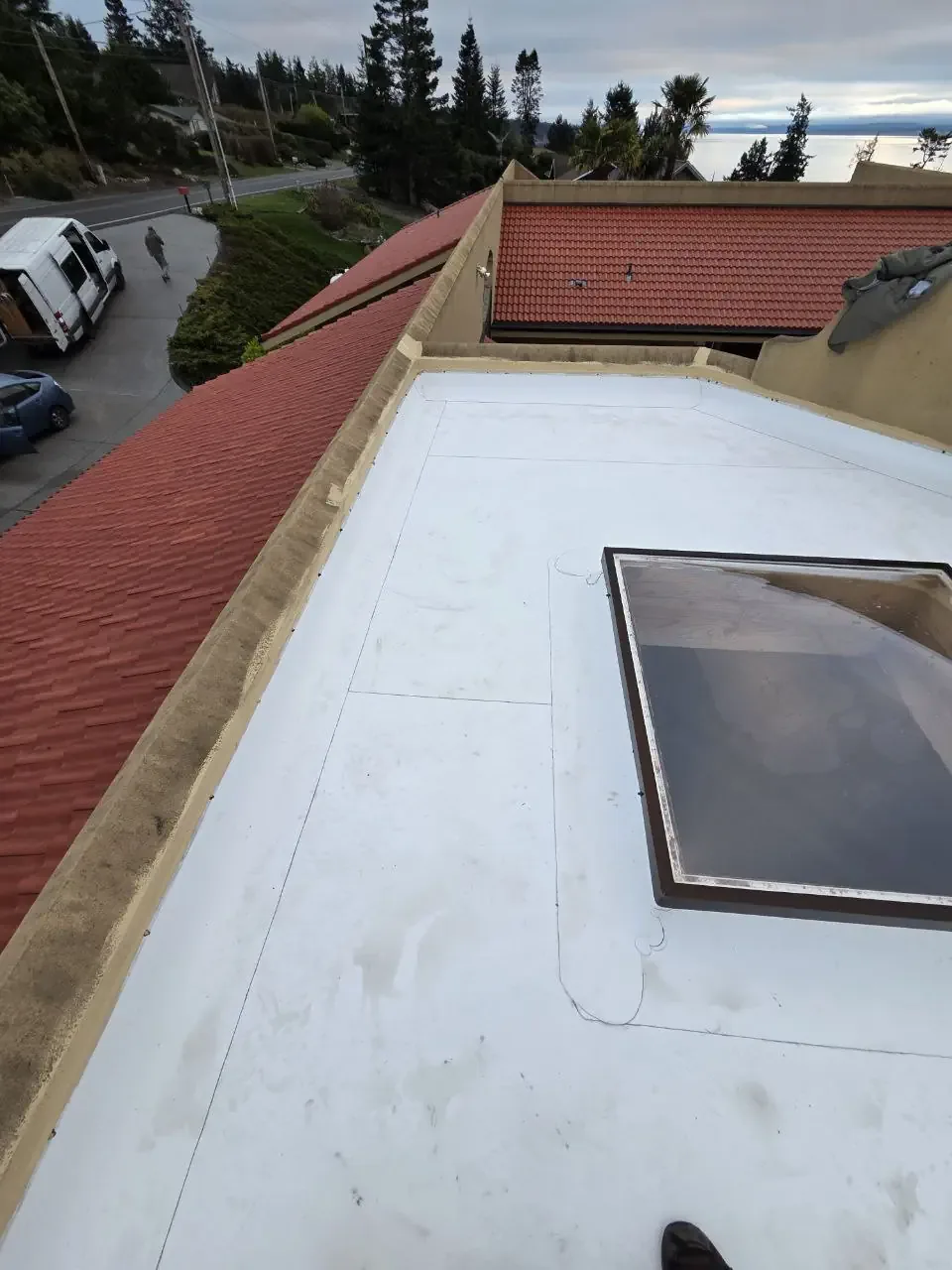
Standing water can reveal a blocked drain, a low area, deflected structure or a roof that is not draining as designed. We inspect bowls, strainers, sumps, scuppers and nearby seams, then determine whether the water is temporary or persistent. A patch alone will not correct a drainage condition that keeps exposing the same detail. The ponding-water review ties the water depth and location to the outlet and surrounding membrane. If the roof requires a physical correction, we separate the drainage work from membrane repair so its purpose stays clear.
Read edges and penetrations
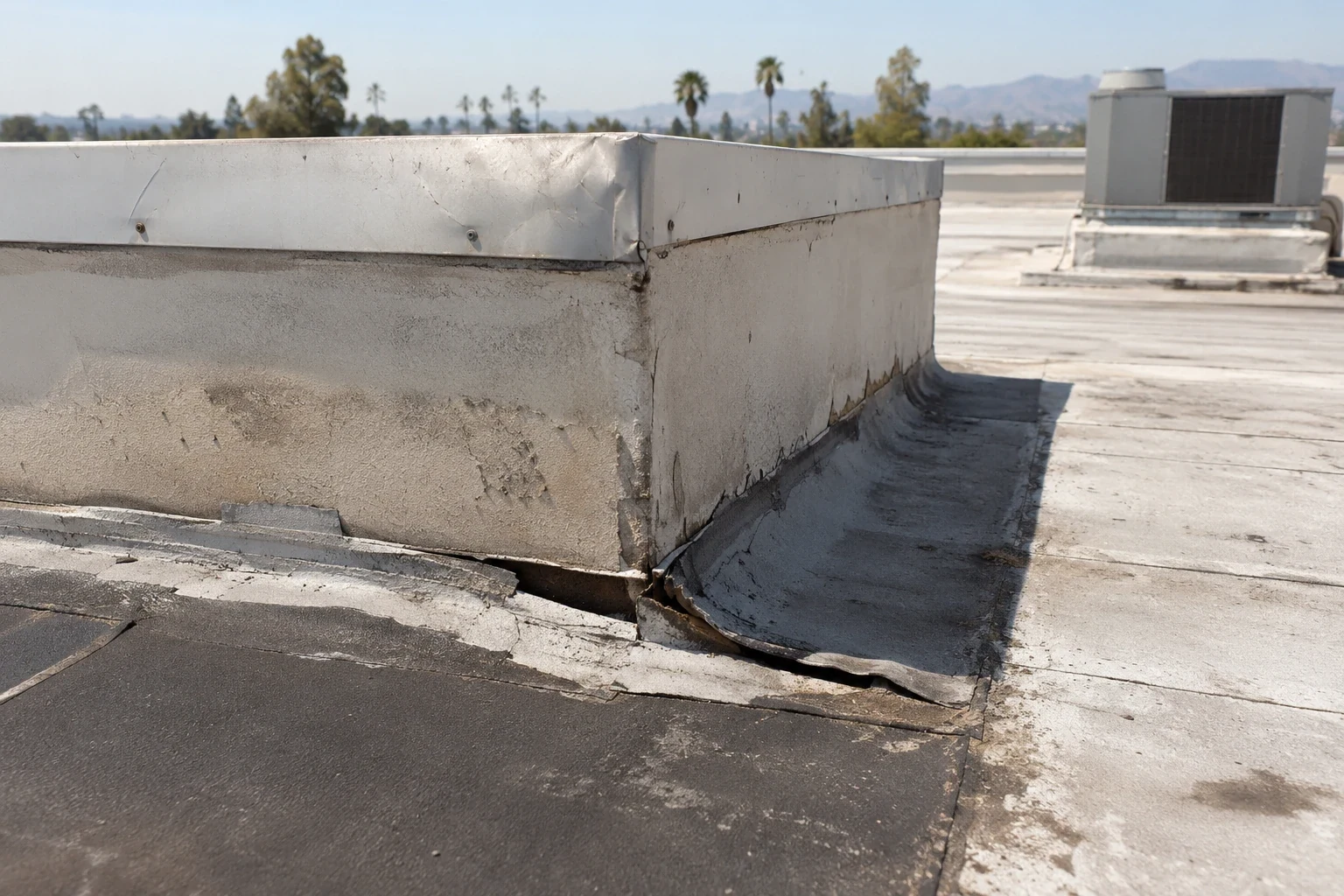
Flashing failures tend to appear at walls, curbs, skylights, pipes and equipment supports. We check terminations, corners, sealant transitions and the membrane around each penetration. A loose edge can admit wind-driven water, while a split lap lets water move under the field. Flashing repair restores the transition; seam repair addresses the joint. Work limits extend to sound material so a new patch does not stop on another weak edge.
Separate surface damage from concealed wetting
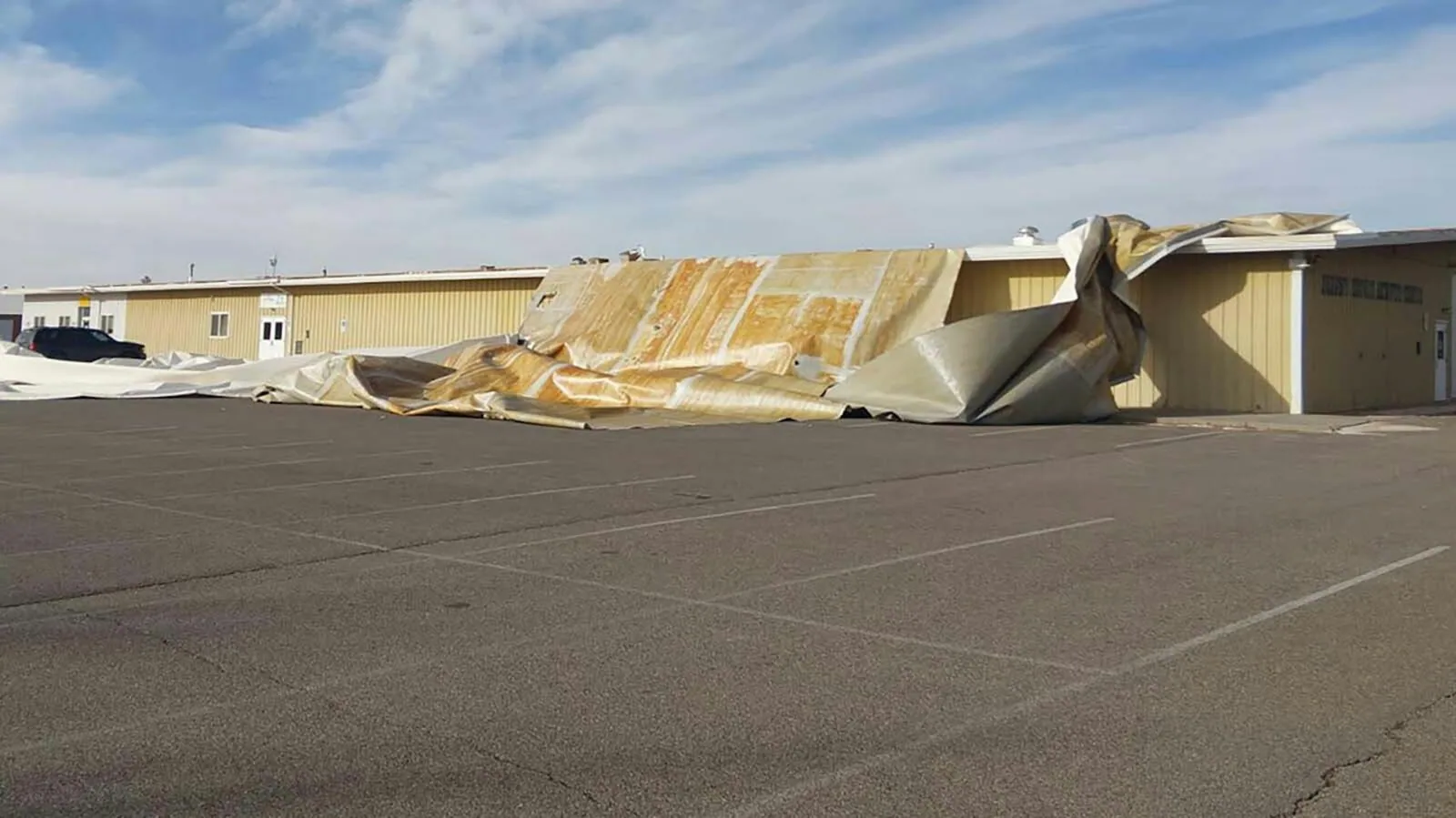
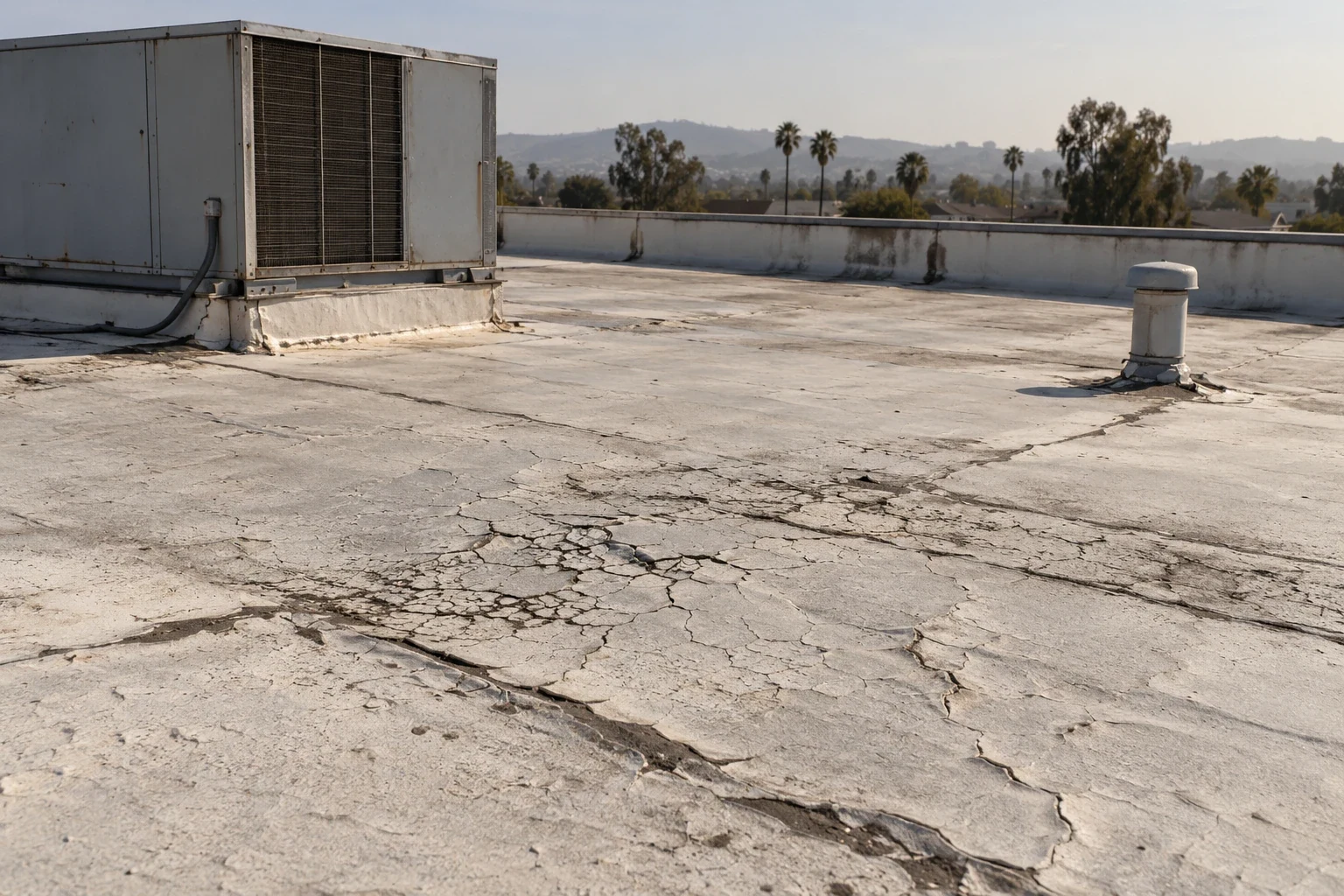
A puncture, blister or heat-stressed area may expose the layer beneath the membrane. We inspect the surrounding field for movement, brittle material, open laps and water entry. Where concealed wet insulation is possible, an infrared scan can help direct further testing, but the pattern must be interpreted with roof construction and conditions. A controlled opening confirms what is below. Membrane puncture repair can remain localized when surrounding layers are sound; heat and UV repair may require a wider look at exposed material and nearby details.
Set work windows to the season
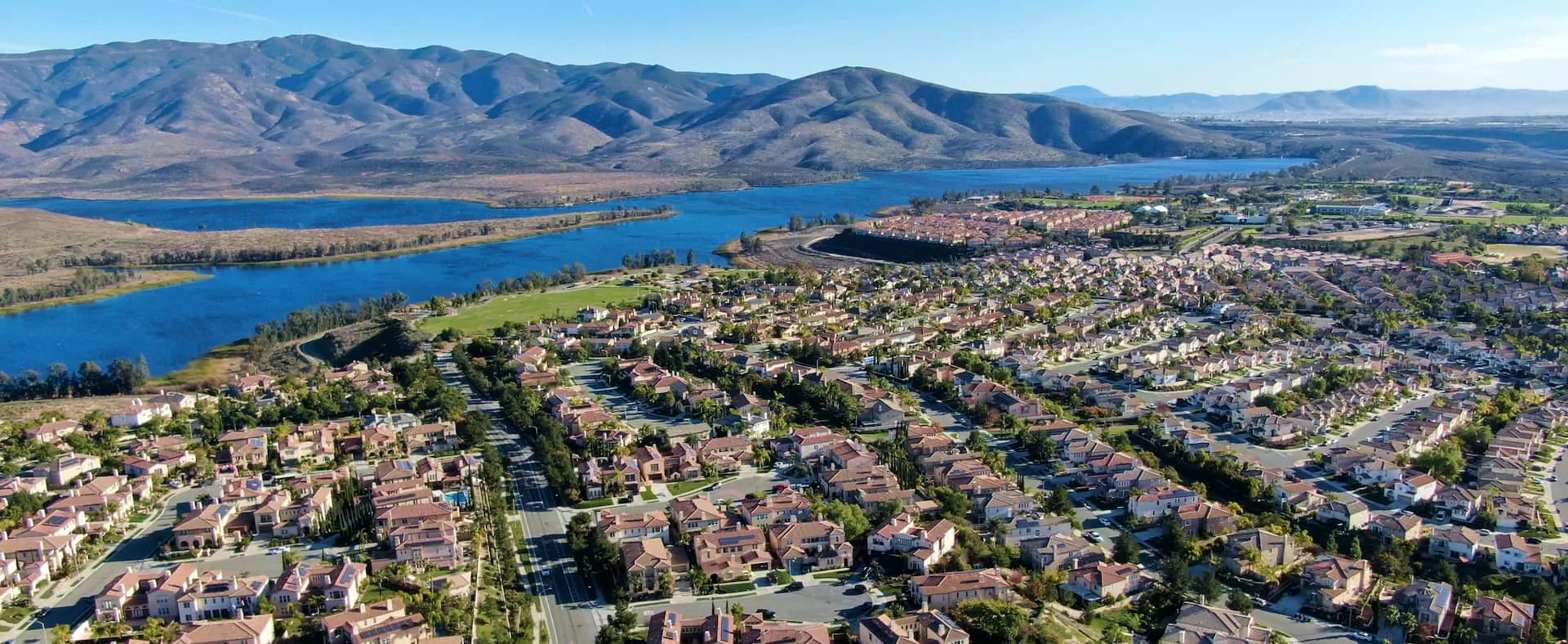
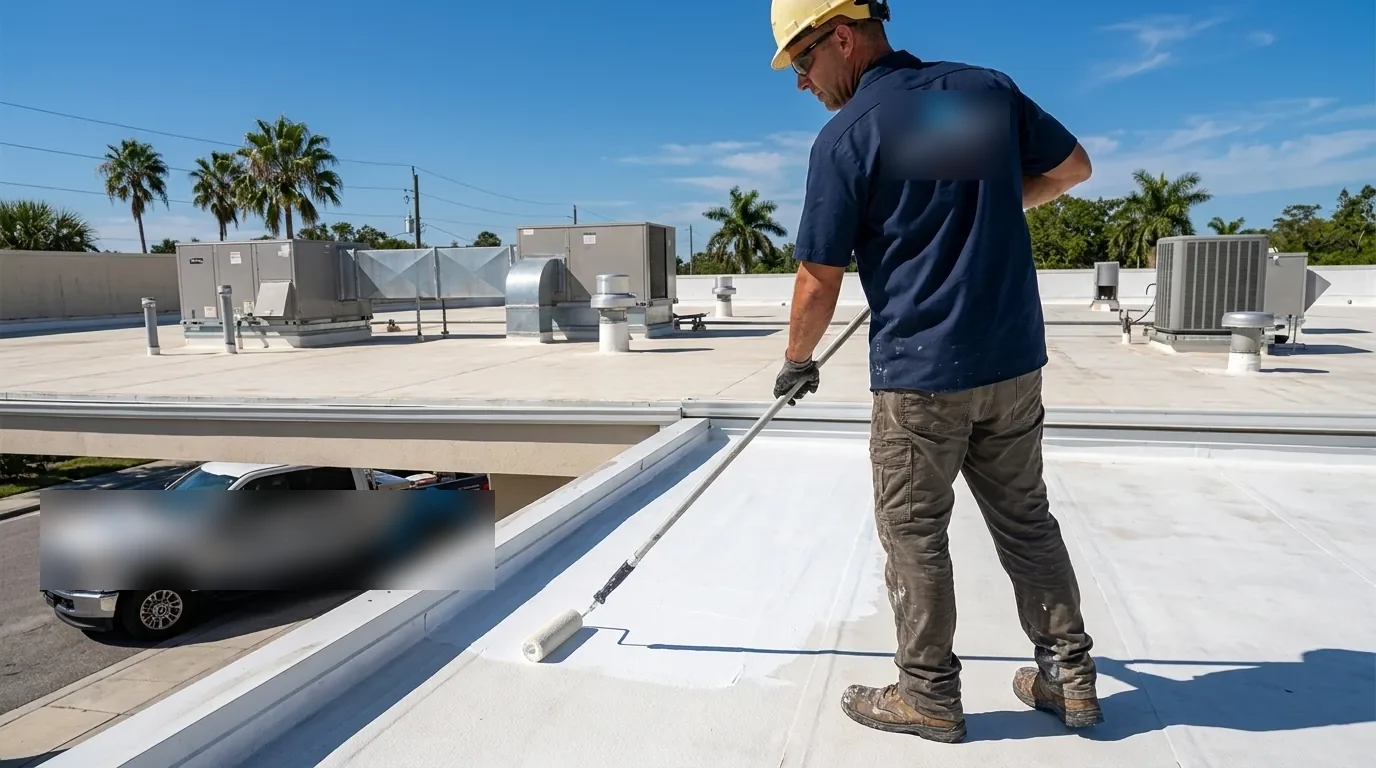
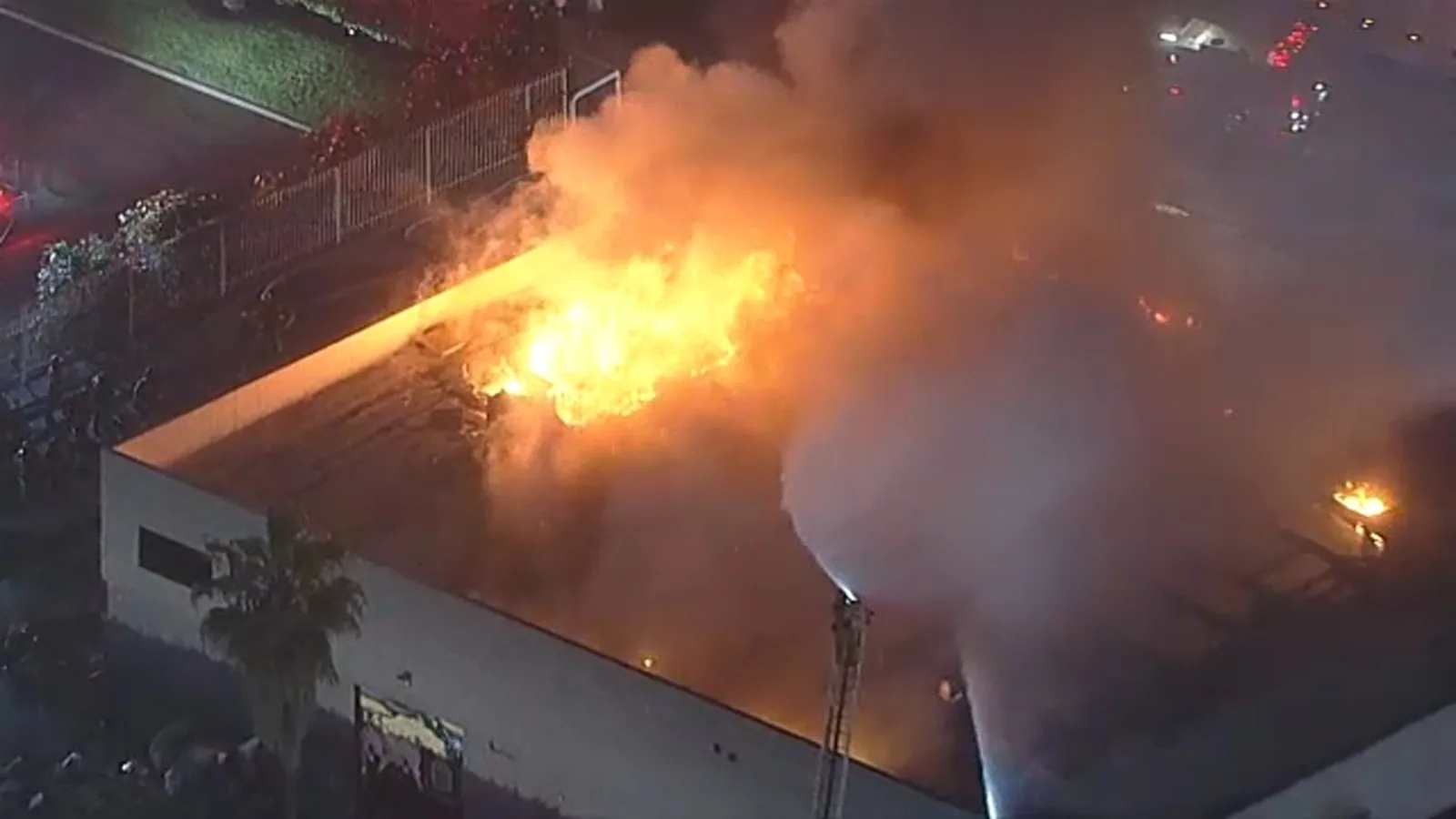
Chula Vista has a mild coastal Mediterranean climate, and most San Diego-area rain falls during winter months. Most San Diego-area rain falls in winter, with seasonal totals that vary. Before opening a roof, we check the current forecast, surface moisture and exposed area, then set a dry-in limit the crew can protect. The Bayfront and Otay Ranch sit in differing coastal and inland settings, so exposure and temperature patterns merit a direct check. Those differences shape what we inspect and when materials can be installed, while the actual building condition sets the repair.
Make the repair record useful
The closeout identifies the reported condition, its likely entry, materials used, the repaired roof zone and any follow-up recommendation. Photos show the boundary and preserve a before-and-after record for facilities staff. We distinguish confirmed damage from a concealed condition that would need an opening or separate approval. Scope and schedule reflect access, staging, removal depth, flashing count, material compatibility and weather protection. Claim documentation can organize repair photos and observations; a roof condition report helps the owner plan work beyond the immediate leak. The next step is a walk tied to the building and affected zone.
Commercial Roofing Questions
Does the ceiling stain mark the entry?
Not always. Water can travel below the membrane, so we inspect connected seams, walls, curbs and drains.
What happens after temporary protection?
Once conditions allow, we inspect the assembly, define the permanent repair and record any concealed question needing approval.
Can ponding water be fixed with a patch?
A patch may seal a defect, but drainage and low areas need separate review if water keeps collecting.
What belongs in the closeout record?
Photos, repair materials, affected zones, work limits and follow-up needs help the facility team track the repair.