Protect the Business Below the Roof
A ceiling stain above a shop or dining area may appear away from the roof opening. Water can travel along a deck or beneath the membrane before reaching an interior finish. We compare the reported area with roof slope, penetrations, seams and drains, then trace the likely route. If water is active, we set temporary protection where it can be attached to sound material and keep the opening controlled until permanent work is ready.
Storefronts and service businesses may have different delivery hours and customer peaks. Before mobilizing, we confirm roof entry, ladder or lift placement, the location for removed material and the space below that needs protection. We can sequence roof work so the most disruptive step happens during an agreed window. For a block with several tenants, a property manager can help confirm which entrance, loading point or shared passage must stay open.
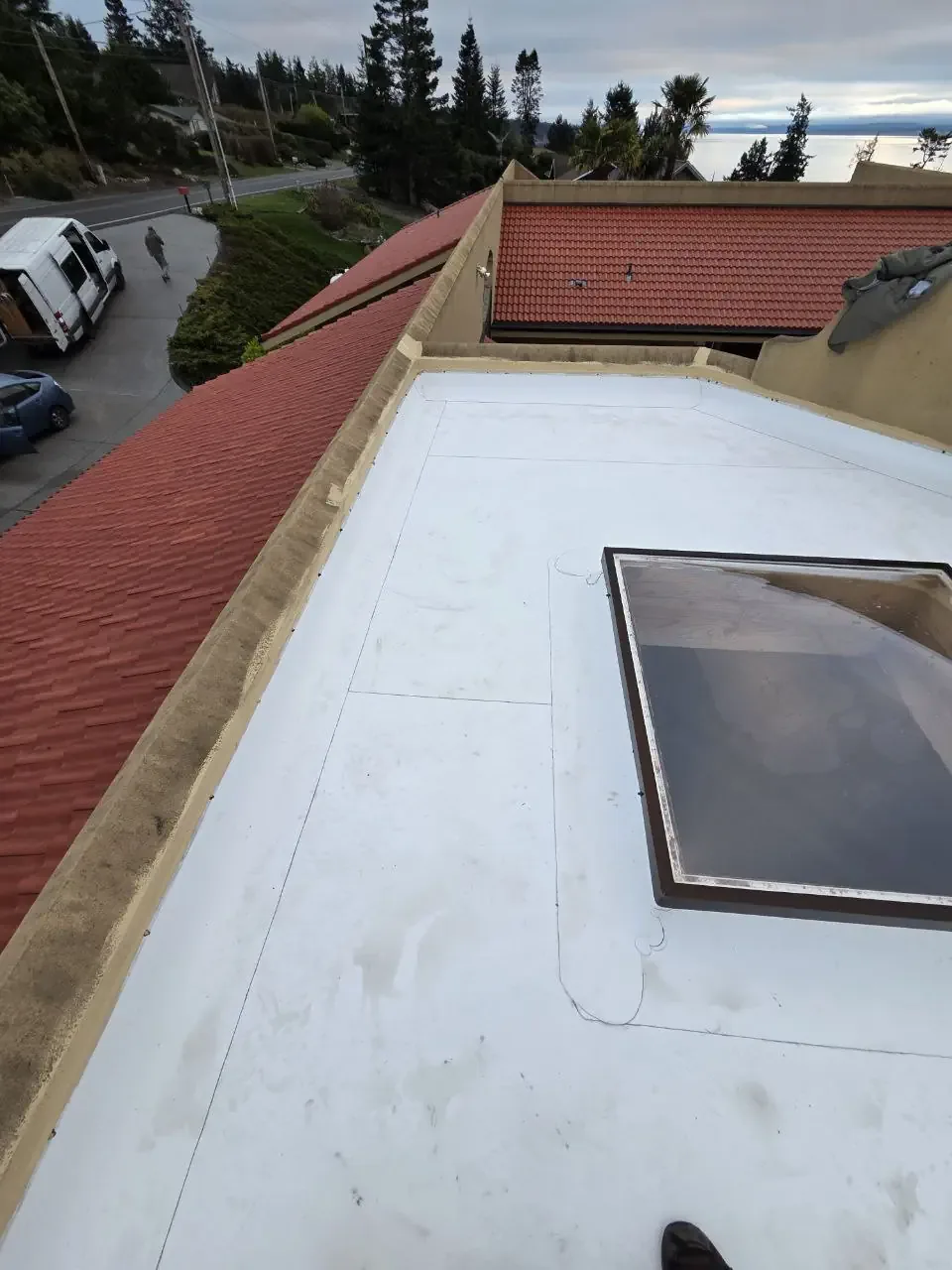
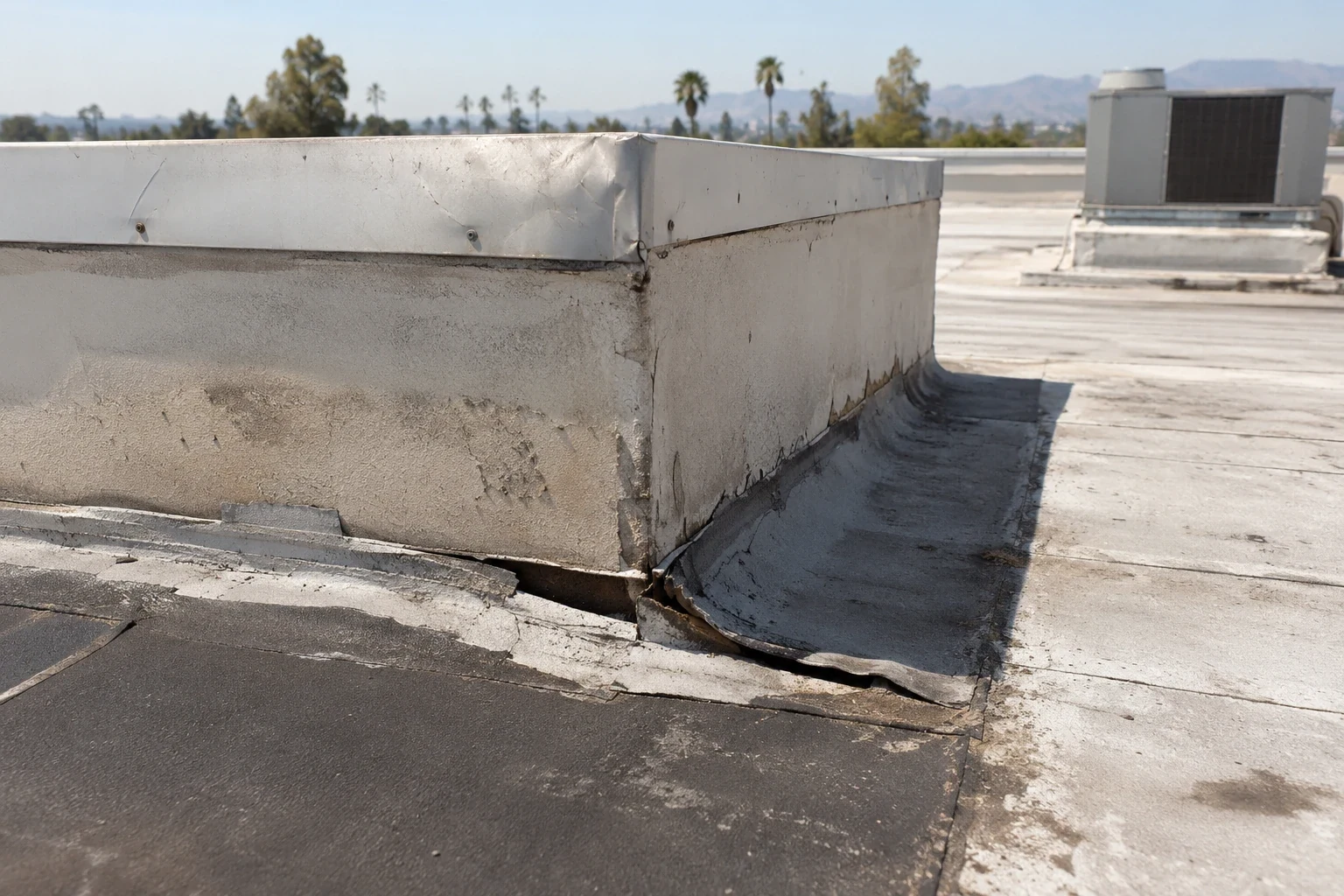
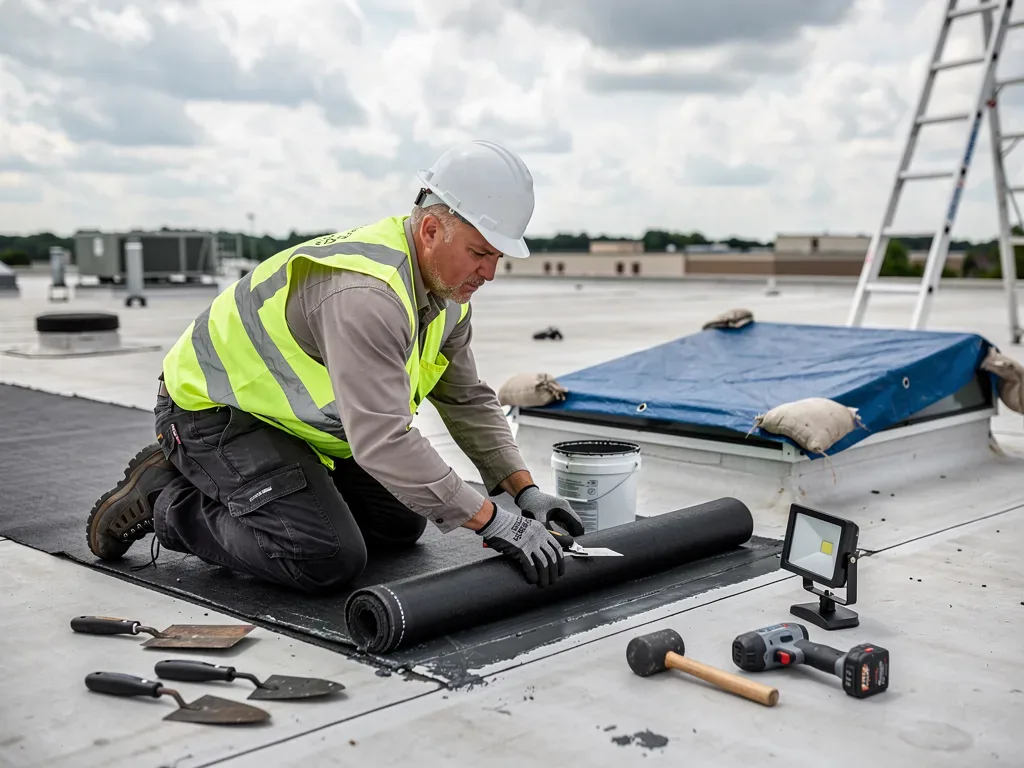
If the defect is a separated lap, membrane seam repair may be appropriate where the surrounding material remains sound. A failed curb or wall transition can call for flashing repair. We keep the repair tied to the observed condition rather than placing the same patch over every symptom reported from the building.
Check the Full Roof Zone
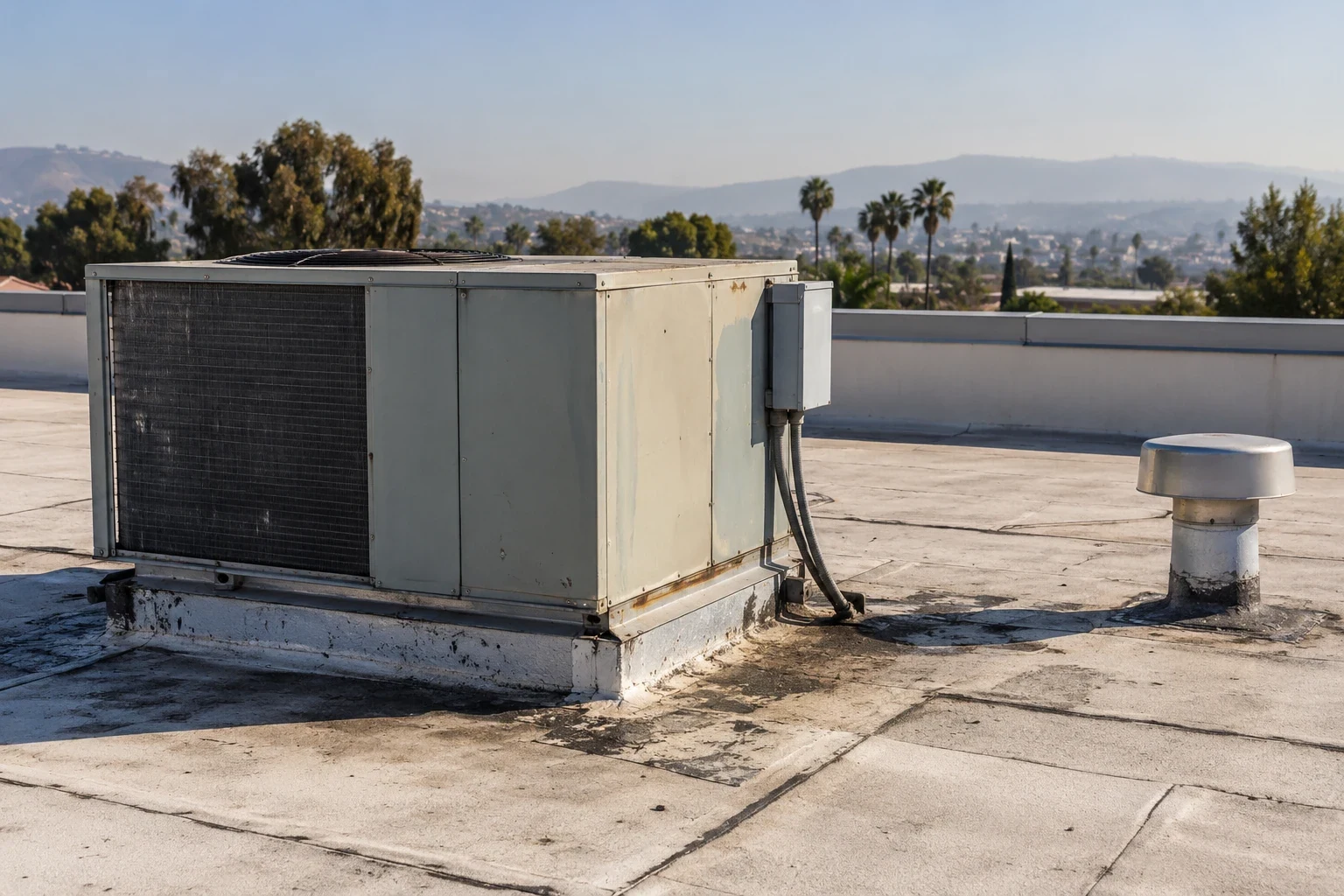
We inspect drains, scuppers, edge metal, rooftop equipment and previous patches along with the visible opening. A loose vent boot or blocked drain can contribute to a leak even when the reported seam looks intact. The inspection record marks the roof zone and nearby details so another visit can compare the same locations. If moisture may be concealed below the membrane, a suitable survey or controlled opening can establish whether insulation or deck work belongs in the scope.
The district's improvement area covers approximately 16 blocks and 265 parcels, with boundaries reaching from Church Avenue to Landis Avenue and from E Street to I Street. A roof may sit within a larger shared property pattern, but its access and assembly still need a direct review. We confirm which building is involved, where the roof hatch or ladder is and whether the property contact needs a separate tenant notification.
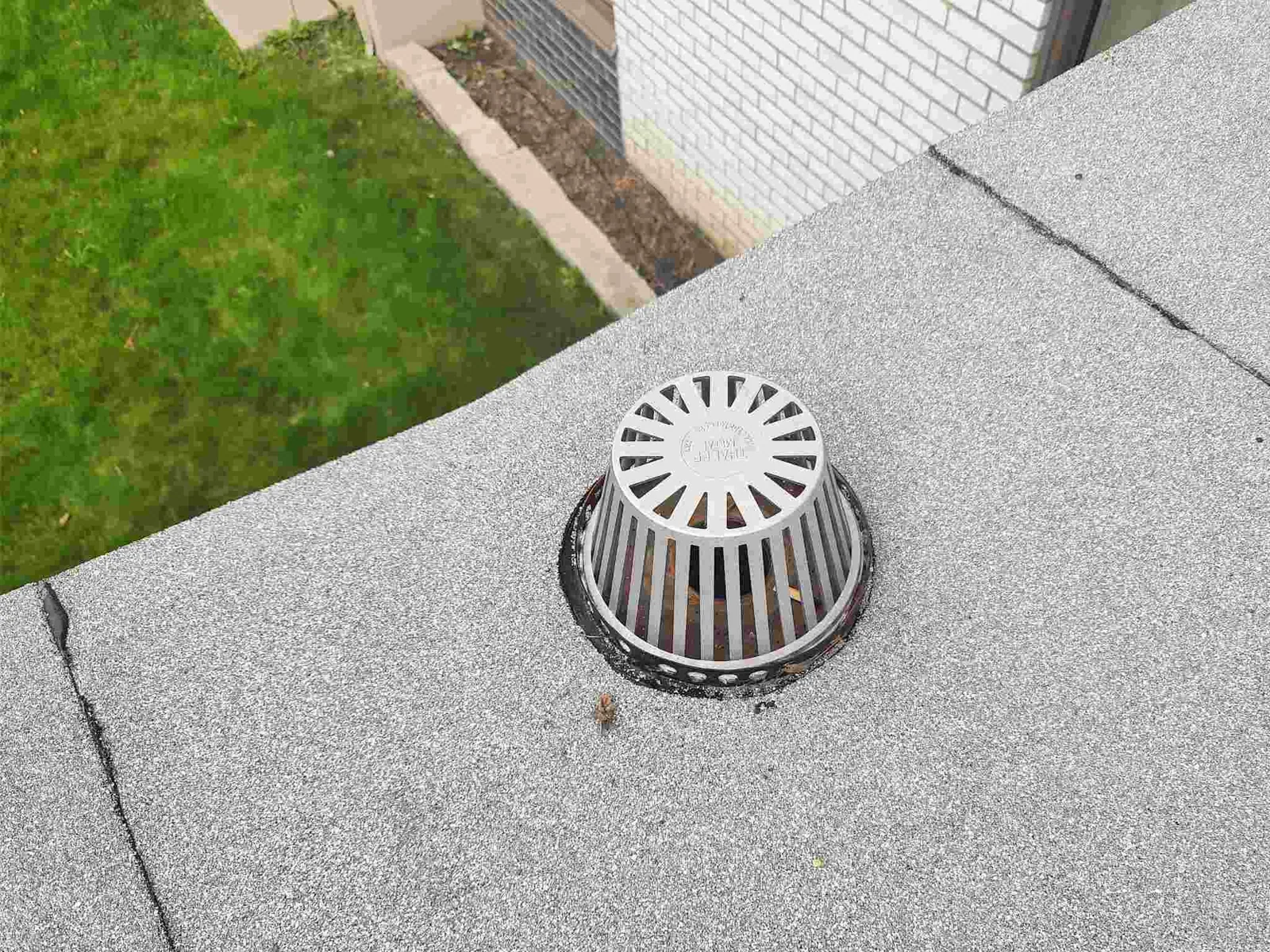
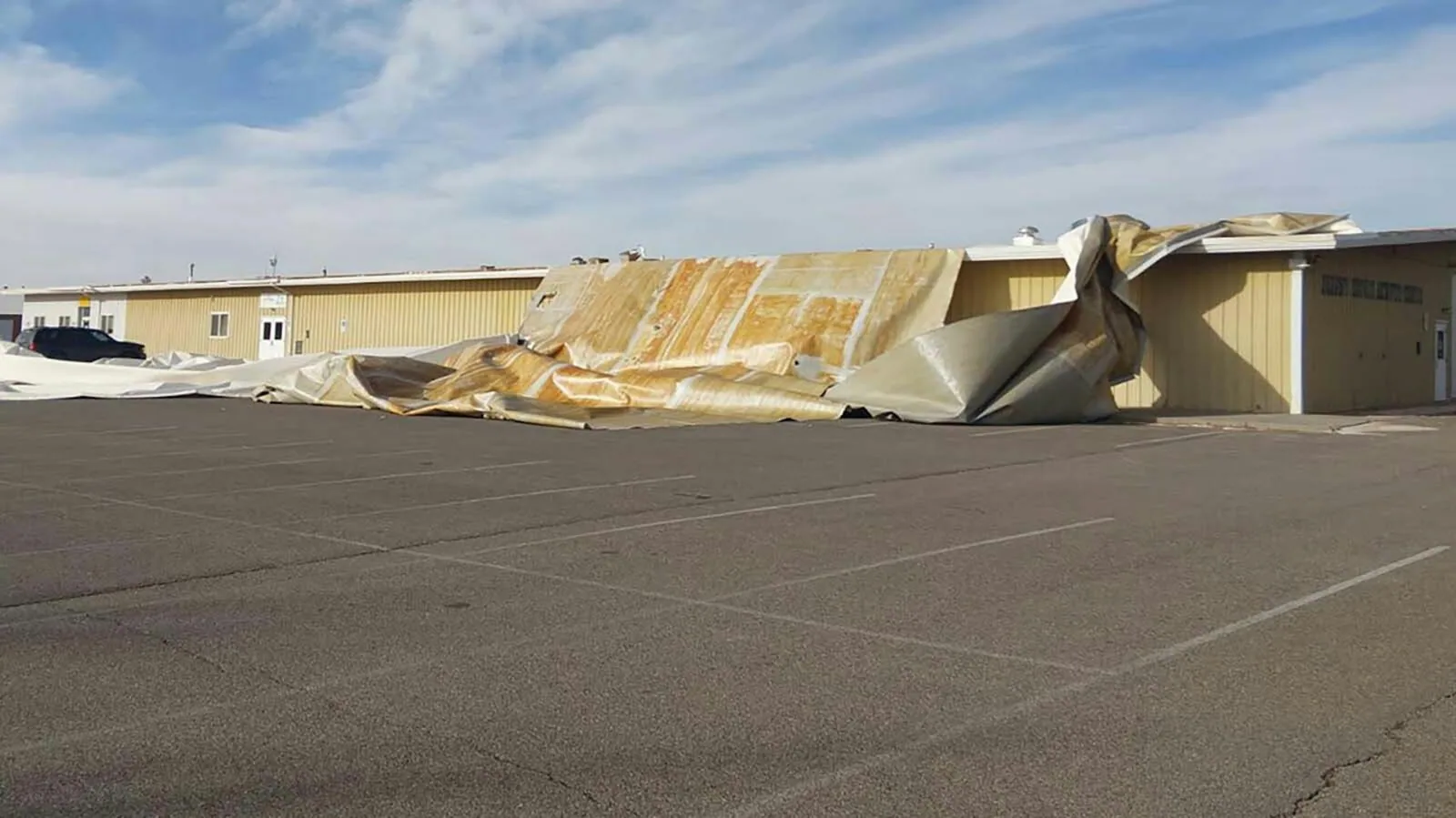
Where drainage is part of the complaint, drain and scupper service can clear outlets and inspect overflow routes. Persistent ponding may need a separate slope or insulation review. After strong seasonal wind, a wind damage inspection can check displaced edge metal, open laps and loose rooftop equipment before a small defect spreads.
Select a Repair That Fits the Assembly
We identify the membrane before choosing a patch. Thermoplastic single-ply, EPDM, modified bitumen and built-up roofs have different seam and flashing details. The repair surface must be clean and dry, and the patch must extend to stable material. If earlier sealant or coating hides the edge of a failure, we remove enough material to prepare a sound tie-in rather than layering new product over a weak bond.
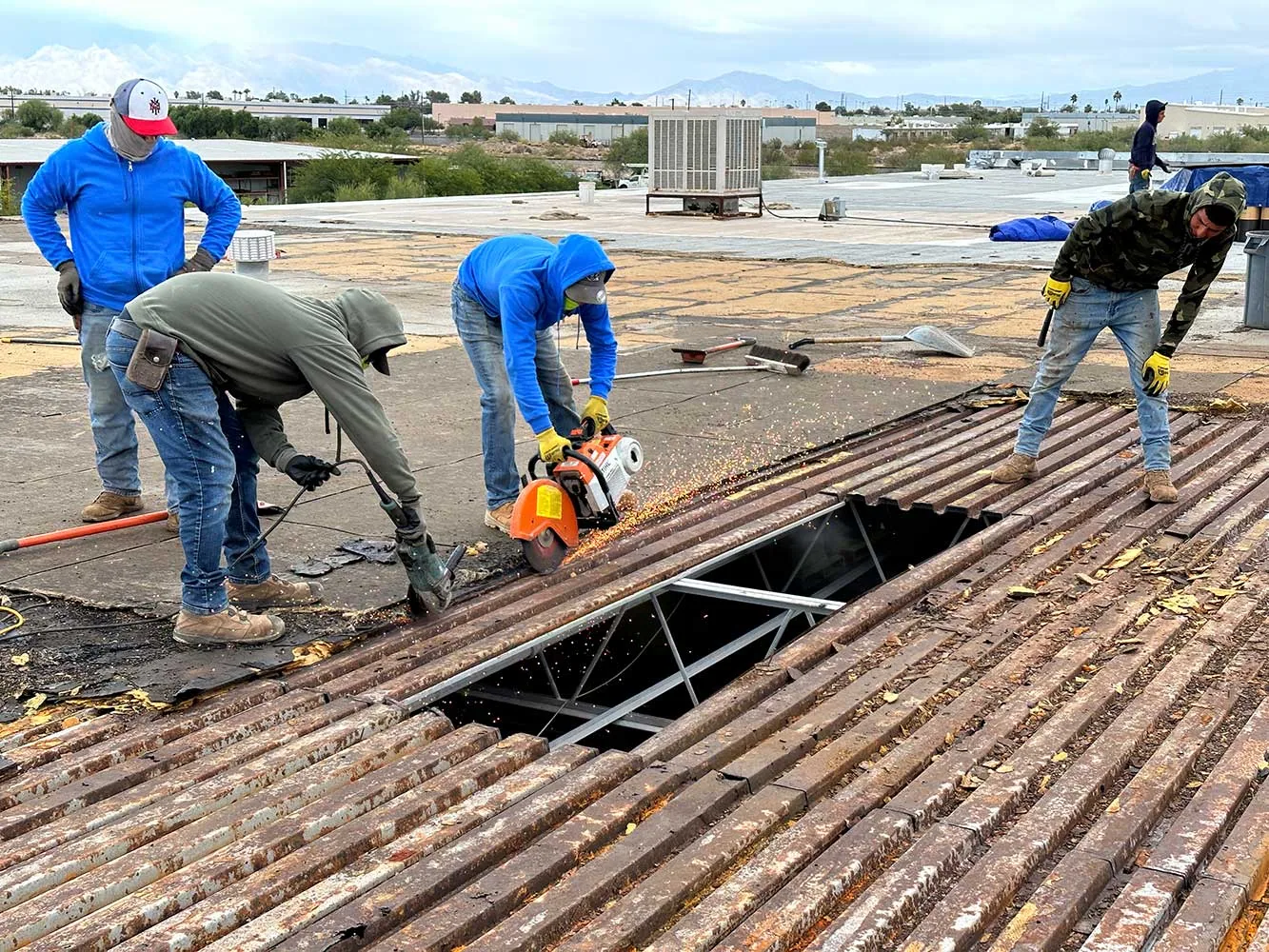
A localized repair can be practical when damage is limited and the insulation below is dry. If a broader area is brittle, repeatedly patched or wet, a larger replacement may serve the building better than repeated spot work. We explain what was observed and what remains concealed. A commercial roof repair scope separates urgent water control from permanent work, while a controlled opening can add evidence when the repair boundary is uncertain.
Cost and timing depend on roof height, material compatibility, access, equipment staging and how much of the roof can be worked at one time. On an active Third Avenue property, delivery and tenant hours may set the mobilization window. We confirm those details before bringing materials to the roof and identify if another trade must move equipment or approve a shutdown.
Prepare for the Winter Rain Period
In Chula Vista, rain concentrates in the winter months, but the amount changes from season to season. A seam or drain problem found before that period may be easier to repair before the roof is repeatedly wet. We check for open laps, low areas, loose fasteners, clogged outlets and cracked sealant at transitions. If the roof is wet during the visit, we identify what can be inspected safely and whether permanent adhesion or welding needs a dry return window.
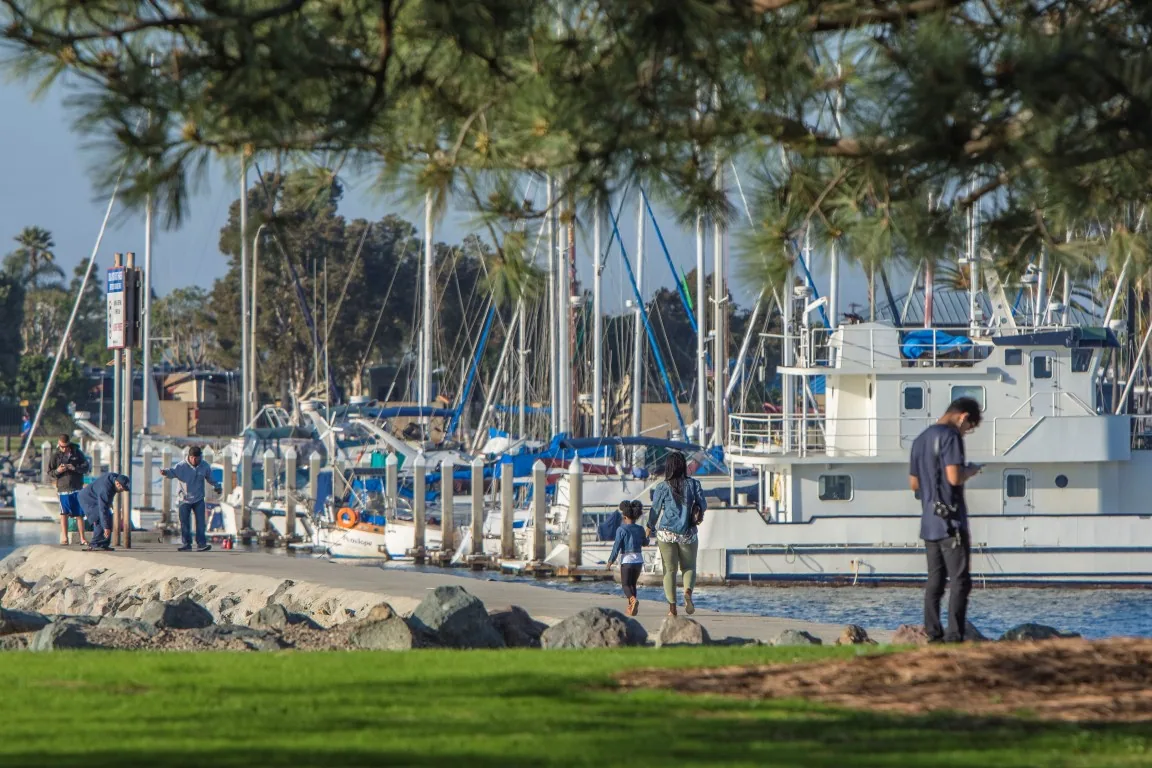
Chula Vista's coastal setting moderates conditions, but a membrane still needs product-appropriate temperature and surface preparation. We schedule repair work when the roof is dry enough and the chosen system can bond or cure. If rain is close, a temporary dry-in may limit exposure. The crew secures the protected area, leaves drains open and records what still awaits permanent work.
A facilities contact can help prioritize rooms below an active leak and arrange after-hours access when needed. Emergency roof response is available at any hour, weekends and holidays included, when sudden water entry needs immediate stabilization. A permanent repair follows once the roof can be prepared correctly. The owner receives a clear distinction between interim protection and completed work.
Keep the Repair Record Useful
When work is complete, we inspect the patch edge, nearby seams and drainage path for secure attachment and open gaps. We check that removed material has not blocked a drain and that the repair remains accessible for future service. Photos show the affected area before and after work. The record lists the roof zone, repair material and any condition that still needs follow-up.
For a multi-tenant building, the property manager can use the record to tell occupants which area was addressed and whether another visit is planned. If moisture testing or deck review remains open, we identify the decision it supports. A roof condition report carries those observations into planned work without mixing them with unrelated maintenance items.
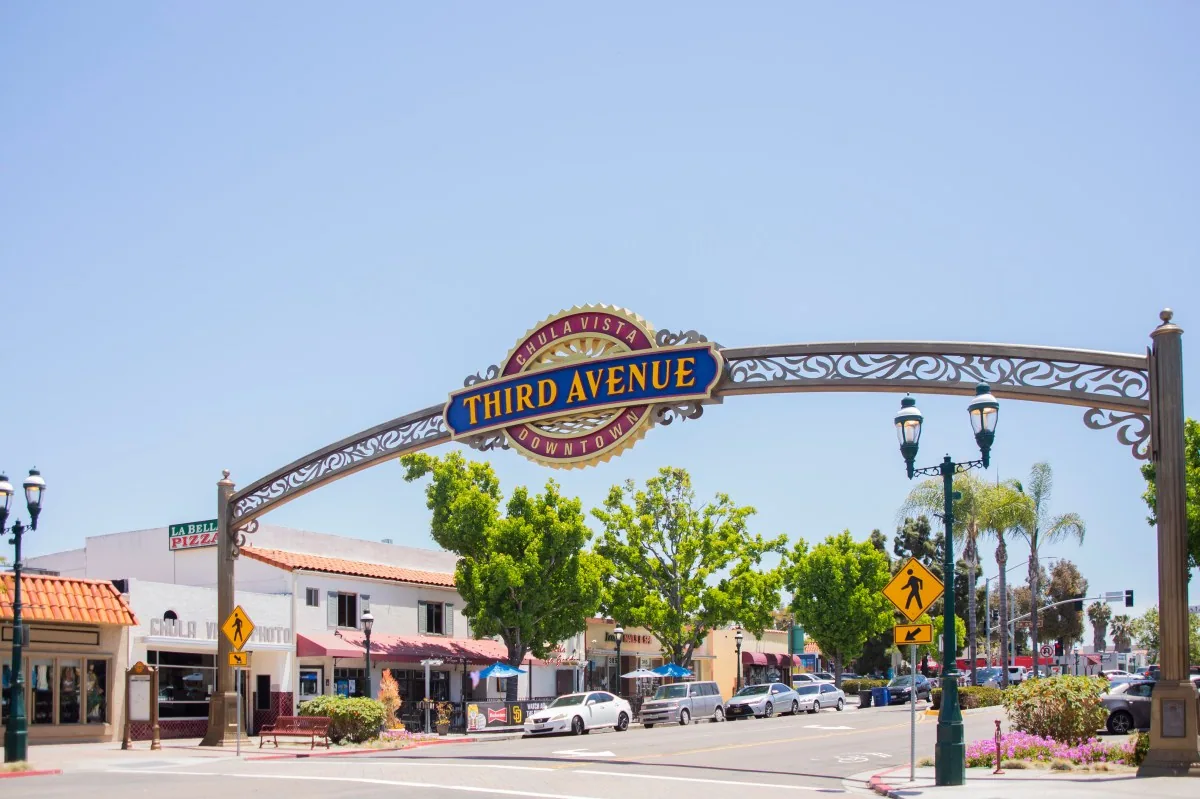
Downtown Chula Vista's retail, dining and small businesses line Third Avenue. A future Bayfront roof review or H Street service-area visit can use the same clear records while keeping each property's findings distinct. For this building, preventive maintenance can revisit drains, seams and repaired details before the next wet season.