Inspect the Full Transition
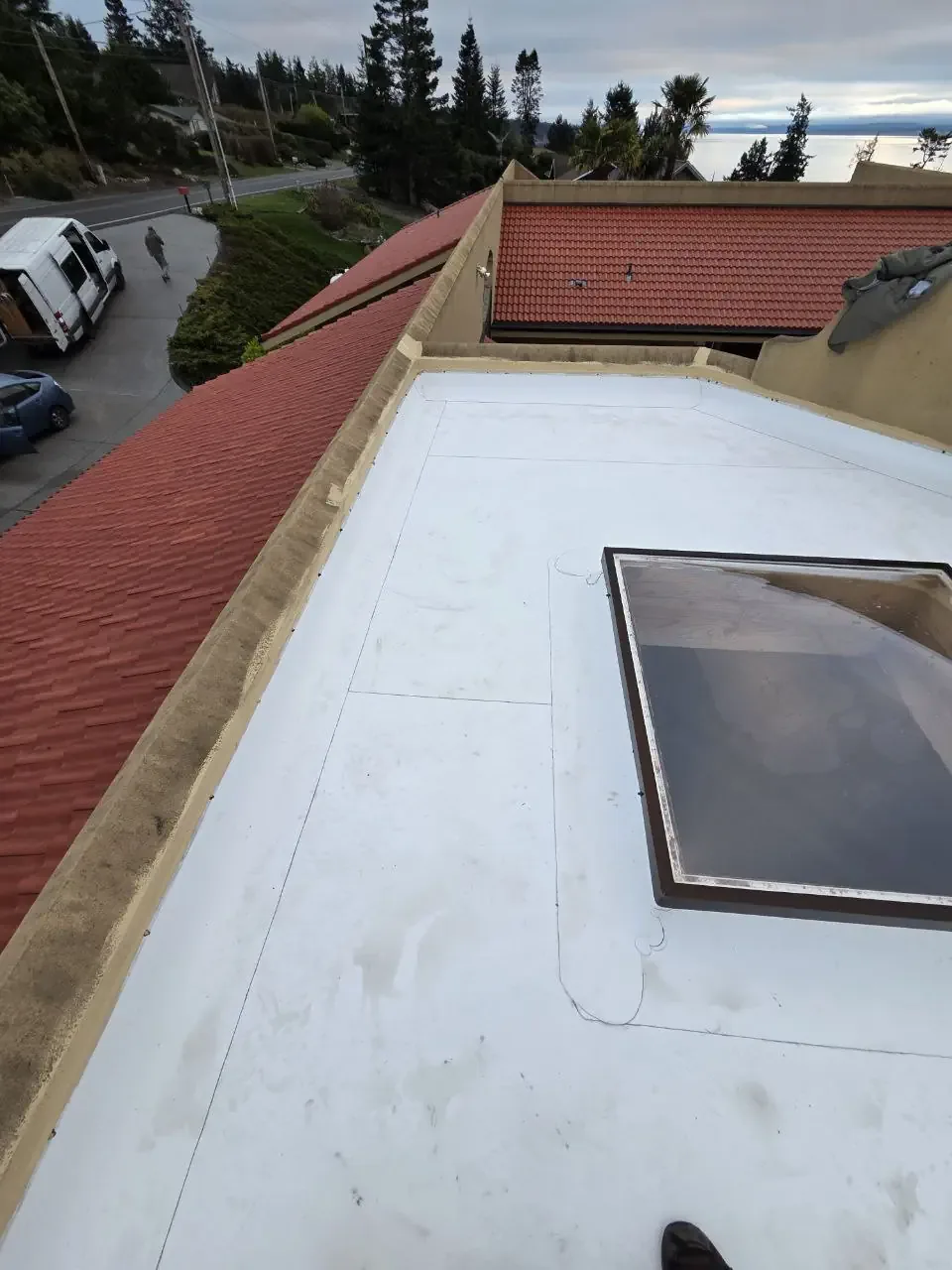
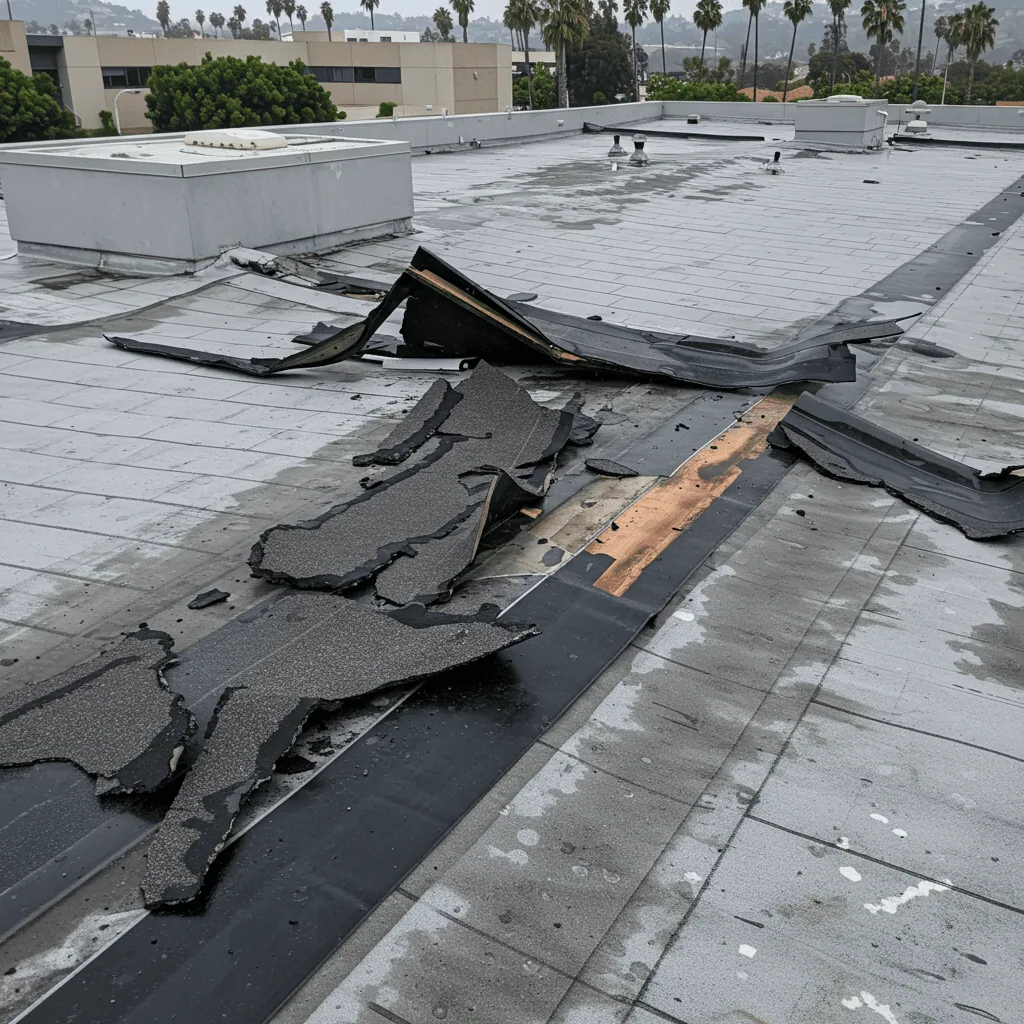
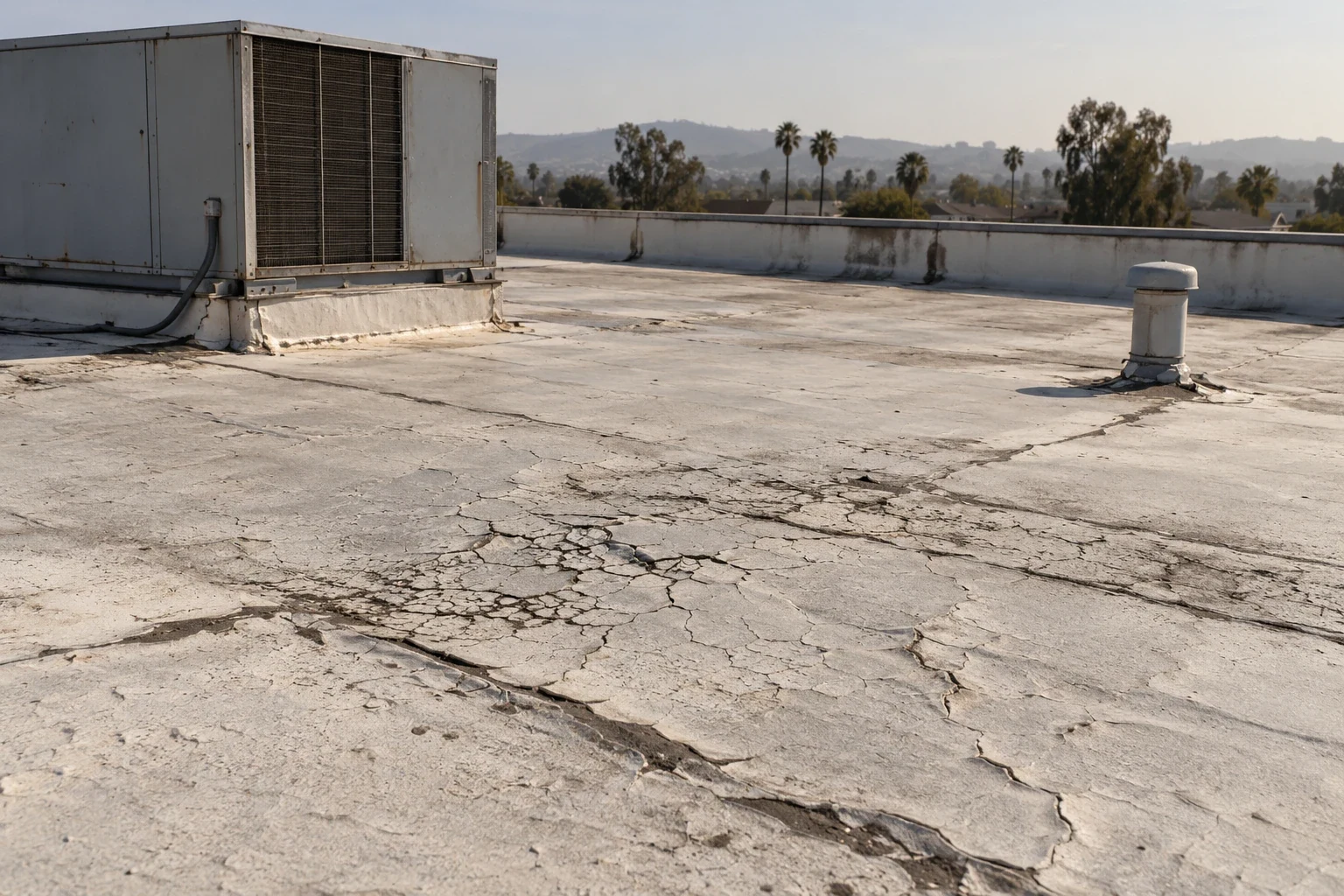
Flashing protects the point where a roof meets a wall, curb, pipe, skylight or equipment support. We check whether the membrane rises high enough, where its top edge terminates and how metal counterflashing sheds runoff. A loose corner or open lap may be visible, but the surrounding material can also be brittle, wet or poorly bonded. We probe only where appropriate and photograph the perimeter so the repair includes the full failed run.
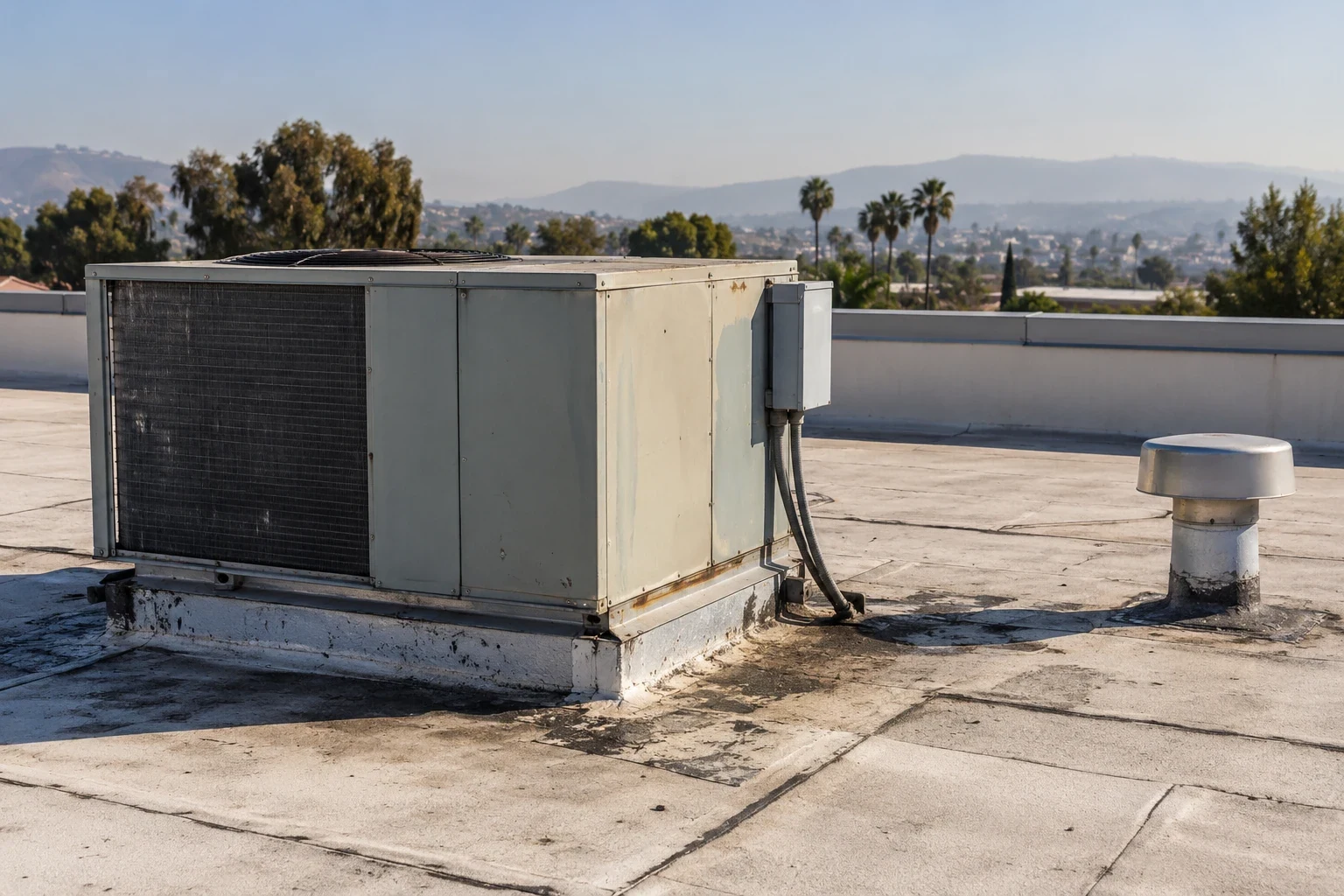
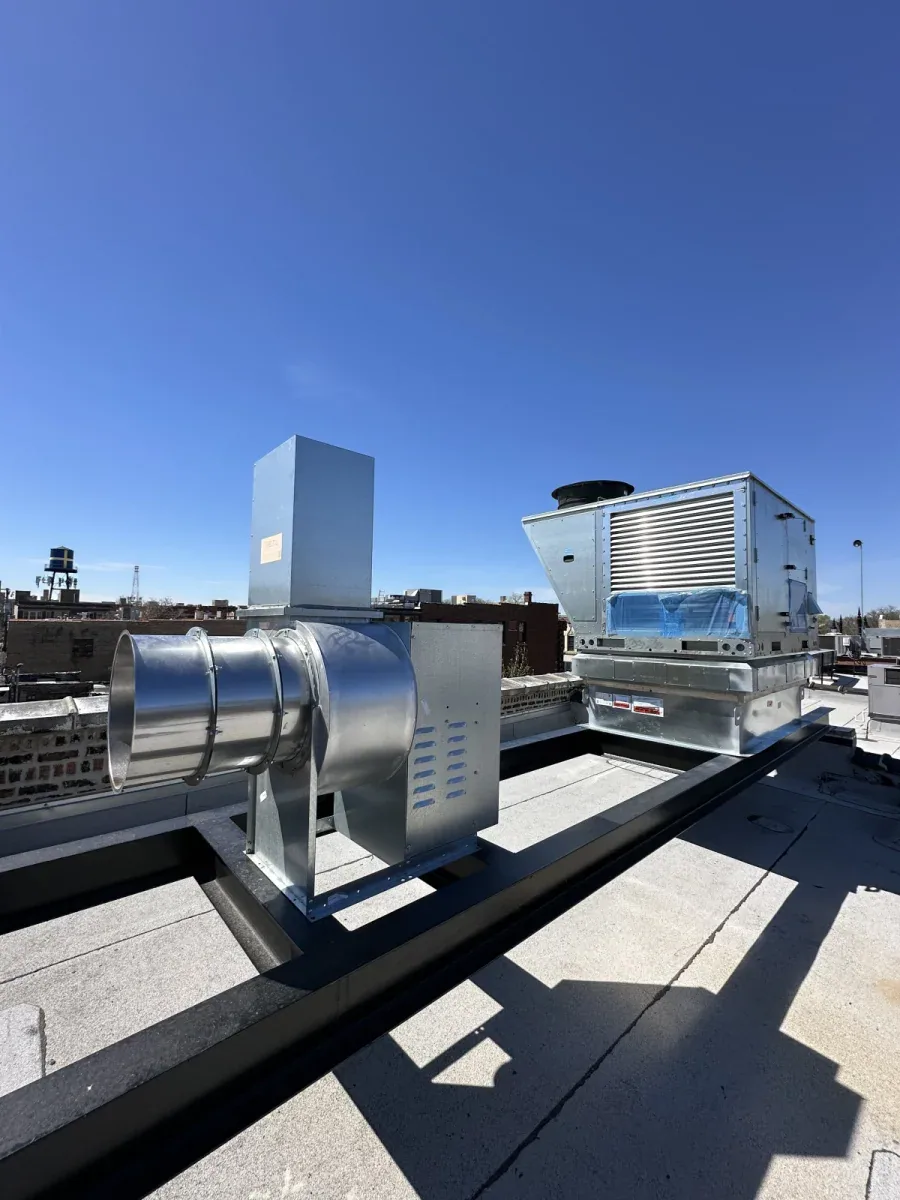
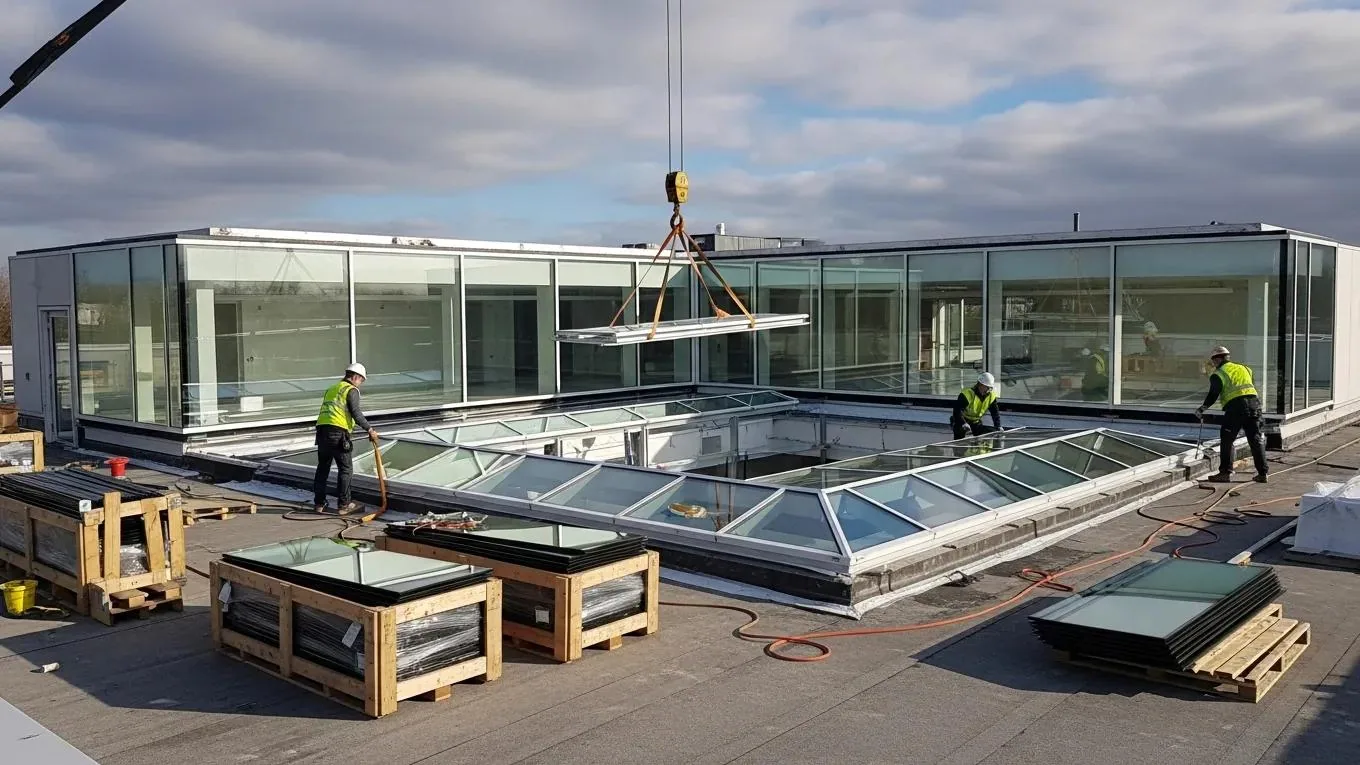
At a curb, equipment vibration and service visits can pull flashing away from corners. We inspect all sides, nearby fasteners and any conduit or pipe that crosses the membrane. At a parapet, we look at coping joints and the transition below the cap. At a wall, we check counterflashing and reglets rather than assuming surface sealant forms the primary waterproof connection. Curb and equipment-support repair can address a confirmed equipment transition; skylight and penetration flashing applies to an opening detail.
Most San Diego-area rain falls in winter, bringing repeated wetting to roof transitions over the season. A leak that appears only during wind-driven rain may point to a wall or exposed edge, while water during steady rainfall may follow another route. We compare the timing and indoor location with the geometry of the roof. A stain by a curb is a clue, not proof that the curb flashing failed.
Follow Water Past the Visible Gap
Water can enter through a split at one side of a curb, run under the membrane and emerge on another side or in a room below. We compare the stain, equipment location, roof slope and nearby drains. If water has moved through insulation or a deck flute, the indoor mark may not sit directly beneath the opening. We record both the reported room and the roof transition under review so a later repair can be tied to evidence.
When the entry point is uncertain, we inspect adjacent seams, penetrations and drainage before removing material. A moisture survey may help narrow an investigation if surface and weather conditions are suitable. A controlled opening can show the membrane and insulation at that point; it does not describe an entire roof area. We explain what the test can establish and where its limits are before it becomes part of the scope.
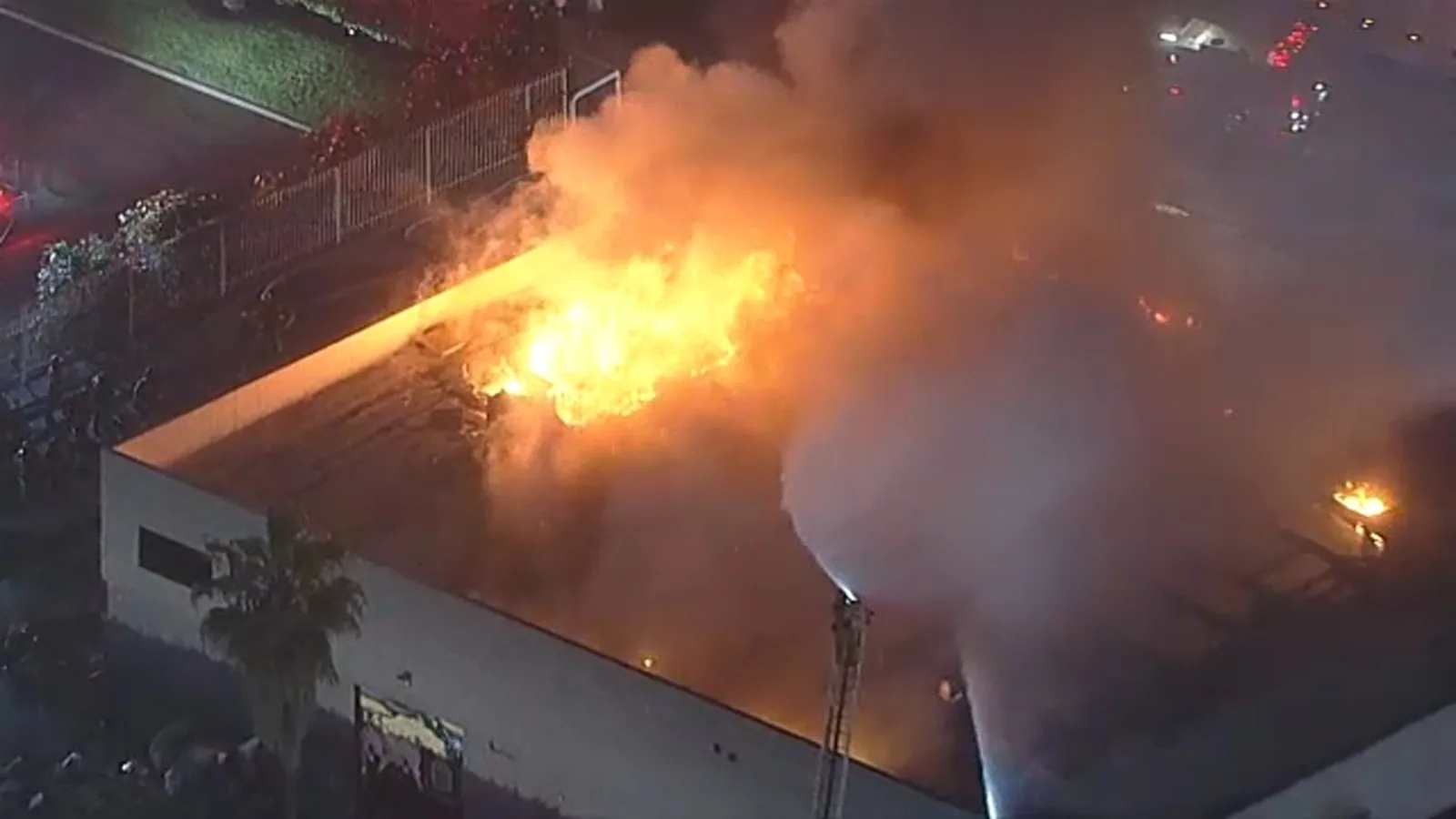
For active entry, emergency response is available at night, on weekends and through holidays. We can install temporary protection to limit water while a permanent detail is planned. The cover must connect to sound material and stay clear of drains. We tell the facility contact which transition was protected and whether interior protection or follow-up inspection is needed. Emergency roof repair can address the active opening before a lasting flashing repair is installed.
Rebuild the Connection, Not Just the Seal
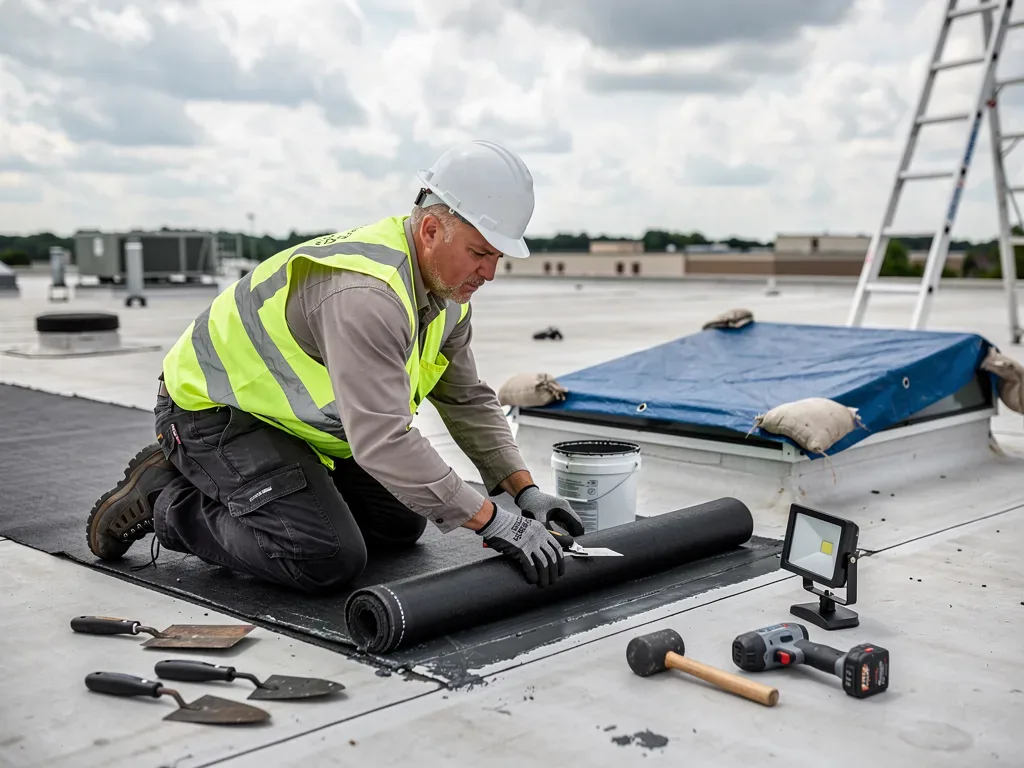
Repair starts by removing loose or failed material far enough to expose a sound tie-in. The replacement flashing must match the roof assembly and connect to a stable curb or wall. Single-ply roofs need compatible membrane and welded or adhered details; modified bitumen and built-up systems need suitable reinforcement and surfacing. Metal counterflashing must overlap and discharge water away from the opening. We restore the corner, end condition and top termination as one detail.
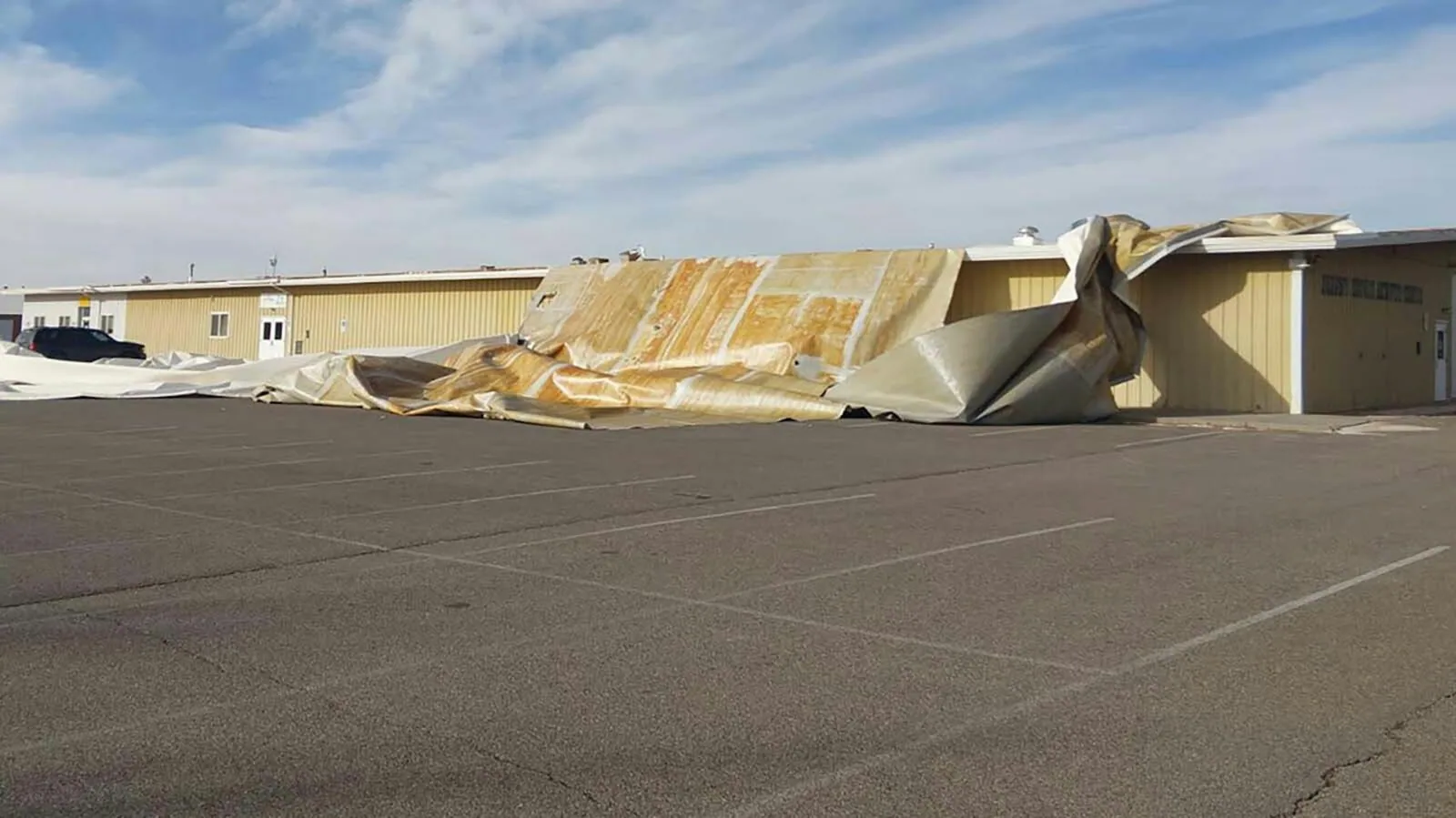
Sealant can be useful at a designed joint, but it does not replace missing membrane, loose metal or a failed termination. If the curb is unstable or the deck is damaged, the roof repair may need coordination with another trade. We record that boundary before installation so the membrane is not tied to a moving support. Seam repair can address a connected open lap, while wind-damage repair may be needed if perimeter flashing was displaced during a weather event.
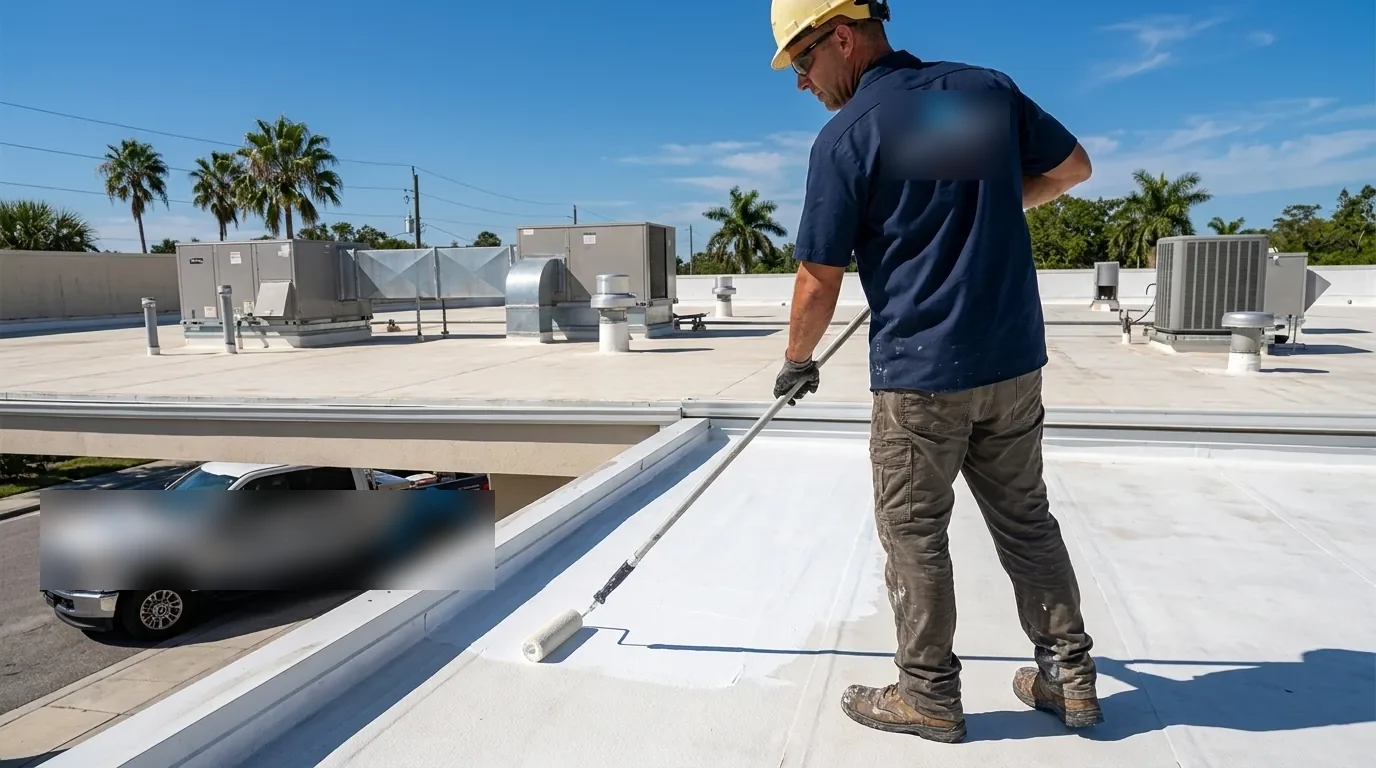
A coating cannot correct a curb that moves or a wall transition that has separated. When several details fail or adjacent insulation is wet, we compare a localized repair with broader recover or replacement. The scope identifies what is removed and retained, and whether an opening is required to confirm hidden conditions. We keep unrelated wear separate from the flashing defect being repaired.
Coordinate Equipment and Roof Access
Before work, we confirm whether rooftop equipment can remain active, who can approve a shutdown and how the crew will access the curb. A service technician may need the same work area. We coordinate the order so one trade does not remove or disturb another’s finished detail. Lifts, tools and materials stay clear of occupied entrances, fire lanes and receiving routes.
The National City Marina District combines maritime operations and commercial activity along the South Bay waterfront; Otay Mesa connects industrial and commercial land with SR 905 and regional freight routes. These regional uses can affect delivery windows, but each property’s gate and service path determine staging. We confirm the building access plan with the facilities contact. A roof visit near Otay Mesa still depends on the site’s roof-access route.
After installation, we inspect the flashing perimeter, check the membrane tie-in and clear nearby drainage. If concealed substrate damage expanded the repair area, the closeout names what was added. We do not close a transition over an unreviewed opening or leave a temporary cover described as permanent work.
Make the Flashing Repair Traceable
The record names the roof zone, transition type, materials and repair boundary. Photos show the original separation, prepared substrate and finished termination. If a wall or curb remains closed, we record what remains concealed and when to reinspect.
The scope depends on access, roof system and concealed damage. A roof condition report preserves the detail photos, while maintenance can revisit transitions, drains and roof edges before winter rain.
Share the affected room, curb or wall location, roof access contact and equipment restrictions. We will trace the water path and rebuild the flashing connection to sound material.