Check the Curb Before the Flashing
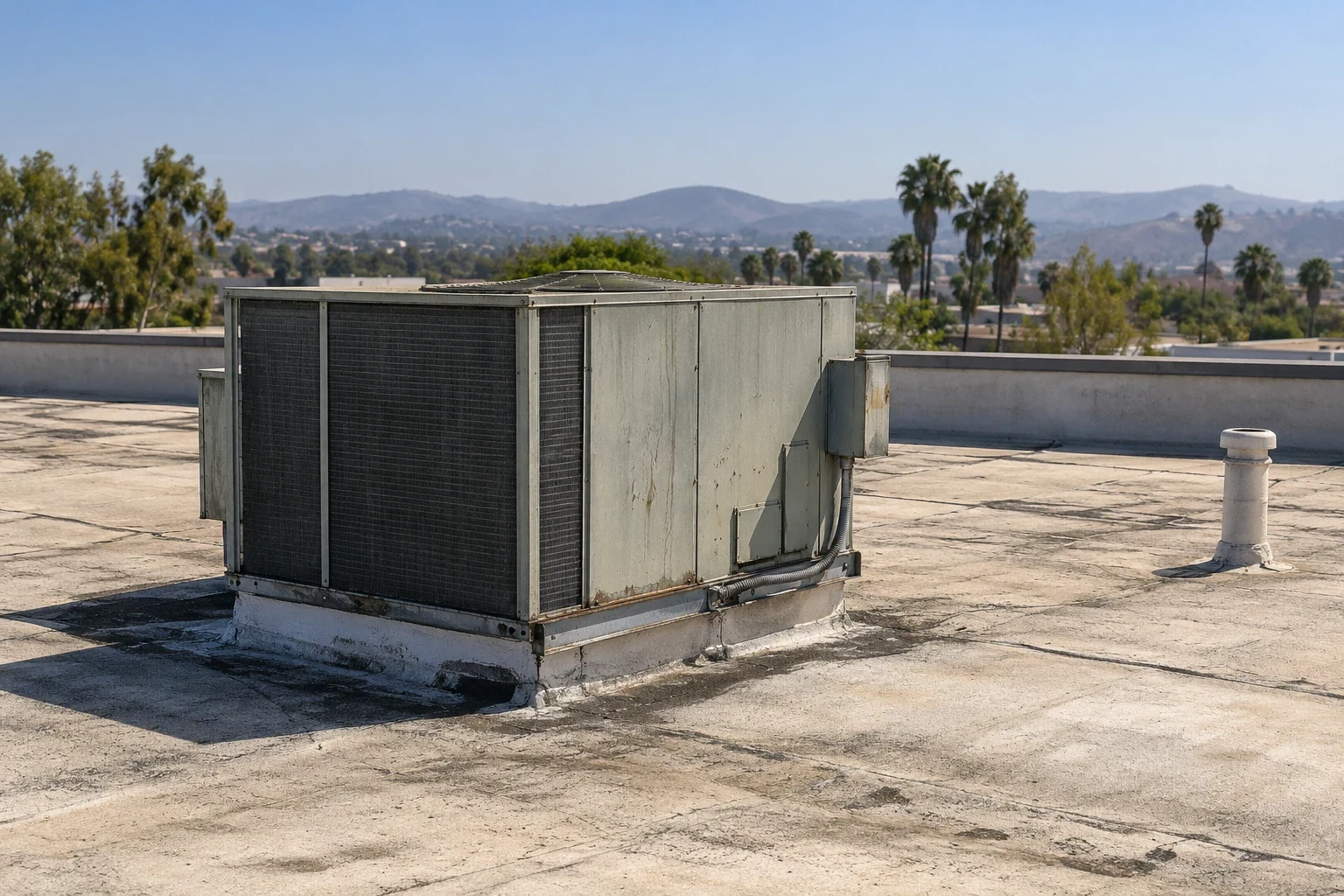
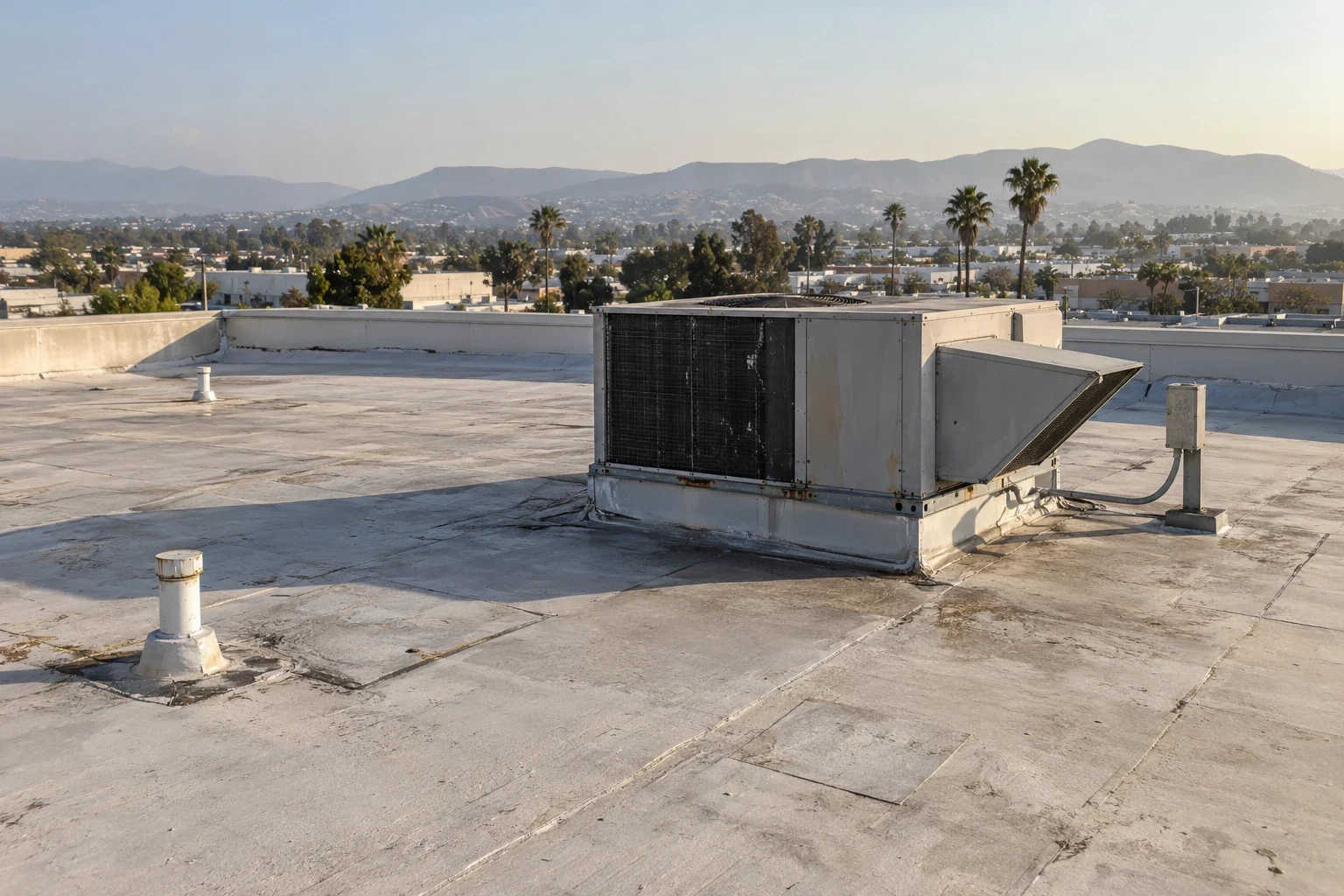
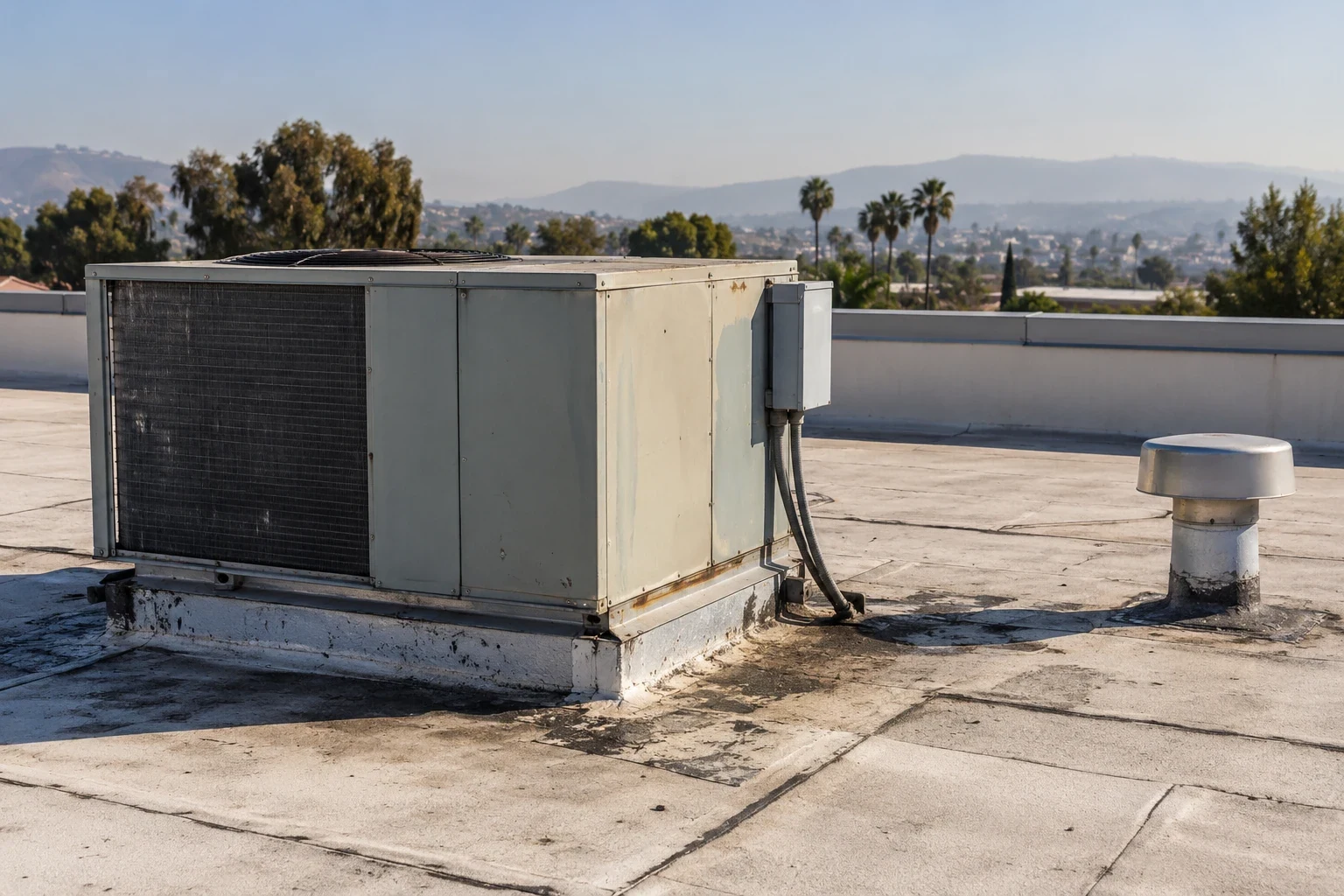
The curb transfers equipment load to the roof structure and lifts the opening above the membrane. We check whether its sides are sound, level and adequately attached, then inspect the membrane turn-up and counterflashing. A curb that has shifted can pull the flashing loose; a low curb may leave too little membrane height above the finished roof. We photograph the corners, seams, fasteners and any separation so the repair scope identifies the failed connection rather than calling the whole unit defective.
Mechanical equipment may cycle, vibrate or produce condensate. Those conditions can stress supports and create water that looks like a roof leak. We inspect for loose bolts, movement at rails, open pitch pans and disconnected condensate lines, coordinating with the equipment technician when the roofing repair depends on a mechanical adjustment. A roof contractor should not reset equipment or disconnect services without that coordination. We explain which trade needs to complete each part before the roof detail can be closed.
When a new unit is installed, curb dimensions and equipment weight need to match the roof framing and membrane system. We inspect the curb and support plan before the opening is made. If the unit footprint changes, the former curb and unused penetrations need a complete roof repair, not a cover plate that leaves water paths. A penetration flashing detail can address the roof transition after the mechanical scope is settled.
Follow the Load Into the Roof
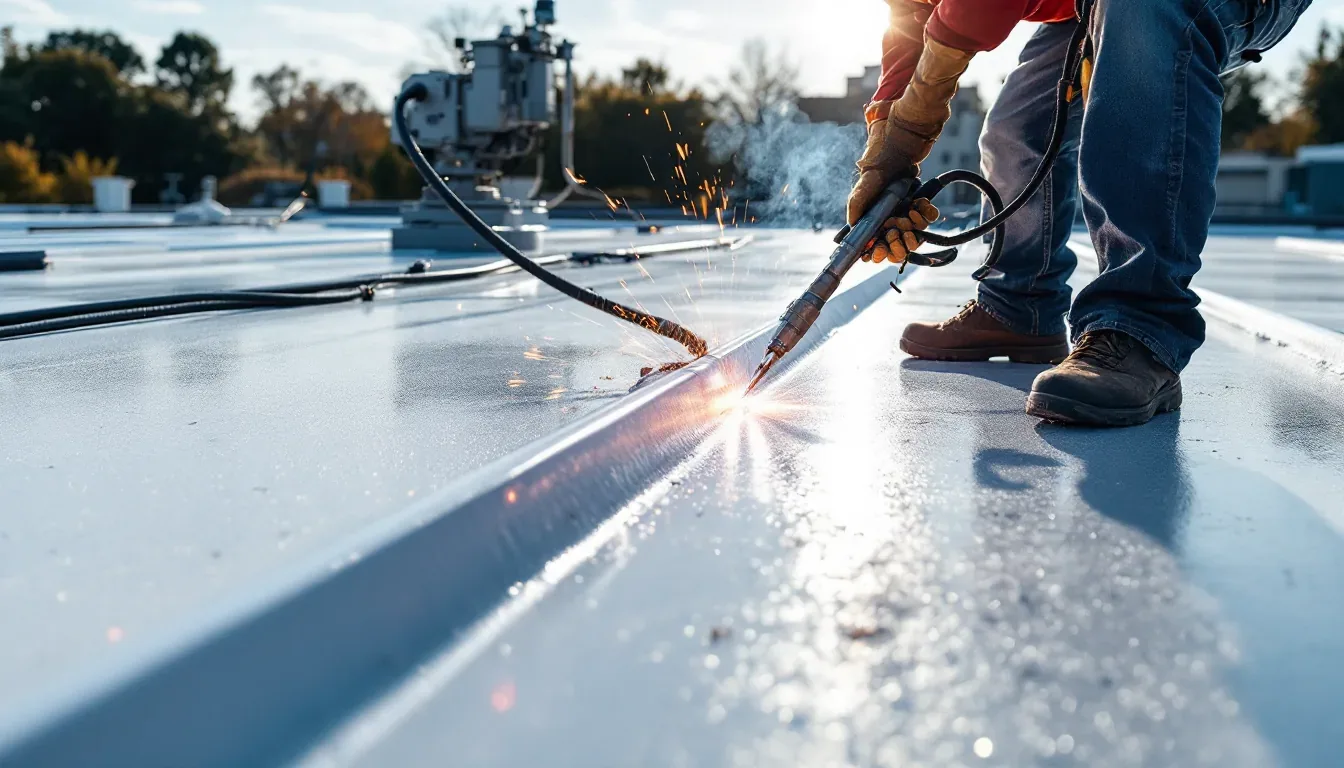
Rails, dunnage and pipe supports spread equipment loads across the roof. We check whether feet sit on protective pads, whether rails remain straight and whether supports bear on stable material. A sharp support foot can damage a membrane; a shifted rail can pull against a curb or conduit. Compressed insulation can leave a unit out of level or hold water; the repair may call for a new pad or support adjustment.
Pipe supports need enough clearance to keep lines from rubbing the roof and enough stability to resist movement during service. We inspect the base, pipe contact and nearby flashing. Where a line crosses a walkway or drain route, support placement should not trap debris or block maintenance access. We photograph each support and record service access.
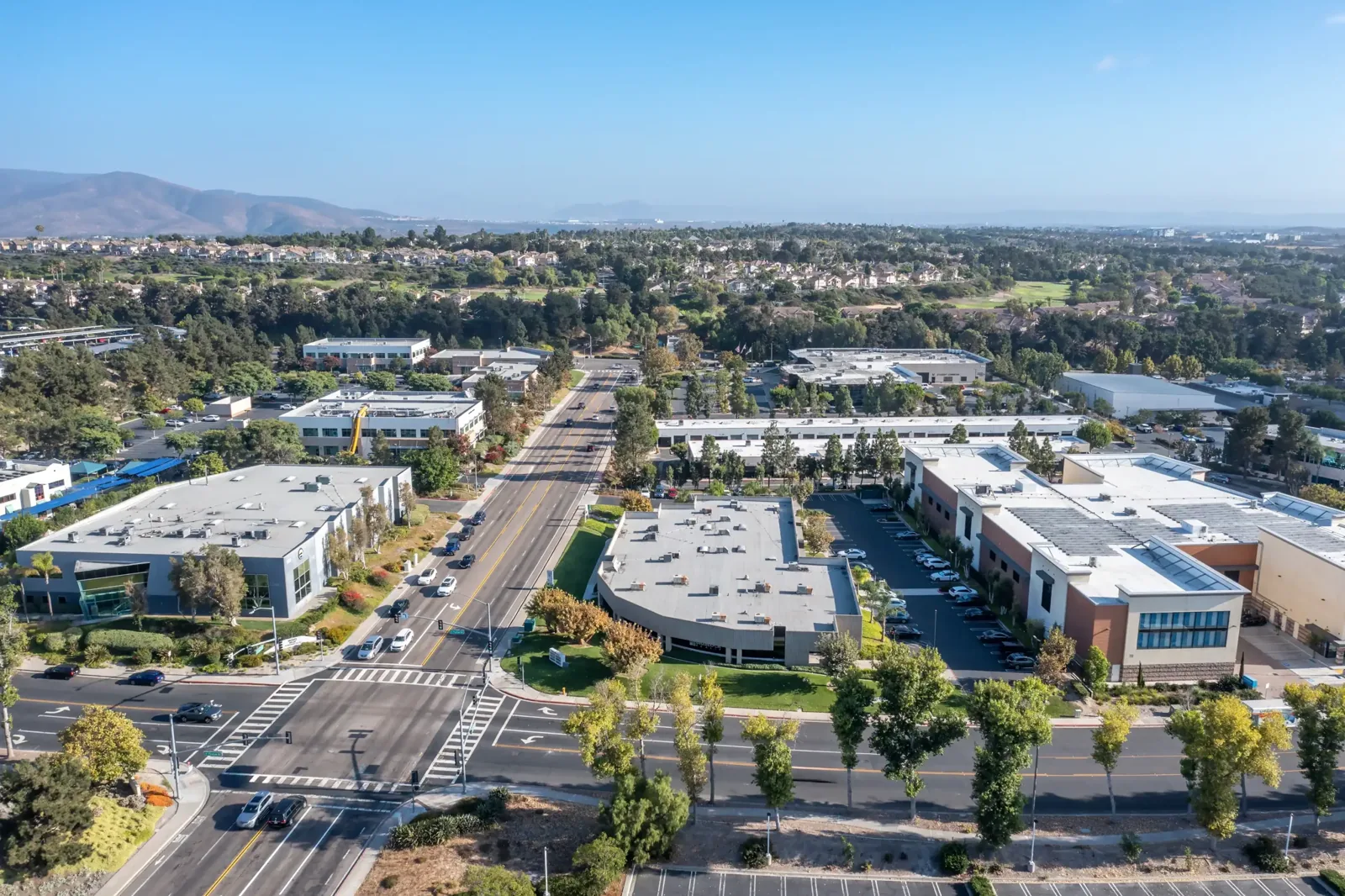
Near the Otay Ranch villages, eastern Chula Vista includes office, commercial and limited-industrial areas. For a mechanical lift, that mix makes the receiving window and unit shutdown part of roof access planning. We confirm both with the facility before staging supports or curb materials. A roof visit in Eastlake may involve different receiving logistics from a site in Otay Mesa, while the unit and support condition dictate the work.
Keep Water Away From the Equipment Opening
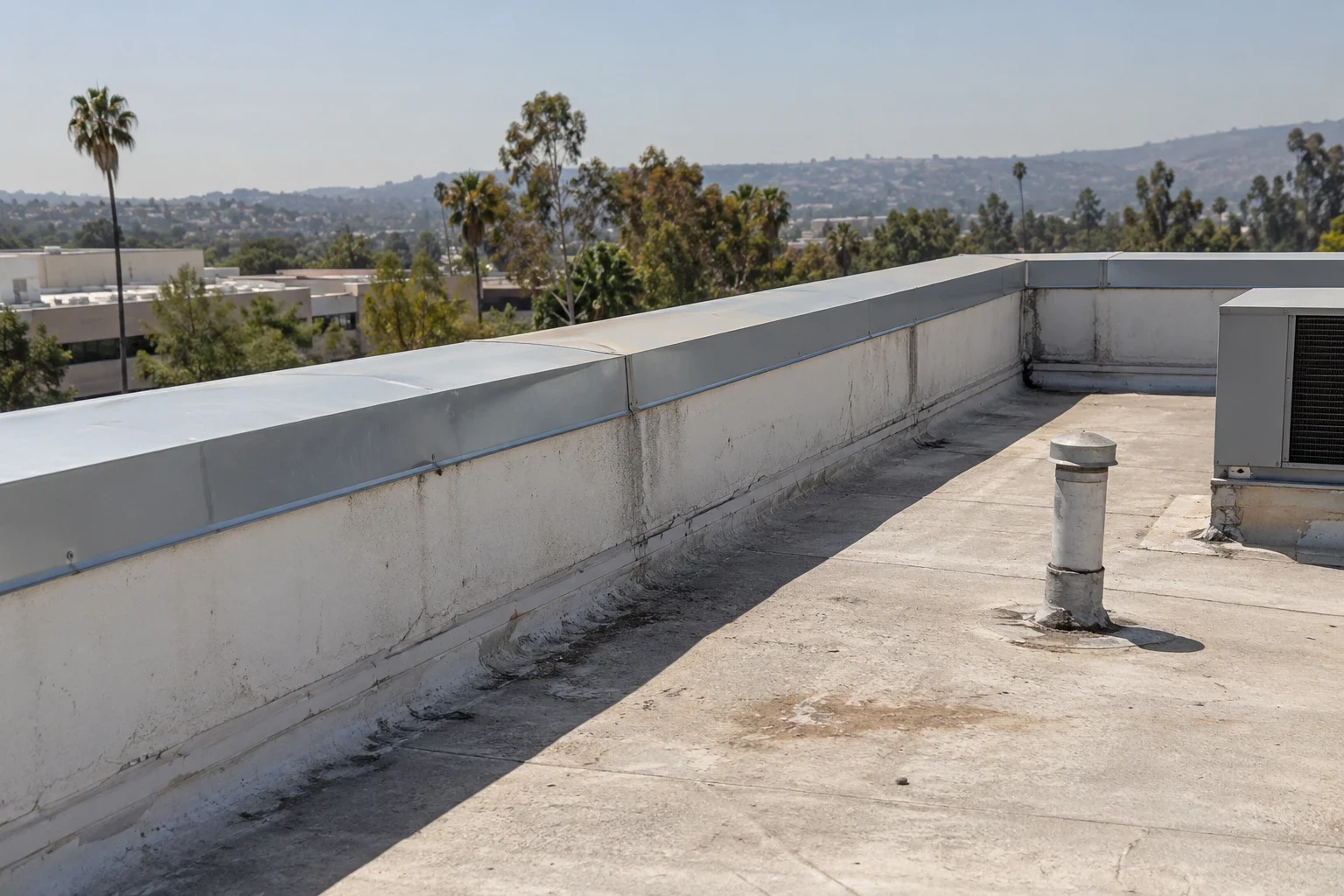
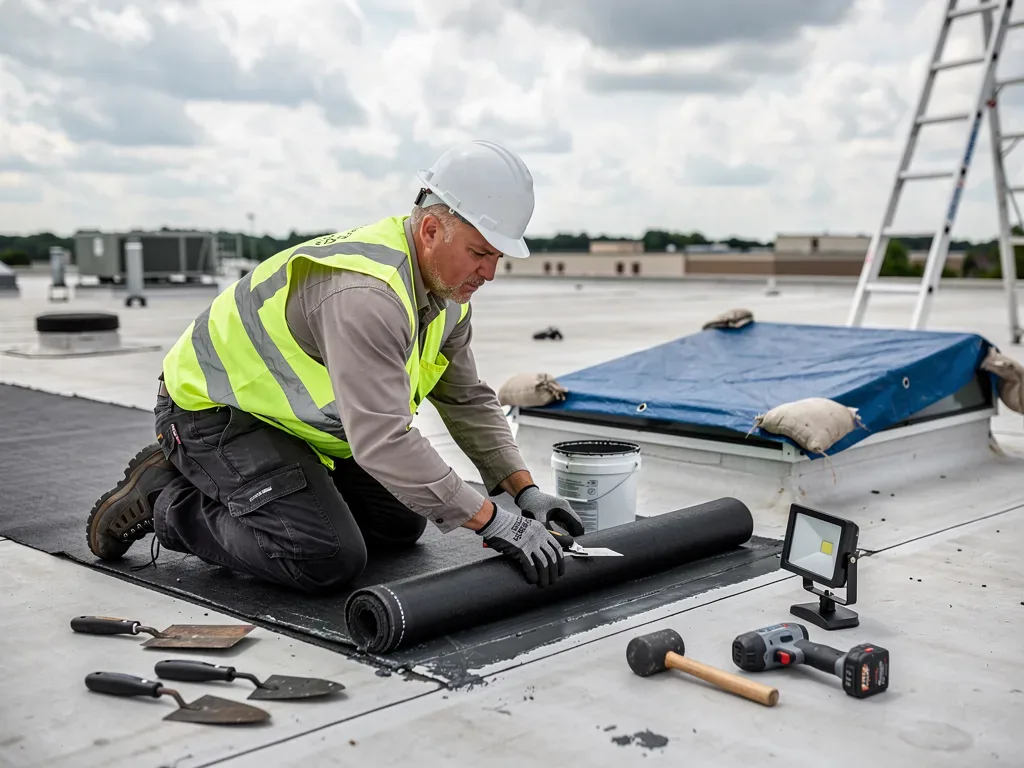
Flashing must shed water away from the curb and tie into the field membrane without reverse laps. We inspect the curb corners, membrane termination, counterflashing and any pitch pan. A pitch pan needs compatible fill and a stable pipe or conduit; topping it with sealant does not correct a loose support or open base. If the membrane is split or wet insulation extends beyond the curb, we set a repair boundary that reaches sound material.
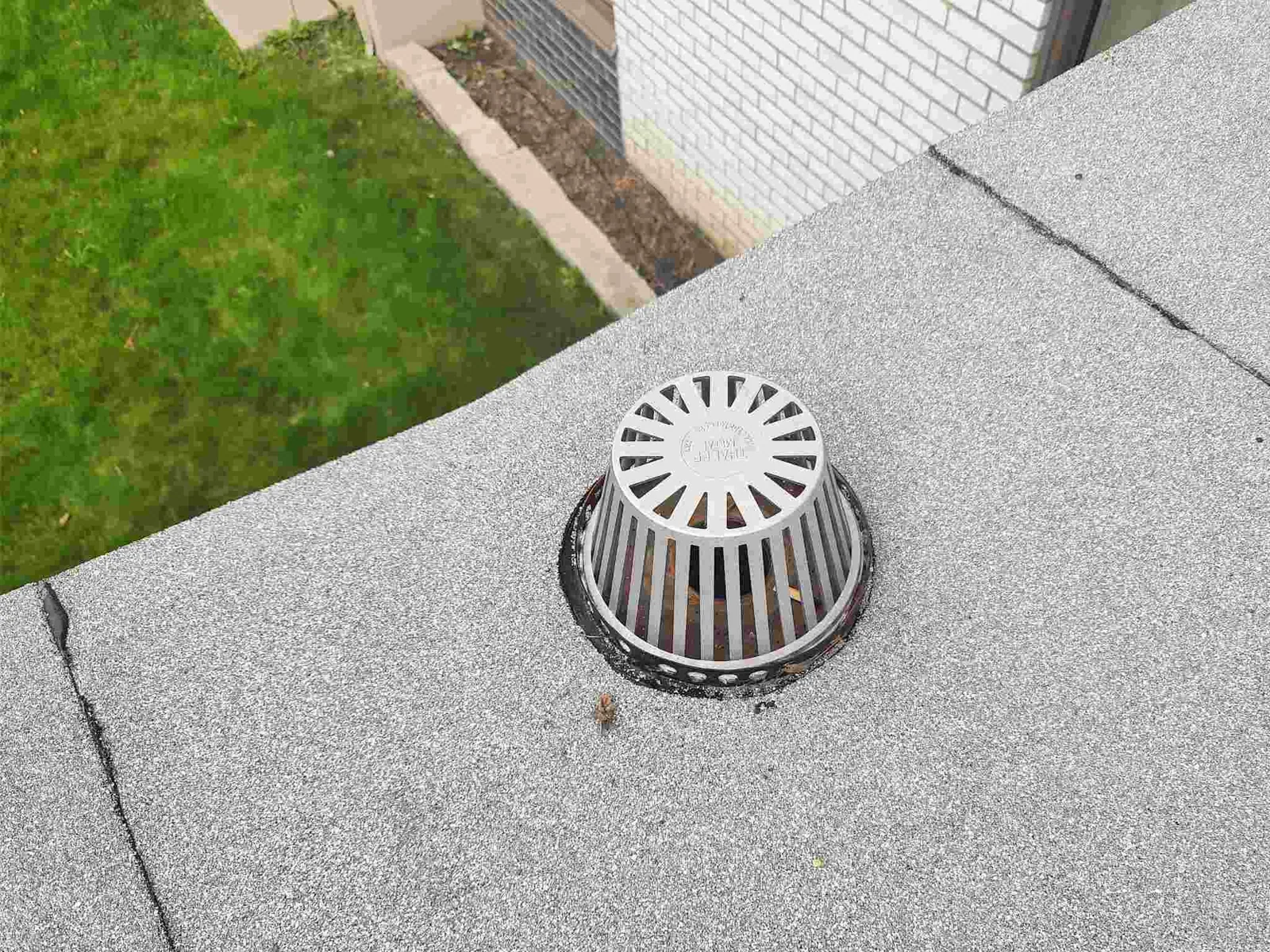
Equipment can change roof drainage. A wide support rail may interrupt flow, while a condensate line can discharge near an opening. We check whether water is held against the curb and whether a cricket or drain route is needed. At a roof with many units, repeated obstructions can create several small low points that are missed when each unit is inspected in isolation. The drainage route should remain clear around equipment and service paths.
Most regional rain falls from November through March. We check forecasts before opening curb flashing and have dry-in material ready if the roof cannot be closed during the shift. Coastal air near the bay can affect exposed metal; hotter dry winds farther inland can stress sealants. We inspect actual metal and sealant condition rather than prescribe the same detail throughout the market.
Coordinate Roofing With Equipment Service
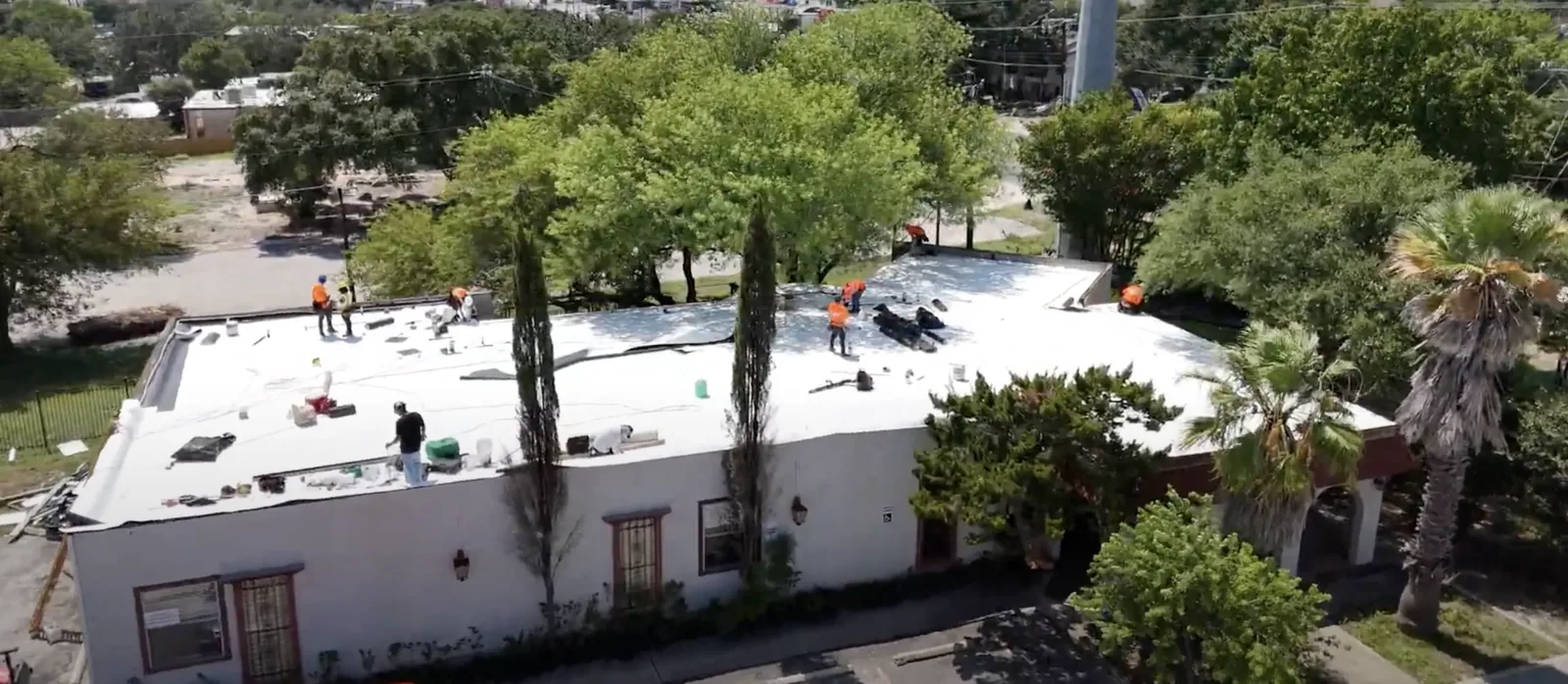
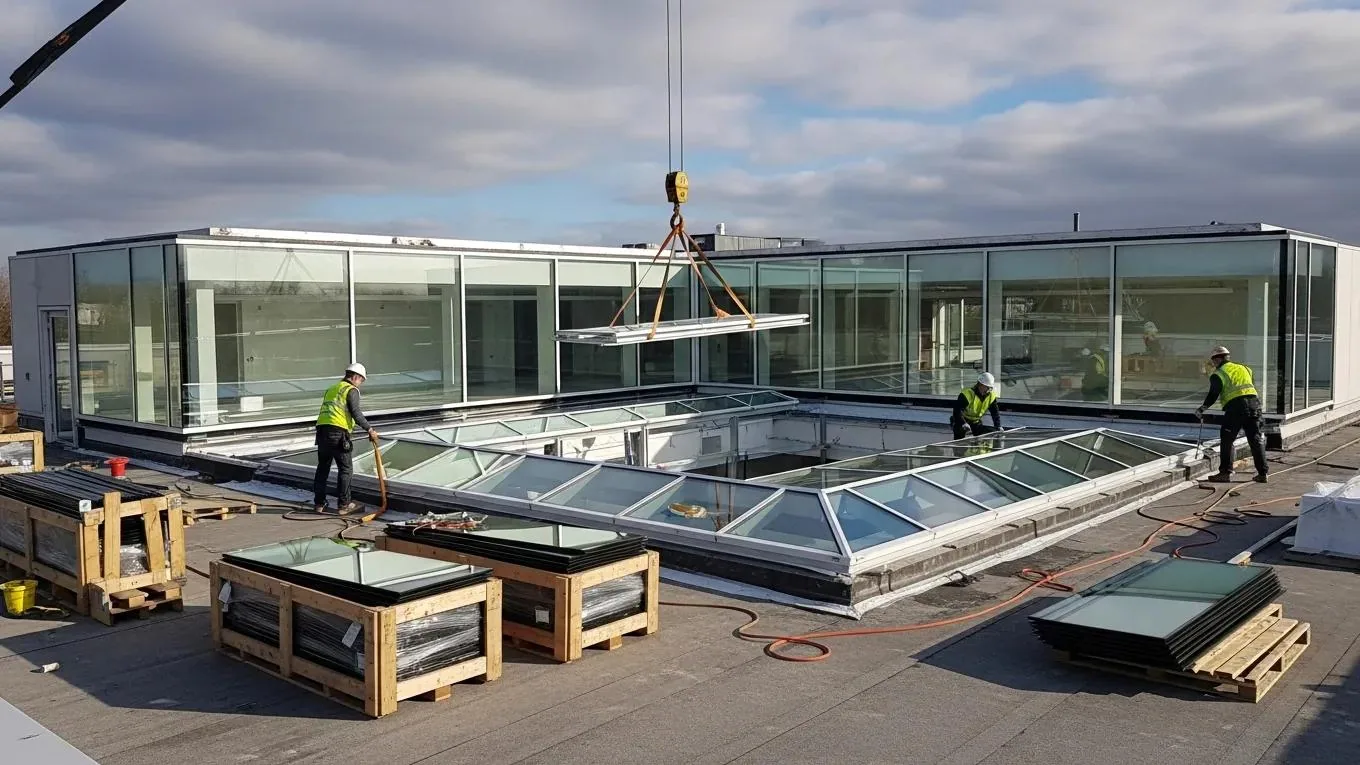
Before moving or isolating a unit, we confirm who controls the equipment and what shutdown window is acceptable. The facility contact identifies critical systems, vibration concerns, roof access and any interior space affected by the work. We protect open ductwork and keep water from entering the building during removal. If a crane or lift is required, delivery timing and staging must fit the site’s receiving area and safe roof path.
On the Otay Mesa side of the market, a roof visit must fit truck movement on and off SR 905. Eastern Chula Vista has a growing mix of office and industrial uses, so maintenance crews may share a service route with equipment deliveries. We confirm each property’s receiving window and operating hours before setting a lift. A phased occupied-building plan can coordinate interior protection and tenant notices when equipment work spans several zones.
When roofing is complete, we inspect the curb corners, fasteners, support pads and tie-in, then coordinate a final equipment check with the mechanical contact. We record any service line or support that remains outside the roofing scope. This keeps a later vibration call or condensate issue from being confused with the flashing repair.

Document the Unit and Repair Boundary
The work record identifies the building, equipment unit, roof zone, support type, materials and flashing components repaired. It includes photos of the original condition and finished tie-in, plus separate follow-up work. Cost and timing depend on equipment size, access, shutdown coordination, curb condition, support replacement and whether deck or insulation work is needed. We list those drivers before opening the roof so the facility team can understand what changes the scope.
Maintenance checks should revisit curb corners, exposed sealant, support pads and any pipe route affected by service work. A maintenance visit can compare the same equipment zone over time, and a roof condition report preserves repair locations for future budgeting. If several buildings share rooftop equipment needs, multi-site planning can keep the equipment and roof records separate by property.
Share the building, unit or support location, affected roof zone and mechanical access contact. We will inspect the attachment and flashing, coordinate any shutdown requirement and explain the next roofing decision.