Start with the water path
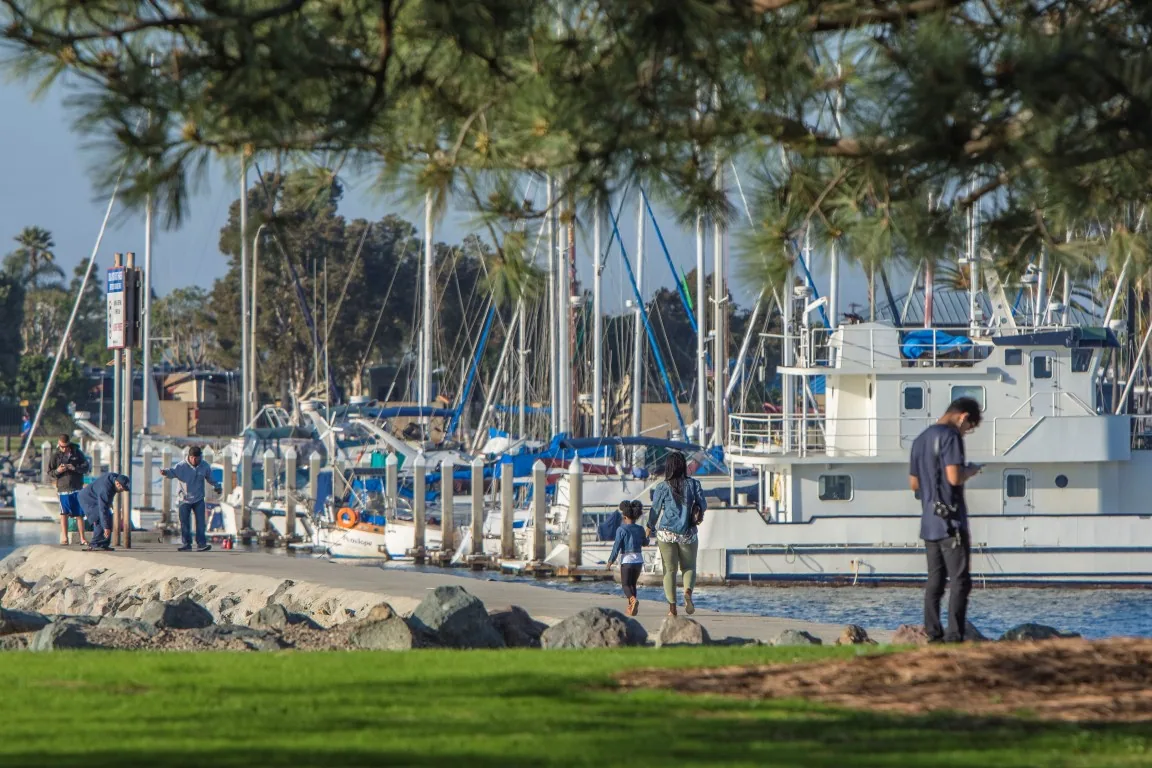
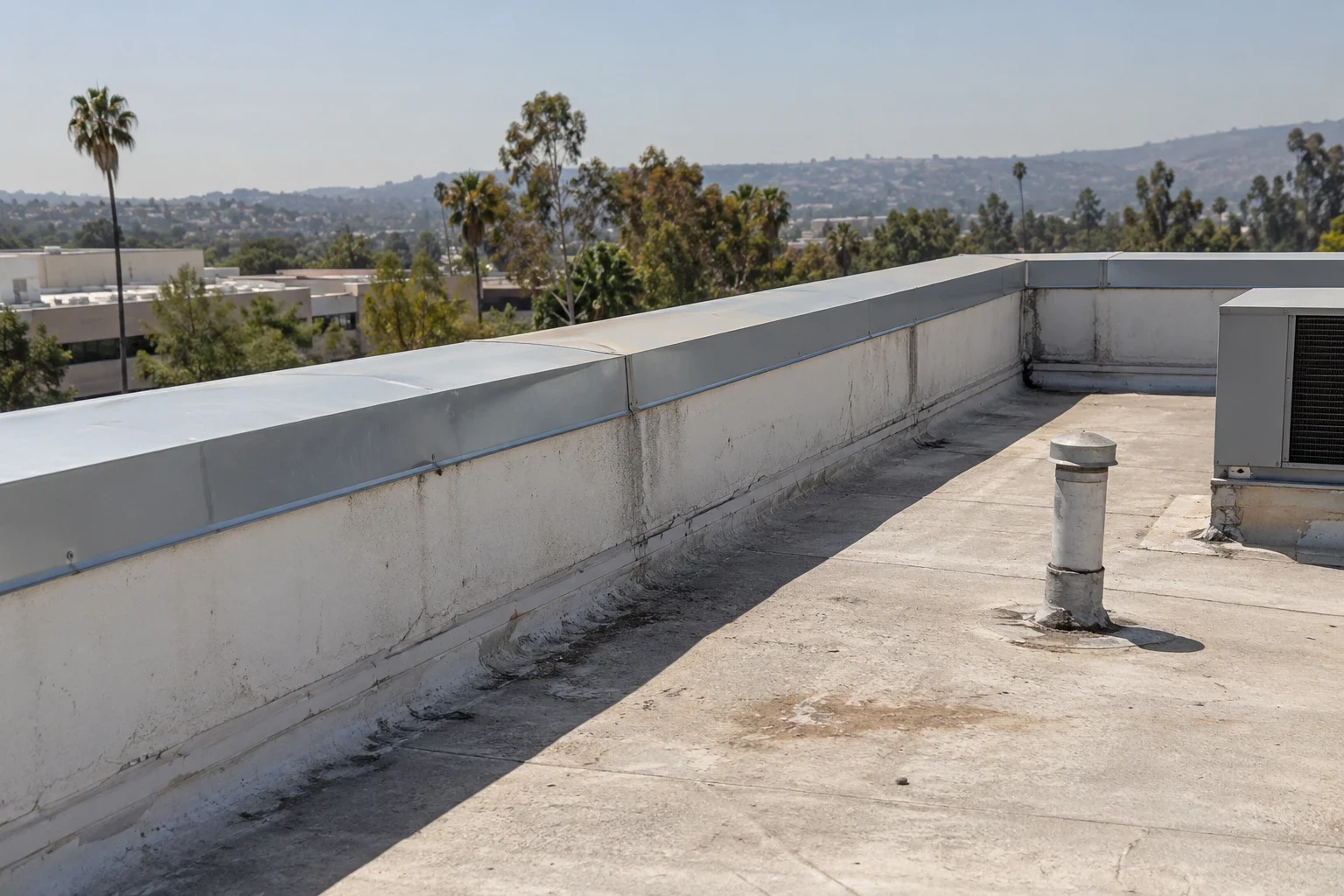
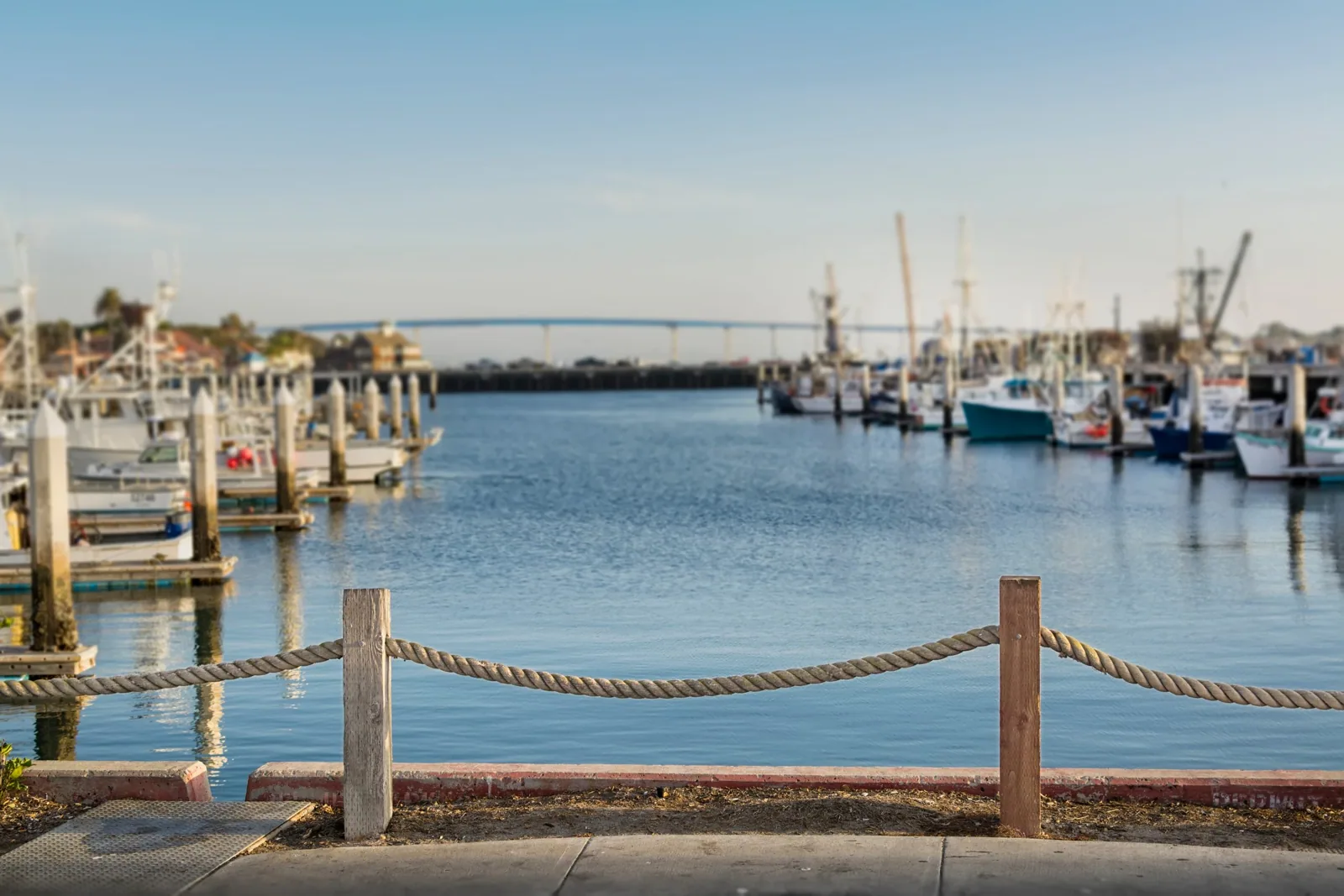
A ceiling stain is evidence of a leak, not a map of the entry point. Water can move under a membrane, follow a deck flute or travel along a seam before reaching a light, wall or storage area. We inspect the reported roof zone, then follow drainage routes and transitions uphill. At each curb, pipe penetration, edge and wall termination, we check whether the flashing remains bonded and whether the membrane has a split, puncture or open lap. Drain bowls and scuppers get attention because debris or a distorted strainer can slow discharge and leave water against seams. We record what is directly visible, what is only suspected and which test would answer the remaining question. If moisture may extend below the surface, a controlled opening can establish the affected layers before the repair boundary is set. That distinction matters in a waterfront district where commercial recreation and maritime work can bring different contents and access needs into neighboring spaces. Our infrared moisture survey can help locate suspect areas, but a reading is interpreted with the roof assembly and surface conditions in view.
Drainage and exposed metal
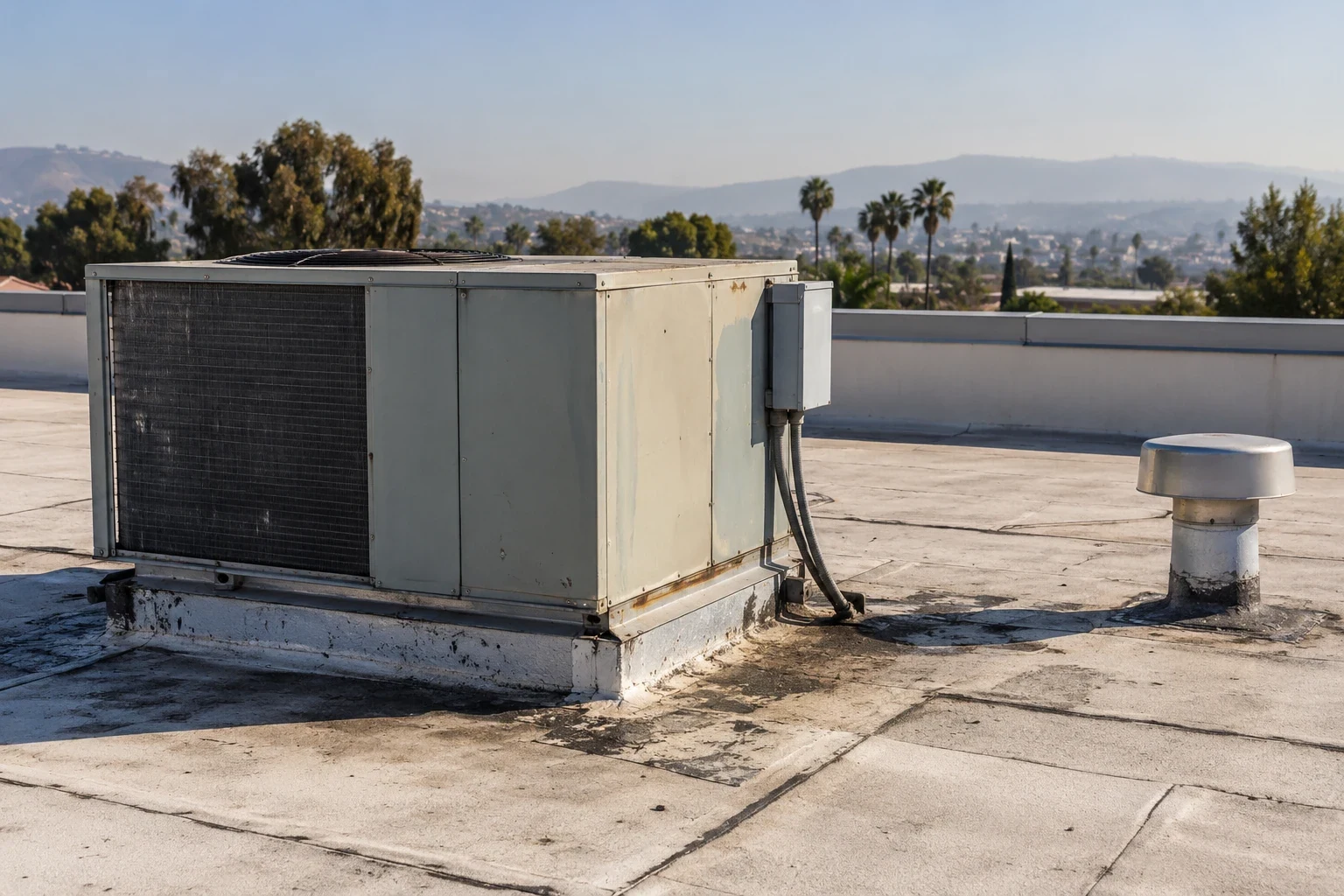
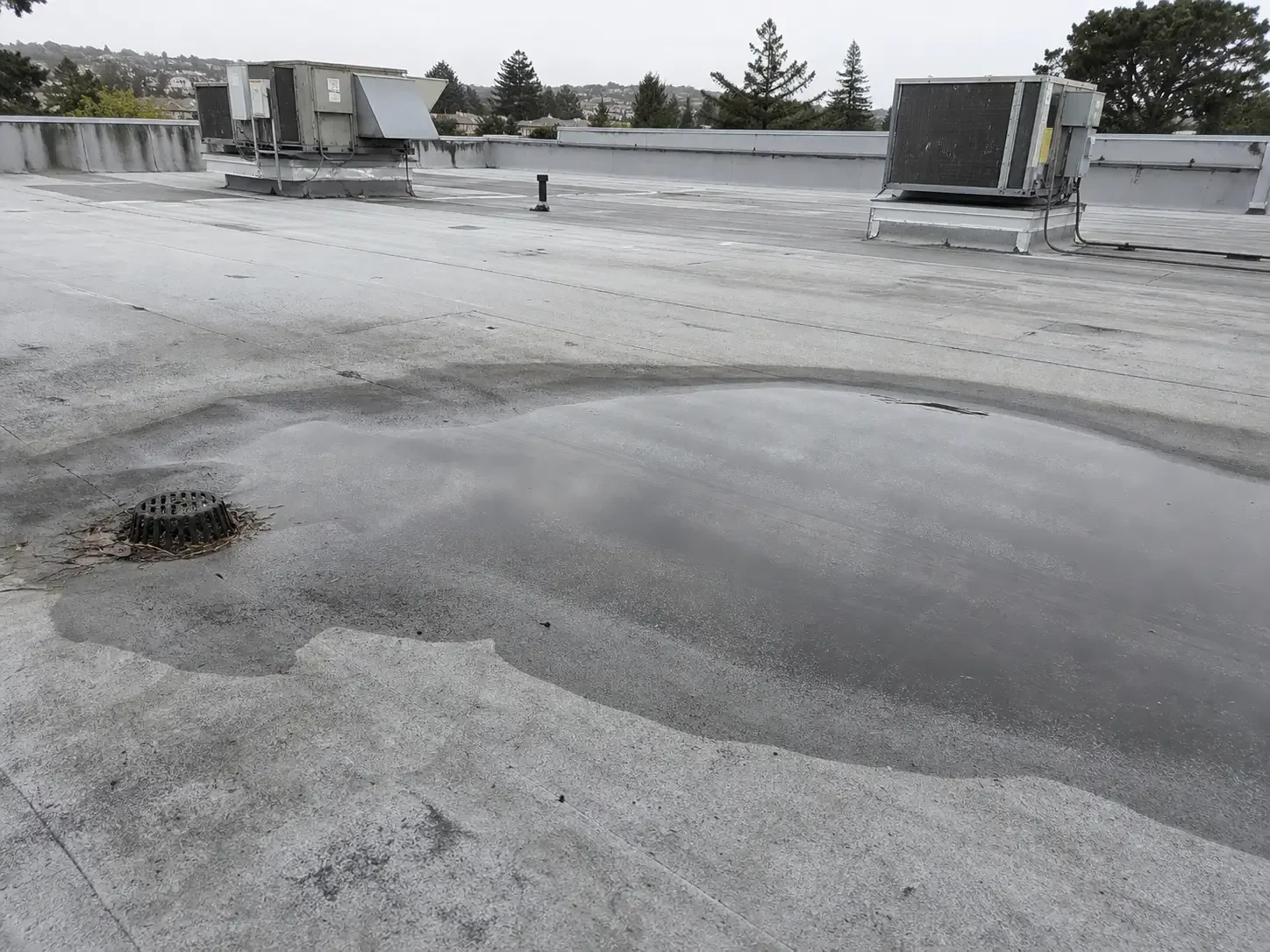
Standing water adds time to a leak investigation because the entry may sit beyond the visible pond. We check the drain bowl, surrounding membrane, overflow route and low points, then record whether water clears as intended after the weather passes. A blocked drain needs a different response from a settled deck or a failed seam. A coating cannot correct a recurring drainage problem; we inspect slope, insulation and outlets before recommending work. The scope should state whether cleaning, localized membrane work, tapered insulation or a broader assembly decision is involved. Coastal air also makes exposed metal worth a close look. At coping, edge metal, equipment supports and fasteners, we check for corrosion, loose joints and breaks in the protective finish. The repair must reconnect to sound material, not just conceal the discolored surface. Where a metal edge or gutter is part of the leak path, our edge-metal and gutter work can be scoped with the membrane repair. For a persistent leak around a drain or overflow, compare the condition with our ponding-water repair approach and confirm that the discharge route is clear before a membrane repair is closed.
Keep the work area usable
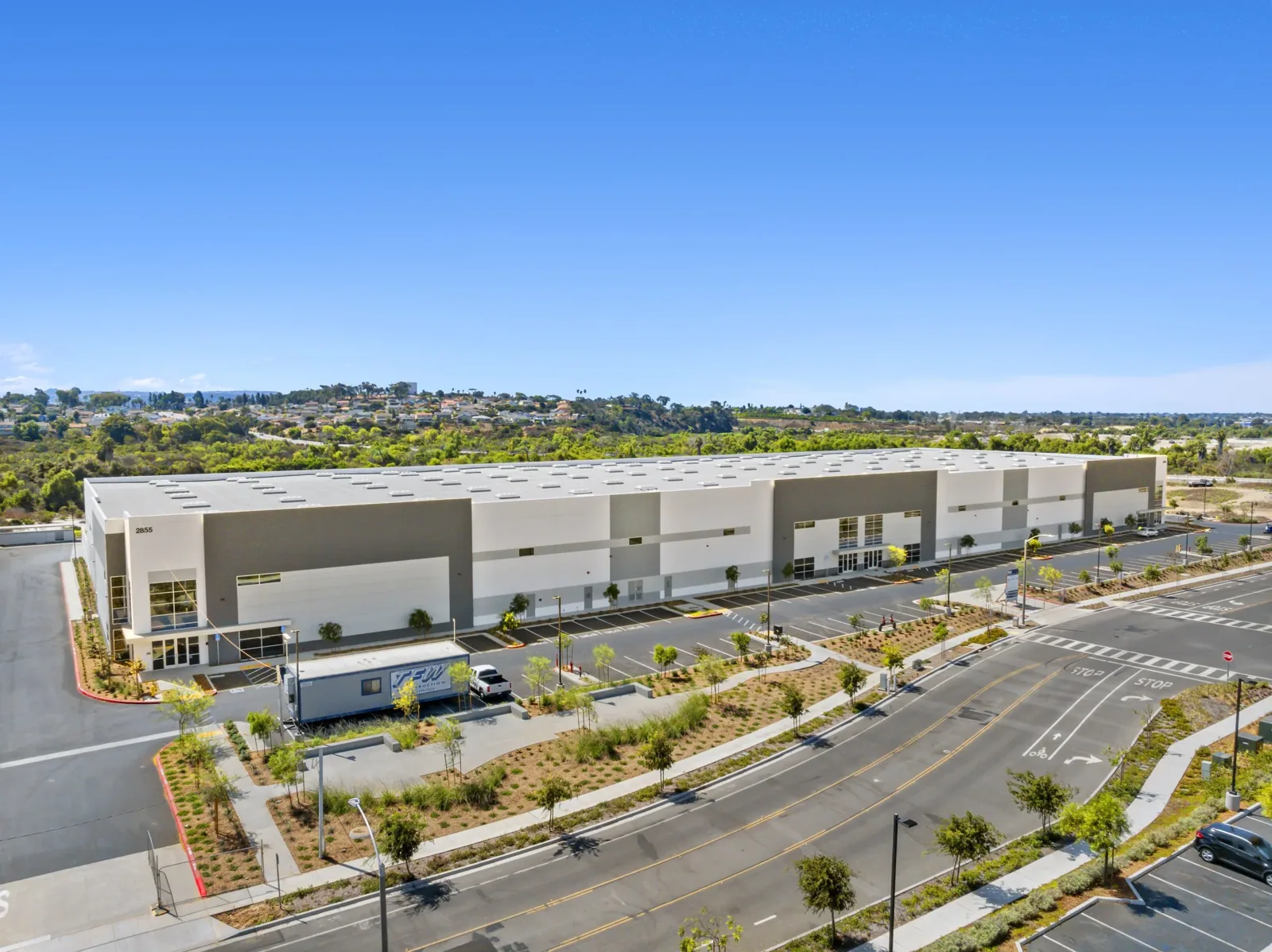
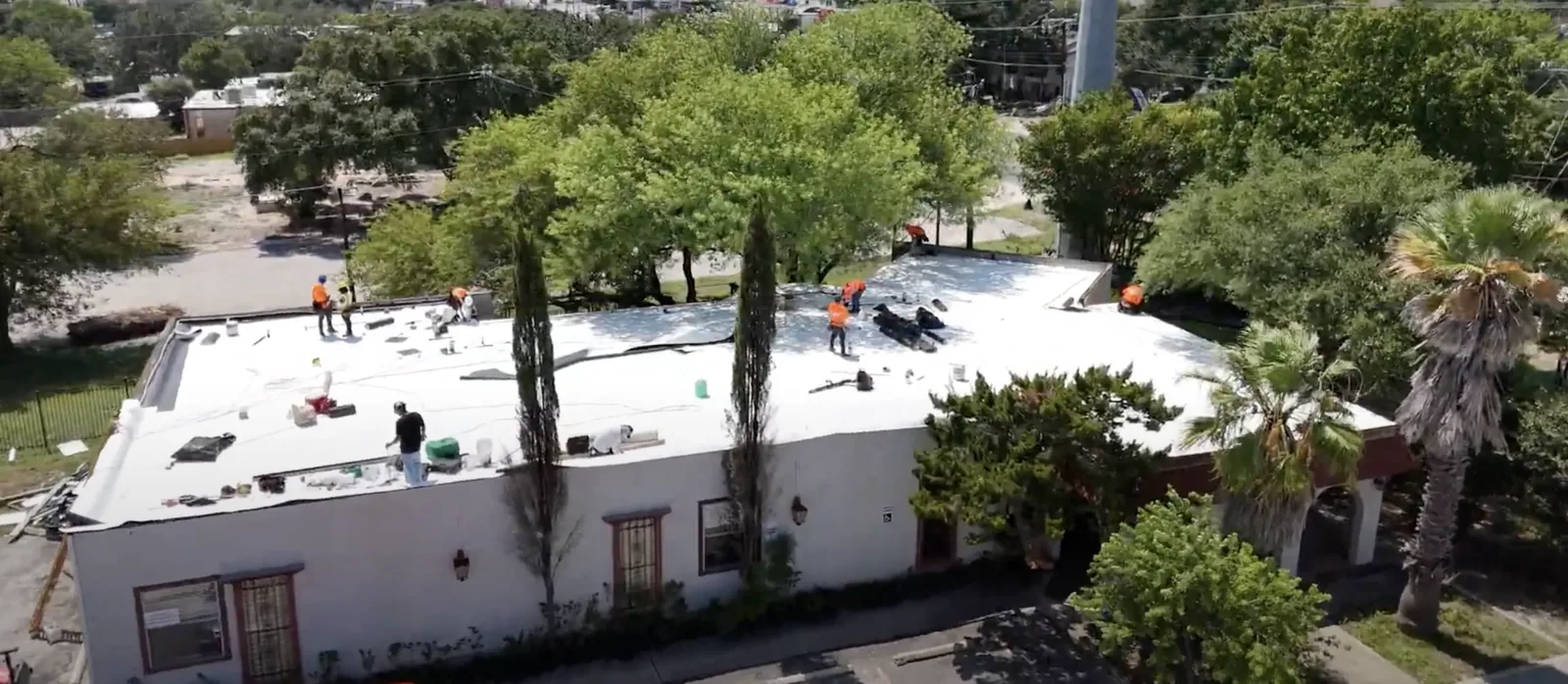
Before mobilization, we confirm the building’s receiving area, pedestrian paths, equipment and service routes that must stay clear. Before mobilization, we confirm roof access, where materials may be staged, which doors or service routes need to stay clear and who can authorize a temporary shutdown. For repairs over occupied space, the crew can work by roof zone, protect exposed layers at the end of a shift and coordinate noisy or disruptive steps with the building contact. If replacement is needed, the sequence can account for dry-in, tear-off limits and the point at which the next section is weather-protected. For occupied-building reroofing, we set the work boundary around tenant and public access, then identify daily route changes and areas that remain open.
Choose a repair that fits the assembly
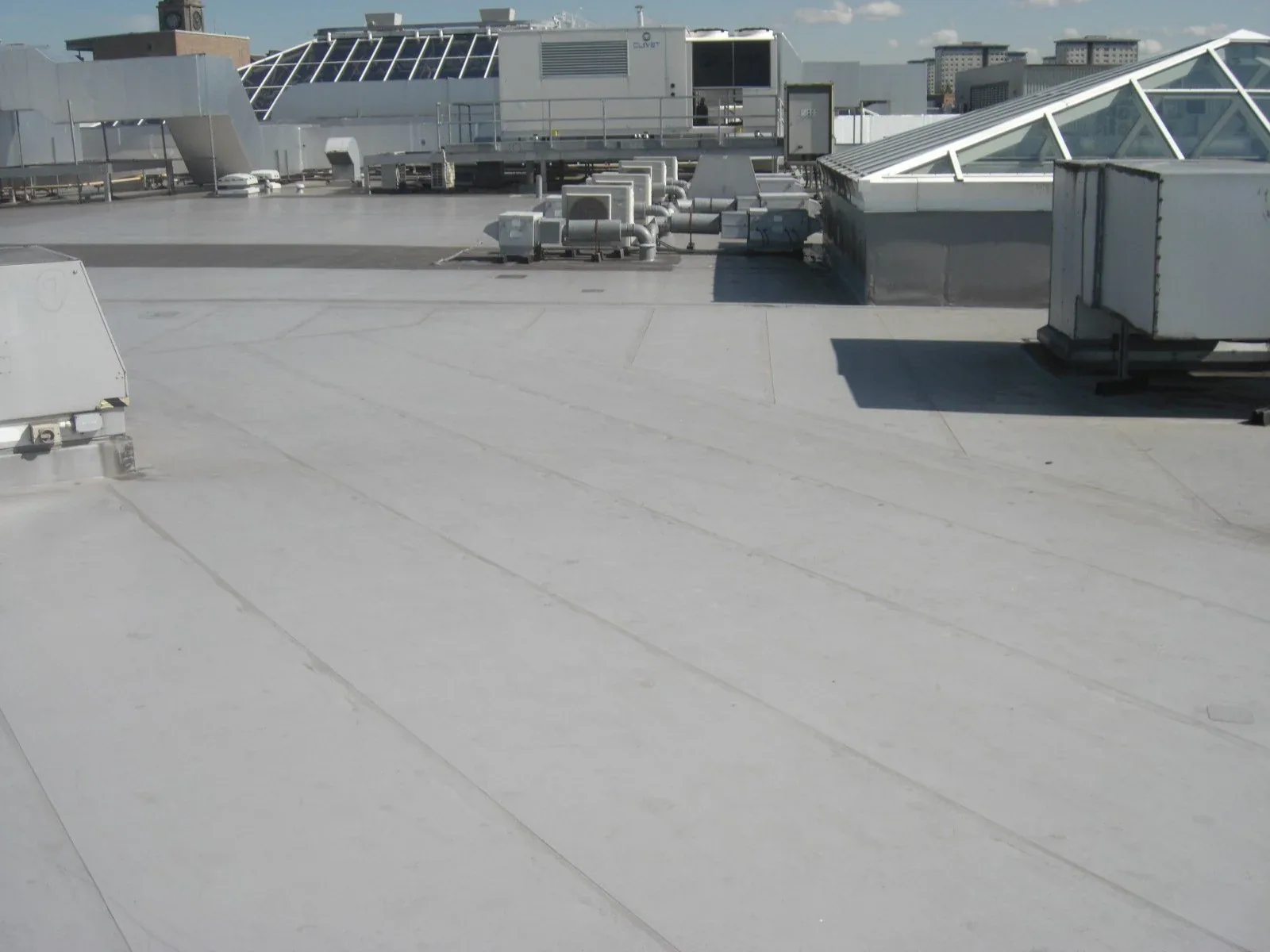
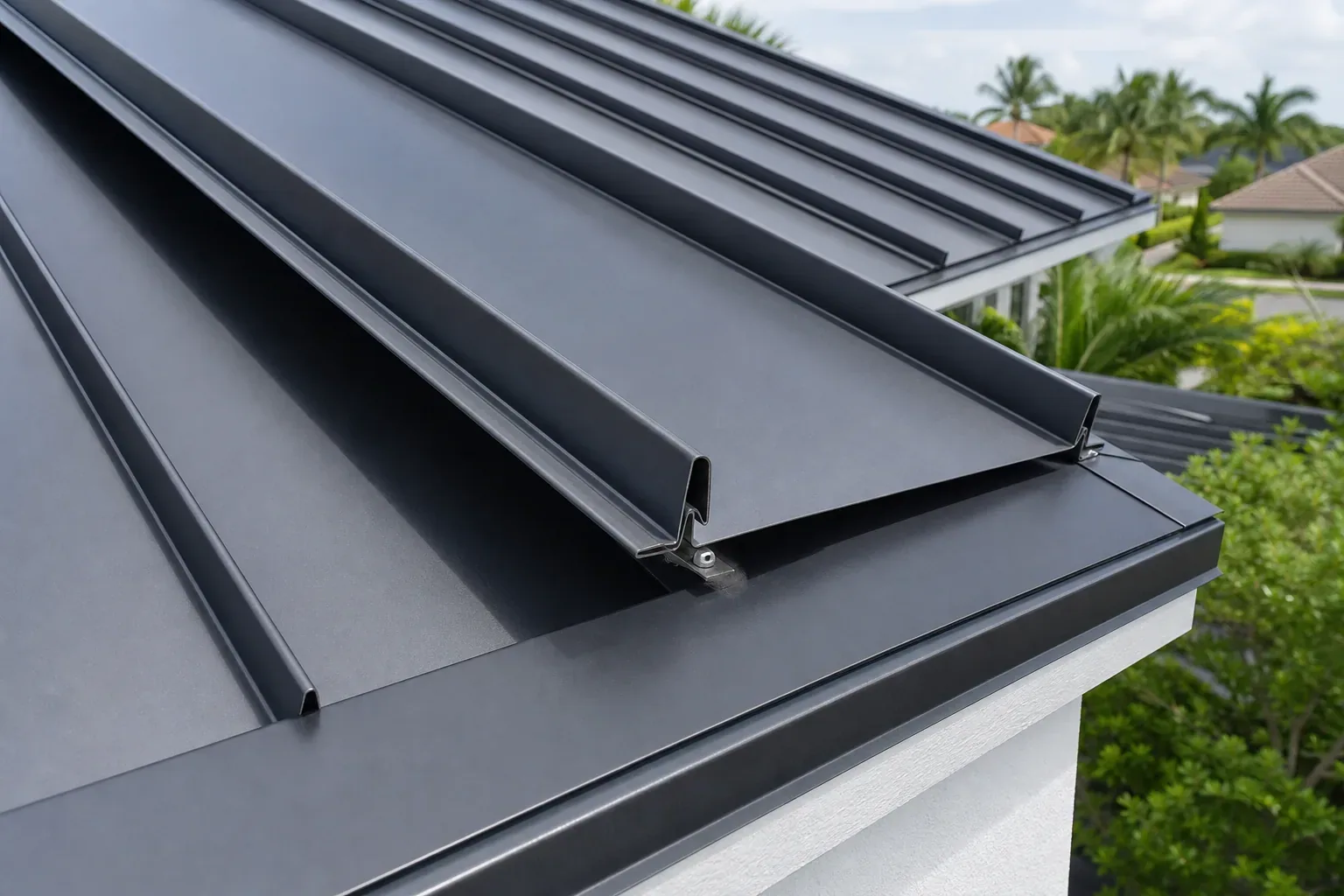
A repair is only durable when the new material can bond or fasten to what remains. We identify the existing membrane or metal profile, check its condition around the reported failure, and look for incompatible coatings or prior patches. On a single-ply roof, a compatible membrane patch with sound lap edges may be appropriate. A deteriorated section, wet insulation or repeated separation can change the decision toward a larger replacement area. Where a coating is considered, the surface must be suitable, dry enough for the product and free of conditions that prevent adhesion. We explain what preparation and reinforcement the application requires instead of using coating to hide an unresolved leak. The property owner receives options tied to the evidence: immediate stabilization, a defined repair, or a capital-planning scope when the roof has broader failure. If the district property's roof is metal, our standing-seam metal service can address panel seams and related flashings; membrane owners can review TPO repair and replacement considerations. A roof walk determines which path fits the actual assembly.
Scope, timing and records
Timing depends on the affected area, safe access, material compatibility, moisture findings and the need to keep a maritime or public-facing operation clear. Cost changes with removal depth, damaged insulation or deck, edge and curb details, drainage corrections, staging limits and the amount of sound roof that must be tied into. We separate confirmed work from allowances for concealed conditions so a manager can see what could change after opening the assembly. Permit requirements follow the property’s jurisdiction and proposed scope. We identify any review needed for the roofing work before scheduling material delivery. The inspection record includes roof-zone photos, observed conditions, repair boundaries and a next-action list. When insurance documentation is needed, we can organize photographs and findings for the owner's claim file without promising an insurer's decision. To schedule a walk, share the affected building, roof zone and access contact. We will establish what is visible, identify any test needed to confirm hidden moisture, and lay out the next decision in a useful order.