Read the Edge as Part of the Roof
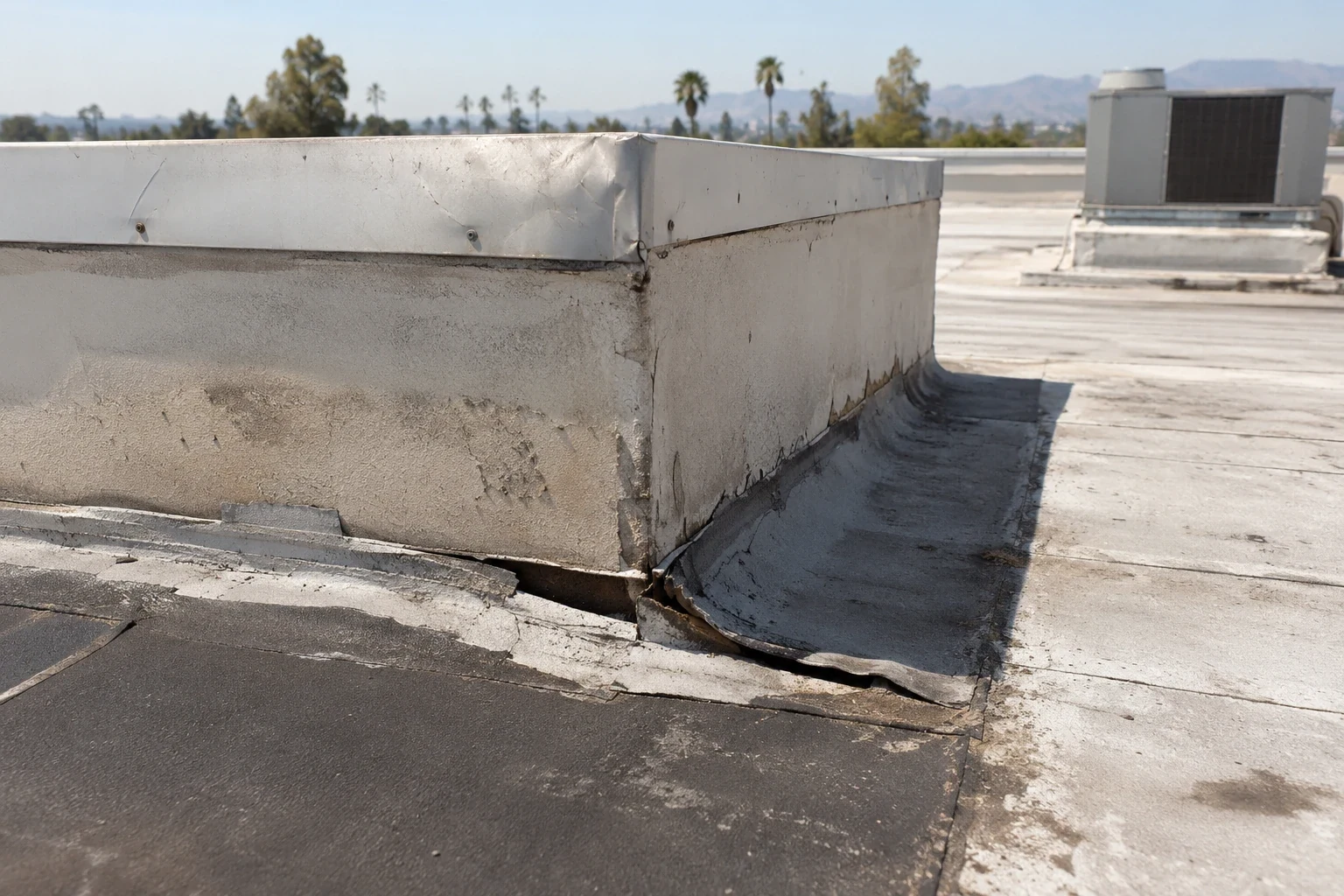
At a parapet, coping should cover the top of the wall and remain attached as the roof and wall move. We check joints, corners, splice plates, cleats and fasteners for looseness or separation. The membrane termination beneath the metal needs a secure, compatible connection. A cap can look straight from the ground and still have a loose cleat or open splice above it, so we inspect the full run and photograph the affected sections.
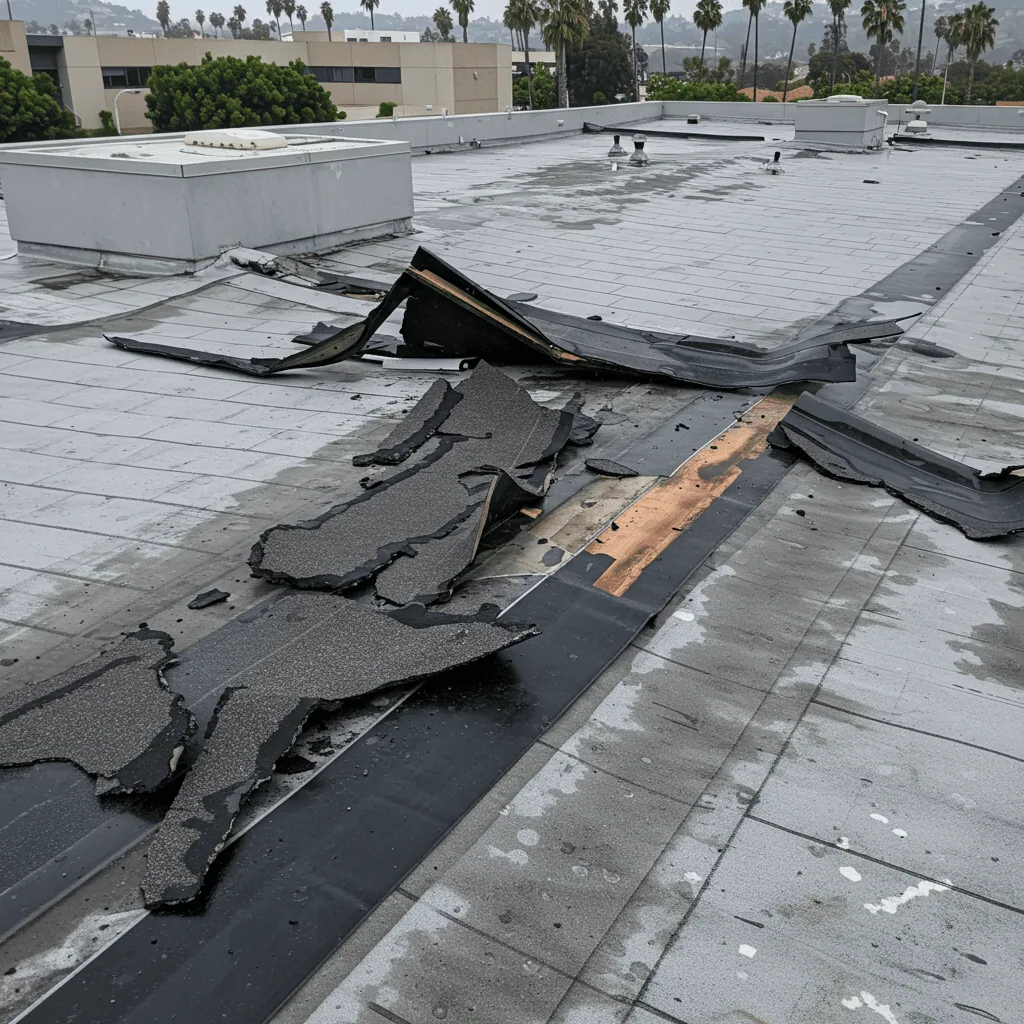
At a low-slope edge, the membrane may turn over the deck and terminate under fascia or edge metal. We check how water sheds from the drip edge, whether the metal is fastened to sound material and whether wind has pulled the edge away. If the metal has shifted, we inspect nearby membrane and substrate before resetting it. A repair that attaches new metal to a weak deck edge can fail again when the next gust loads the perimeter.
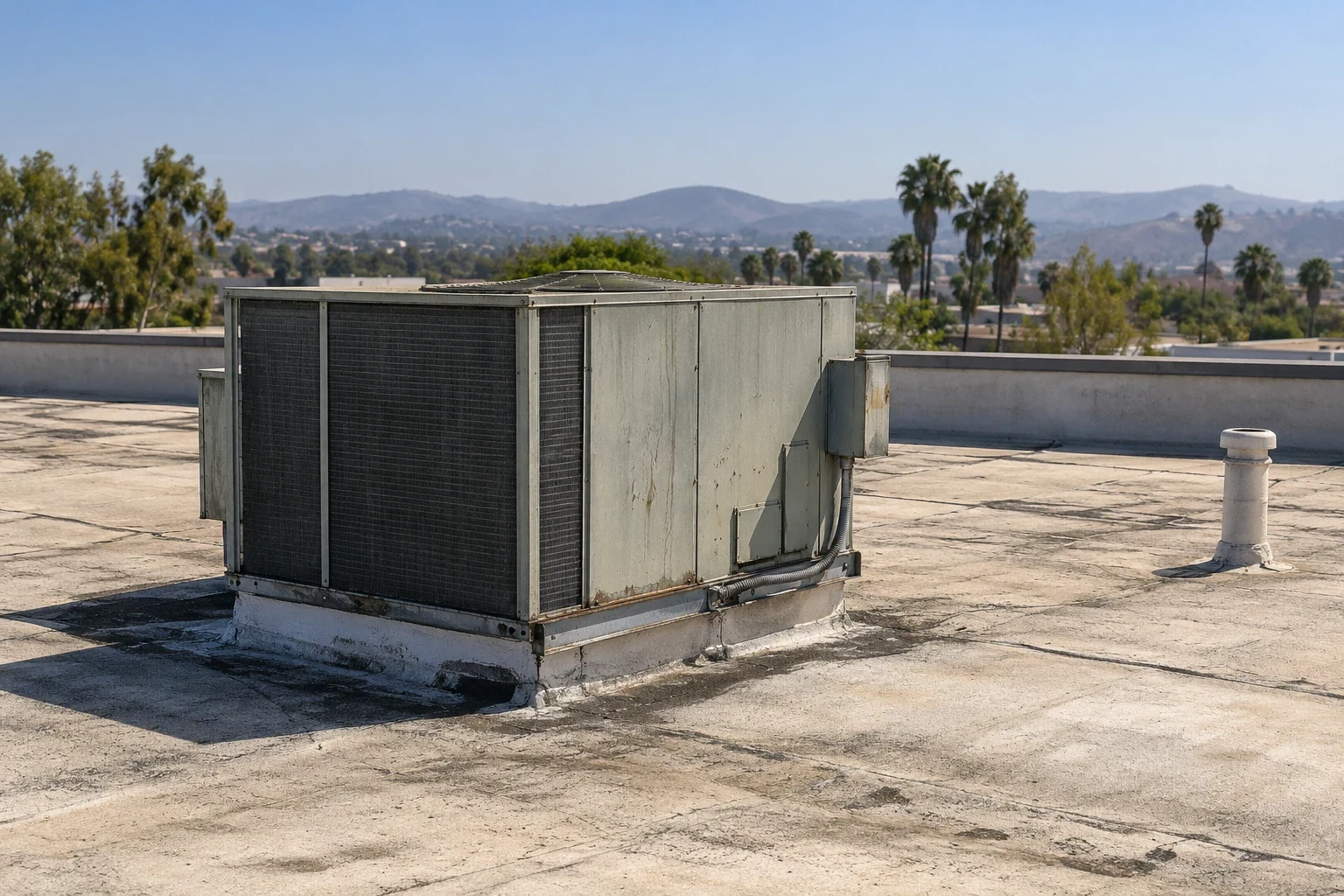
At coastal and inland roofs alike, we look for corrosion at cuts, seams and fasteners. Farther inland, heat and dry winds can affect exposed sealants. We check whether sealant is cracked, detached or simply weathered, then decide whether the metal joint needs rebuilding or only maintenance.
Follow Water Through Gutters and Downspouts
A gutter that holds water may be blocked, undersized, sagging or pitched away from its outlet. We inspect hangers, seams, end caps and downspout connections, then trace the discharge route to its safe destination. A disconnected downspout can wet a wall or foundation area; a clogged outlet can force water over the gutter edge and behind fascia. Clearing debris may restore flow, but bent or corroded sections may need replacement.
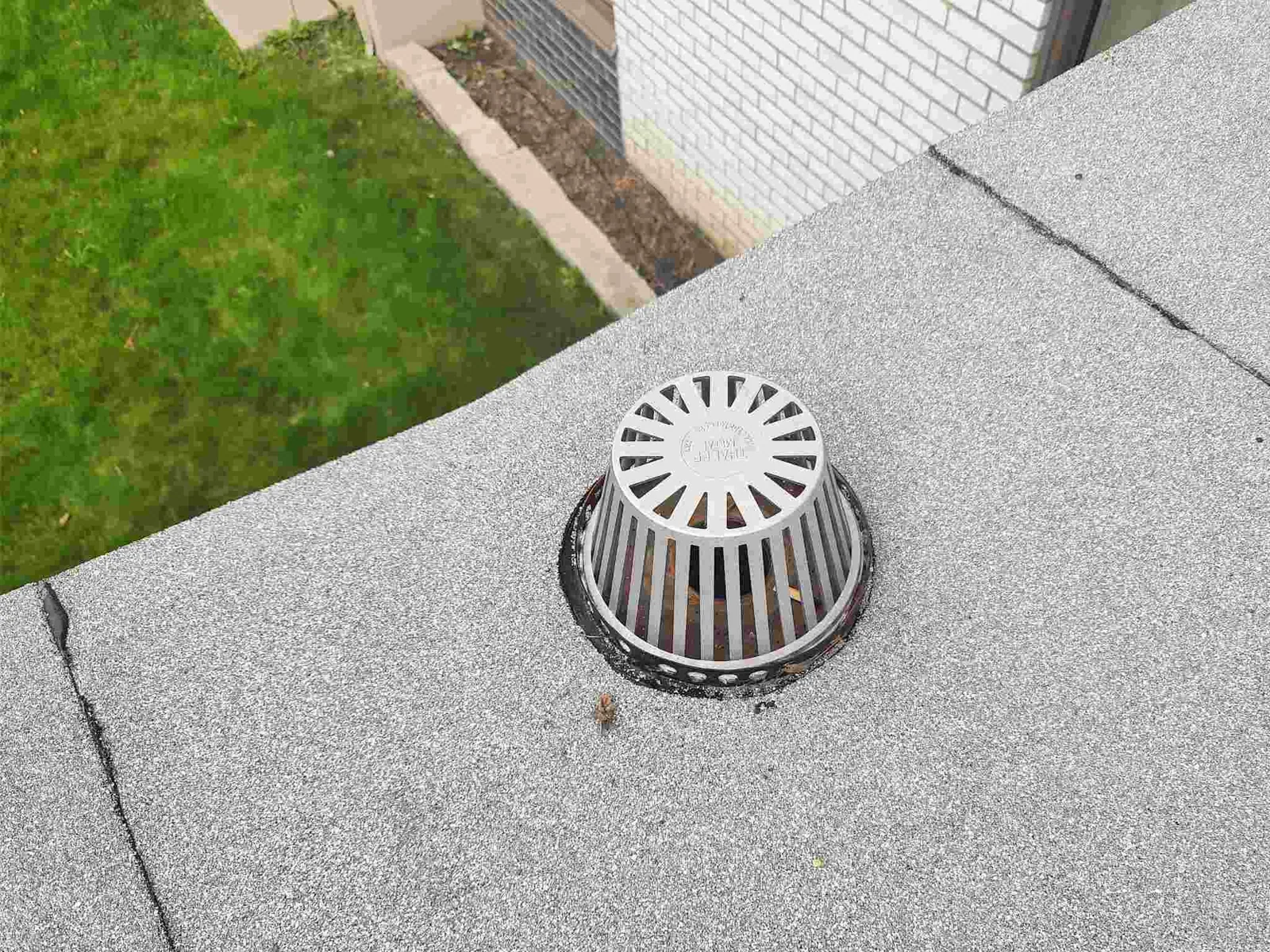
Roof drainage and edge metal meet at the fascia and scupper. We check that membrane runoff reaches the intended opening and that a gutter or conductor does not obstruct an overflow. At a parapet scupper, the opening must remain clear, the liner must connect with the roof membrane and the exterior discharge should not return water to the wall. Drain and scupper work may be needed when the outlet or overflow path is part of the failure.
Most regional rain falls between November and March. Before the wetter period, owners may choose to clear gutters and check downspouts; afterward, new stains or overflow marks can help identify a failure point. We compare water marks, joint condition and roof slope to identify whether runoff is coming from the gutter, outlet or membrane before recommending repairs.
Repair the Joint, Corner or Termination
Metal joints need enough movement capacity to remain connected as temperatures change. A rigid sealant bead across a moving seam can split, while an undersized splice may open at the corner. We examine how the pieces overlap and attach, then select a compatible repair method. Loose cleats or fasteners may be reset when the surrounding material is sound. Corroded metal, torn membrane or deteriorated wood nailer may require replacement before a new cap or edge is installed.
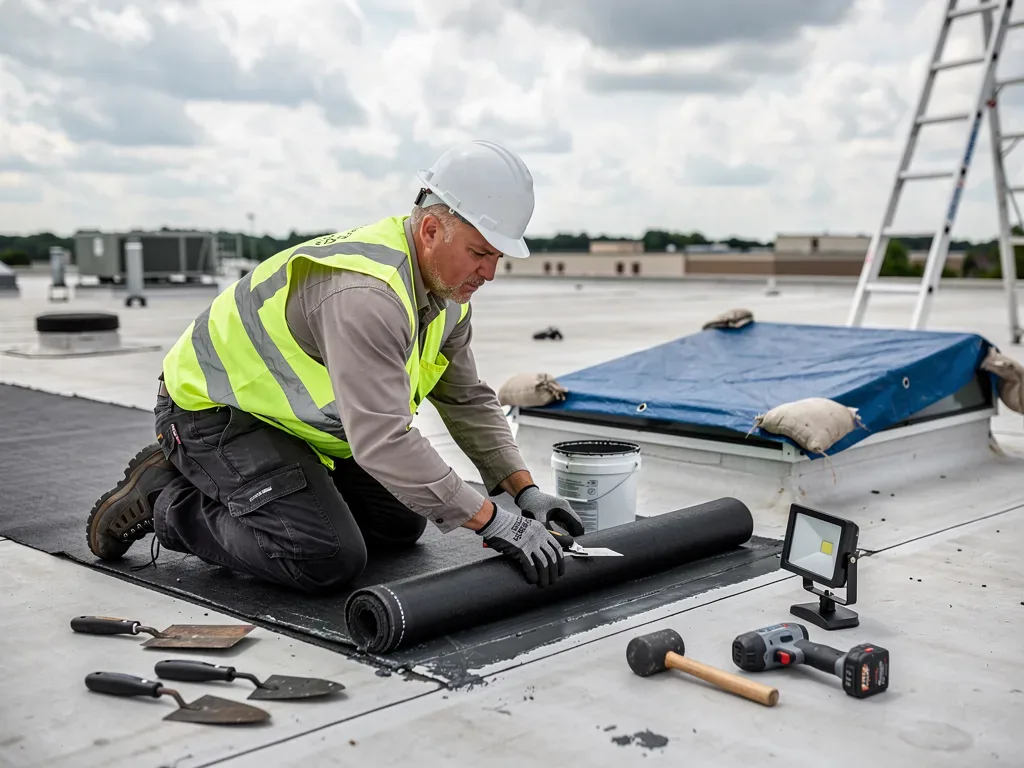
At a roof-to-wall transition, coping and counterflashing protect different surfaces. We identify which one has failed and whether water reached the membrane below. If the flashing is loose, the repair should resecure the termination, restore the lap and seal the connection using system-compatible materials. A flashing failure repair can address the wall transition, while commercial roof repair can correct related membrane defects.
Gutter replacement needs a drainage and attachment check, not just a matching profile. We confirm the slope, outlet size, support spacing and connection to downspouts. If runoff overwhelms the existing route, a larger gutter alone may not solve the issue; the roof outlets and overflow arrangement also matter. We record the route and discharge condition so the owner understands how water should leave the building.

Work Around the Building’s Service Route
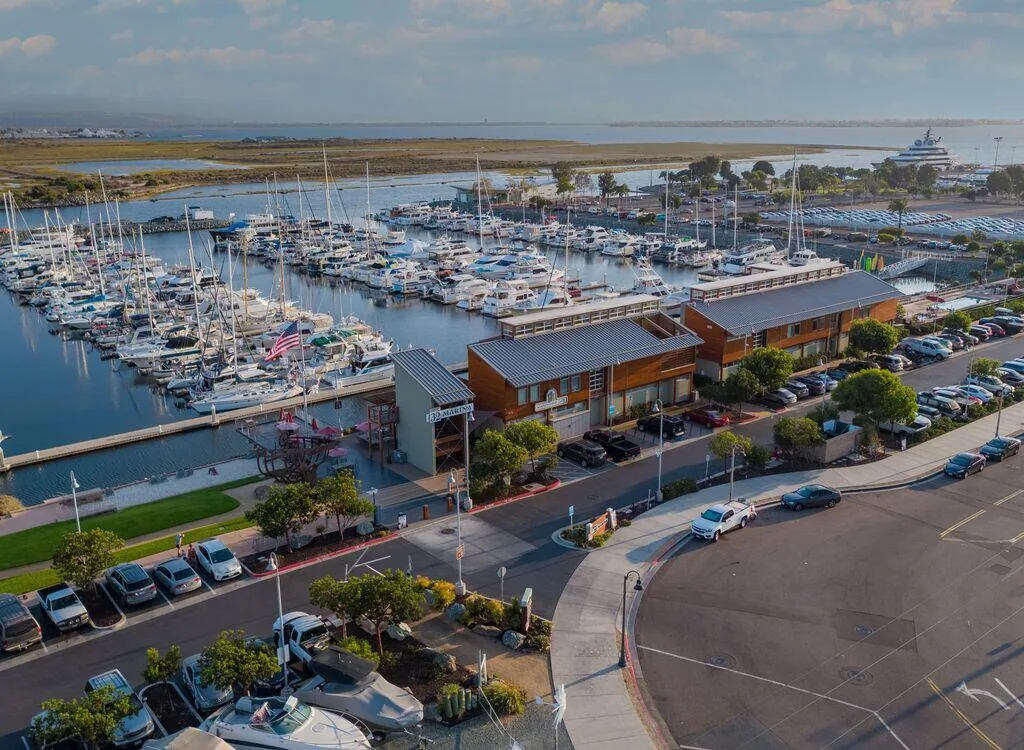
Access for long metal sections, ladders and lifts affects the work sequence. In downtown Chula Vista, Third Avenue supports local retail, dining and small businesses, and a shared rear lane may serve more than one tenant. Along National City’s waterfront, maritime operations and commercial access can shape delivery routes. We coordinate the actual staging point with the facilities contact, preserve public and emergency paths and protect the wall and roof below the work area.
We phase edge repairs by elevation and roof zone. Removing too much coping at once can leave the wall exposed, so each section is secured before moving to the next. For gutters, downspouts and fascia, we keep the discharge route functional during repair. A Third Avenue roof visit may use a tighter delivery window than a property in the National City Marina District, but both require site-specific access planning.
After installation, we check fasteners, seams, corners, membrane termination and water discharge. We clear debris from the gutter. Photos show the repaired run and any area deferred for separate work. If rain interrupts the job, the crew secures the open edge and records what remains before leaving the roof.
Set a Durable Repair Boundary
Cost and duration depend on metal length, profile, substrate condition, access, height, corrosion and whether membrane or wall flashing must be rebuilt. A short coping splice can require careful disassembly, while a long gutter replacement may need lifts and protection below. The work order identifies the affected run, corner, outlet or termination and records any concealed nailer or deck condition that could change the scope.
Edge details should remain part of future roof maintenance. We record joints, exposed fasteners, downspout discharge and any sealant that needs follow-up. Preventive maintenance can revisit the same perimeter after seasonal rain, and a condition report can preserve photos and locations for budget review. If the roof edge is part of a replacement project, replacement planning should coordinate new membrane height with coping, fascia and gutter dimensions.
Share the building, affected edge, roof zone and access contact to arrange a walk. We will trace the drainage path, check the metal connection and explain what needs repair before water reaches the wall.