Follow the Water Backward
Timing helps narrow the search. Wind-driven rain may expose an edge or wall transition; prolonged rain can follow a drain path. A stain that grows after equipment cycles may involve condensate or a penetration. We ask where water showed, when it began and whether the area was wet before. Those details guide inspection without treating the ceiling as proof of roof entry.
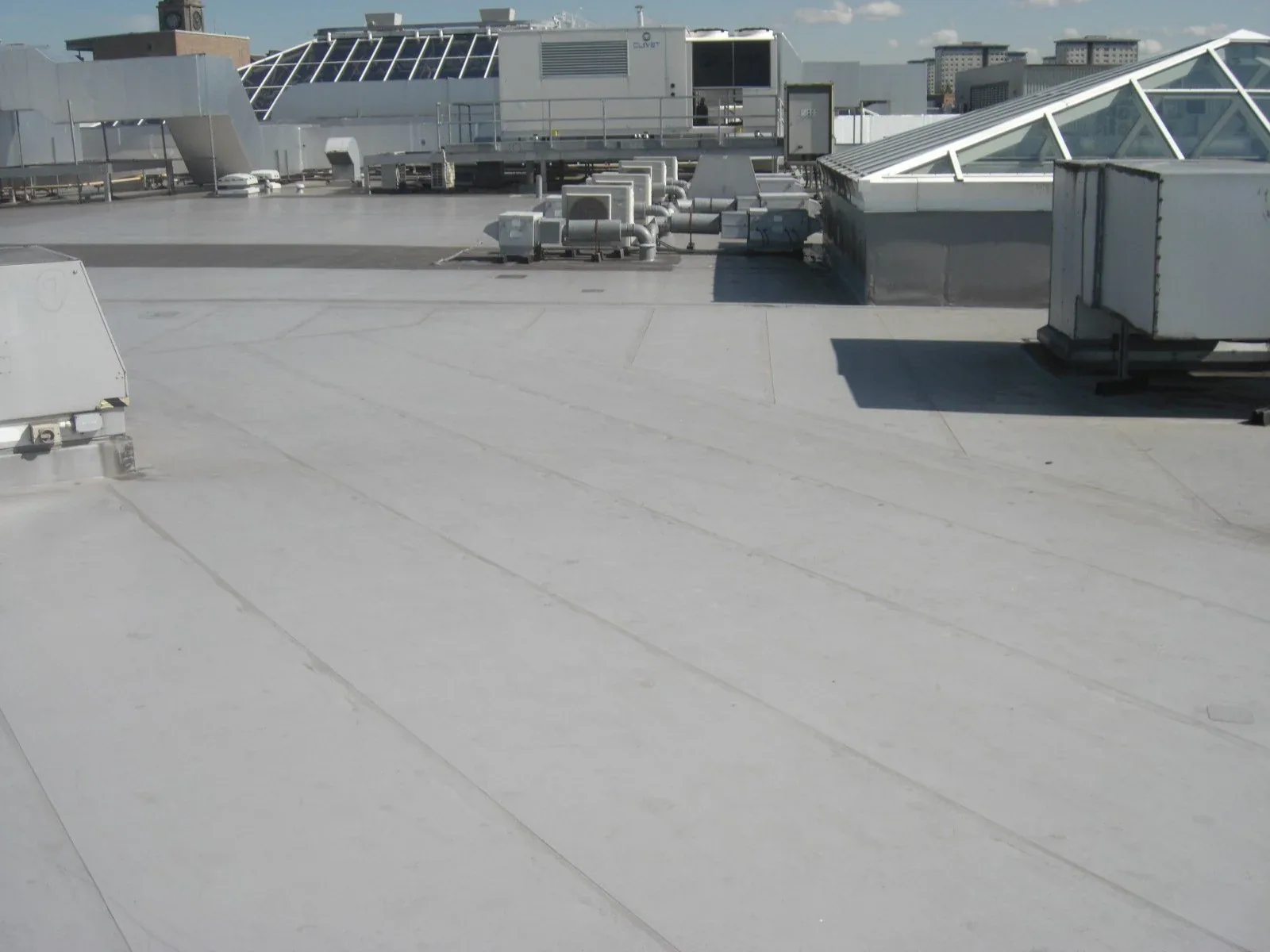
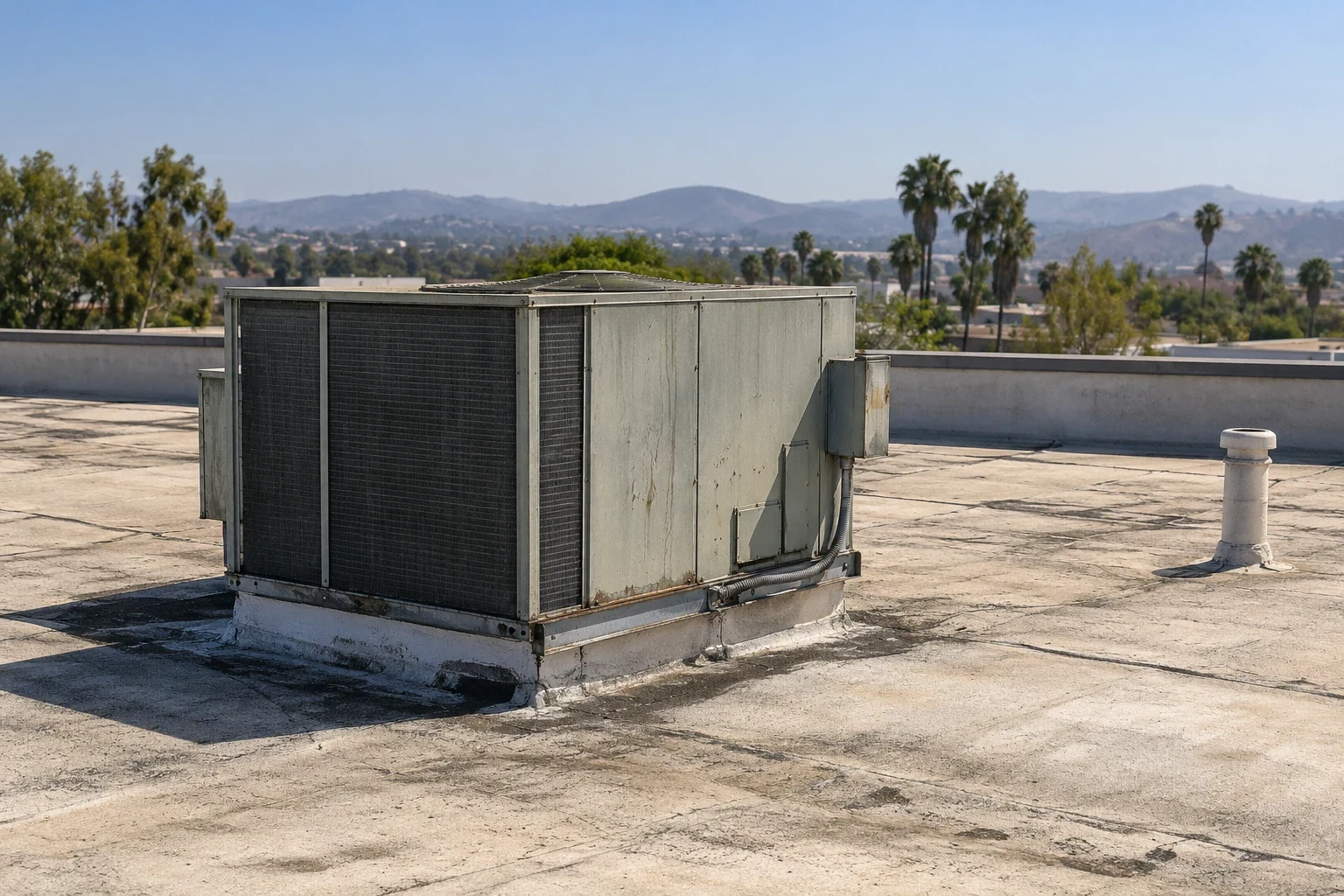
On the roof, we follow seams, fasteners, curbs, skylights, scuppers and deck changes. Water can move under a membrane before surfacing inside. We check for soft areas, wet insulation and patches that bridge drainage. Photos connect the reported room with candidate entries. If the path remains uncertain, we state what evidence is missing before opening material.
Most Chula Vista rain falls from November through March. Several leaks can emerge during one wet period, and separate reports may share an entry. We group them by location and timing, then inspect each candidate. A moisture survey may help target closer review when conditions permit.
Common Entry Points on Commercial Roofs
A narrow opening at a single-ply weld can let water travel below the surface. We check separation beyond the visible gap, membrane condition and nearby insulation. A compatible weld or patch must reach sound material; brittle or wet layers may need more than a surface fix.
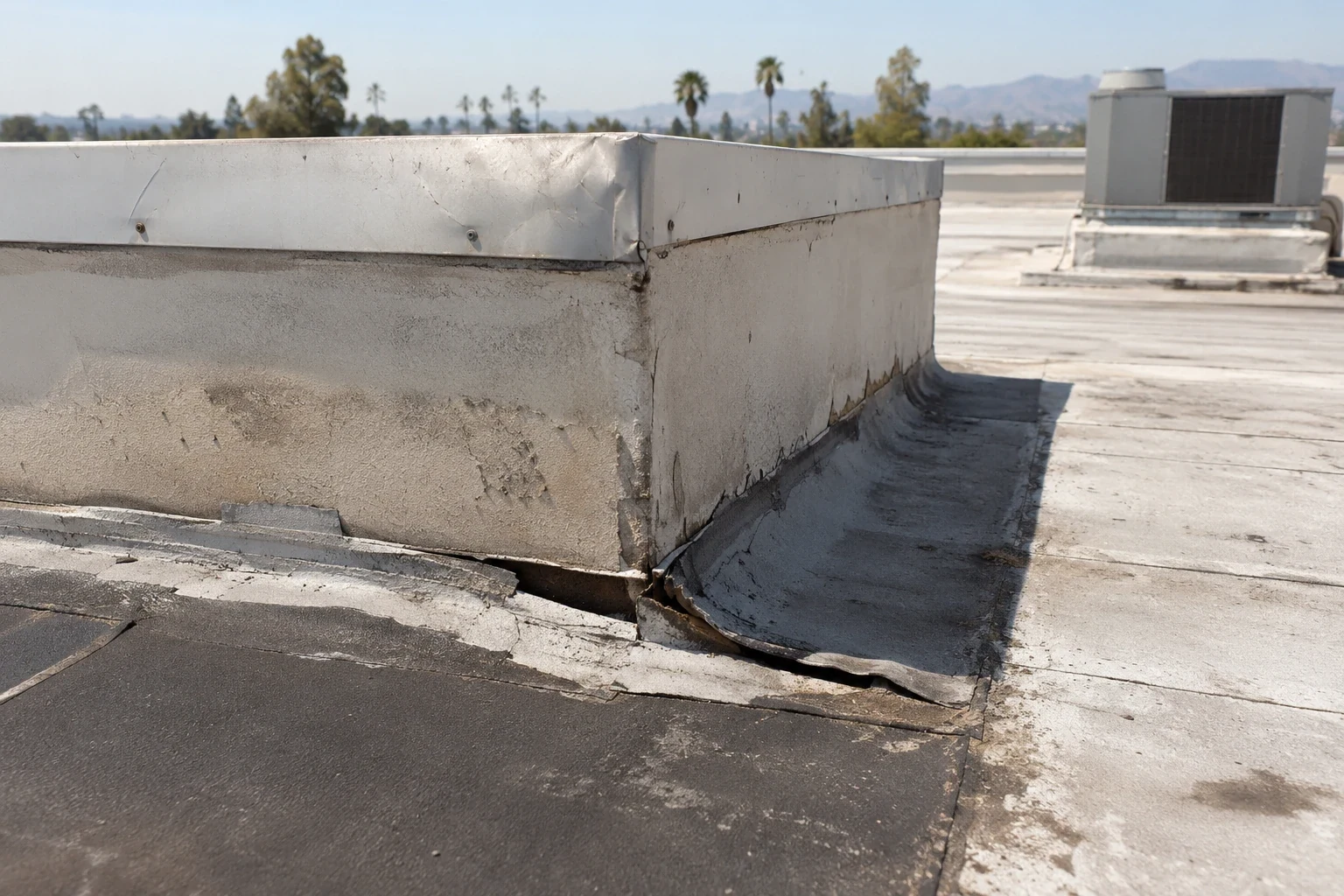
At curbs and walls, membrane rises above the field and counterflashing protects the termination. A loose corner, cracked sealant or open joint can admit water. We inspect the full perimeter, not only the side aligned with the stain. Flashing repair rebuilds a confirmed transition failure. Skylights and pipe boots need compatible details of their own. A curb repair also needs a termination that sheds water away from the opening rather than trapping it against a fastener row.
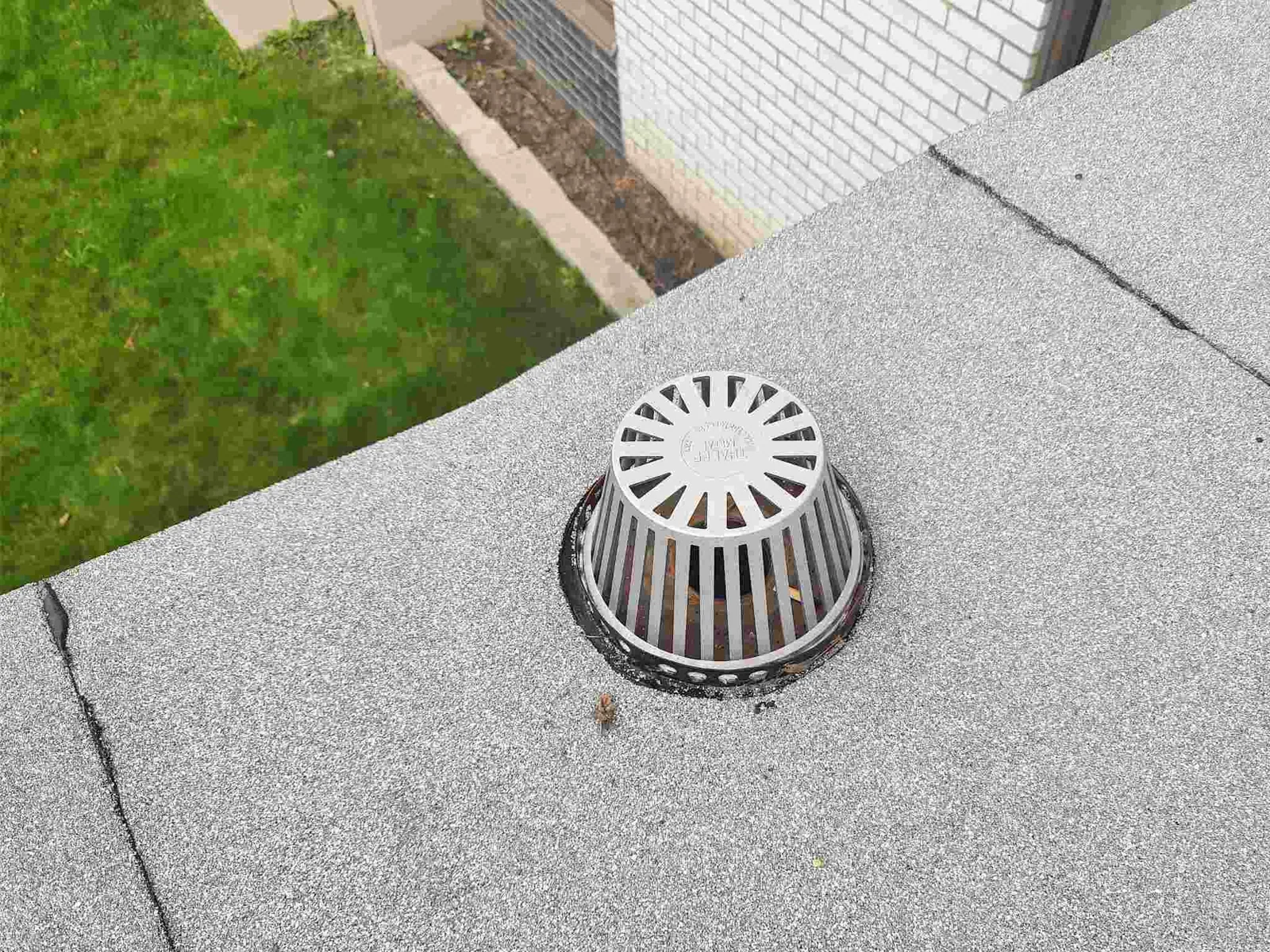
Debris can slow a drain, while settled insulation can leave ponding around an open outlet. We check the bowl, slope and overflow to distinguish blockage from membrane defect. If water control is part of the failure, drain and scupper work belongs in the repair plan.
What Inspection Can Confirm
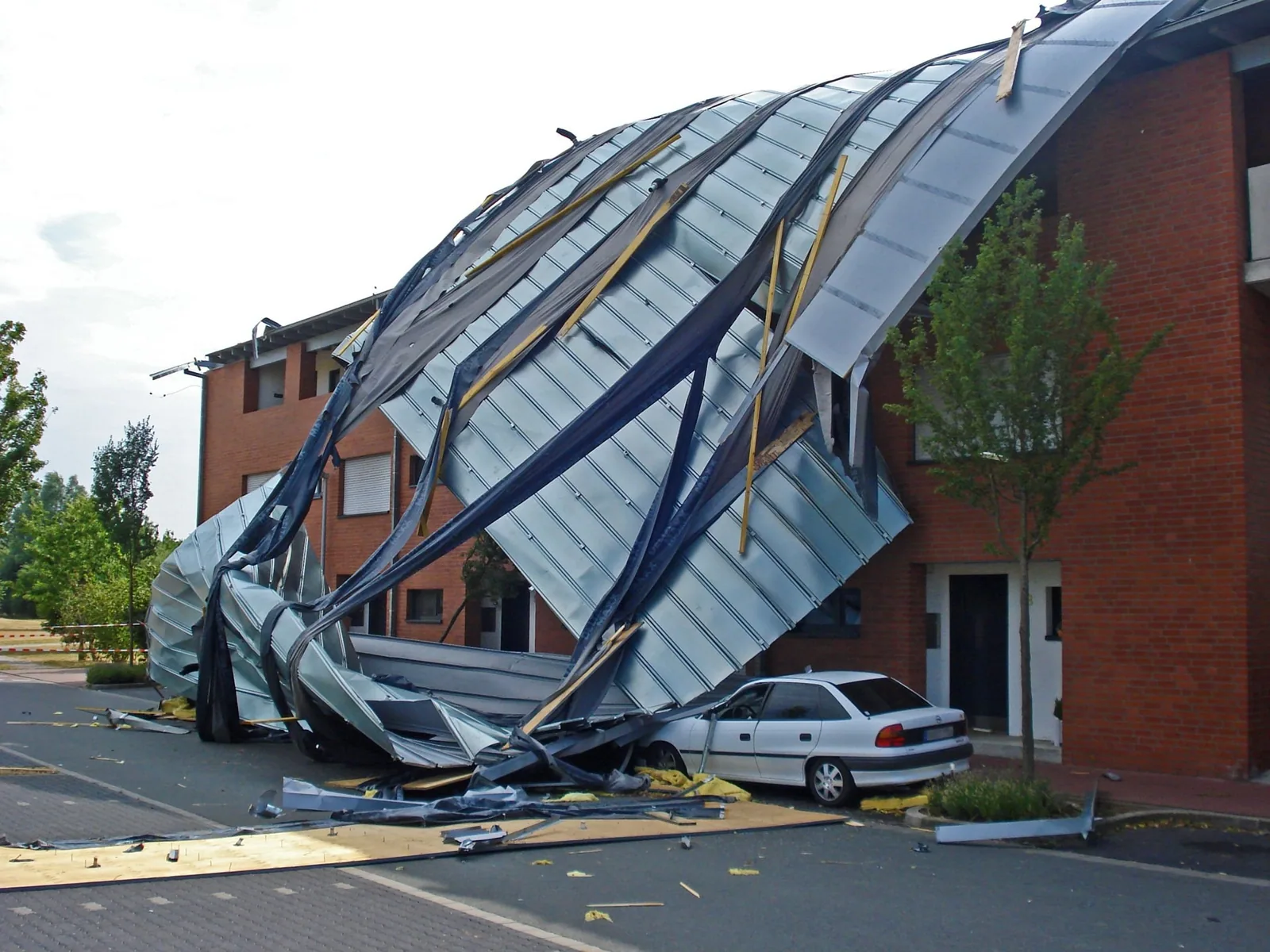
A visual check narrows the search but cannot show every layer. We may probe a seam, review surface-temperature patterns or recommend a controlled opening when insulation condition changes the repair choice. Infrared imaging needs suitable conditions; a test cut shows material only at its location. We explain each method’s limits before requesting access.
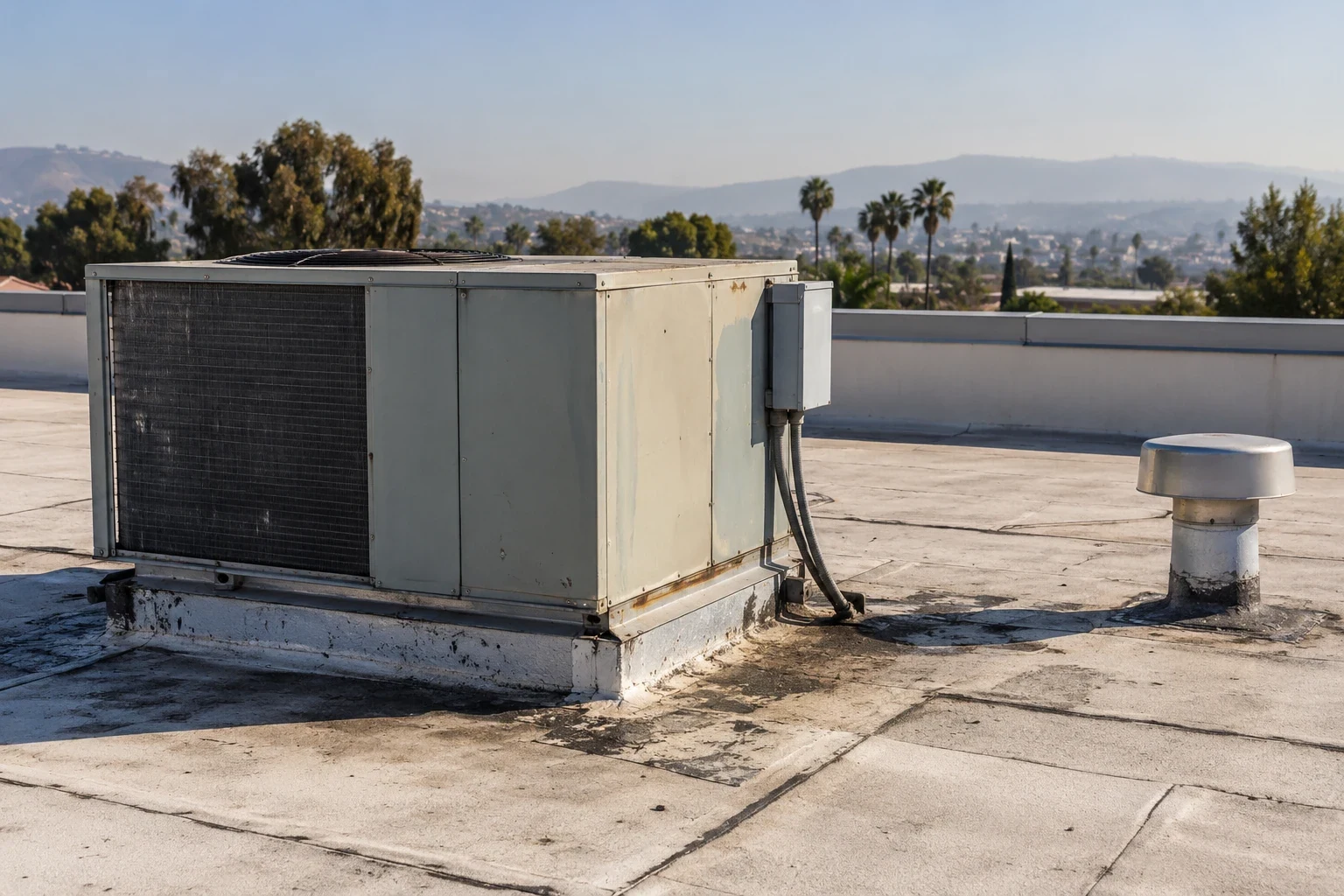
Inside, we check stain edges, ceiling material, piping and signs of condensation. Plumbing or HVAC can mimic roof entry, and water may travel through a wall. Findings should fit both the building report and a plausible roof path. When they do not, we tell the facilities contact what we checked and what may need another trade’s review.
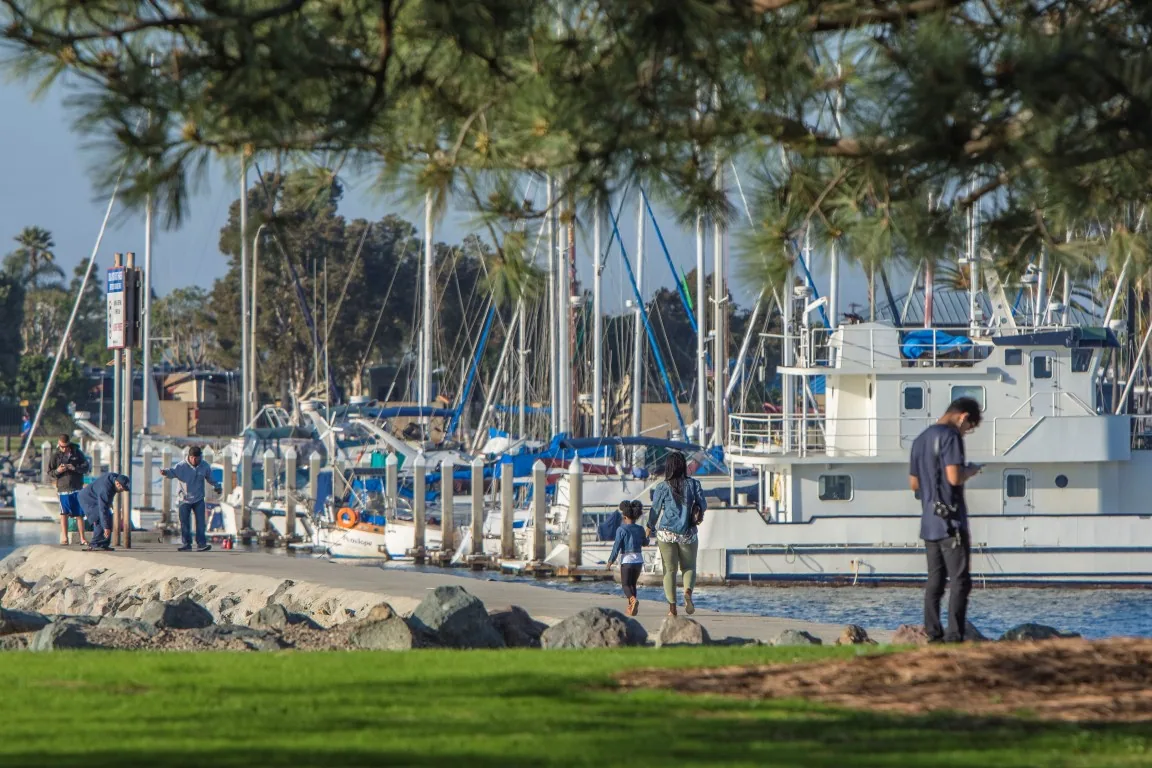
Along downtown Chula Vista’s Third Avenue, the business district mixes shops, restaurants and services. A leak investigation there may need coordination around customer access or a shared receiving route. We confirm those conditions with the site contact instead of assuming a roof route will remain open during business hours. Interior protection, ladder placement and any temporary closure should be agreed before the crew enters the building.
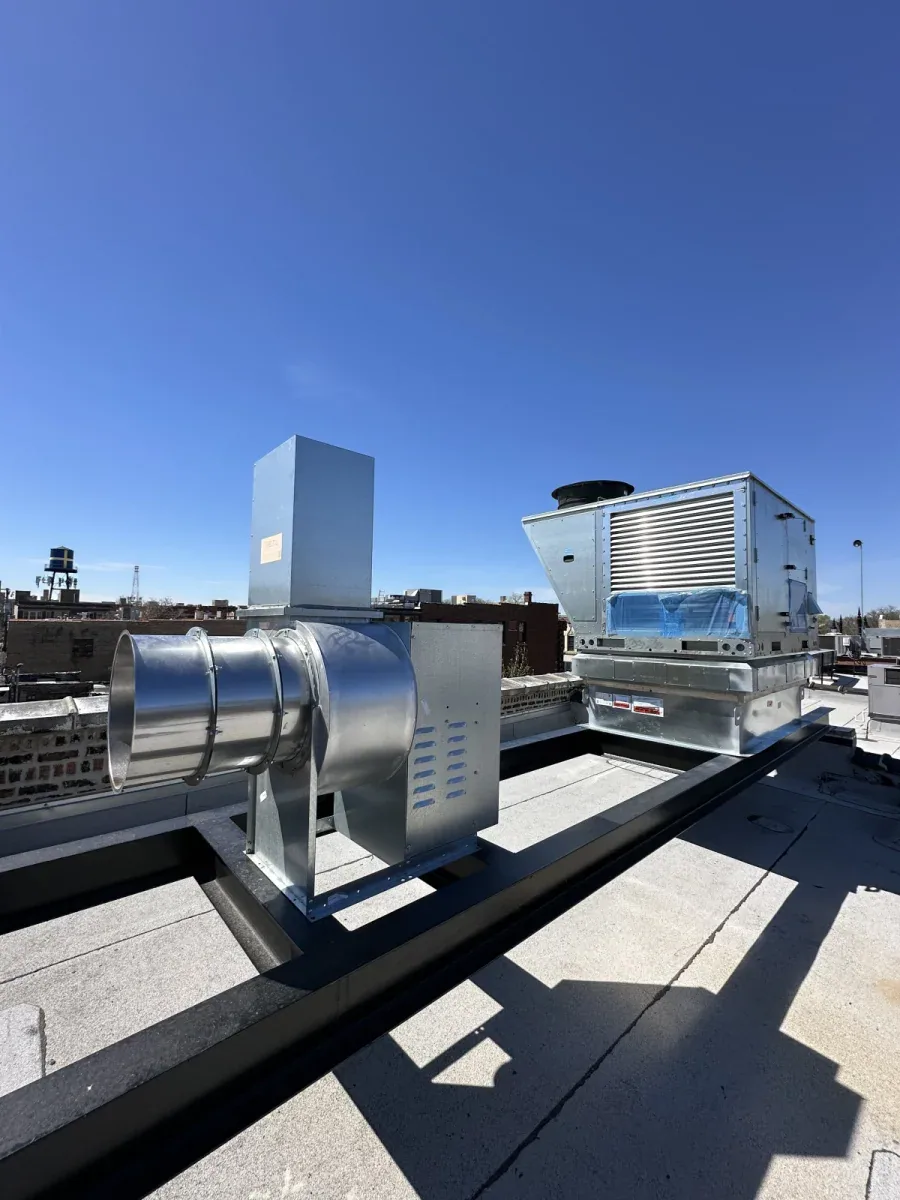
Bayfront commercial properties can combine rooftop equipment and access constraints. In Otay Mesa, receiving schedules may limit lift access. We coordinate around the building while keeping the water path central. Bayfront roof access and Otay Mesa scheduling follow the property’s route and contact.
Stop Entry and Restore the Detail
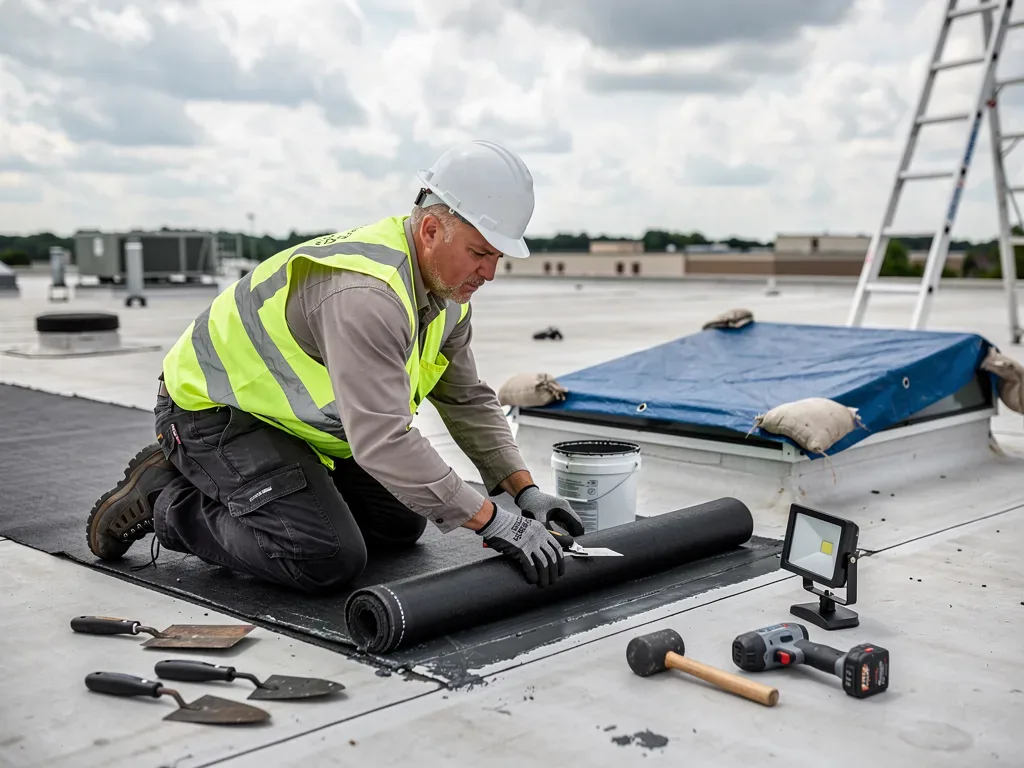
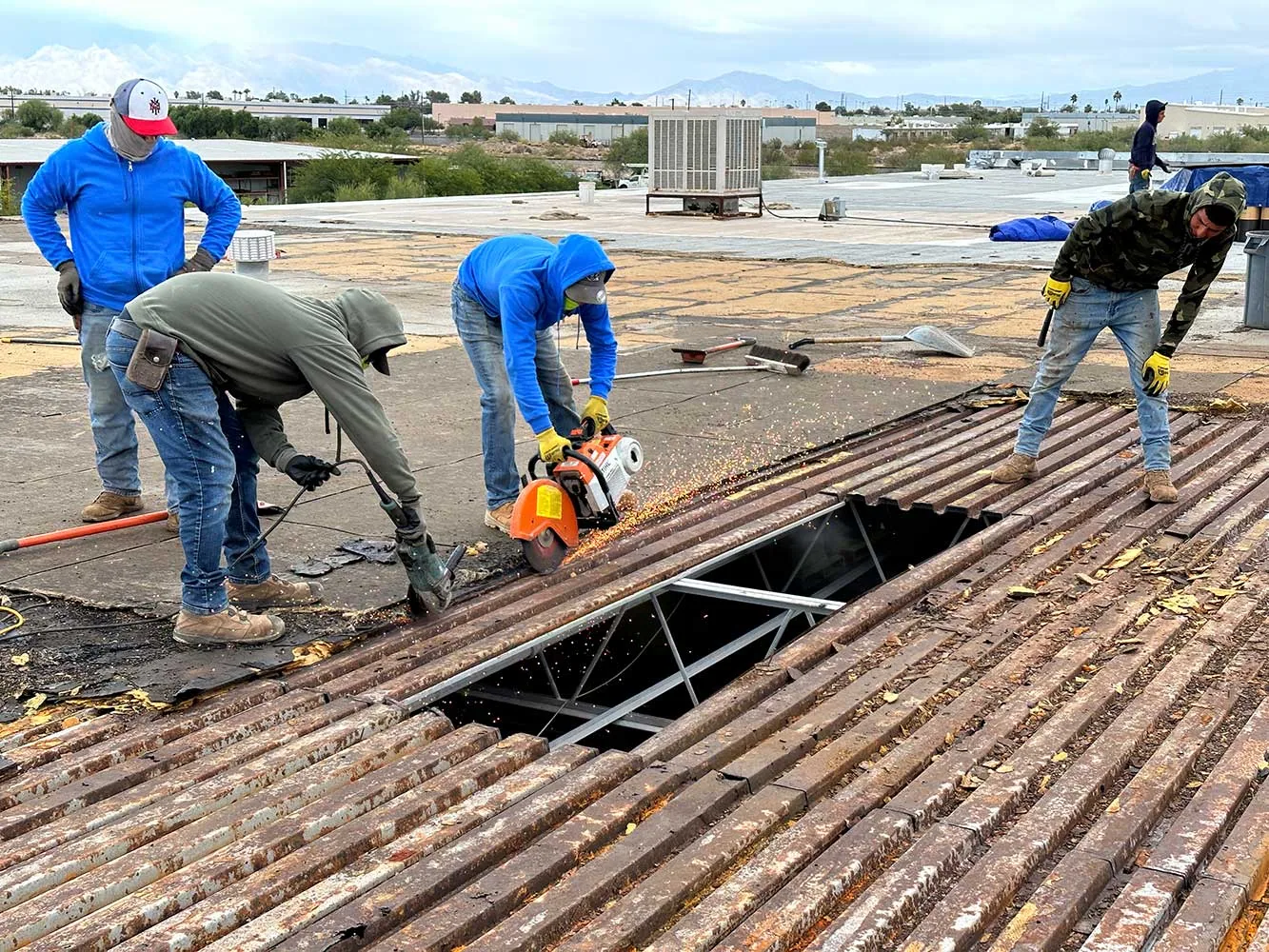
After locating the entry, we set a boundary around sound membrane and stable substrate. The crew removes failed material, prepares the surface and rebuilds the seam, flashing or penetration with compatible materials. Wet insulation or damaged deck beyond scope is recorded before covering. Hiding it can leave the water path open below.
Active entry may need temporary protection before permanent materials can be installed. For active entry, our crew can respond at night, on weekends and during holiday periods. Dry-in limits exposure but is not a permanent tie-in. We record its location and conditions for follow-up, coordinating interior protection with the facility contact.
After repair, we inspect the tie-in and clear drainage. A surface check cannot establish whether concealed areas are dry. Closeout identifies repaired details, areas not opened and follow-up observations. If staining continues, residual water may still be moving through the assembly; we compare its timing and location with the original path.
The Repair Record and Next Inspection
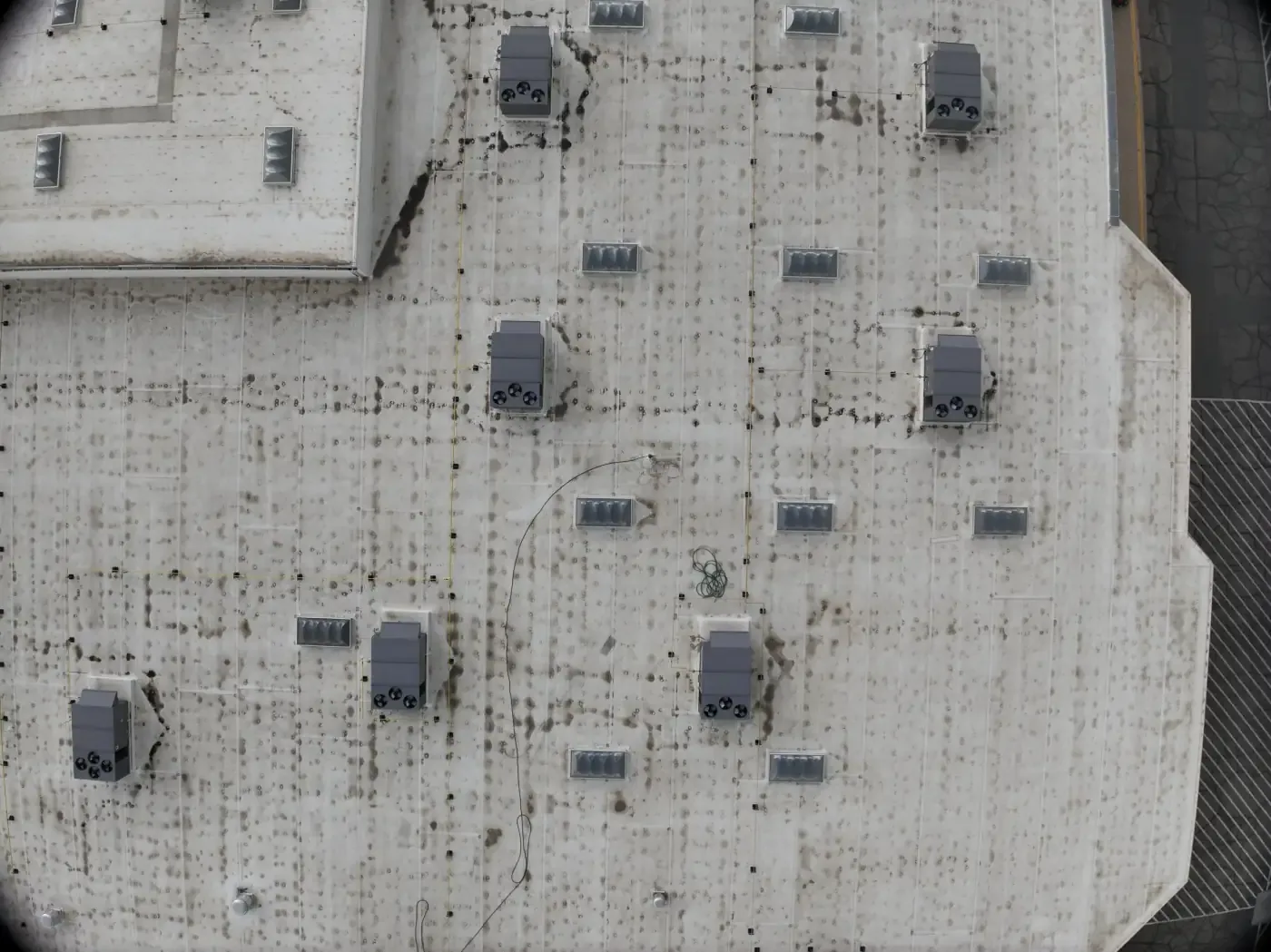
A leak record should let the next person find the same roof zone. We capture the interior report, roof detail, materials and work boundary, with photos before and after. If a test cut was made, its location and result belong in the record. This helps plan inspection and track recurrence while a ceiling stain dries.
Cost and timing depend on access, system, preparation, entry points and hidden moisture or deck damage. A curb repair may be direct once exposed; a long path with several penetrations takes more investigation. We separate confirmed work from additional testing. A condition report preserves the distinction, while planned maintenance revisits drains, seams and flashing.
Give us the building and room where water appeared, along with the roof-access contact. We will follow the reported path, explain findings and identify the next repair decision.