What the Open Roof Must Confirm
We look for wet or compressed insulation, soft deck, failed fasteners, open seams, damaged curb flashing and drainage points that hold water. One defect can be local, while repeated wet areas across a roof zone may point to a wider assembly problem. We map findings to photos and measured locations, then explain which conditions call for removal and which fit a repair boundary.
Where the membrane hides insulation, a controlled opening shows the layers, attachment and moisture at that point. We choose openings from the visible pattern and state what each will answer. If replacement is indicated, the report separates observed deterioration from areas that still need review, helping the owner compare full tear-off with a limited approach.
Most San Diego-area rain falls from November through March, so drainage and dry-in planning affect the schedule. We inspect drains, scuppers and low points before tear-off, then stage removal so the building can be secured if weather interrupts work. Farther east, hotter dry-wind periods and wider temperature swings call for attention to perimeter attachment and movement. Conditions inform sequencing; the roof sets the scope.
A Sound Tie-In at Every Transition
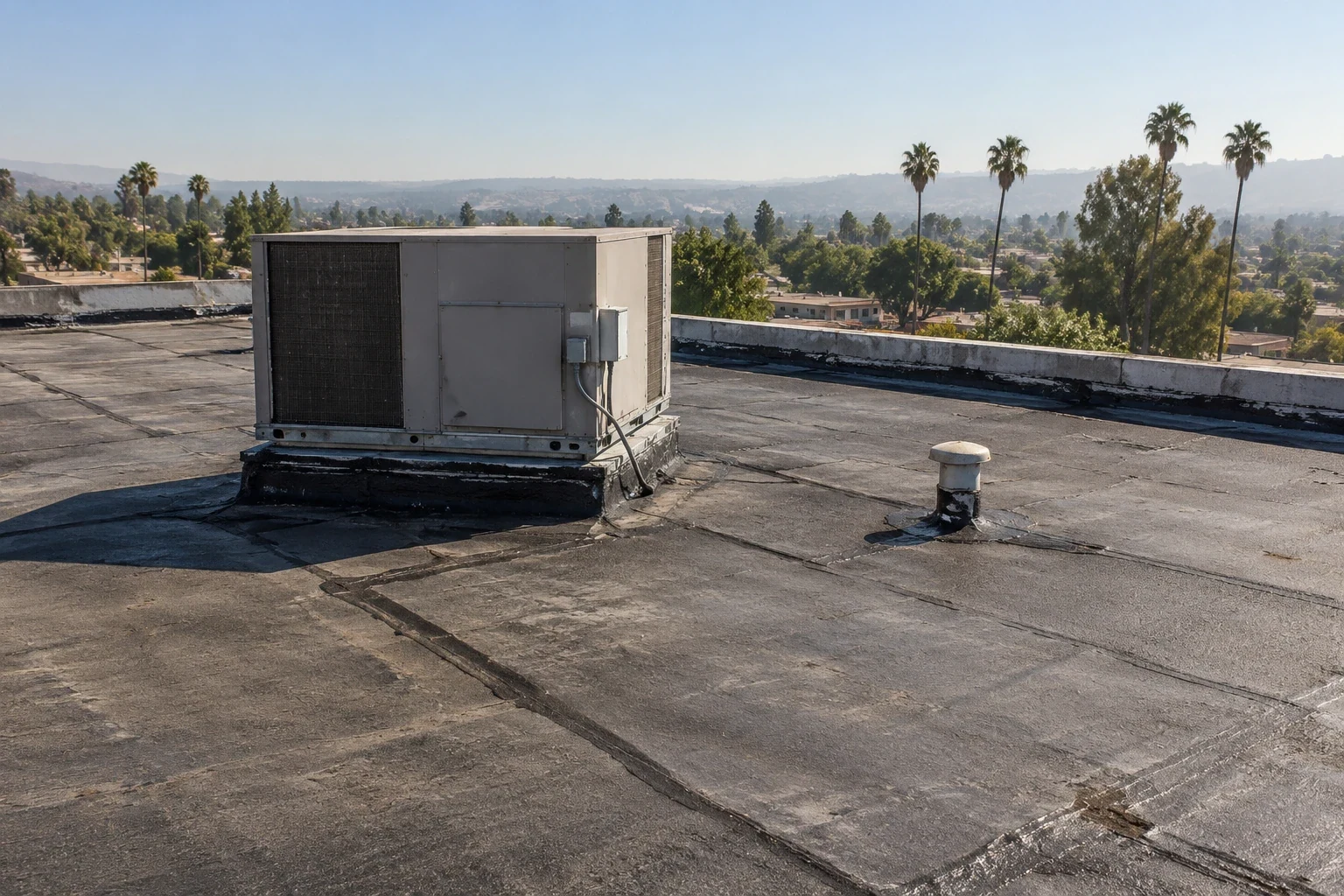
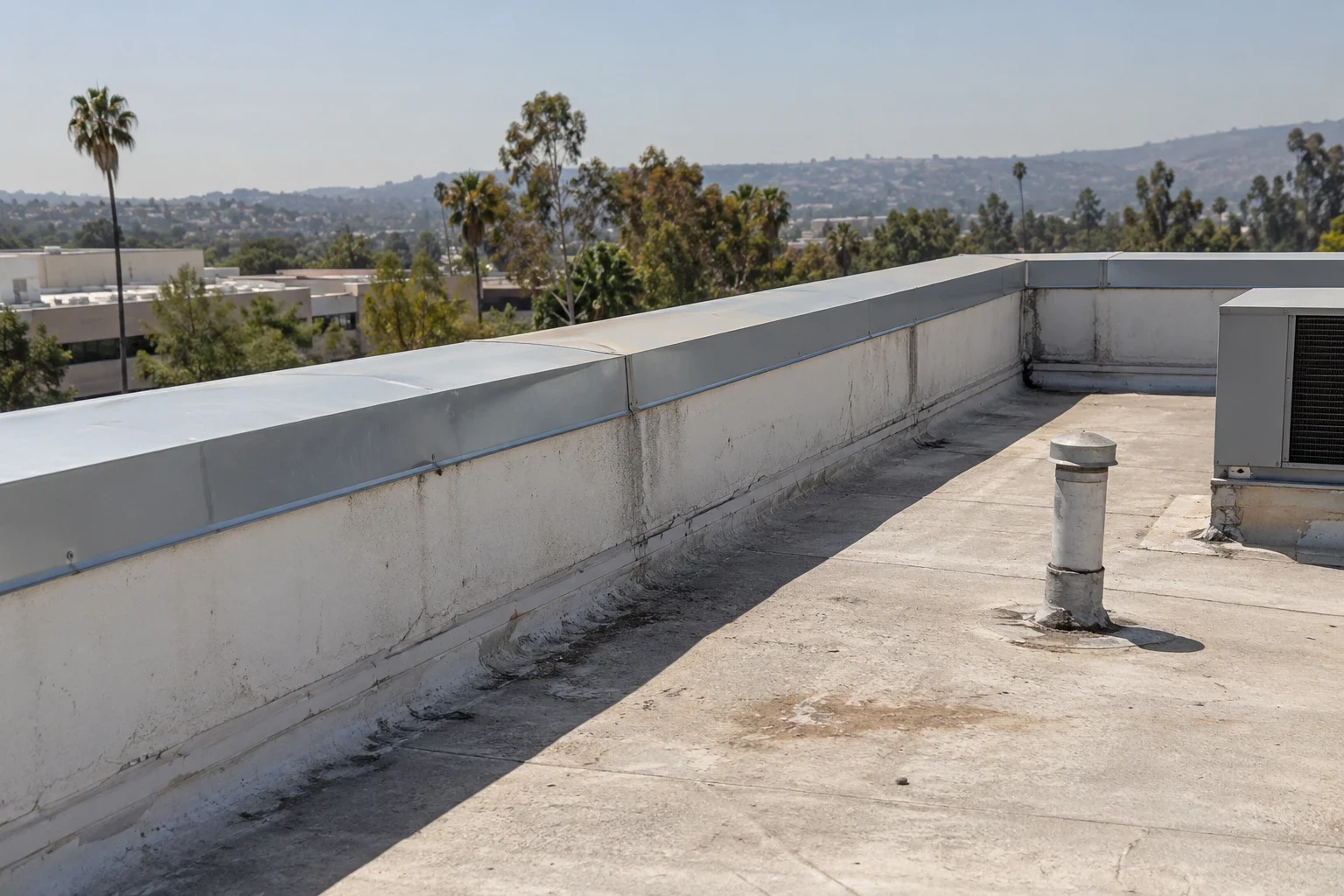
The assembly must connect cleanly at parapets, joints, drains, curbs, skylights and roof-to-wall transitions. We record heights, substrate changes and penetrations before selecting the new build-up. Insulation, cover board, attachment and membrane type affect the finished edge and how water reaches the drain. A small detail can decide whether the new layer meets sound material or covers an unresolved failure.
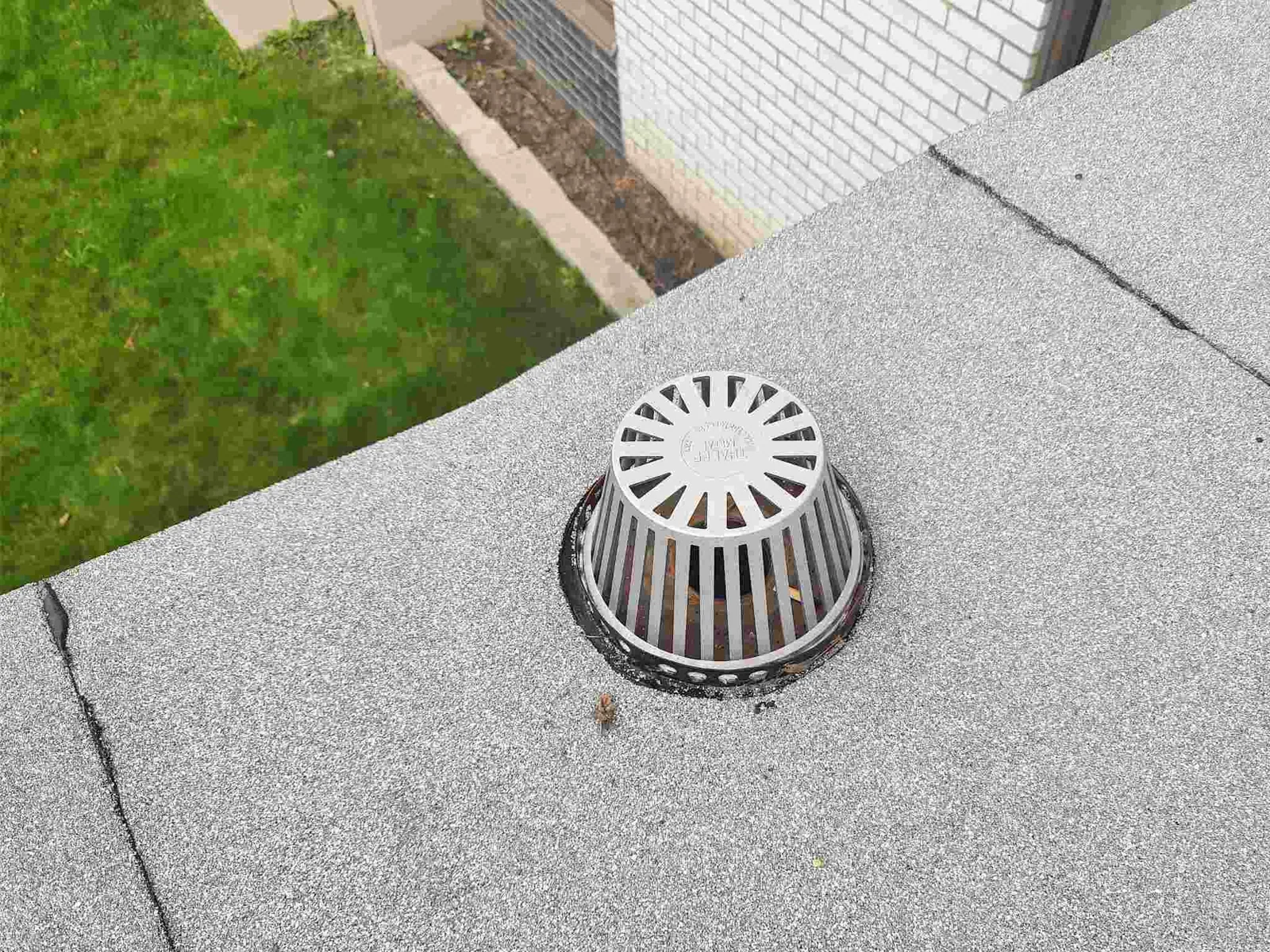
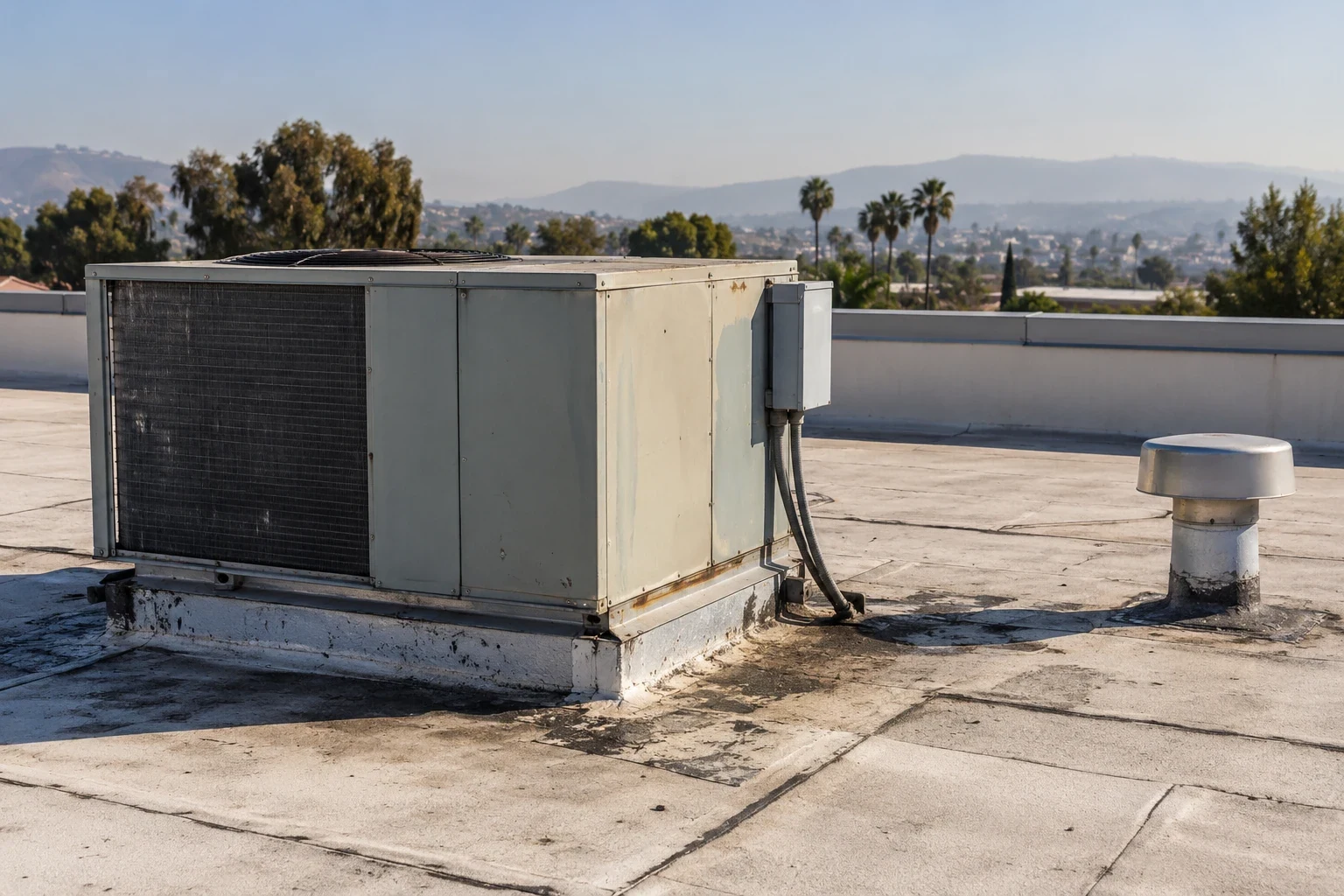
An old curb may sit too low for added insulation. We determine whether it needs extension or replacement and include curb flashing in the scope. At drains, the bowl and clamping ring must suit the system, while the surrounding surface should direct water to the opening. The drain and scupper work must integrate with the field membrane to avoid a new surface ponding at its outlet.
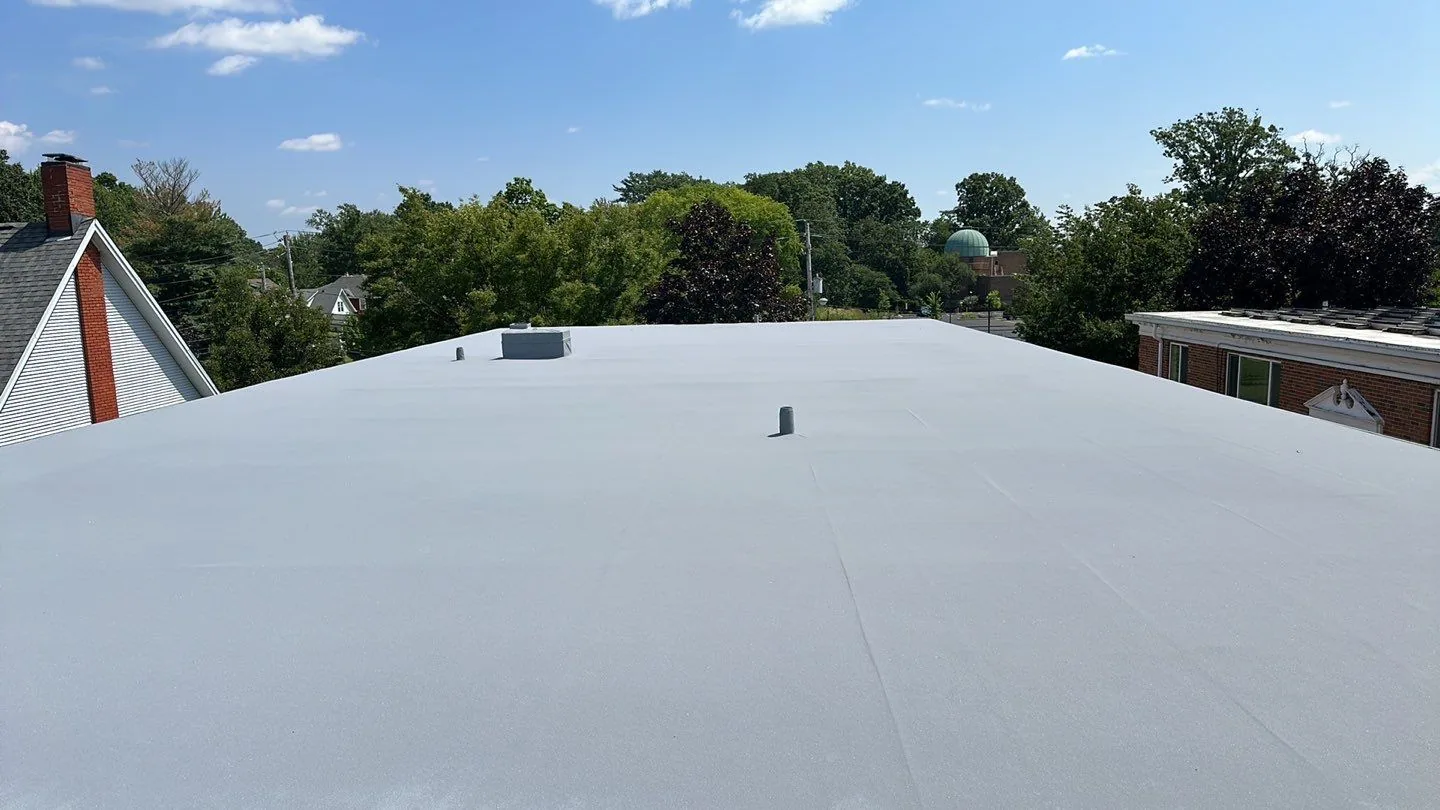
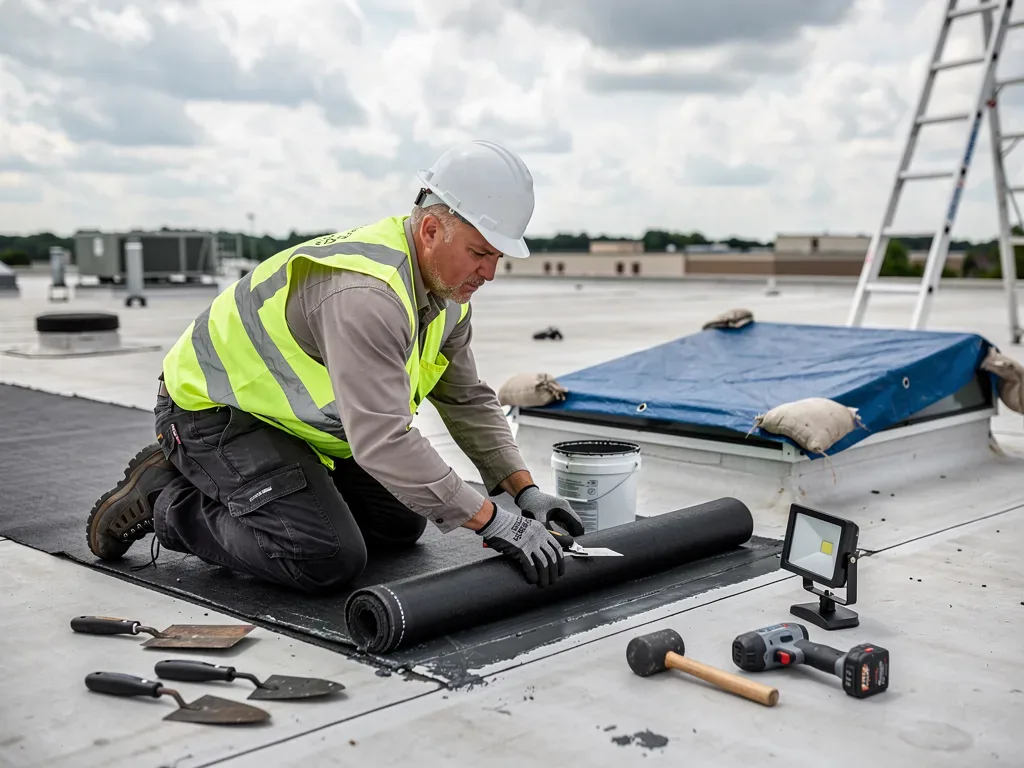
Material selection follows building use and existing conditions. TPO, PVC, EPDM and modified bitumen differ in seam methods, attachment and maintenance. We explain the proposed system, how it meets existing edges and which exposed details need attention. A TPO assembly or modified bitumen roof is a full assembly, not just a product label. The closeout should identify those layers.
Keeping the Building in Service
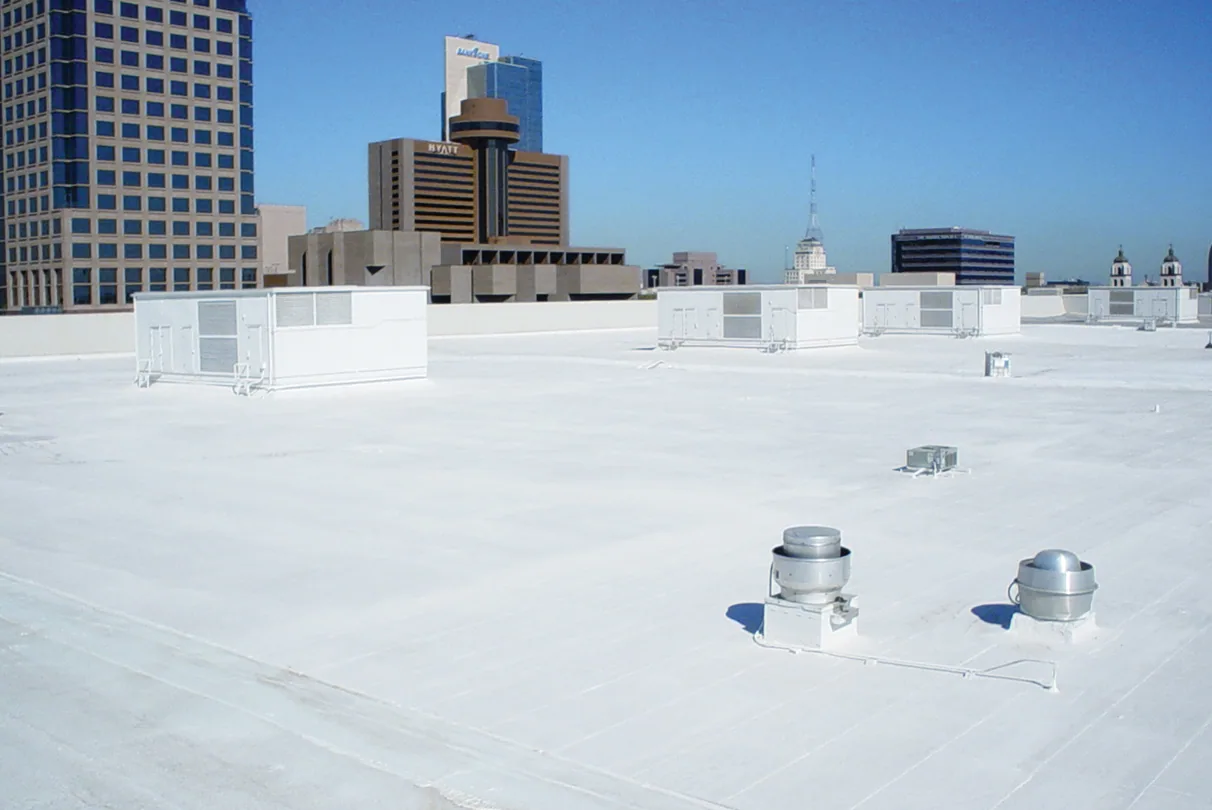
At an occupied property, the work plan is also an access plan. We divide the roof into zones, set material staging points and coordinate disruptive tasks with the people responsible for the space below. A loading area, kitchen or office may have different constraints. The facilities contact identifies sensitive rooms, equipment, delivery windows and routes that must remain clear.
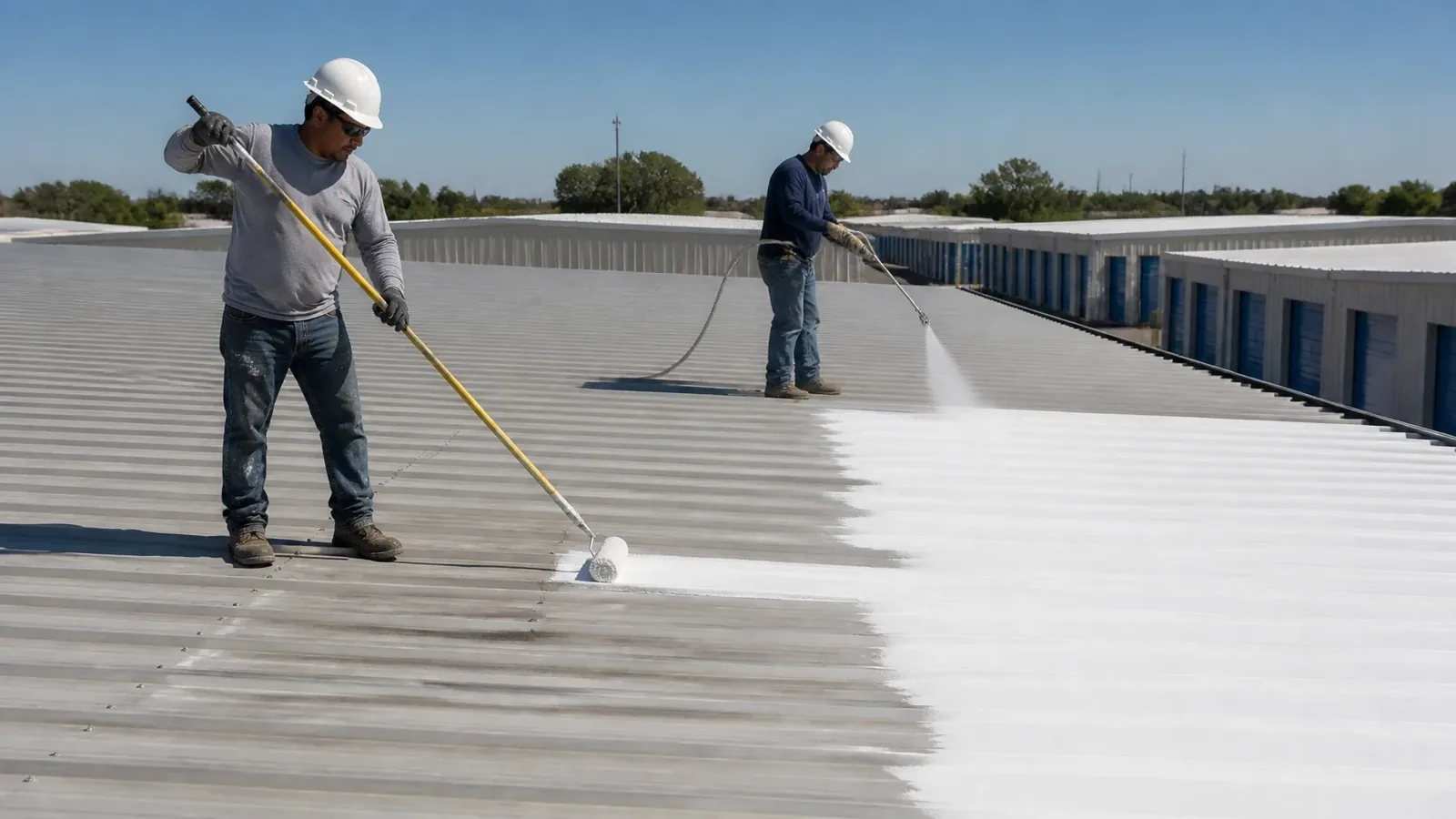
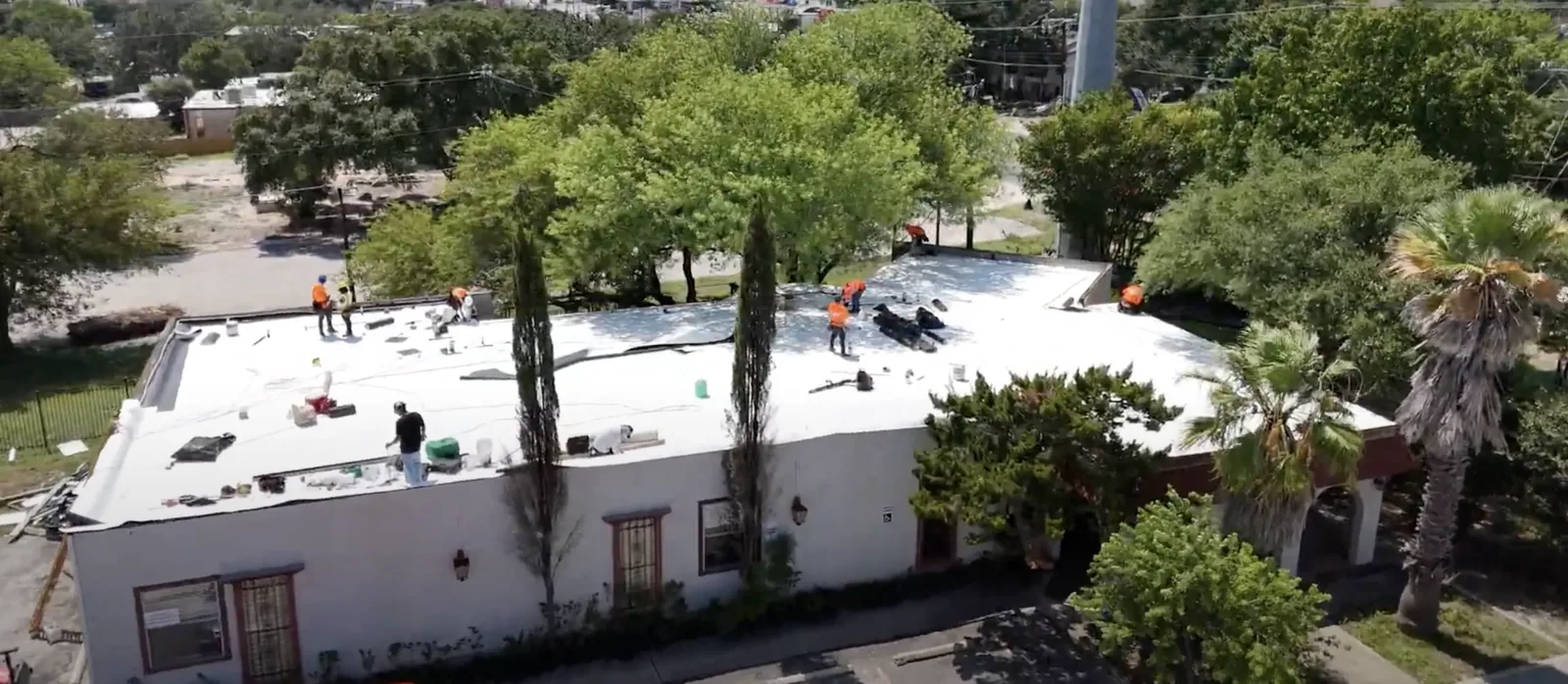
We remove only the area that can be covered during the shift. The crew strips the old layer, checks deck and insulation, replaces unsound material within scope, then installs new layers and closes exposed edges. If concealed conditions change the work, we record the location and explain the schedule effect before crossing the agreed boundary. Daily checks focus on temporary protection, drains and edges where water could enter overnight.
Third Avenue and Broadway serve shops and small businesses; near Otay Mesa, I-805 and SR 905 connect cargo and industrial activity. Those access patterns affect material deliveries and truck movement. We schedule around the property’s route and operating hours. An occupied-building sequence can coordinate interior protection, while Otay Mesa service planning accounts for its employment-area access.
Drainage Before the New Membrane
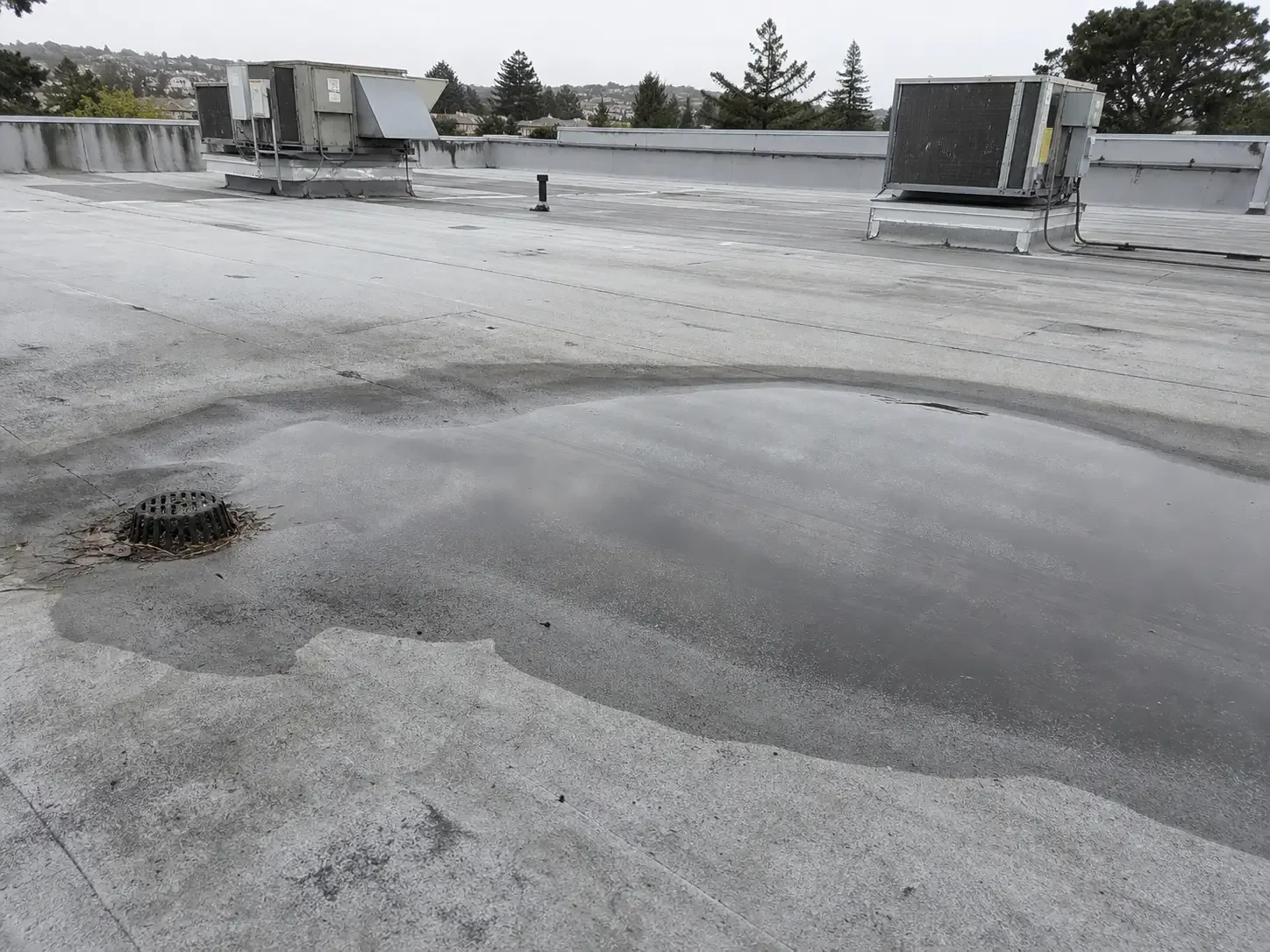
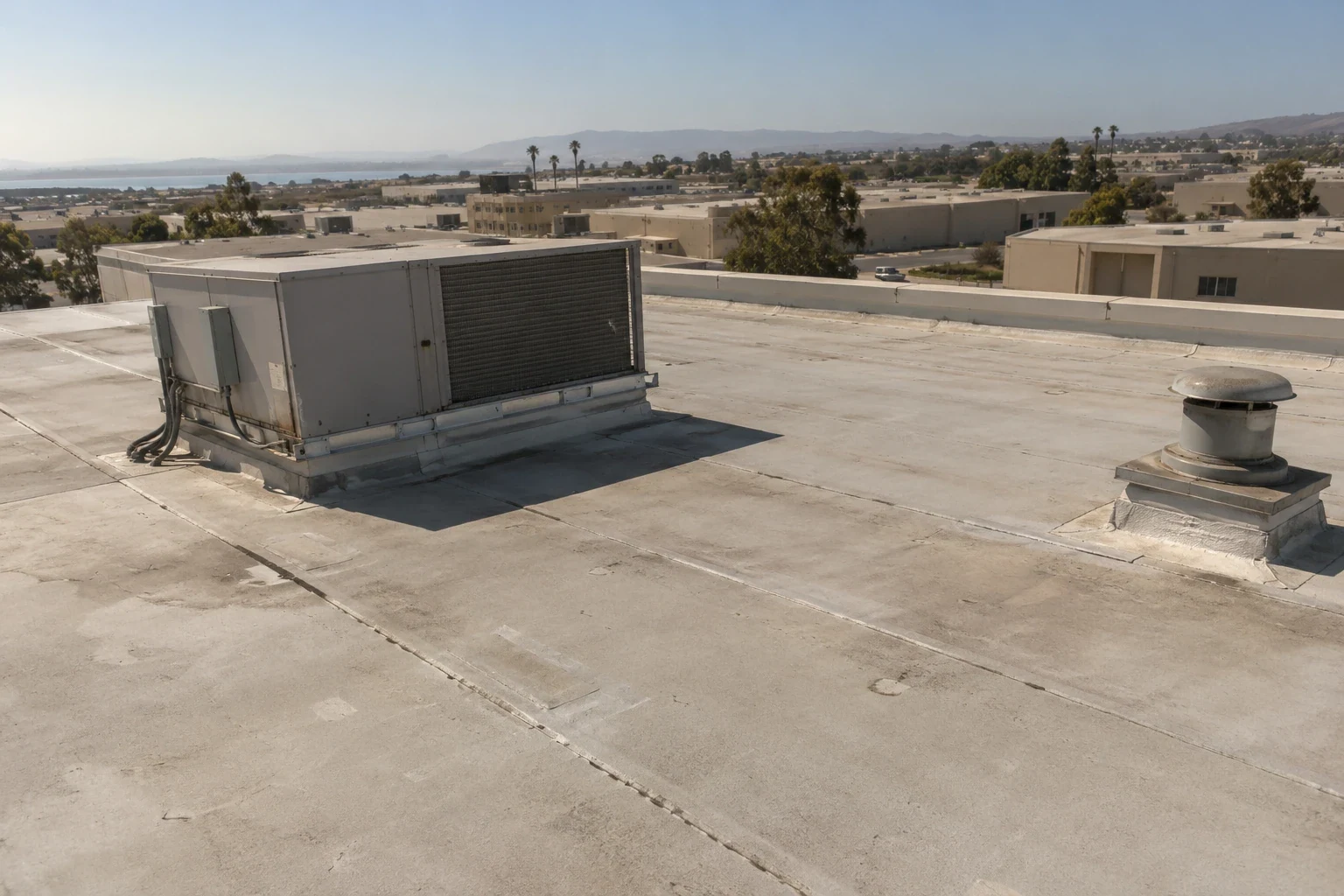
A membrane cannot correct a drain above the low point or a deck that holds water because its slope is wrong. We follow the path from each roof zone to its outlet. Debris, crushed insulation, settled deck, undersized leaders and blocked scuppers can interrupt it. The scope may include drain correction, tapered insulation, overflow protection or separate plumbing work. Each affects cost and schedule and should be listed clearly.
During tear-off, we inspect drain bowls for corrosion, loose rings and old patch layers that can prevent a reliable connection. The membrane needs a compatible clamping detail and clear route into the drain. We also check overflow height and discharge, then clear outlets after installation so seasonal rain meets an open path.
Coastal air can affect exposed metal at edges and equipment supports, so we inspect those details and replace metal where condition calls for it. Hotter inland periods can stress exposed sealants and transitions. The ponding-water repair details matter because drainage correction and membrane tie-ins must work together.
Scope, Schedule and Closeout
Cost and duration depend on layers to remove, deck repairs, insulation depth, perimeter metal, lifting access and how many zones can be safely opened. The scope lists these items and explains how concealed damage is handled, making proposals easier to compare and preventing curbs, drains or edges from disappearing inside a broad allowance.
We plan around forecast conditions and building operations. Dry-in material and equipment must be ready before removal. Rain concentrated in the cool season narrows workable windows; inland heat affects crew pace and adhesive handling. Each shift ends with the exposed area secured and occupied spaces below protected.
Closeout records identify completed zones, system layers, deck repairs, drain and curb details, plus owner maintenance items. Photos tied to locations help later inspections. A roof condition report gives facilities staff a useful record, while capital planning can rank remaining work across buildings. At the next roof walk, we can review the building, affected zone and access contact, then agree on the next decision.