Start With the Roof Finding, Not the Reserve Line
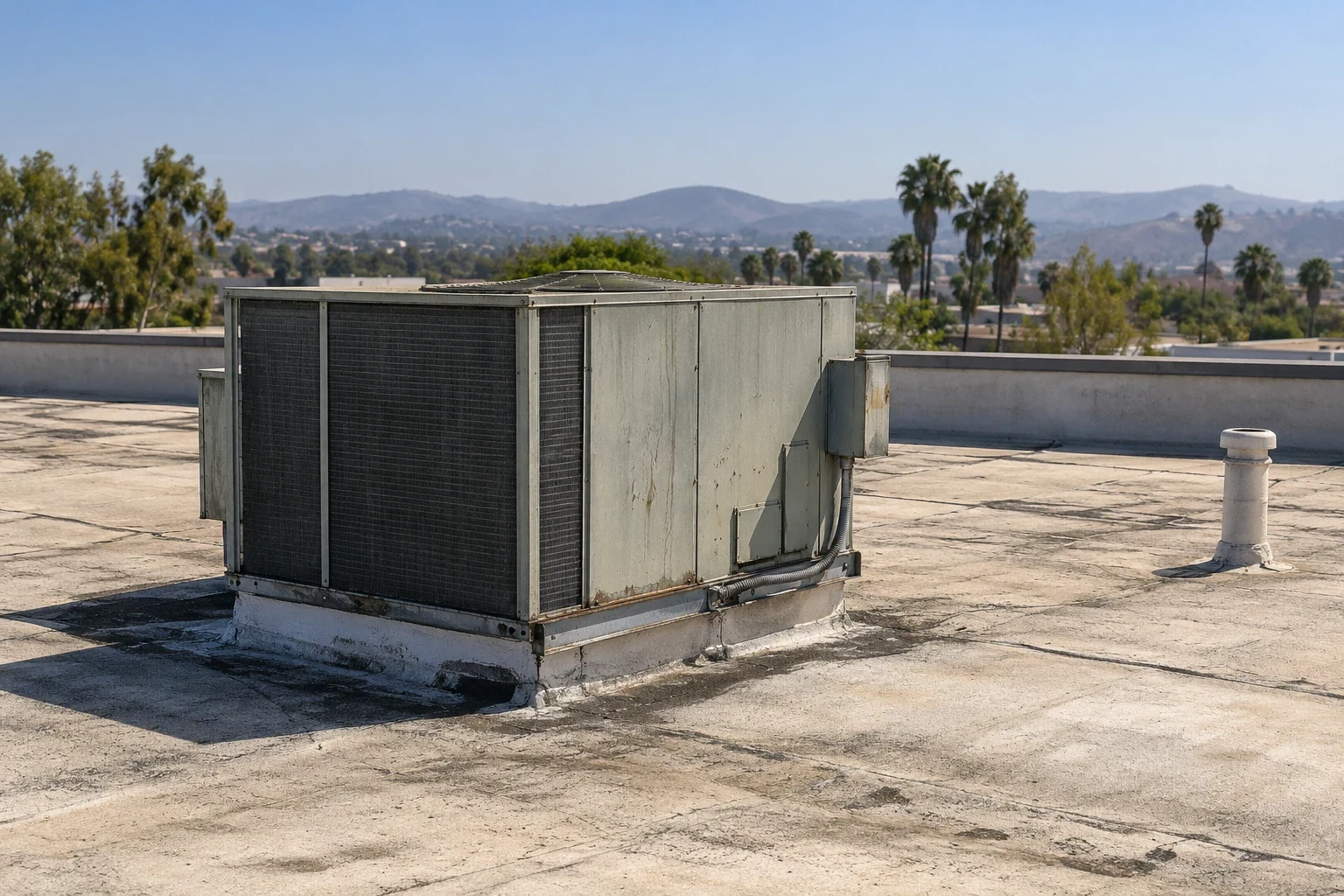
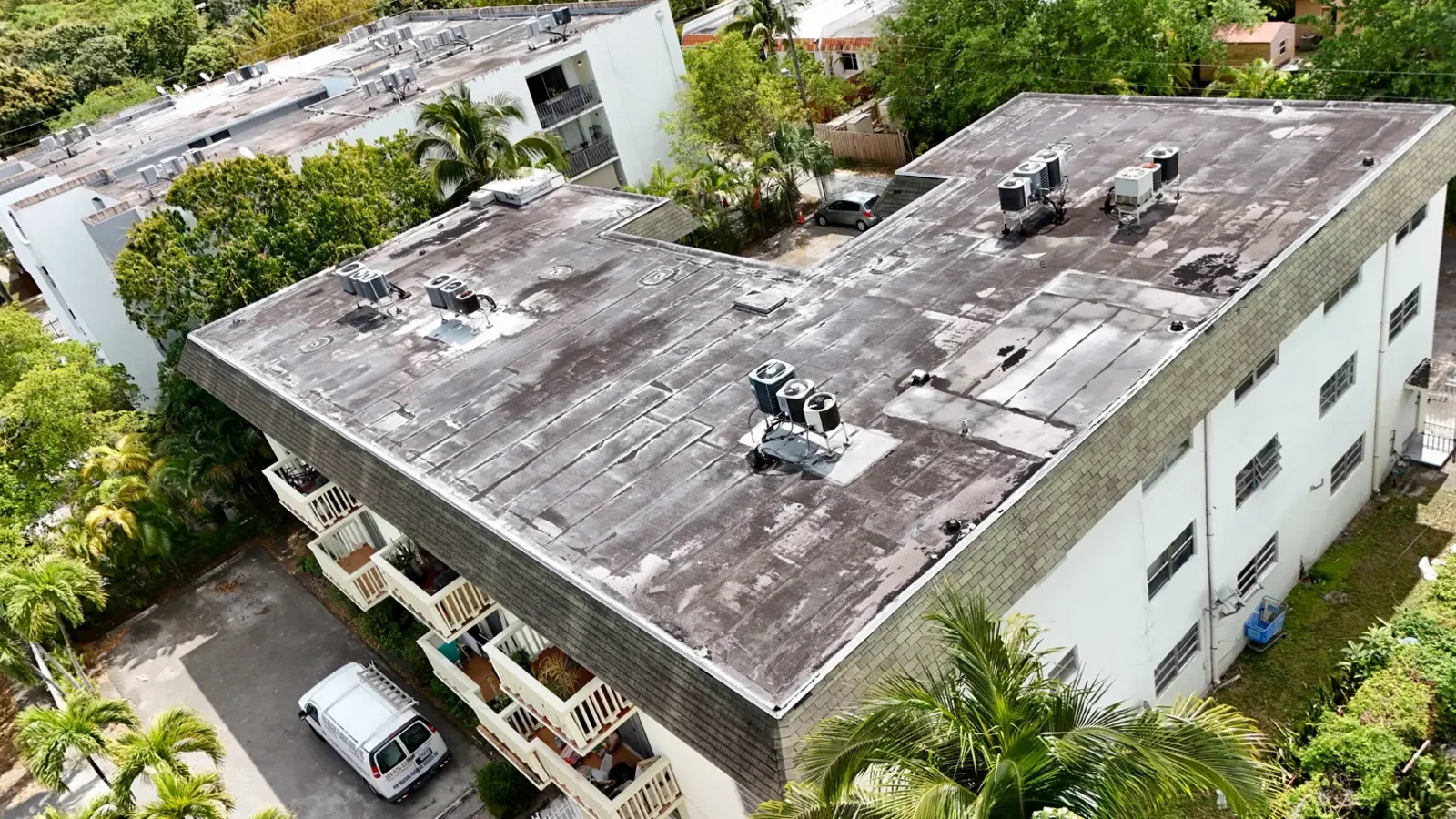
A recurring leak at one curb, ponding at a settled section, and widespread membrane separation carry different urgency. We inspect the roof system and locate each concern by zone, then distinguish visible conditions from concealed ones. A small surface defect may have wet insulation beneath it; a ceiling stain can also be fed from a different roof detail. The field record describes the evidence and the test needed before a budget includes hidden removal.
Chula Vista employment property ranges from western business corridors such as Third Avenue and Broadway toward industrial and office development near Eastlake and Otay Ranch. A portfolio budget may include very different uses, access routes, and equipment conditions. The geography helps facilities plan site visits; each roof still needs its own condition check. A written condition report gives ownership a current record of the observed system and the open questions behind the scope.
When active water threatens an occupied building, emergency service can stabilize it after hours, on weekends, or holidays. That response is budgeted and recorded separately from permanent work. We state what was protected and what remains for inspection so a temporary patch does not quietly become the assumed capital solution.

Sort the Work by Risk and Evidence
Capital planning needs a reason for the order of work. We identify conditions that can expose interiors, disrupt equipment, or spread into adjacent roof zones, then compare them with issues that can be tracked through maintenance. The work sequence shows what delay could expose and which next observation would change the priority. It avoids treating every stain, aged coating, or open sealant as the same construction scope.
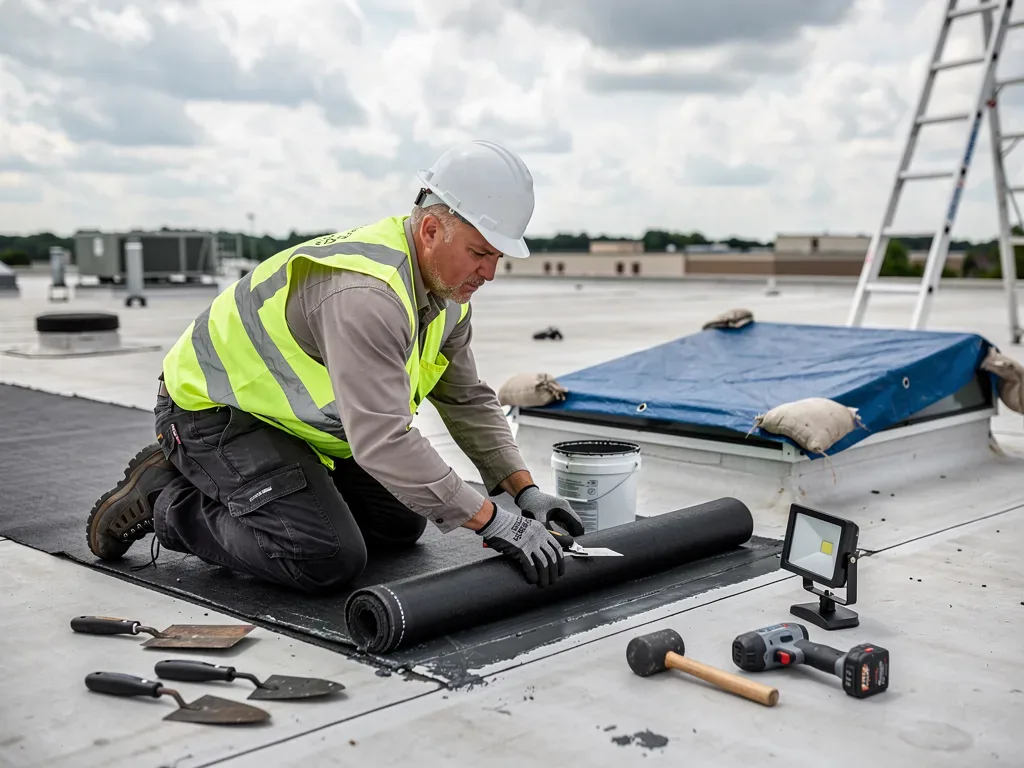
A localized seam or flashing issue may be addressed through repair work if surrounding material is sound. Repeated leaks, wet insulation, failed attachment, and deteriorated deck can support a broader removal scope after confirmation. If an existing assembly is dry, secure, compatible, and permitted, a recover may be compared with replacement. The capital record lists the conditions that qualify each option, rather than hiding a test allowance inside one total.
A roof asset register can help keep each roof’s photos, repairs, and follow-up together. It does not replace project review. We update the decision when an opening exposes a different condition, a tenant changes access, or a repair resolves the issue sooner than expected.
Set a Funding Horizon the Assembly Supports
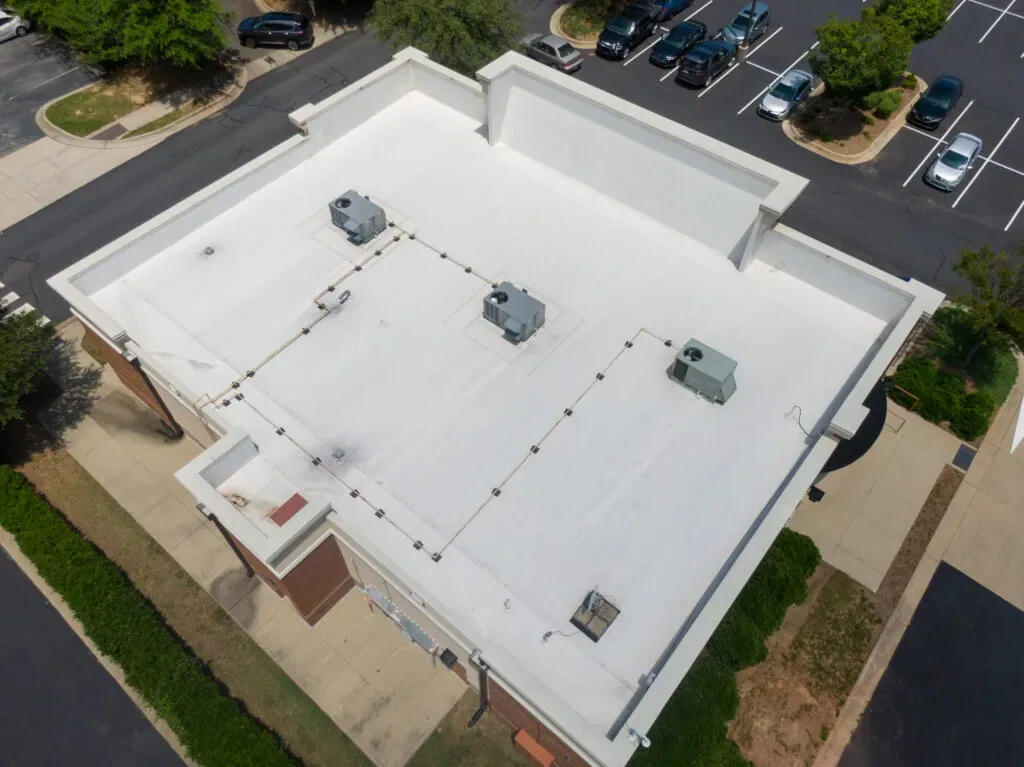
Replacement timing should come from what the roof shows, how it is performing, and the work necessary to restore reliable drainage and tie-ins. We inspect membrane seams, edge conditions, penetrations, drains, insulation, and prior overlays. Where field observations cannot establish remaining layers, a controlled opening may be appropriate. The planning record explains the limits of the inspection so ownership does not read an estimate as a fixed service life.
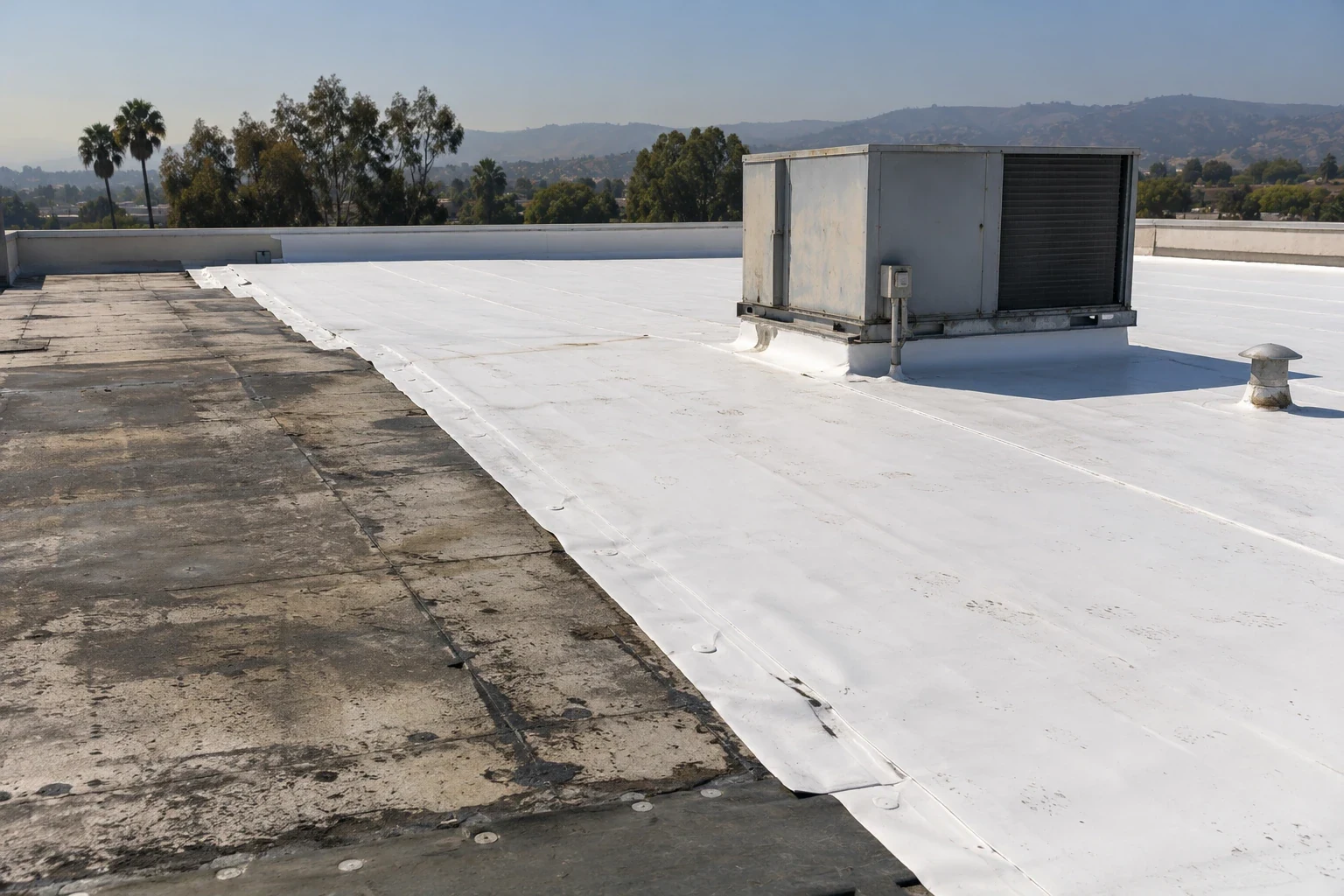
A replacement project can include more than the membrane surface. Removal depth, new insulation, cover board, edge metal, drain details, curb heights, equipment supports, testing, and tie-ins all affect the scope. Replacement planning identifies each component, the areas that can remain, and the items that need a project decision. Where a roof contains multiple systems, the work can be divided by assembly instead of using one method across the full building.
Seasonal timing also matters. Most regional precipitation falls during winter, with meaningful variation between seasons, while dry easterly winds can bring hot conditions inland. We set the open-roof limit against current weather and the assembly’s dry-in requirements. A capital calendar can set a target period; the daily conditions and facility access determine whether the work can proceed.
Connect the Budget to a Workable Sequence
Funding approval is only useful when the project can fit the property’s operating schedule. We identify which roof zones can be isolated, where a lift can stage, and which entrances or equipment routes must remain available. For an occupied building, the sequence lists the area opened, the intended closure point, overhead protection, and the party who approves each phase. A schedule that ignores these field limits can understate both time and coordination.
Near the Chula Vista Bayfront, coastal exposure may affect visible metal and hardware; farther inland, larger temperature swings can change the inspection and work window. We inspect the actual edge, fasteners, membrane, and drainage before describing a repair. For properties near the Broadway commercial corridor, the building’s delivery and public-access plan also belongs in the mobilization schedule.
Roof maintenance between capital projects can keep drains, scuppers, seams, and flashing transitions under review. The work order records what was serviced and what still needs a construction scope. Maintenance can extend useful operation when the system condition supports it; it does not erase a known wet area or substitute for a needed replacement.
Update the Plan When the Roof Is Open
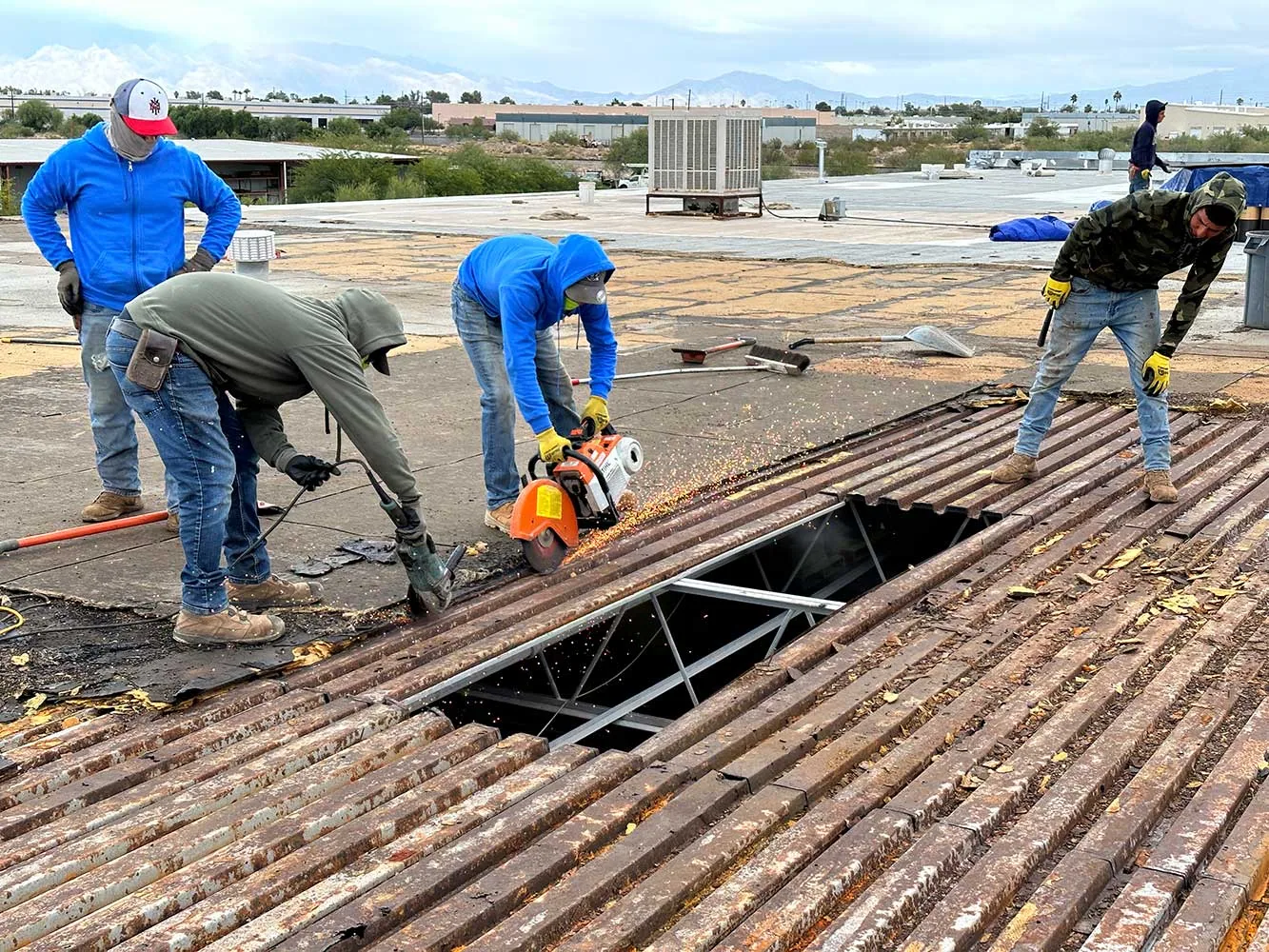
Demolition is a decision point, not a formality. Wet insulation, separated layers, deteriorated deck, or a changed curb can alter quantity and sequencing. We photograph the exposed condition, secure the zone, and describe the work required to continue. The owner or authorized project contact can then approve the change with a clear view of the affected area. The closeout preserves the original assumption and the evidence that changed it.
Costs depend on assembly, access, removal depth, material handling, lift needs, drainage details, equipment coordination, and occupied-space protection. We separate confirmed work, unit-based changes, testing, and allowances that remain unresolved. A roof survey may be a separate need when a financing or property transaction asks for an independent condition view; it should not be blended into routine capital planning without stating its purpose.
Share the asset list, available roof plans, prior repairs, budget period, leak history, and access contacts. We can inspect released zones and outline near-term repairs, testing needs, and replacement work in separate scopes. A building near EastLake Business Center receives the same evidence-based review as a western property, with its own roof details and operating restrictions.