Build a Roof Register That Can Be Used
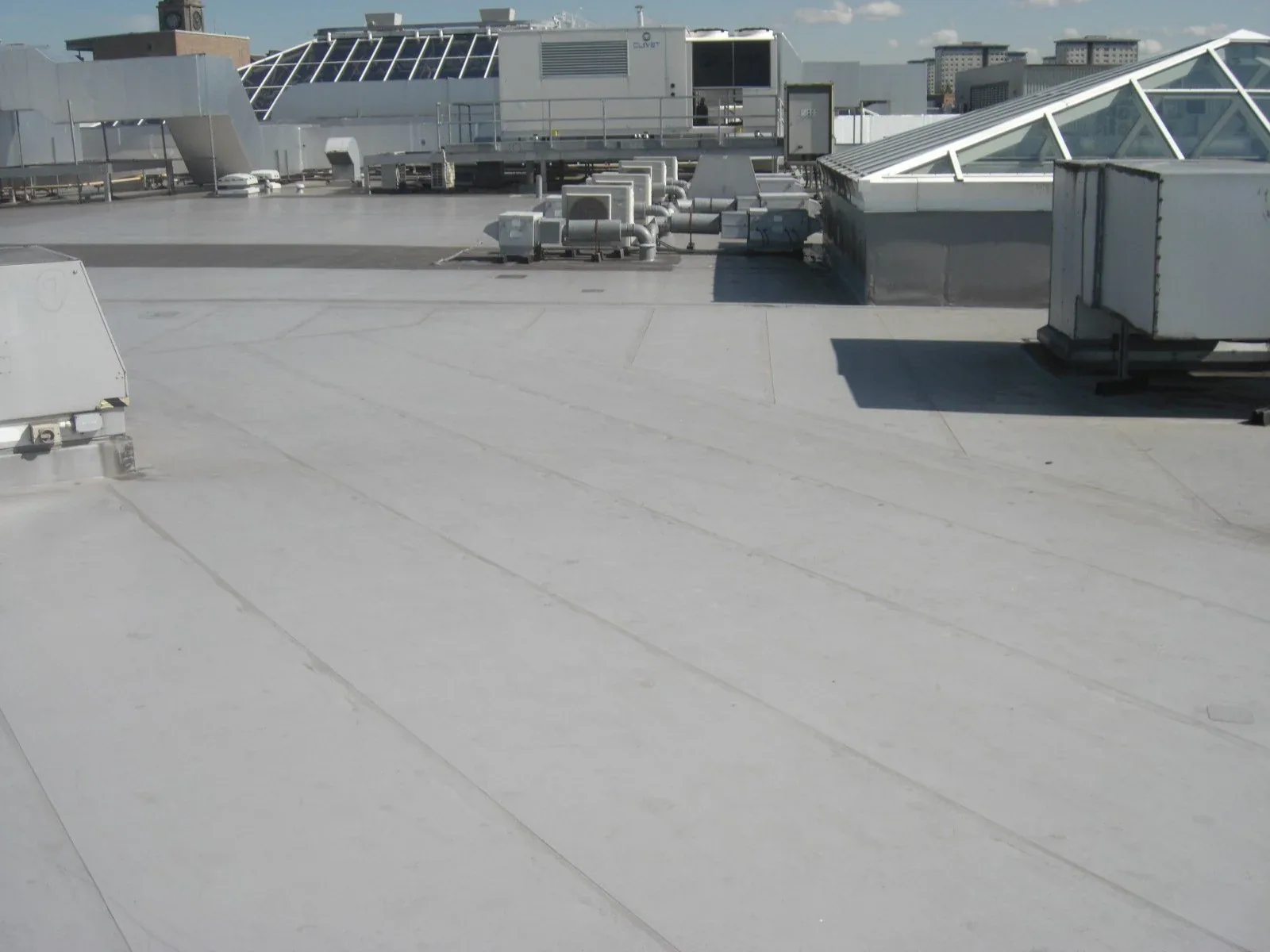
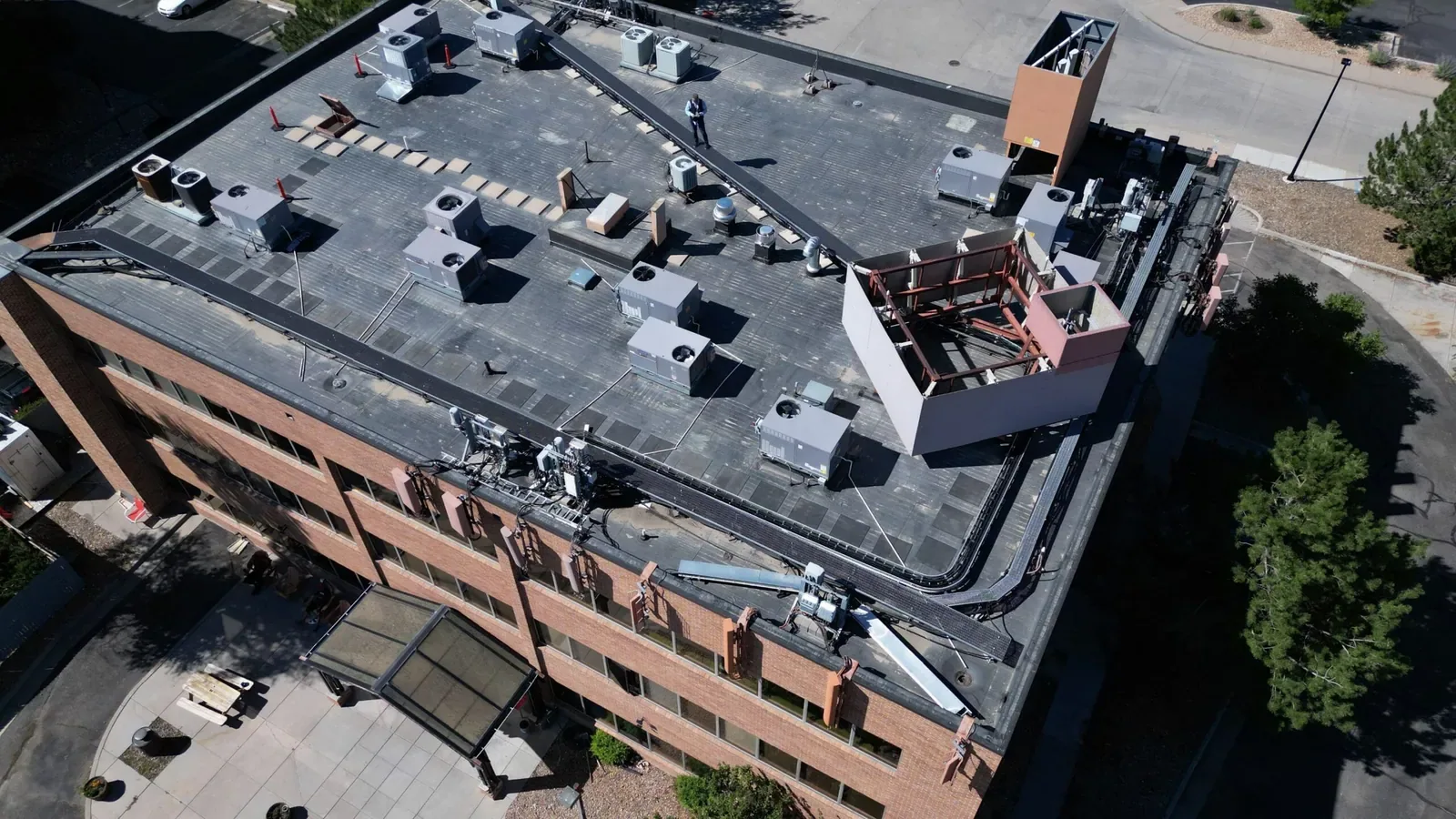
A useful register identifies the property, roof section, visible system, drainage points, access limits, and relevant repair history. We separate a clinic wing or warehouse addition when it has a different assembly or work boundary. A building label alone does not tell maintenance staff which membrane, curb, or outlet needs attention. Photos and a simple roof-zone map let the next person connect a leak call with the location inspected.
Chula Vista’s employment areas span the tideland and Otay Valley, with newer development farther east near Eastlake and Otay Ranch. A manager with buildings across those districts may also track properties near Third Avenue or other western business corridors. We organize travel and access by district, then identify the assembly and visible condition at each roof during the walk.
For older reports, we preserve the date and what could be seen rather than rewriting an old observation as a current finding. A roof condition report can establish a fresh baseline with labeled photos. A separate due diligence survey answers acquisition questions; it should not silently replace the operating record used by the maintenance team.
Check Condition by Roof Zone
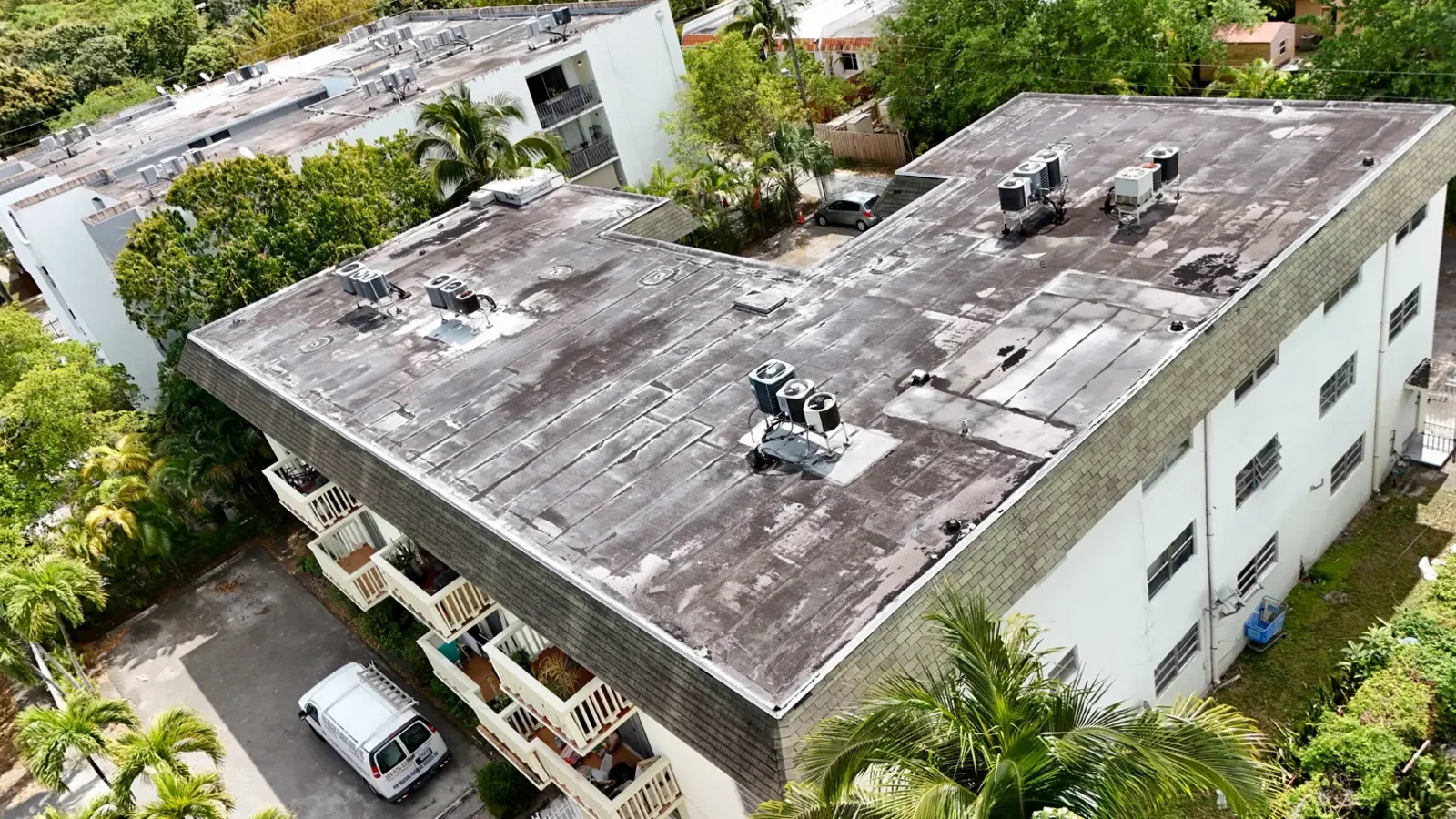
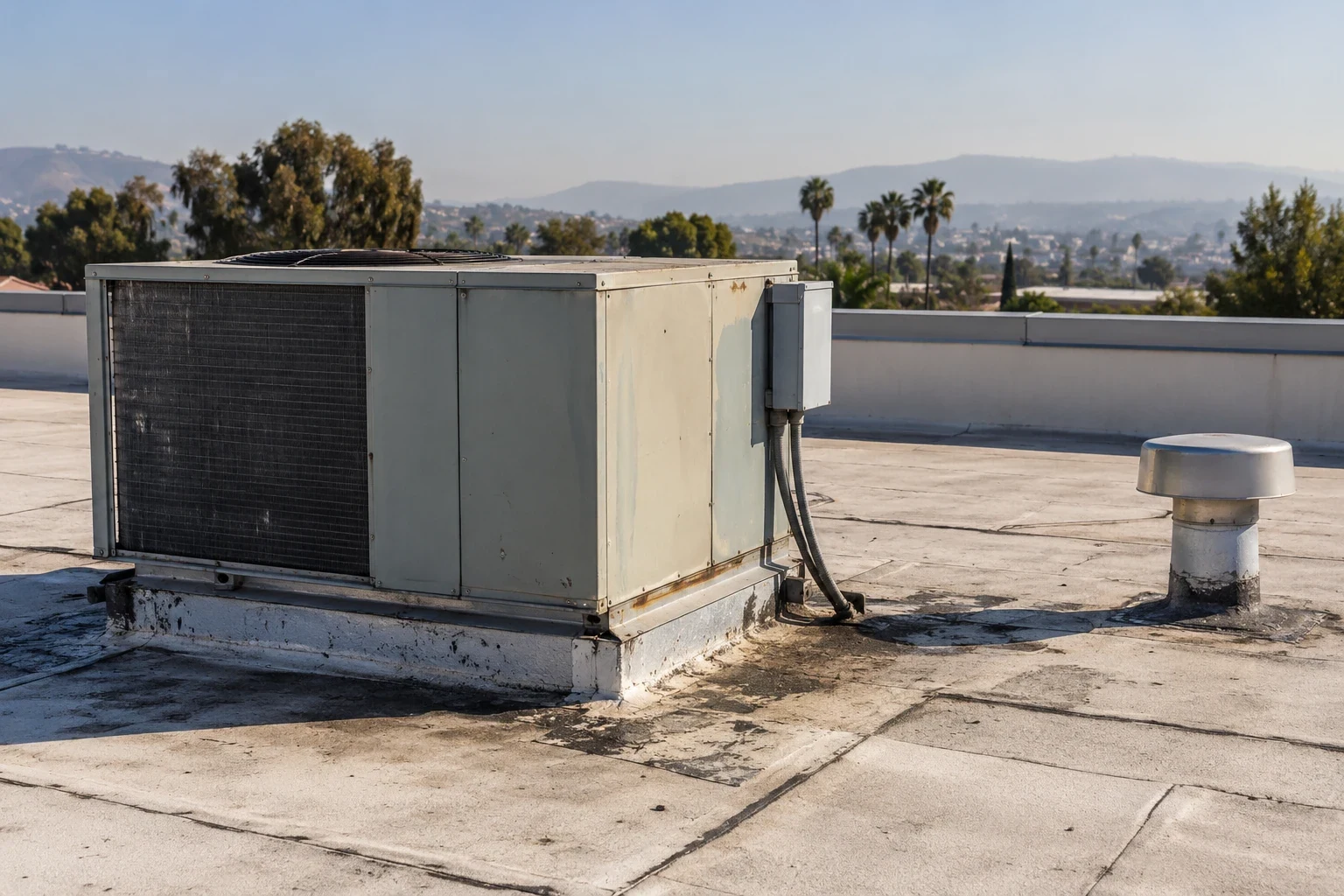
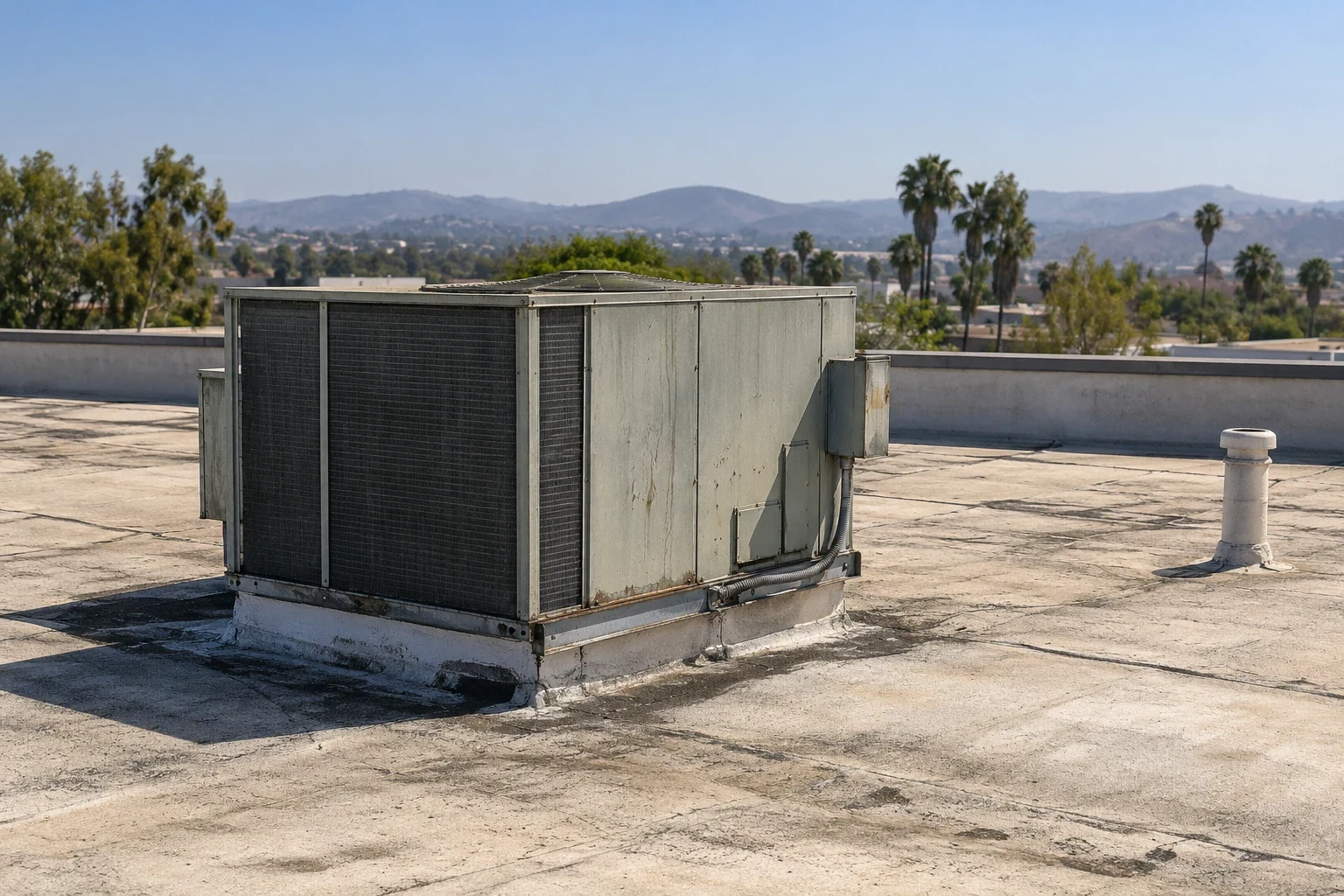
Roof wear is not uniform. A drain bowl may be clear while a nearby low area holds water; a seam may be sound on one slope and separated near a rooftop unit. We inspect seams, curbs, penetrations, edge metal, drains, and past repair locations as separate observations. Each entry says whether the condition was visible, tested, repaired, or left for follow-up. If insulation or deck condition remains hidden, the register records that limit instead of calling the area sound.
Where an interior leak has been reported, we connect the room below with the likely roof zone but keep the two observations distinct. Water can travel along a deck flute or framing before it appears inside. A commercial roof inspection can record the visible path and the next test needed. For a large or obstructed surface, a moisture survey may help identify areas for closer investigation; readings still need interpretation against the assembly.
Emergency response runs after hours, on weekends, and holidays when active water threatens a building. The asset record should distinguish that temporary protection from permanent work. We log the area secured, the material used, the remaining question, and who approved access. This prevents a tarp or seal from appearing later as a completed repair.
Separate Immediate Action from Capital Need
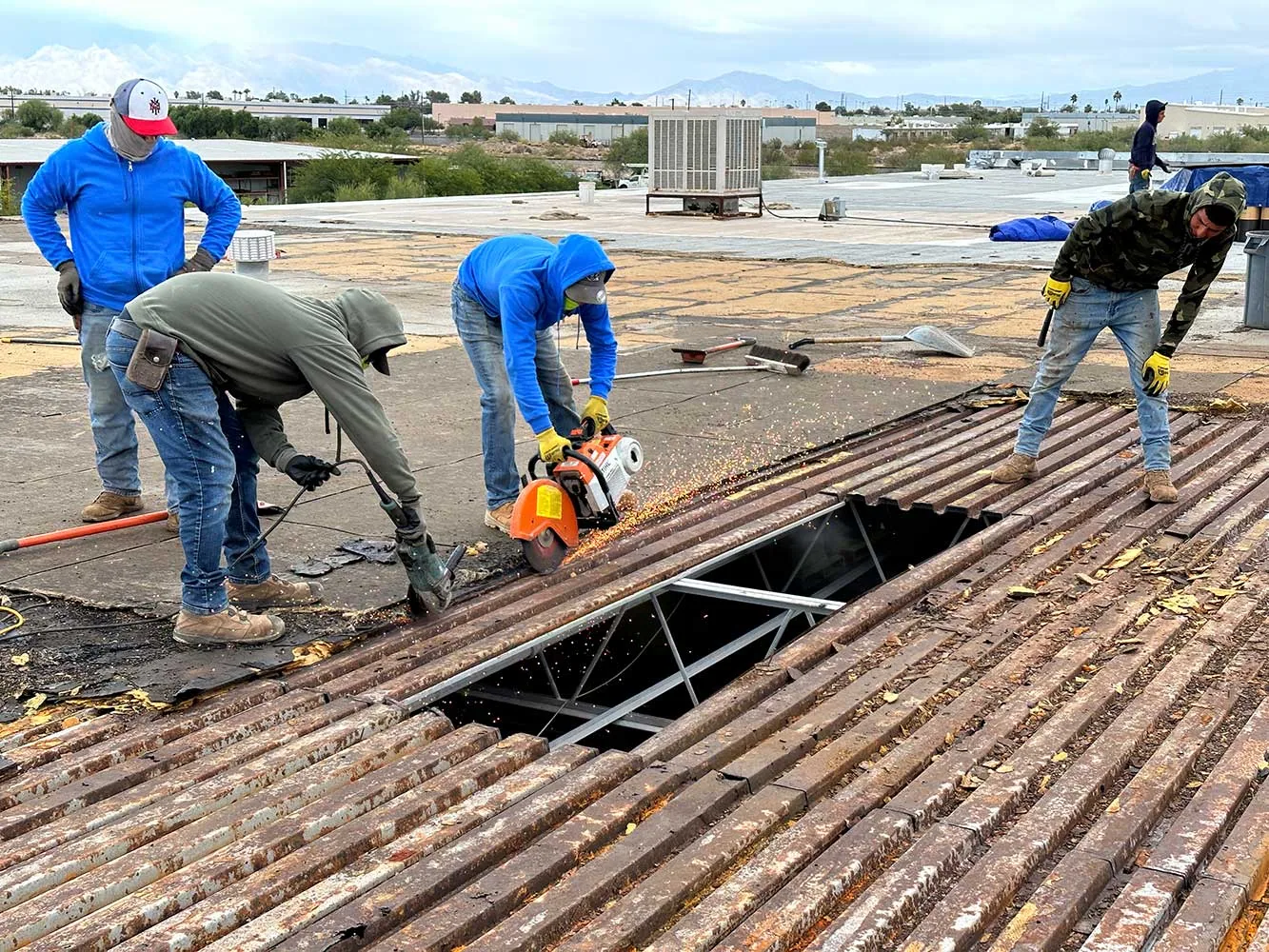
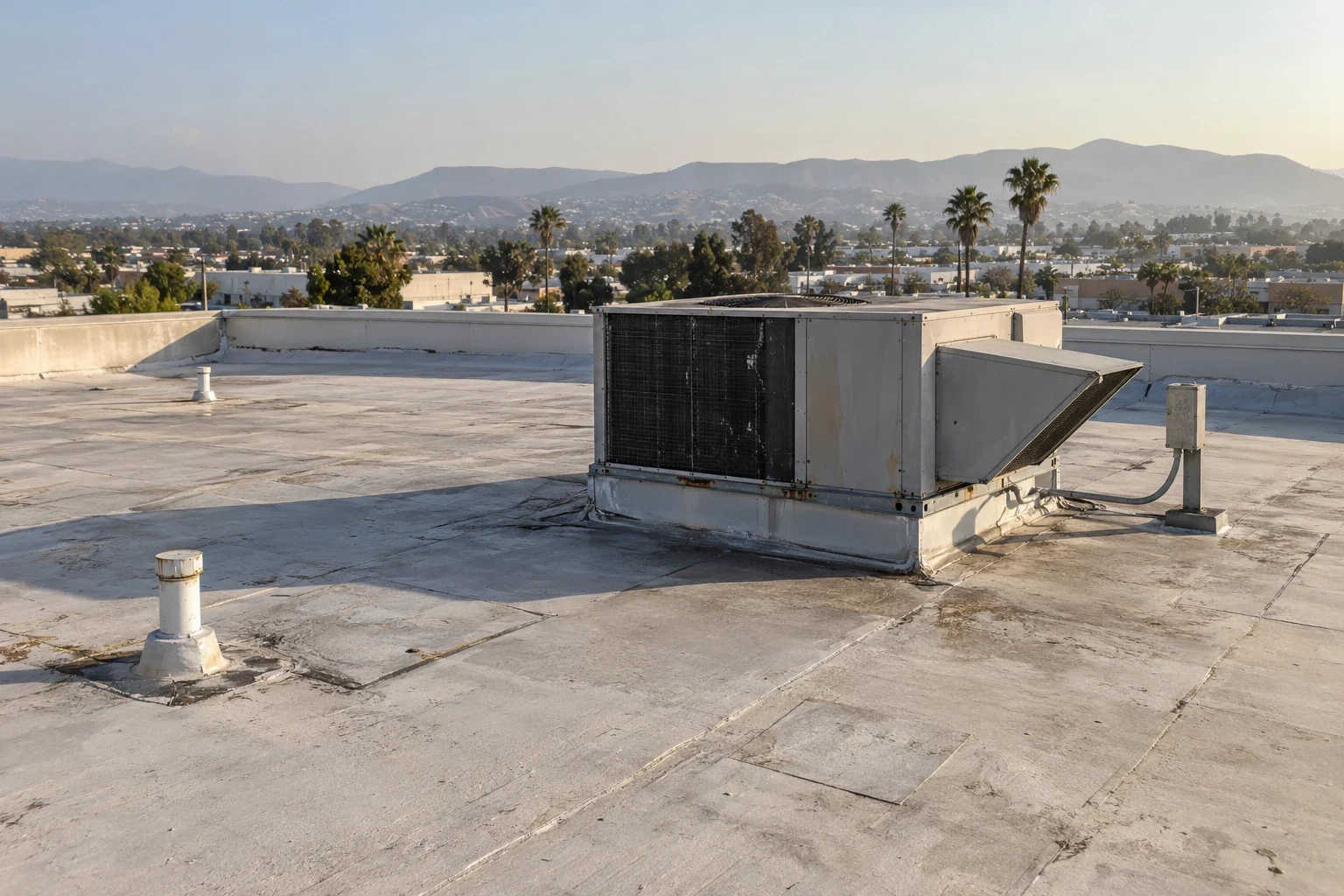
One open curb needs a different response from wet insulation across several connected zones. We rank work by the observed failure, active water, occupant or equipment exposure, and the possibility that delay will spread damage. The record explains why an item is urgent and what protects the building until permanent work is scheduled. It also leaves room for a test opening when the surface alone cannot show how far the condition extends.
A localized defect may support targeted repair. Repeated seam failures, loose attachment, wet layers, or damaged deck can point to removal or replacement, but the inspection has to establish those conditions. Before considering a recover, we confirm that existing layers are dry, firmly secured, compatible with the proposed assembly, and permitted by the project scope. For longer-range decisions, capital planning carries the documented scope into a budget conversation without turning an estimate into a promise about remaining life.
Most San Diego-area precipitation falls during winter, and dry easterly winds can bring hotter periods farther inland. We use the actual forecast and roof-surface conditions to set the daily open area. During inspection, we check each seam and coating for the specific signs of separation, wear, or failure.
Use Maintenance to Update the Record
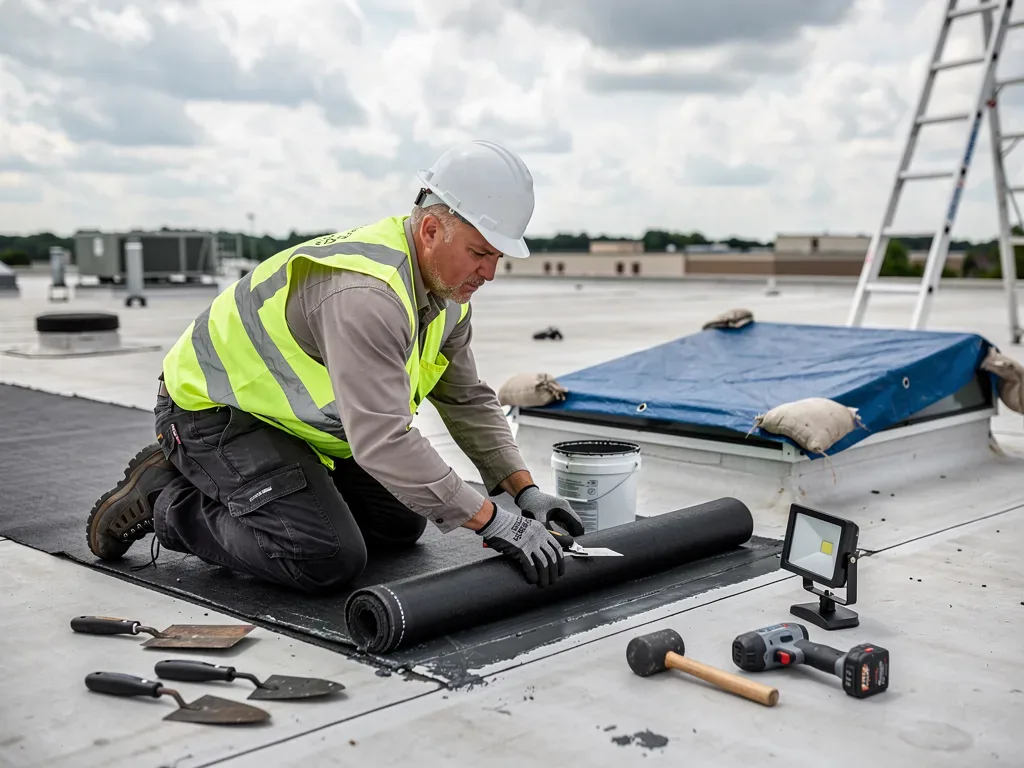
A maintenance visit is more useful when it checks the same roof zones as the earlier inspection. We revisit drain bowls, overflows, exposed seams, flashing transitions, rooftop supports, and repair edges, then record what changed. Debris removal may restore an outlet, but it does not correct a settled roof area. The work order states which items were serviced and which need a separate scope.
Preventive roof maintenance can keep small observations from disappearing between leak calls. The service record lists the date, location, photos, and any part of the roof that could not be reached. Where a facility has many roof sections, a multi-site roof program can group the records for planning while preserving separate findings for each building.
In the Otay Valley or near the Otay River Business Park, access may involve receiving schedules or active yard routes. We confirm those limits with the site contact before setting inspection and repair windows. That detail belongs with the individual asset record so a future visit can follow the same approved route and work window.
Keep Portfolio Decisions Traceable
Ownership and facilities staff need to review the basis for a recommendation, especially when buildings compete for the same capital budget. We connect each suggested action to a roof zone, photograph, observed condition, and open question. If an item is only a planning allowance, we label it as such. If a test or approval is needed, we state what it would resolve and who needs to provide access.
Cost and timing depend on roof area, assembly, removal depth, access, lift needs, drainage, insulation, and coordination with equipment or occupants. An asset register can compare those drivers without pretending that two similar roofs require identical work. For a property sale or refinance, the record can also identify which items merit a separate roof survey before a transaction decision.
Share the property list, roof plans if available, recent leak reports, repair records, and facilities contacts. We can walk released areas, verify visible systems, and organize the findings into a roof-by-roof register. For buildings near Third Avenue, the team can include local access hours and loading restrictions with the condition record. The next decision will be tied to a location the maintenance crew can find.