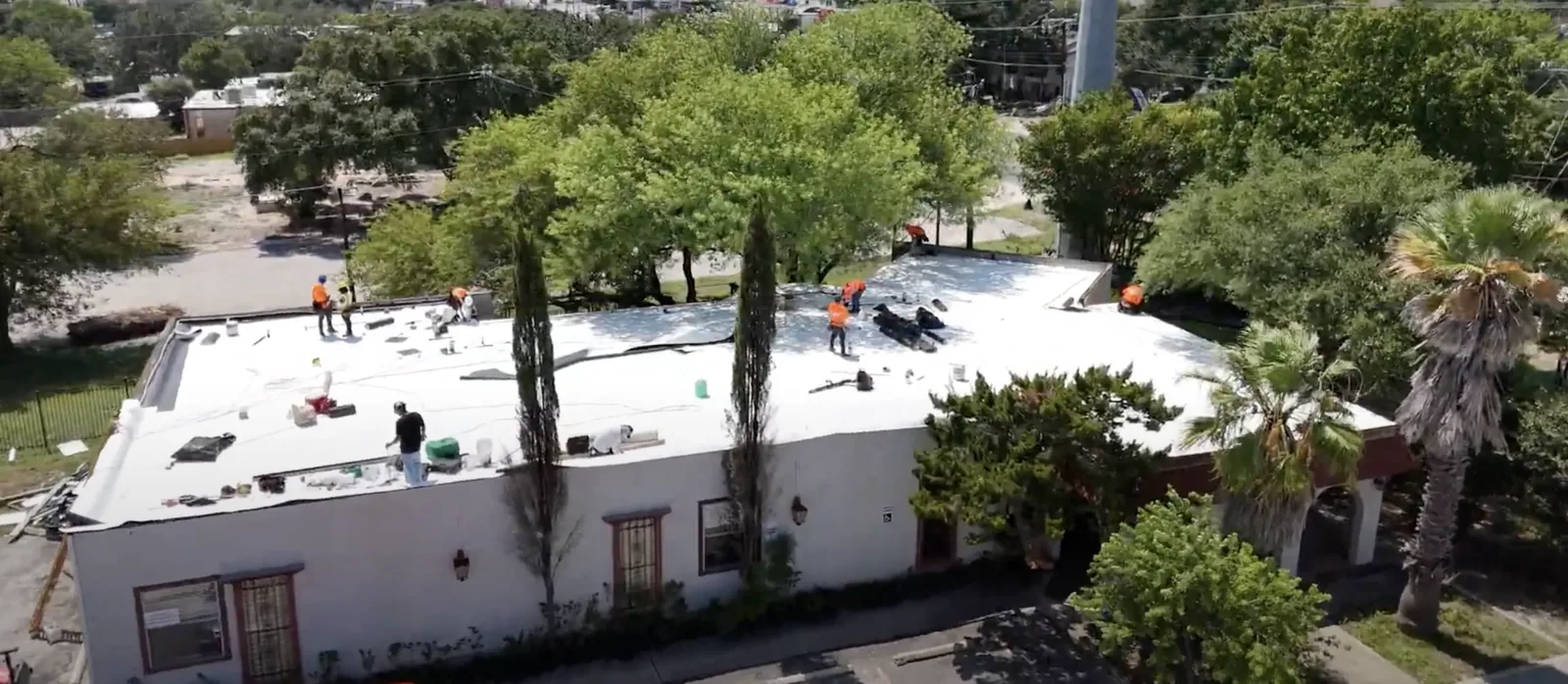
Confirm the modified-bitumen assembly
Modified bitumen is supplied in rolls and installed in layered assemblies. Identify whether the membrane is SBS or APP, how each ply is attached, and what surfacing protects the cap sheet. Review specifications, product labels, repair records, and accessible edges. A mineral-surfaced sheet, coating, or granule loss cannot by itself identify the full system. Record uncertainty when documents and field conditions do not agree.
SBS and APP products have different formulations and may use different installation methods. Some systems are torch-applied, while others rely on hot asphalt, cold adhesive, or self-adhered sheets. We confirm the assembly and site requirements before selecting an application method or using heat. A roof inspection should identify accessible evidence, suspected layers, and any opening needed to confirm the build-up.
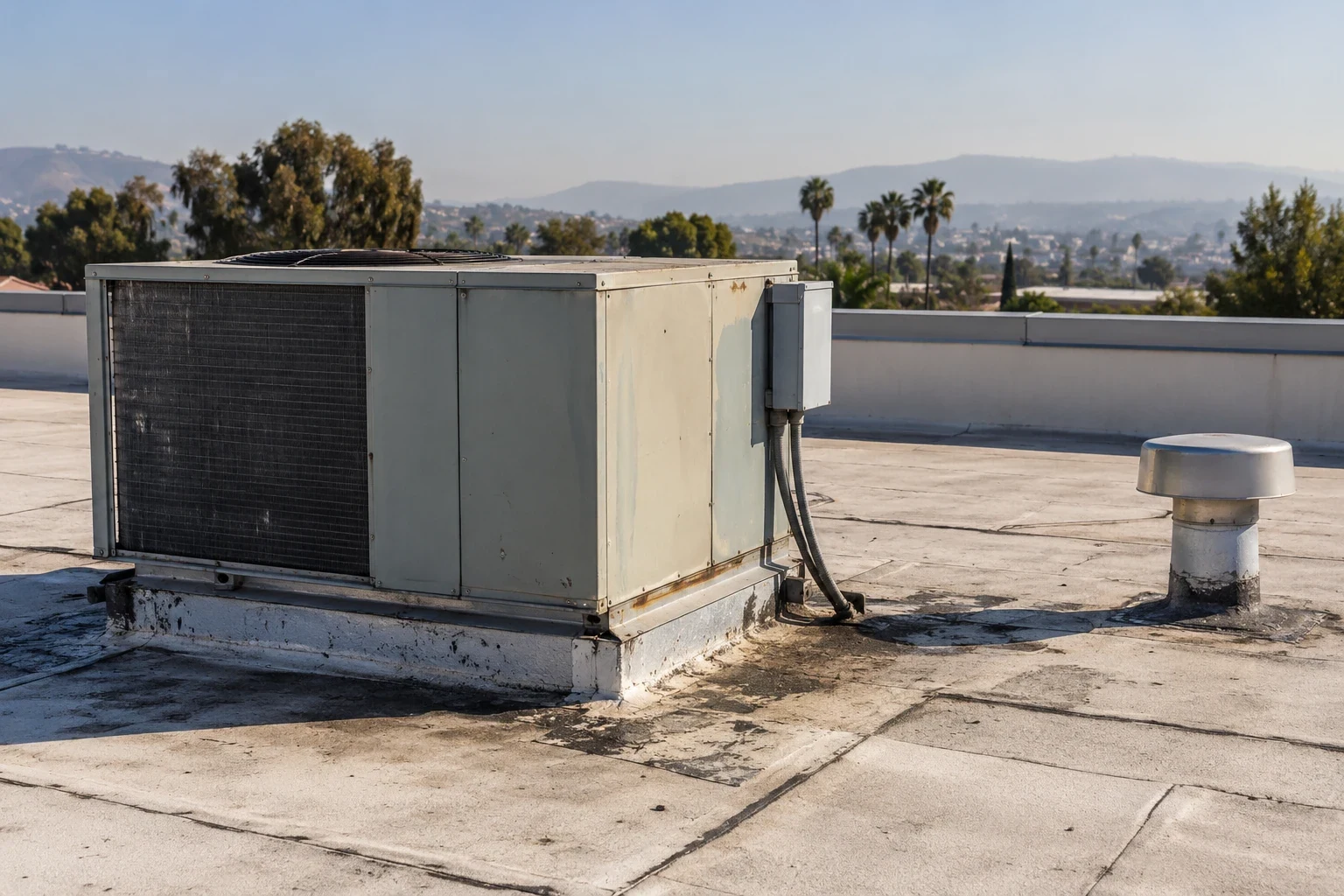
Map the roof into zones where additions, overlays, or previous repairs changed the assembly. record drain heights, parapet details, rooftop equipment, and where one membrane meets another. The roof record should keep original construction separate from later repairs so a maintenance crew does not extend an incompatible patch.
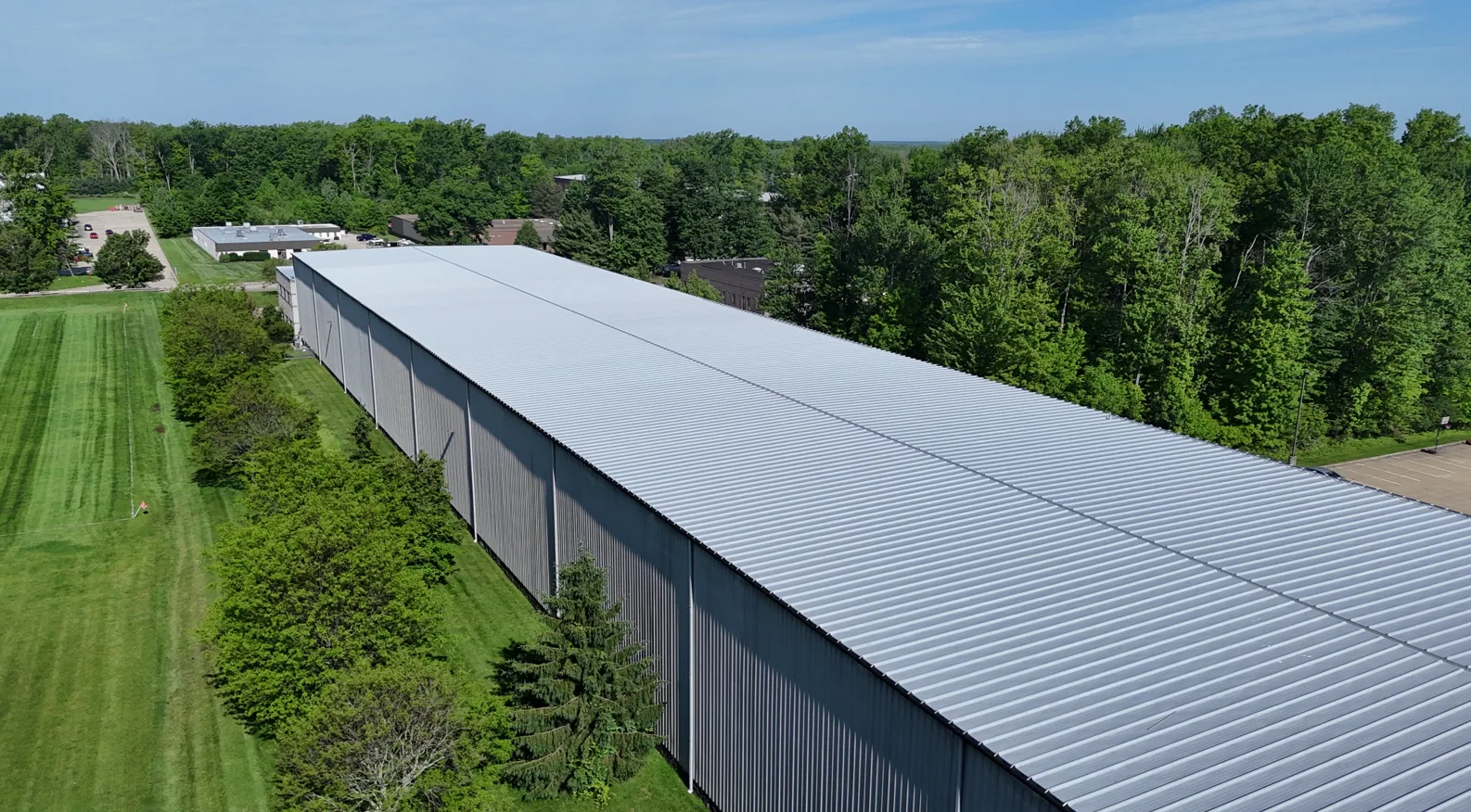
Inspect laps and cap-sheet surfacing
Examine side laps and end laps for openings, fishmouths, wrinkles, exposed reinforcement, and edges that have begun to release. A lap may look closed at one point and separate farther along its run. Follow it until the bond is sound, then mark the repair boundary. Granules may be displaced by traffic or weather; check whether the bitumen is exposed and whether the sheet itself is torn or brittle.
Blisters need careful assessment. A raised area can contain air, moisture, or a separation between plies. Do not cut it open simply to flatten the surface. Determine whether moisture is present and whether adjacent material remains bonded. If an approved opening is necessary, plan protection and closure before starting. Surface patching over wet layers may hide the symptom without resolving its cause.
At penetrations and curbs, inspect the base flashing, corners, counterflashing, and termination. Look for splits where the roof turns up, loose metal, sealant relied on as the only attachment, or damage from service work. The lap and seam repair should restore the layered connection and state which nearby defects are included.
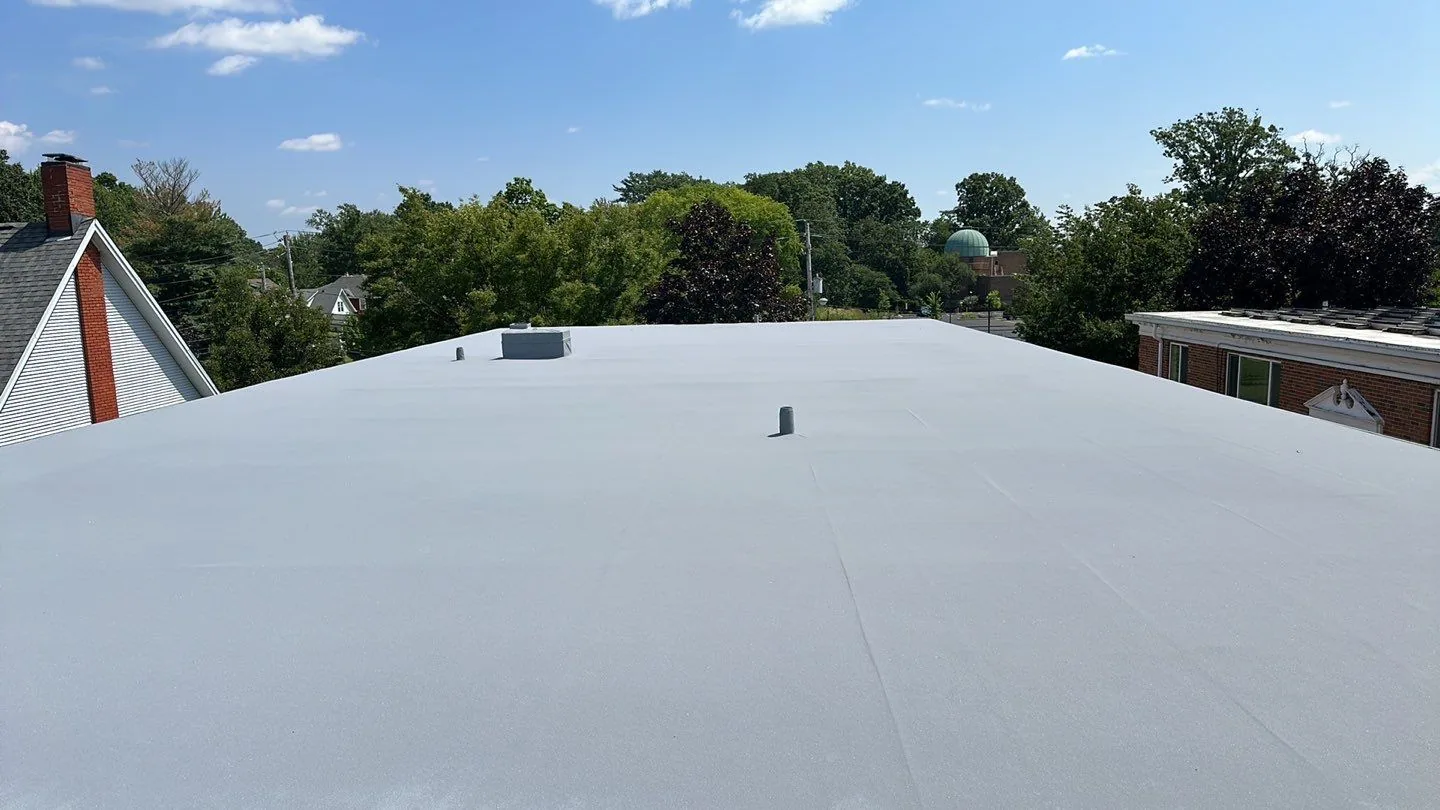
Trace drainage and concealed conditions
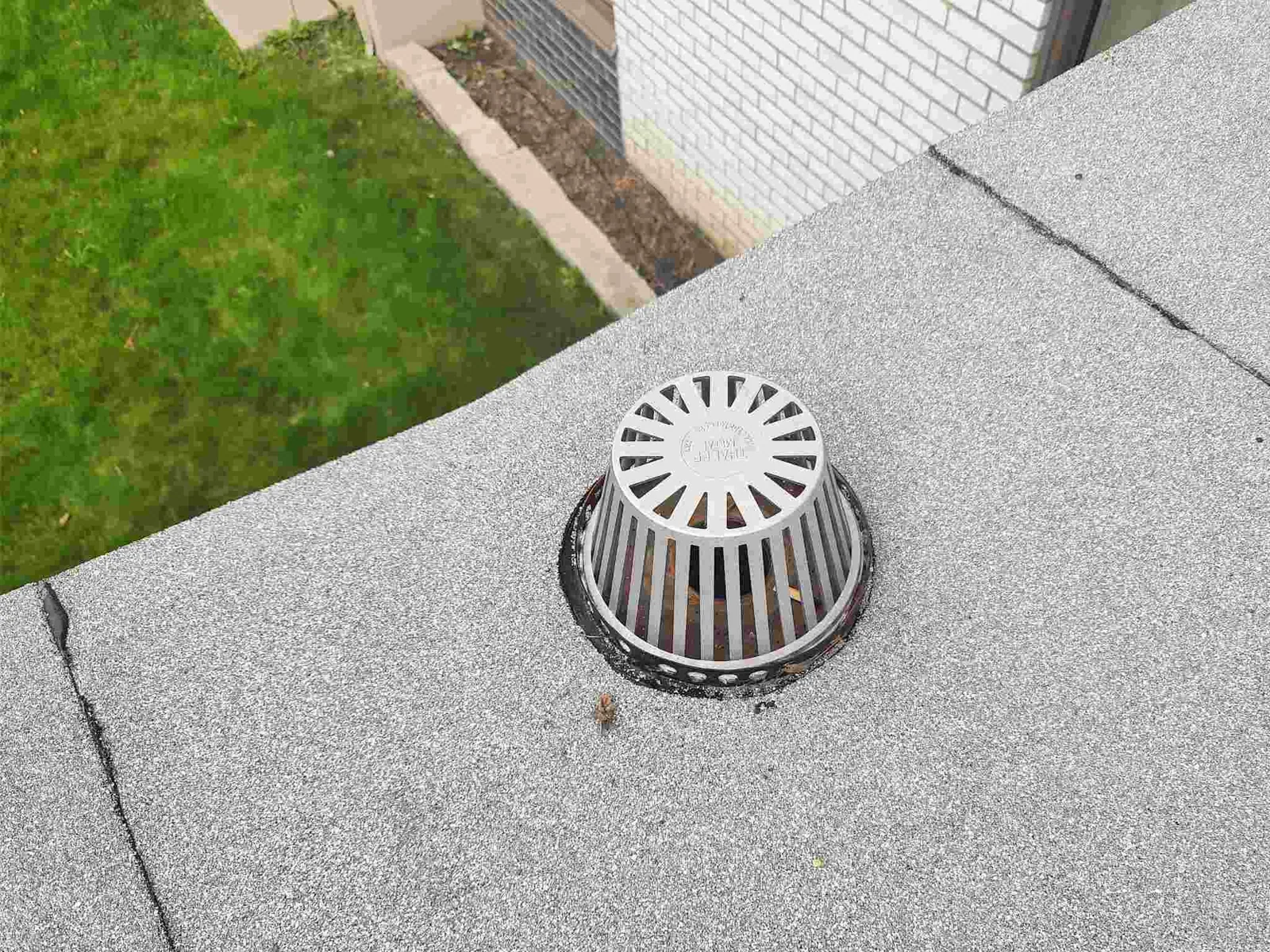
Follow the slope to each drain, scupper, and overflow. Check the bowl, clamping ring, strainer, surrounding plies, and whether prior overlays have raised the field above the outlet. Persistent water can result from blockage, a low area, or changed elevations. A drainage review should separate routine clearing from repairs to the membrane or drain connection.
Interior stains are clues, not roof maps. Water may travel along a deck, insulation joint, or structural member before it appears below. Compare the reported time and location with the roof layout, then check likely paths uphill and around penetrations. Moisture testing can help select confirmation points, but readings should be interpreted with the assembly and followed up where needed. record the limits of any inspection when roof areas are covered or inaccessible.
Winter brings most regional rainfall, so removal and repair need a controlled daily boundary. Keep drains open, protect exposed layers, and confirm each tie-in before the crew leaves. Set a weather response plan and name who checks the closure. If rain arrives during work, record which zone was completed and inspect the temporary edge before resuming.
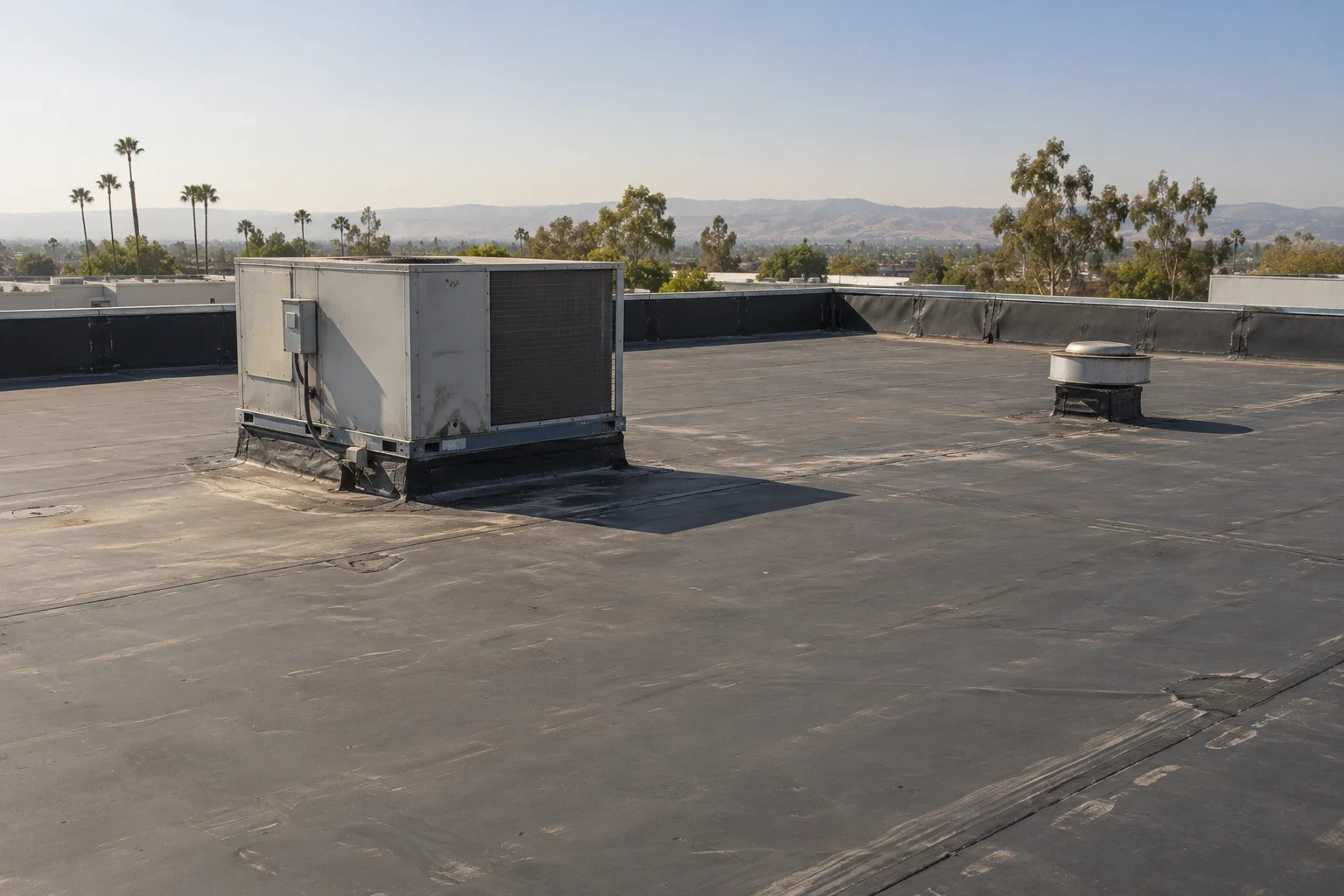
Choose a safe installation sequence
Before selecting a repair method, confirm the substrate, moisture, existing attachment, and material compatibility. Torch work requires a site-specific fire-safety review, including combustible conditions, penetrations, concealed voids, and required fire watch. Where the method or building conditions do not support open flame, evaluate an approved alternative system. Keep welding, adhesive, and asphalt procedures aligned with the specified product and field conditions.
Chula Vista's coastal influence and inland hot spells can create different roof-surface conditions across the market. Check actual temperature, wind, and product limitations rather than assuming one schedule suits every roof. A hot cap sheet may soften under foot traffic, while cooler conditions can change adhesive behavior. Stage material so paths stay clear and completed details are not disturbed by later trades.
Occupied properties need work zones, protected access, tenant communication, and a dry-in point for each shift. The phased reroof plan should show where crews begin and stop, how equipment moves, and who receives the completed area. This is especially useful when a building's loading or business schedule constrains crane access or material delivery.

Decide between repair and replacement
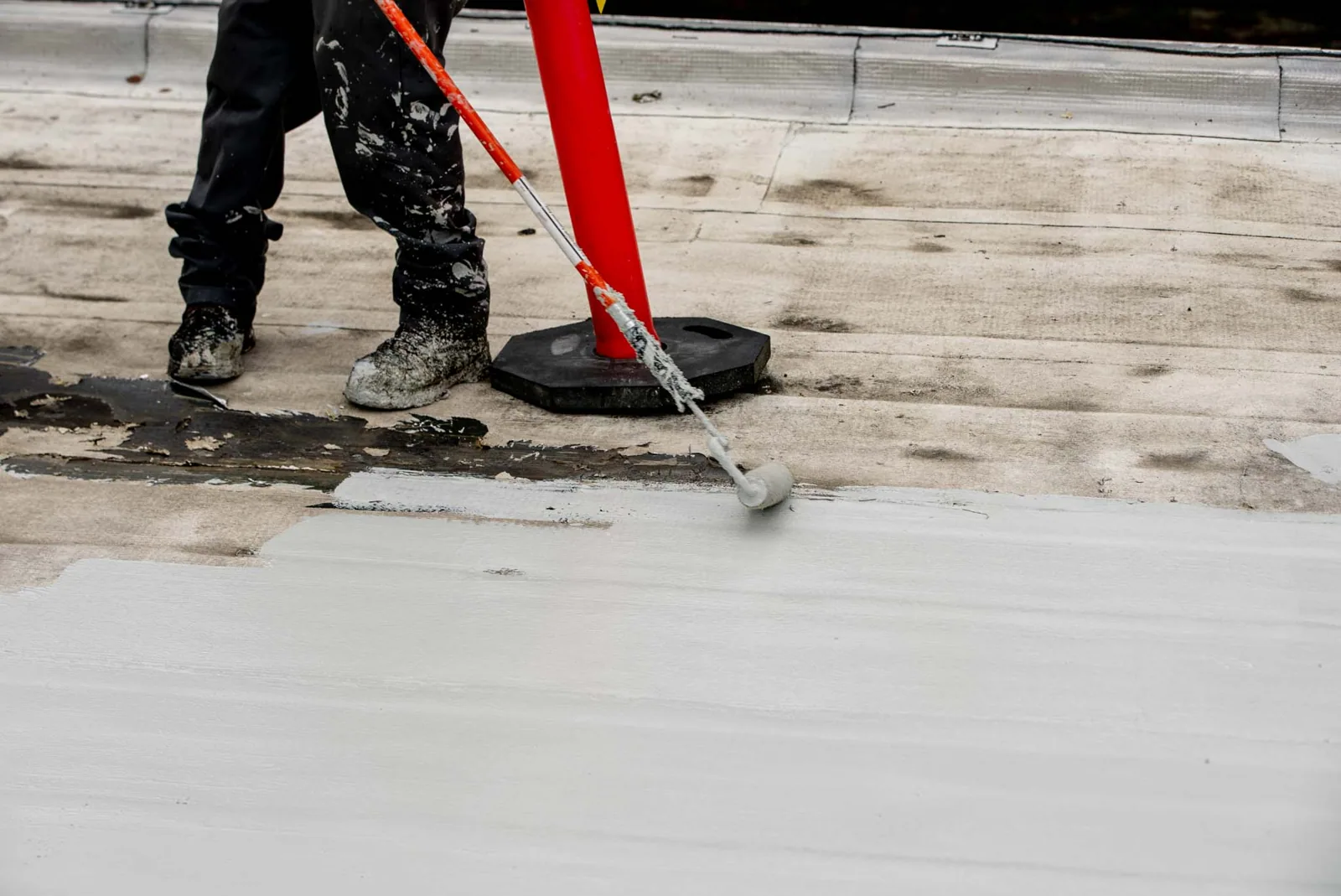
A local lap, flashing, or puncture repair may be suitable if the surrounding plies are bonded and the substrate is dry and stable. Repeated splits, broad brittleness, widespread blisters, or wet insulation point to a larger review. Measure affected zones and compare repair with replacement using the same roof area and access assumptions. Describe what is confirmed and what could alter the scope after opening.
Recover work may reduce tear-off, but existing layers must be suitable for another assembly. Check attachment, moisture, load, roof height, drainage, and transition details first. Replacement exposes more of the deck and insulation but requires debris control and a dependable temporary closure plan. The replacement scope should specify removal limits, substrate repairs, insulation, edge metal, curbs, and the daily dry-in standard.
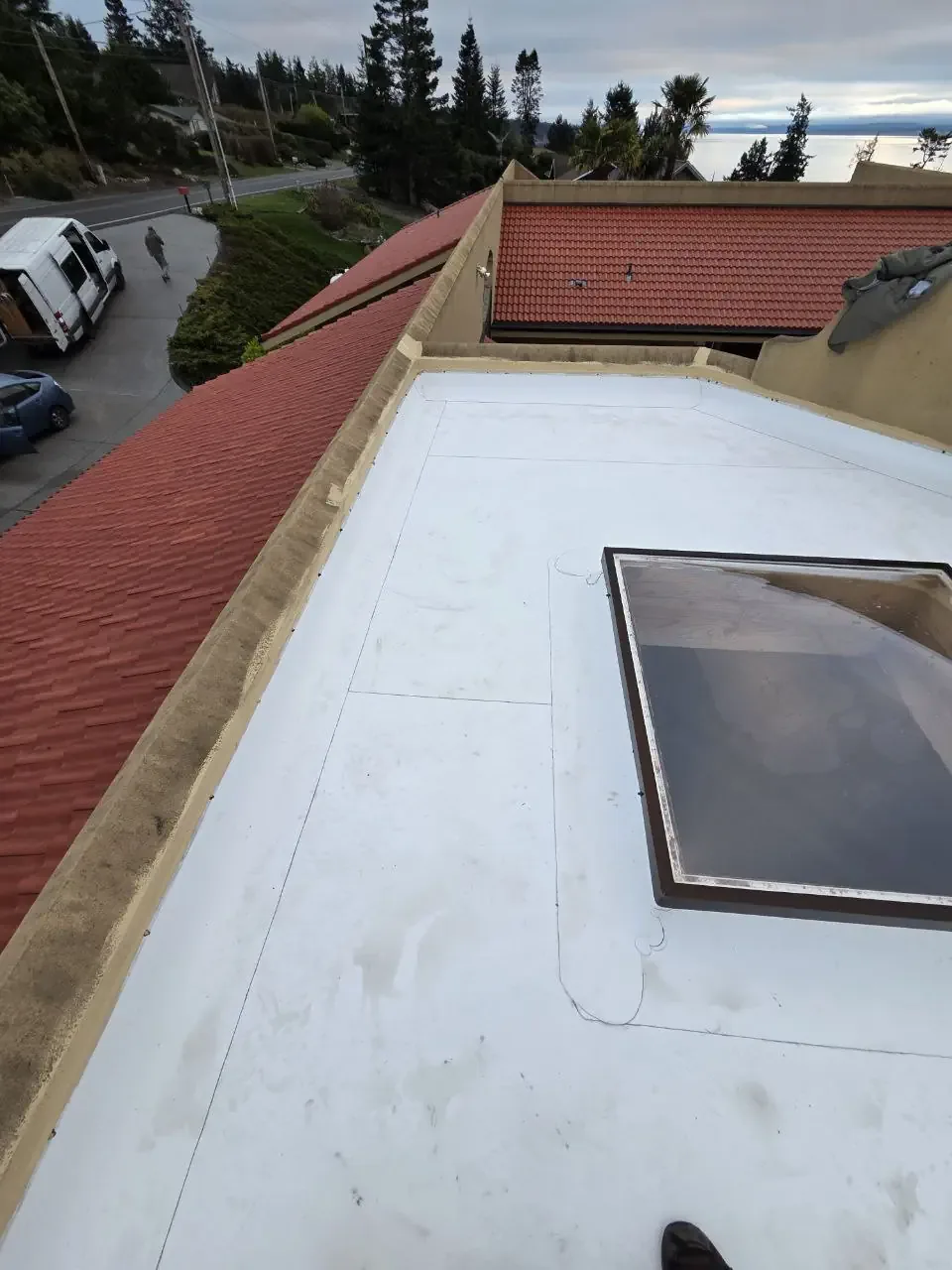
Where modified bitumen meets a single-ply area, identify both products before setting the connection. A TPO system needs its own transition detail. A built-up roof also has multiple plies, but it is not interchangeable with modified-bitumen sheet. Transition details should address movement, water flow, and the specific materials at the boundary.
Keep a useful roof history
At closeout, inspect completed laps, patches, flashings, drains, and temporary tie-ins. Photograph each area and mark it on the roof plan. record the product, method, preparation, date, and any condition left for follow-up. This makes a future leak report easier to compare with the repair instead of relying on an unlabeled image.
Maintenance checks should look for lifted lap edges, exposed reinforcement, displaced granules, open flashing corners, loose metal, debris, and trade damage. After rooftop equipment work or severe weather, review the affected path and penetrations. Do not coat or seal a broad area until the underlying defect and product requirements are understood.
To arrange an assessment, share the building location, access contact, roof plan, leak history, and any installation or repair records. We can examine the plies and drainage, describe what the field supports, and outline practical next steps for the property team.