Locate the Opening and Its Cause
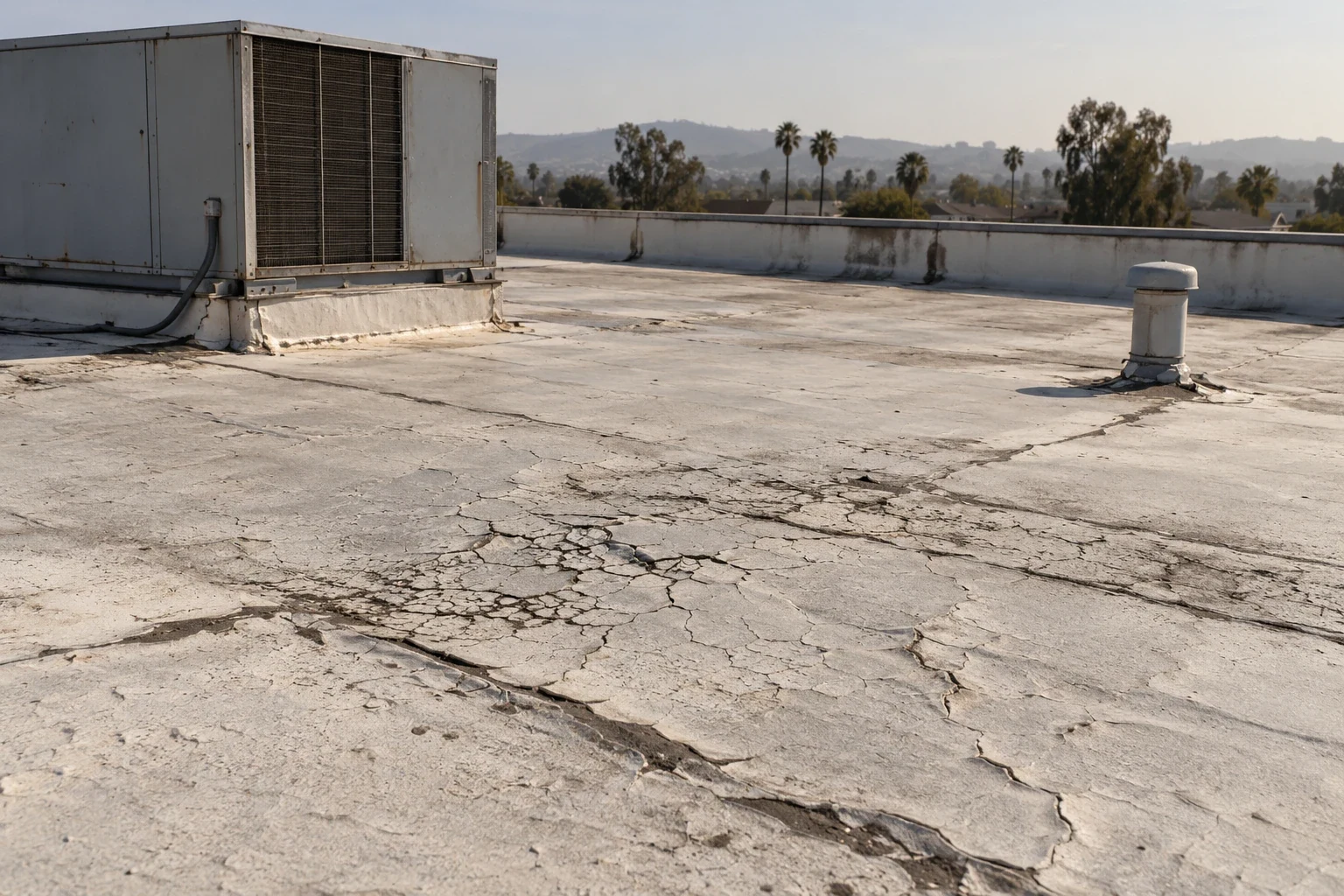
We examine the puncture for a sharp cut, round impact, torn membrane or damaged cover board. A screw or tool can pierce the surface, while concentrated foot traffic can abrade a path near an access point. We check the underside when accessible and look for displaced insulation, crushed board or movement in the deck. Nearby seams and patches deserve attention because a visible hole may be one of several defects in the same work zone.
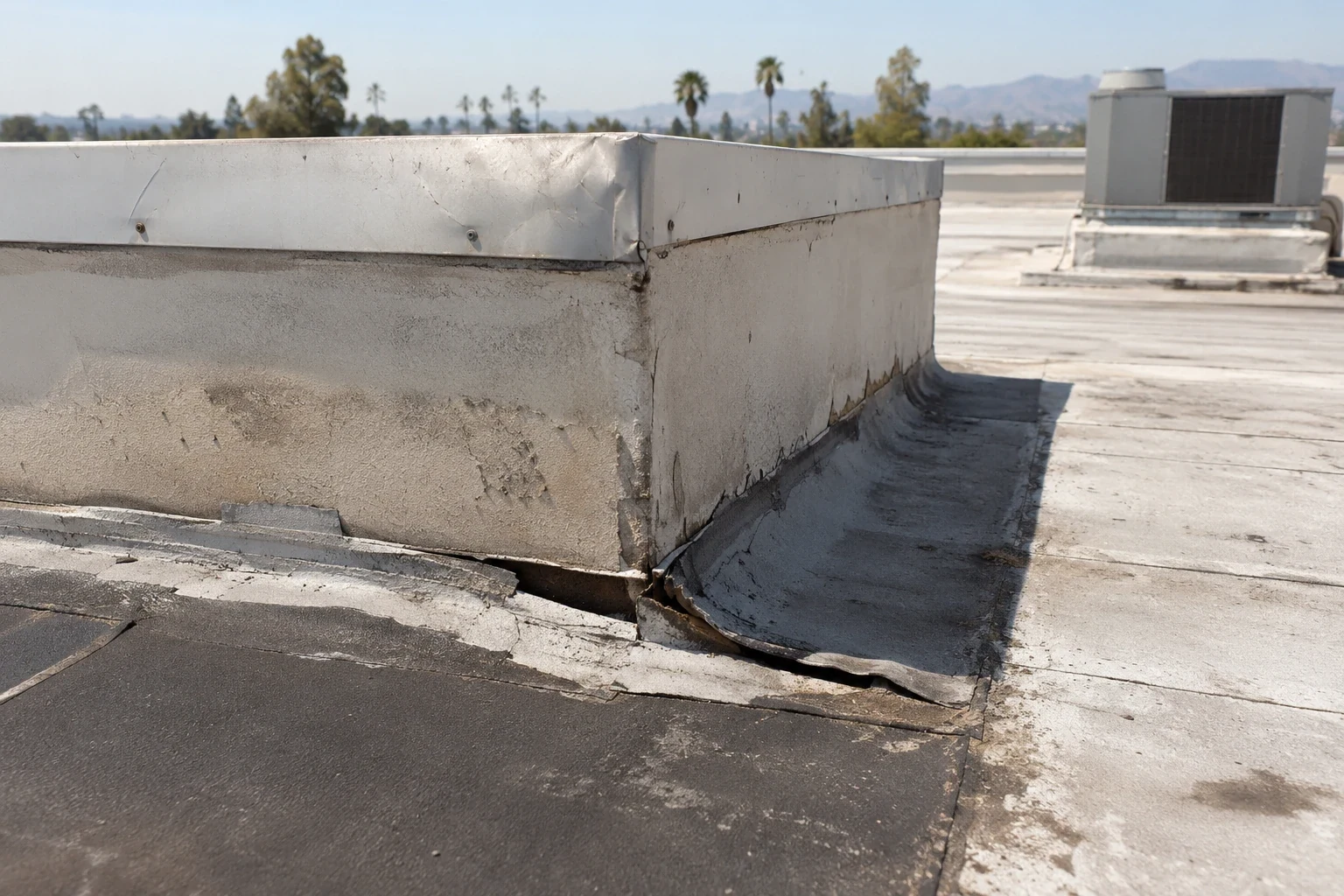
Traffic patterns help determine why the damage occurred. We look at ladders, roof hatches, service walkways, equipment routes and places where crews set tools. If the puncture sits beside a curb or pipe, we inspect that transition rather than assuming the membrane alone failed. A curb can need flashing repair; a separate open lap may call for seam repair. For an active leak with no clear entry point, commercial roof leak repair can include tracing the water path from interior symptoms to the roof.
Property operations guide how we stage the work. The Otay Valley and Otay Mesa connect commercial and industrial land with SR 905 and regional freight routes. At sites with frequent deliveries, we coordinate roof access around loading and identify whether a walkway could reduce repeat wear.
Find Out Whether Moisture Reached the Layers Below
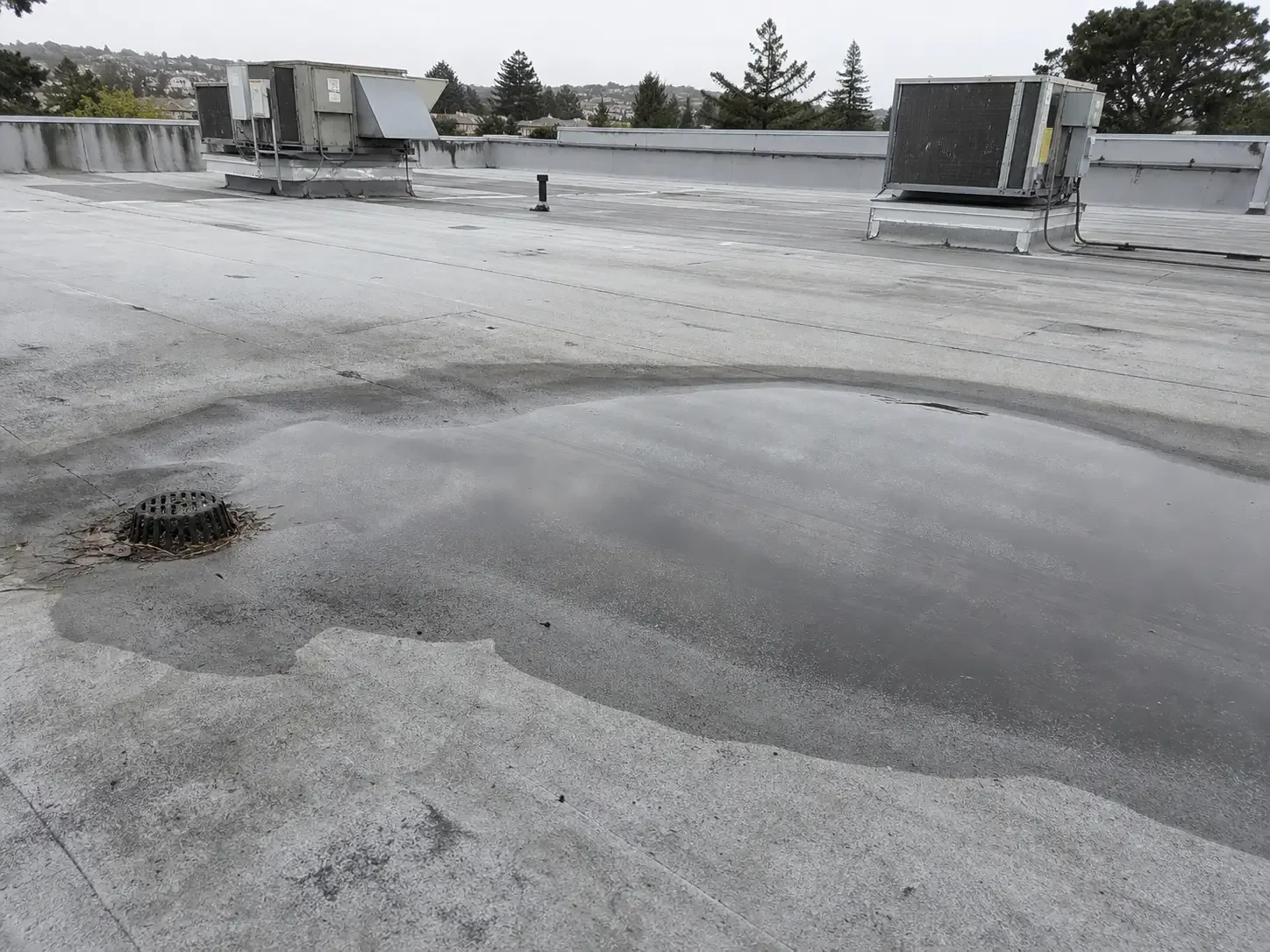
A clean-looking hole does not show how much water entered. We inspect the membrane around it for staining, blisters, softness, trapped debris and prior cover material. If the roof assembly allows, we check insulation and deck from an accessible edge or opening. Interior reports can help narrow the search, but water may follow slope or framing before reaching a ceiling.
When the wet area is not obvious, a suitable non-destructive moisture survey may help map follow-up. Test results need to be interpreted for the roof materials and surface conditions. If they suggest trapped moisture, a controlled opening can confirm the material condition and repair boundary. We explain the purpose before cutting. A small puncture may need only a patch when the surrounding membrane is sound; wet insulation, damaged deck or repeated failures can require a wider repair.
Rainfall timing matters when an opening remains exposed. Most San Diego-area precipitation arrives during winter, although seasonal totals vary. Before a storm, we can secure a temporary cover when conditions allow, then return for a permanent repair after the surface is dry enough for the selected materials. Temporary protection is documented separately so the facilities team knows what is complete and what still needs attention.
Build a Compatible Repair Around Sound Material
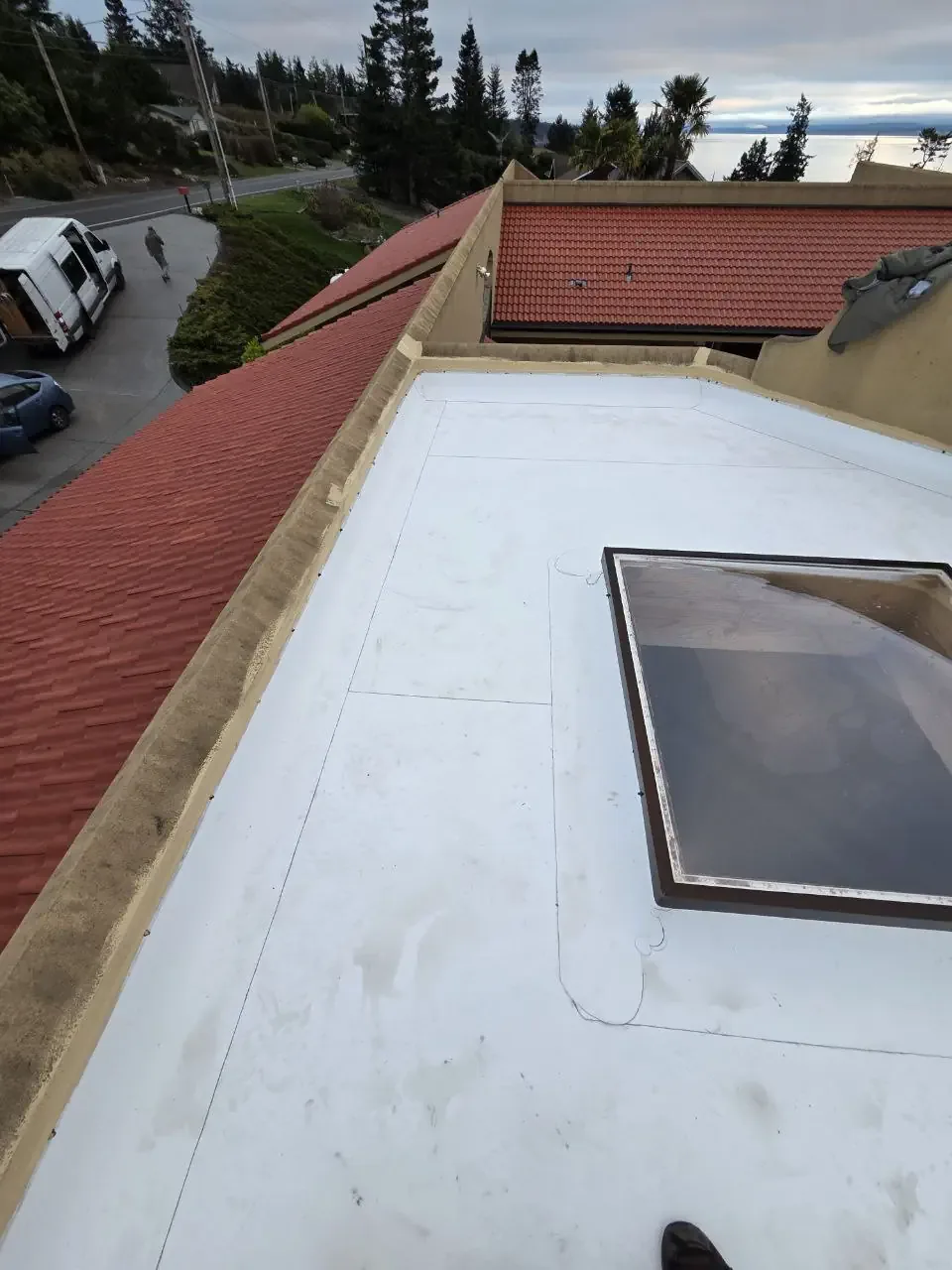
We select patch material for the membrane, not just for the hole's shape. A thermoplastic roof may need a welded patch; an EPDM assembly often requires a compatible primer and cover patch; modified bitumen needs a suitable membrane layer and properly sealed perimeter. The damaged area is cleaned and prepared to meet the system requirements. Loose, contaminated or brittle material is removed until the patch can bond to a stable surface.
The patch extends onto sound membrane with edges shaped to resist lifting. We check for hidden cuts or abrasion, then press or weld the repair as required. Where insulation or cover board is crushed, we replace the affected section before closing the membrane. A surface patch over a soft base can flex and fail under routine service traffic.
Foot traffic prevention is part of the repair scope when the route is clear. We can recommend a compatible walkway or protective pad at a recurring service path, provided the system supports it and drainage remains open. If a rooftop contractor caused damage, the site can assign a designated path and require tools or fasteners to be accounted for. A commercial roof repair can include these related corrections, while insulation and cover-board service addresses a compromised substrate.
Keep Roof Access Safe and Predictable
Repairs on an occupied commercial property require a clear access plan. We confirm the roof entry, escort needs, work hours, staging area and any restrictions around tenants or operations. Equipment routes should not cross a fragile roof zone or block a drain. When several trades share the roof, a short coordination window can prevent new damage while the patch is being installed.
Chula Vista includes western business areas around Third Avenue, Broadway and Main Street as well as larger employment areas toward Otay Valley. We coordinate with the property contact to keep crews clear of customer areas and loading zones. If work must take place during normal operations, the site can identify sensitive equipment, roof openings or interior spaces below the repair.
Heat can also affect timing. Dry easterly winds sometimes bring temperatures into the 90s or higher in eastern San Diego communities. We follow product requirements for temperature and surface condition, and schedule strenuous roof work with crew safety in mind. The application window should support the material cure or weld quality, rather than forcing a repair during unsuitable conditions. For continuing maintenance needs, preventive roof maintenance can track recurring access damage and the condition of protective walkways.
Confirm the Patch and Record Any Follow-Up
After installation, we check the patch perimeter for secure bonding or weld continuity, exposed edges and wrinkles. We look around the repair for missed abrasions, nearby punctures and loose fasteners, then confirm water can still reach the drainage system. A controlled water check may be useful when the assembly and site conditions support it.
The closeout record identifies the roof zone, membrane type when known, repair material and any substrate work. Before-and-after photos help the facilities team locate the patch later. We also record whether foot traffic, a service route or a separate roof condition contributed to the damage. If a moisture survey or broader repair remains advisable, the record explains the next step without presenting an interim cover as a permanent fix.
For buildings with frequent rooftop servicing, a follow-up inspection can confirm the walkway and patch remain intact after maintenance activity.