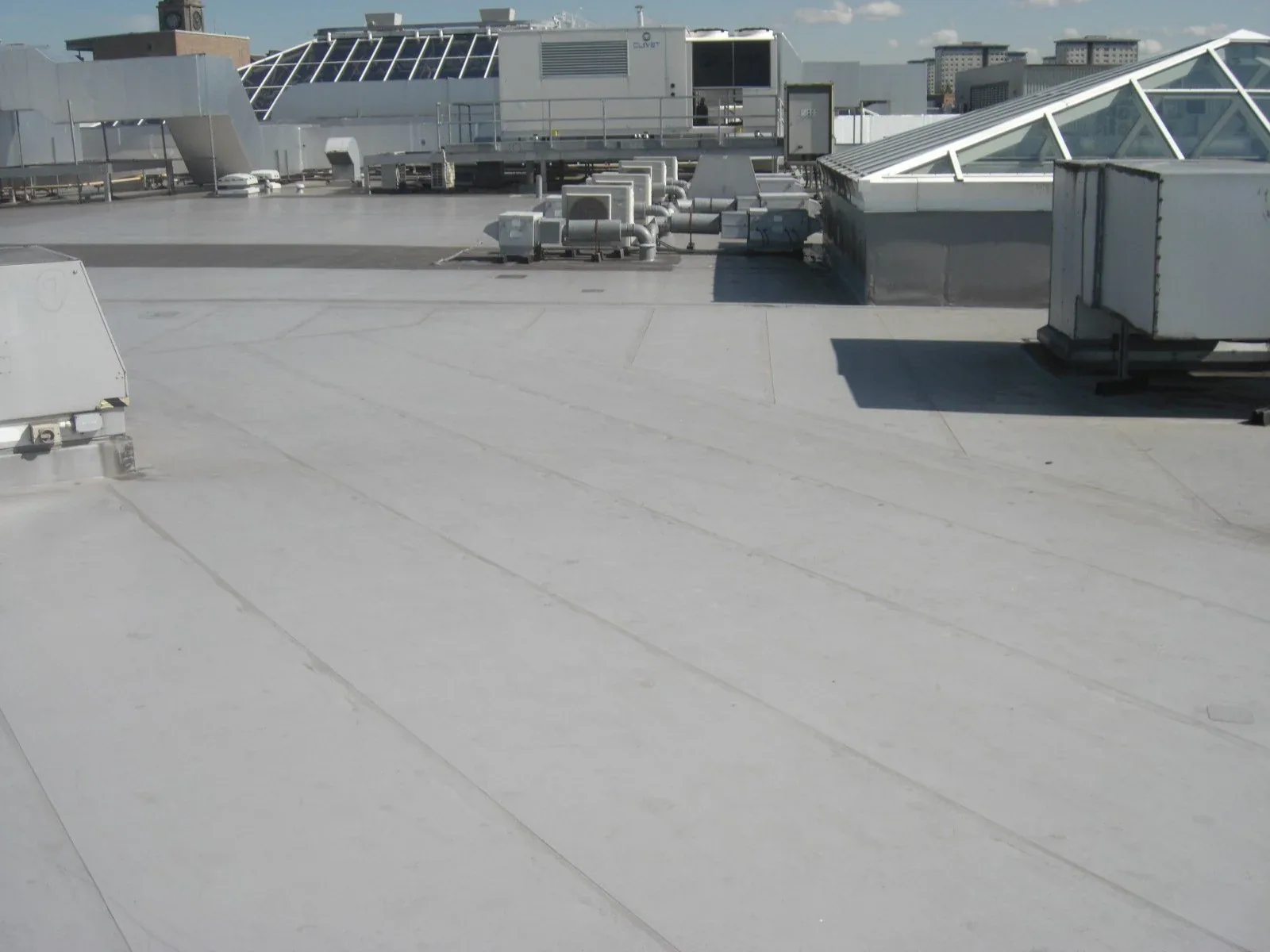
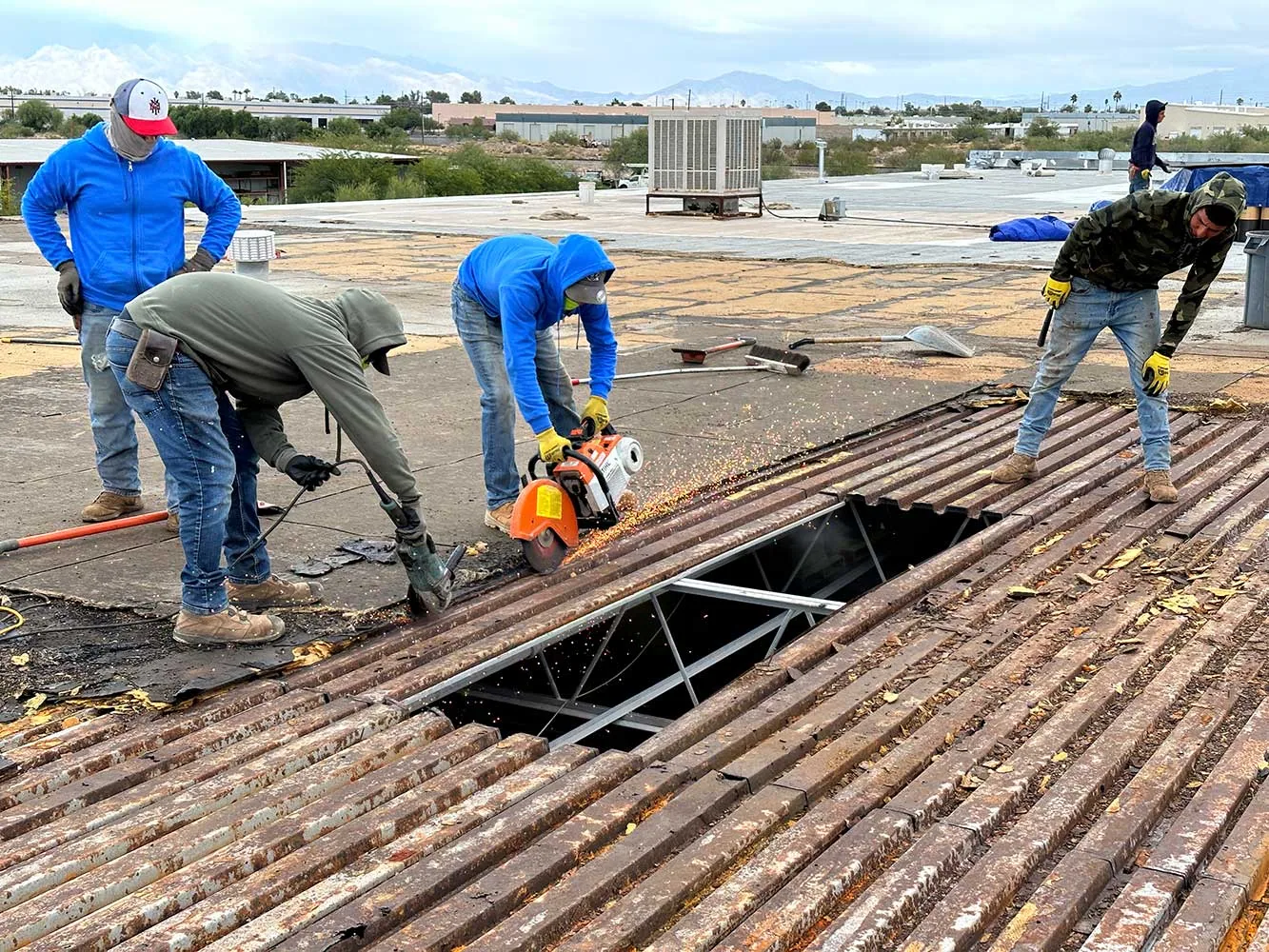
Review the property before setting scope
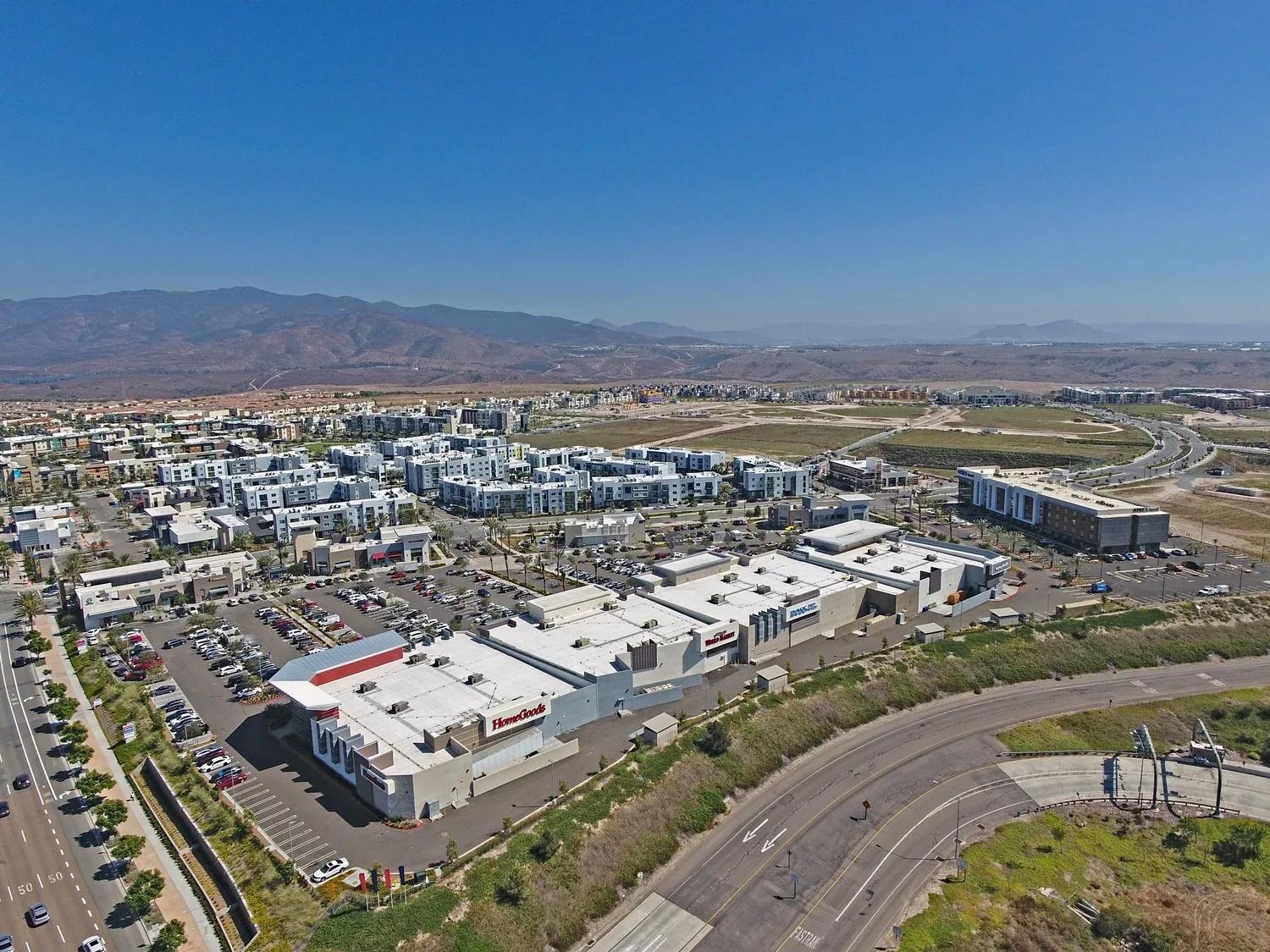
A roof alteration can raise questions that depend on the property and the work being proposed. Orange Avenue is in Coronado Village; Coronado Cays is a separate land-use area. We confirm the requirements that apply to the property before setting the work scope. We identify the property’s planning area before discussing permit or coastal review. We document whether the work is a localized repair, coating, recover or full replacement, and identify when a city or coastal review should be consulted. The inspection documents the existing roof assembly, drainage and proposed change for the owner’s review. It gives the owner a clear description of the existing assembly, drainage and proposed change to take into that review. If the project alters slope, insulation, attachment or edge conditions, those details are stated plainly in the scope. Our project documentation can organize inspection photos and repair findings for the owner's records, while due-diligence roof surveys can support a transaction or planning decision. The roofing record gives the owner clear assembly and scope details to bring into the applicable review.

Check the perimeter and the water path
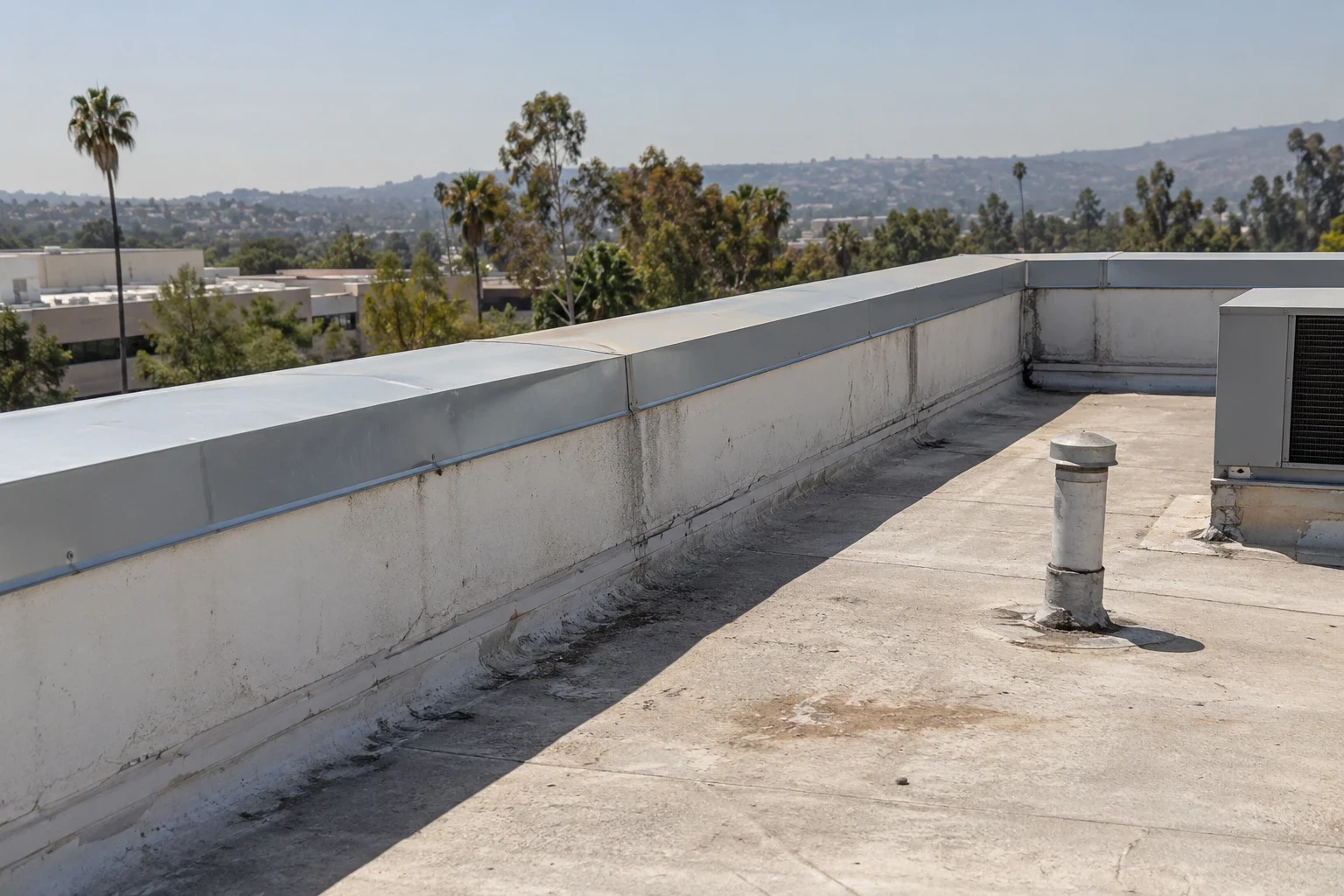
Water entering at a parapet can travel beneath a membrane before it appears at an interior wall. We inspect the transition at the roof edge, confirm how counterflashing and membrane termination are connected, then follow the path toward drains and low areas. At a roof curb or penetration, we check corners and the height of the flashing; at a field seam, we look for separation, puncture or loss of bond. A blocked outlet can hold water at a weak edge detail, so the bowl, overflow and discharge route are reviewed together. We trace the likely water path from the roof details above the stain, then confirm it through inspection or testing. The inspection record marks what is visible, where moisture is suspected and whether a controlled opening would decide the removal limit. If the roof has exposed metal, we look at joints and fasteners for corrosion or movement that could break the water line. Our edge-metal and coping repair addresses confirmed defects at those transitions; thermal differences can point to an area worth checking; an infrared scan is interpreted with the roof layers and surface conditions. We select a small opening only when direct confirmation could change the removal limit.

Match repair material to the roof
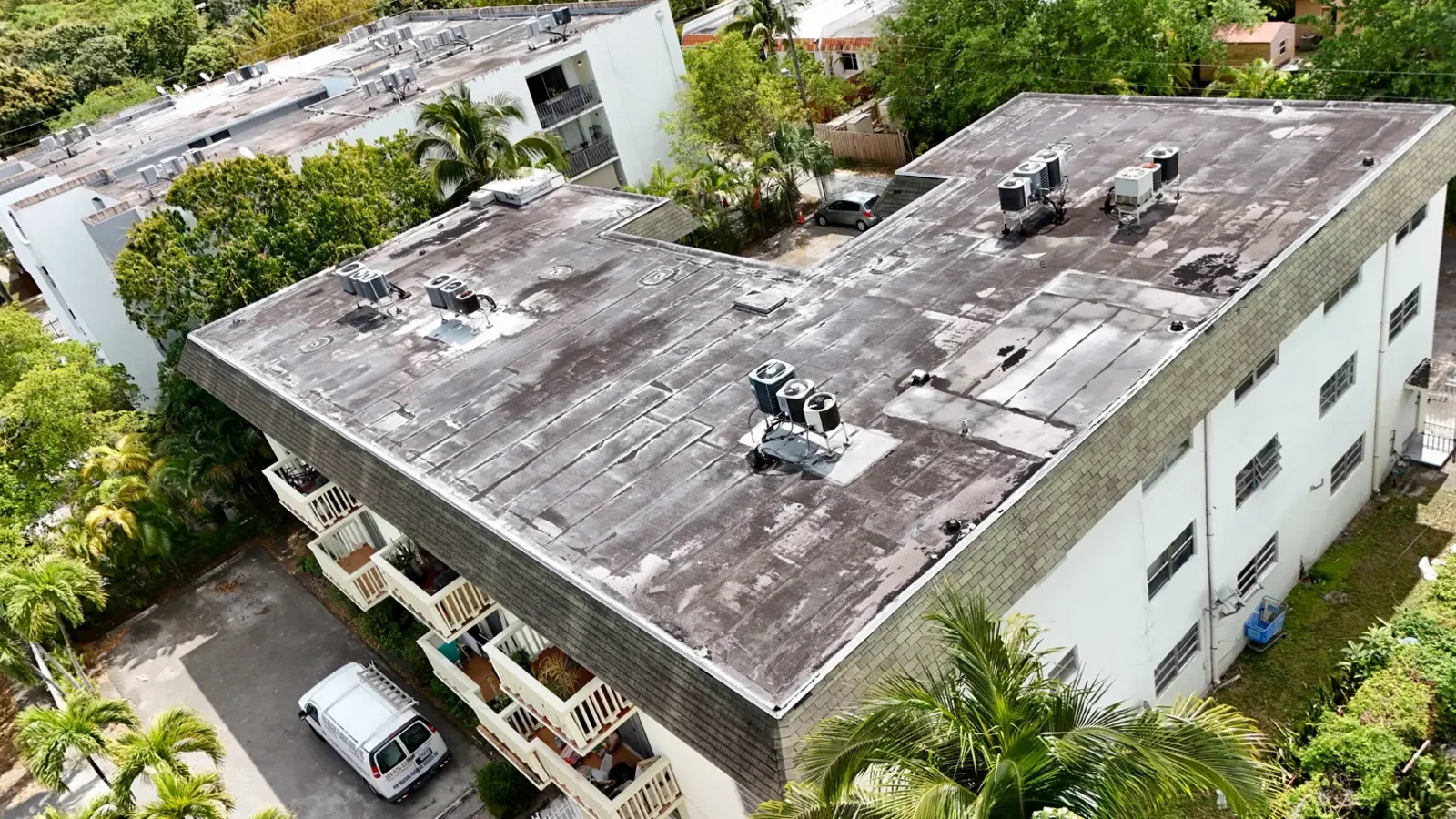
The existing assembly sets the limits for a durable patch. We identify the membrane, metal profile or surfaced bitumen system, then inspect the failed detail and surrounding material for a stable connection. A single-ply patch must be compatible and welded or bonded to a prepared surface. A metal panel repair must maintain the intended movement at seams and fasteners. If a coating is proposed, the surface needs preparation and a condition suitable for adhesion; coating does not replace wet insulation or correct a failed drain. When deterioration reaches multiple roof zones, the owner may compare repair with recover or replacement. That choice depends on moisture extent, layers, drainage, edge details and whether the existing assembly can accept another system. Our commercial repair scope can identify immediate stabilization and permanent work separately. If broader replacement is supported, replacement planning defines removal limits, protection and dry-in by section. Each alternative states what it corrects and what remains, helping the property team weigh the roof evidence before deciding how much work to authorize.
Set the work window and access route
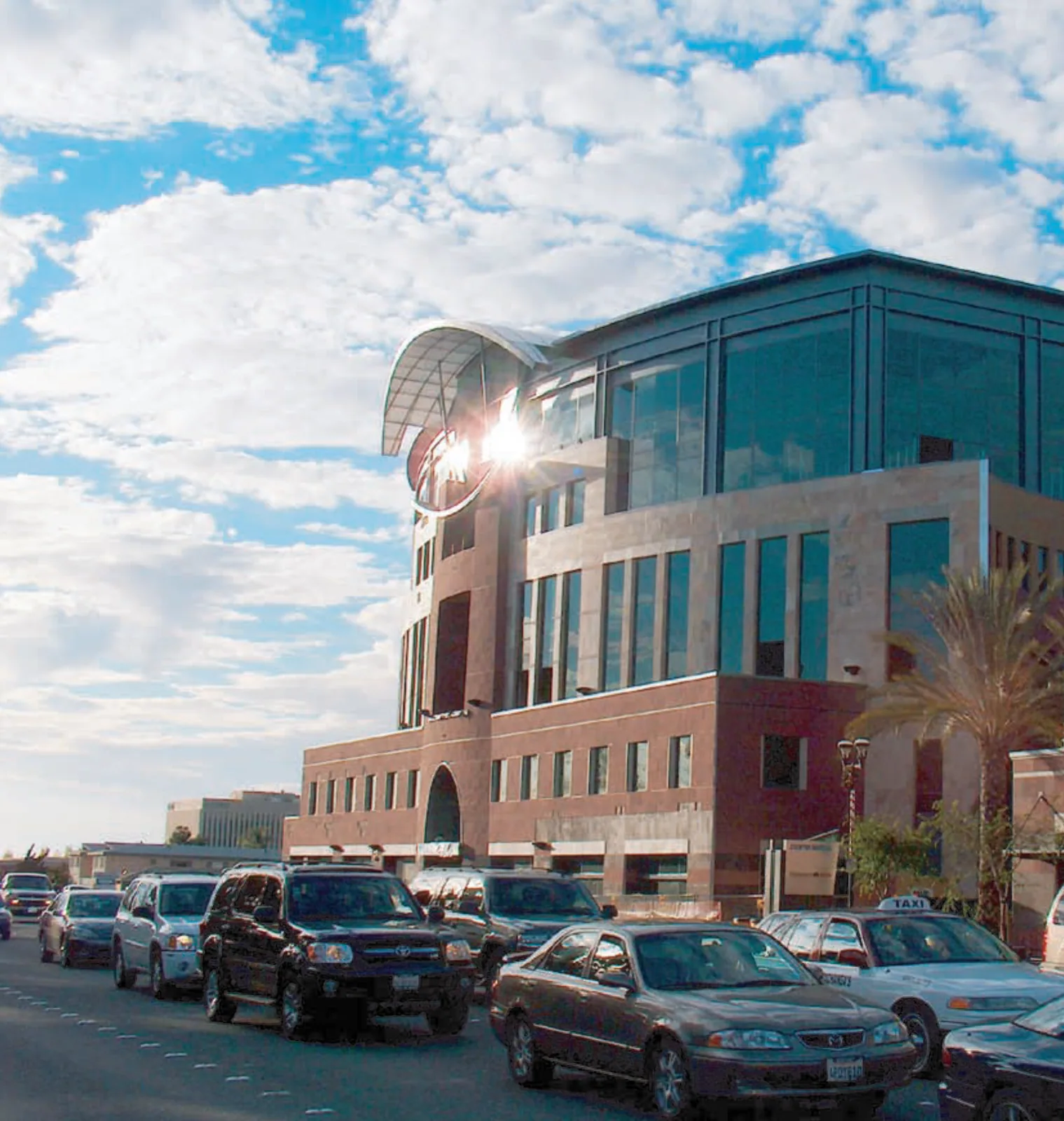
Most San Diego-area rain falls in winter, though totals vary by season. Orange Avenue needs its own forecast before a crew opens the roof. Before opening the roof, we check the current conditions, the surface and the installation needs of the selected material. A dry-in limit sets how much can be exposed in one shift. The work plan also confirms roof access, material staging, active entrances and any route that cannot be blocked. If a building remains occupied, the site contact gets a sequence for each roof area and a handoff when the section is closed. Where coastal or planning review affects the work, the project schedule should account for that step before material is ordered. We explain noise, access changes and protection needs before work begins. For more involved projects, occupied-building reroofing coordination can define phased installation without assuming the owner's operations can pause. The site-specific access and review plan is part of the roofing decision, not a detail left to the day of mobilization.
Keep findings separate from approvals
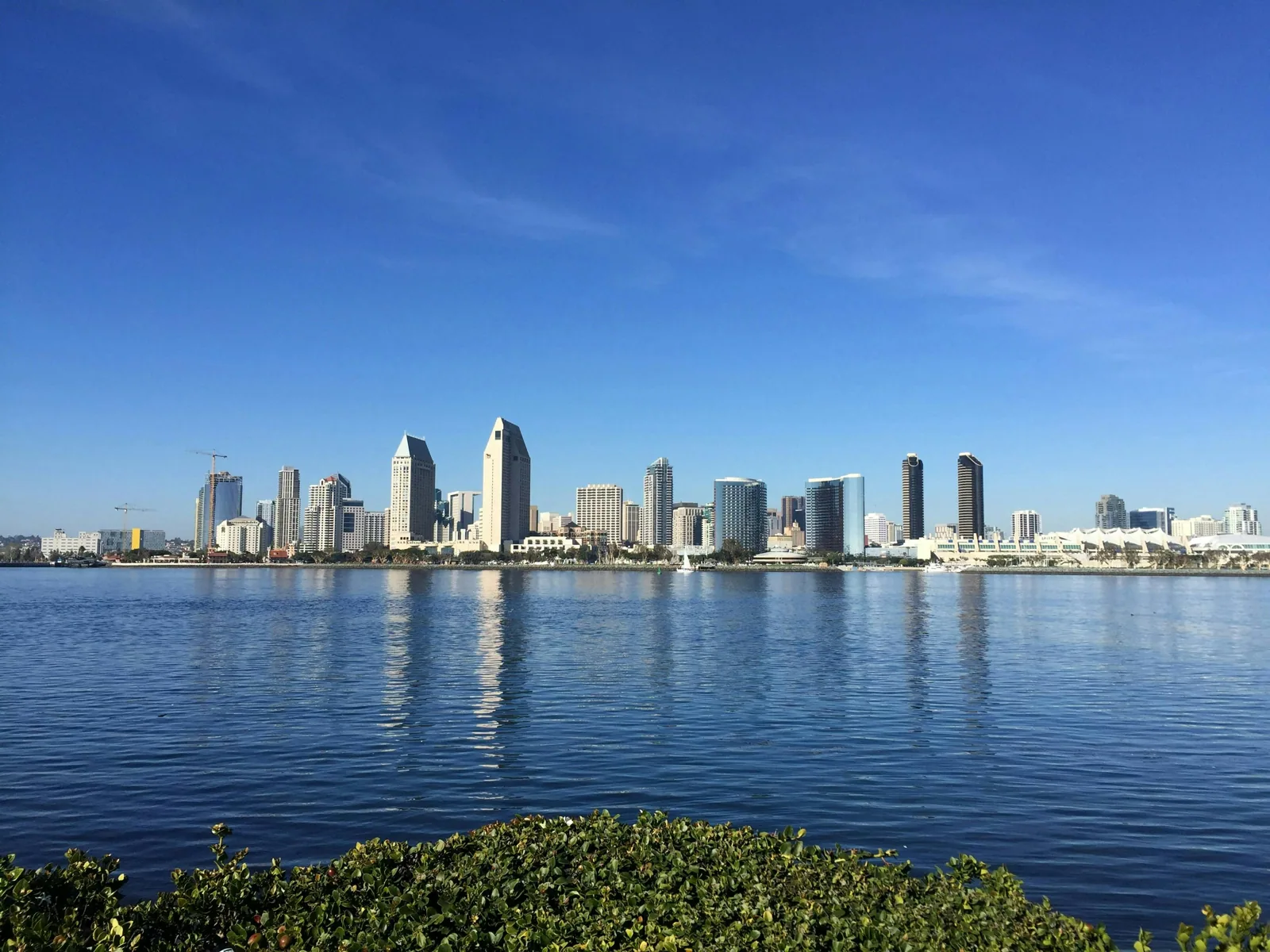
Repair cost and duration follow the work boundary, not the district name. Removal depth, damaged insulation or deck, edge and curb details, material compatibility, staging and the dry-in area all affect the scope. We list confirmed work and any concealed condition that could change it after opening the assembly. The owner receives photos, locations, repair materials and remaining maintenance items at closeout. The closeout can list permit or coastal review questions for the appropriate authority to decide. That record helps property staff distinguish the roofer's field finding from a planning determination. It also provides a baseline for future inspections after a coating, patch or replacement. To arrange a roof walk on the Orange Avenue corridor, share the property, affected roof zone and an access contact. We will document the water path and assembly, explain repair and replacement options, and identify what information will help the next review proceed.