Inspect the surface before pricing coating
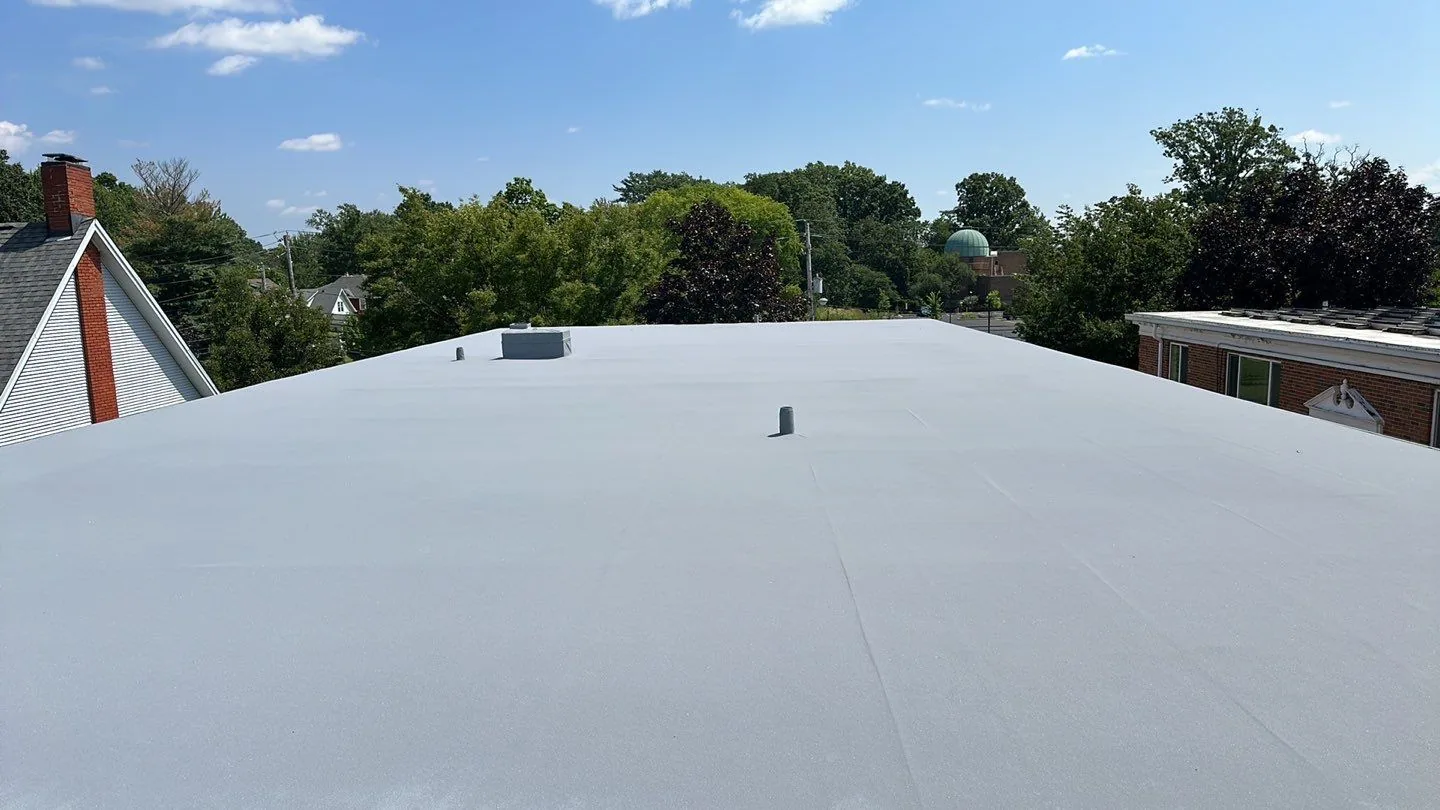
Identify the existing roof and any prior coating, patch, or surface treatment. Check specifications, product data, and accessible edges. A white or reflective finish does not reveal whether the material underneath is single-ply, metal, modified bitumen, or another assembly. Identify the substrate and record any uncertainty before choosing a primer or coating.
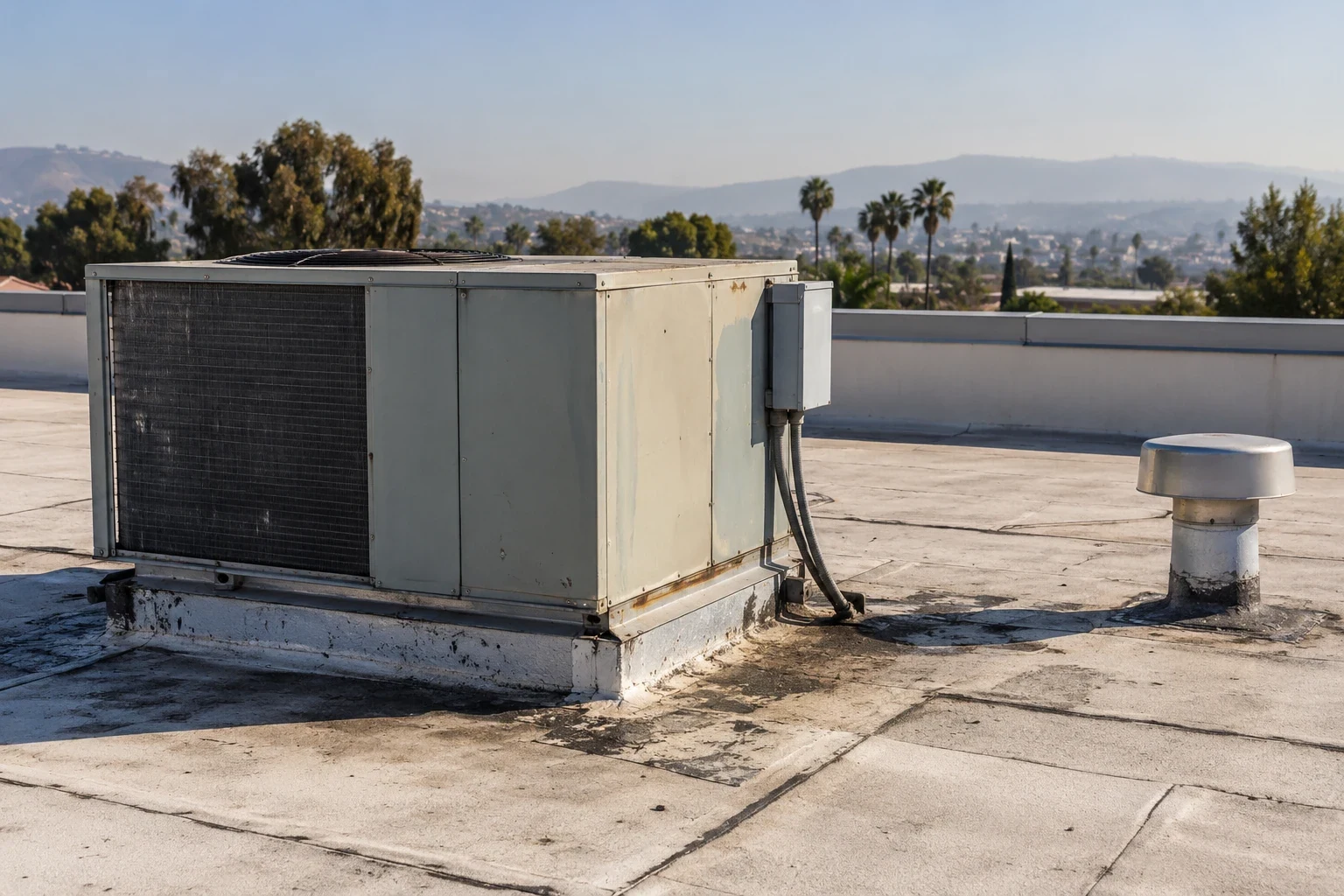
Look for open seams, cracks, blisters, corrosion, exposed reinforcement, loose flashing, and areas with poor drainage. These defects need investigation or repair before broad application. A coating should adhere to a properly prepared surface; it cannot stabilize detached material. A roof inspection can document the existing condition, identify test areas, and separate visible damage from concealed questions.
Check previous coating for chalking, peeling, embrittlement, contamination, or a weak bond. Clean and prepare a representative area as required, then test adhesion where the system or surface calls for it. If old layers cannot be identified, confirm compatibility before covering them. Record where testing occurred so the limits are clear to the owner.
Check slope and water exposure
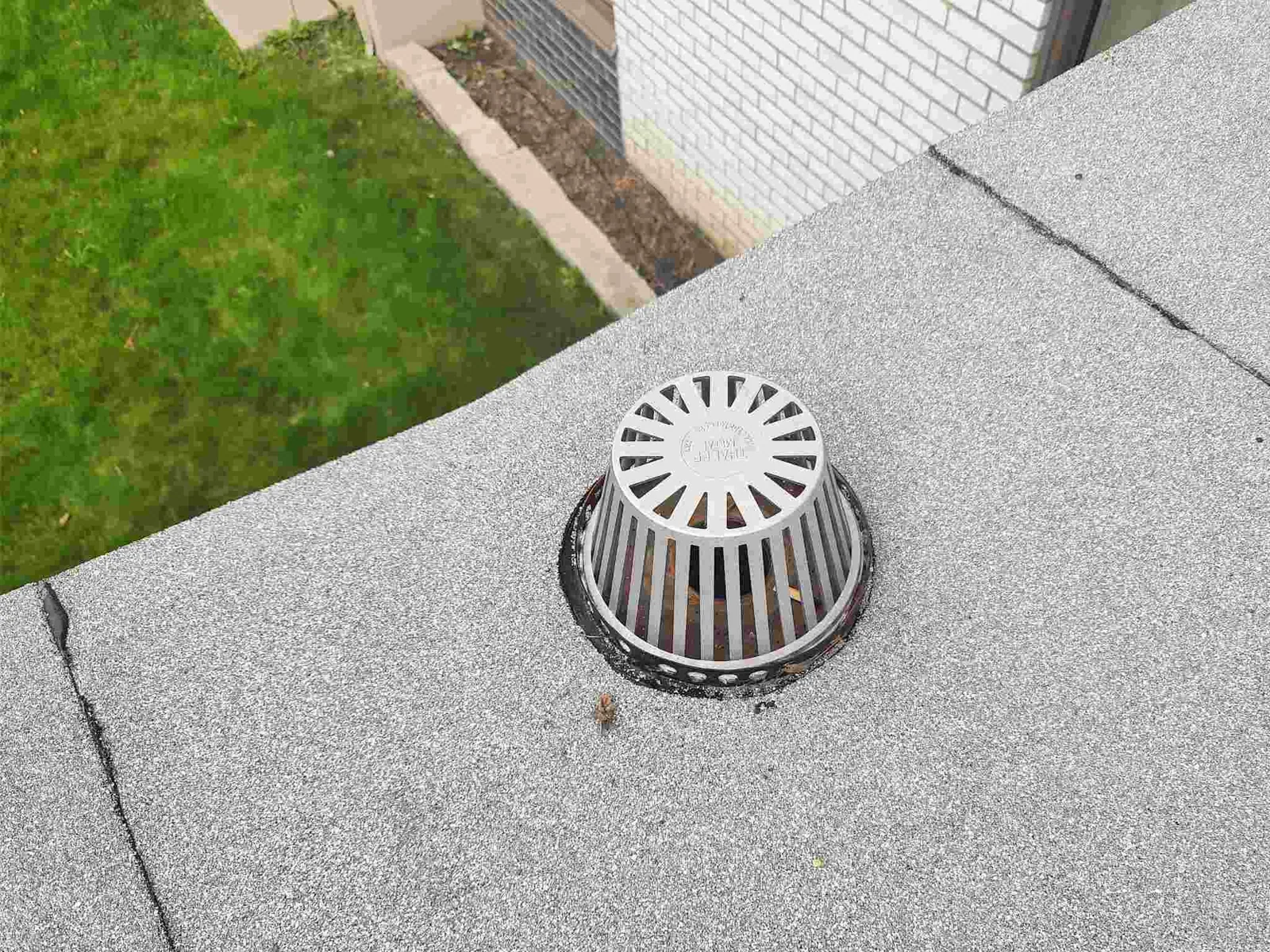
Acrylic coatings are generally used on roofs that drain rather than remain under sustained ponding. Trace the roof plane to drains, scuppers, and overflows. Look for blocked outlets, depressed insulation, raised edges, and water trapped behind equipment. A drainage assessment should tell whether cleaning is enough or a roof detail needs correction before coating.
Observe ponding after rain or other controlled inspection and mark how long water remains. Review whether prior repairs changed drain height or created a dam. Water can reach an interior space through a seam some distance from the stain, so follow likely routes uphill from the reported area. If moisture is found beneath the membrane, drying or replacing the affected layer may be required before a new finish is considered.
Most regional rain falls in winter. The roof must be dry and weather conditions suitable for preparation, application, and cure. Check product limits for temperature, dew point, and forecast conditions. Do not coat a damp surface or leave exposed areas without a secure closure plan. Keep drains open through the work and inspect temporary protection at the end of each shift.
Prepare seams, edges, and penetrations
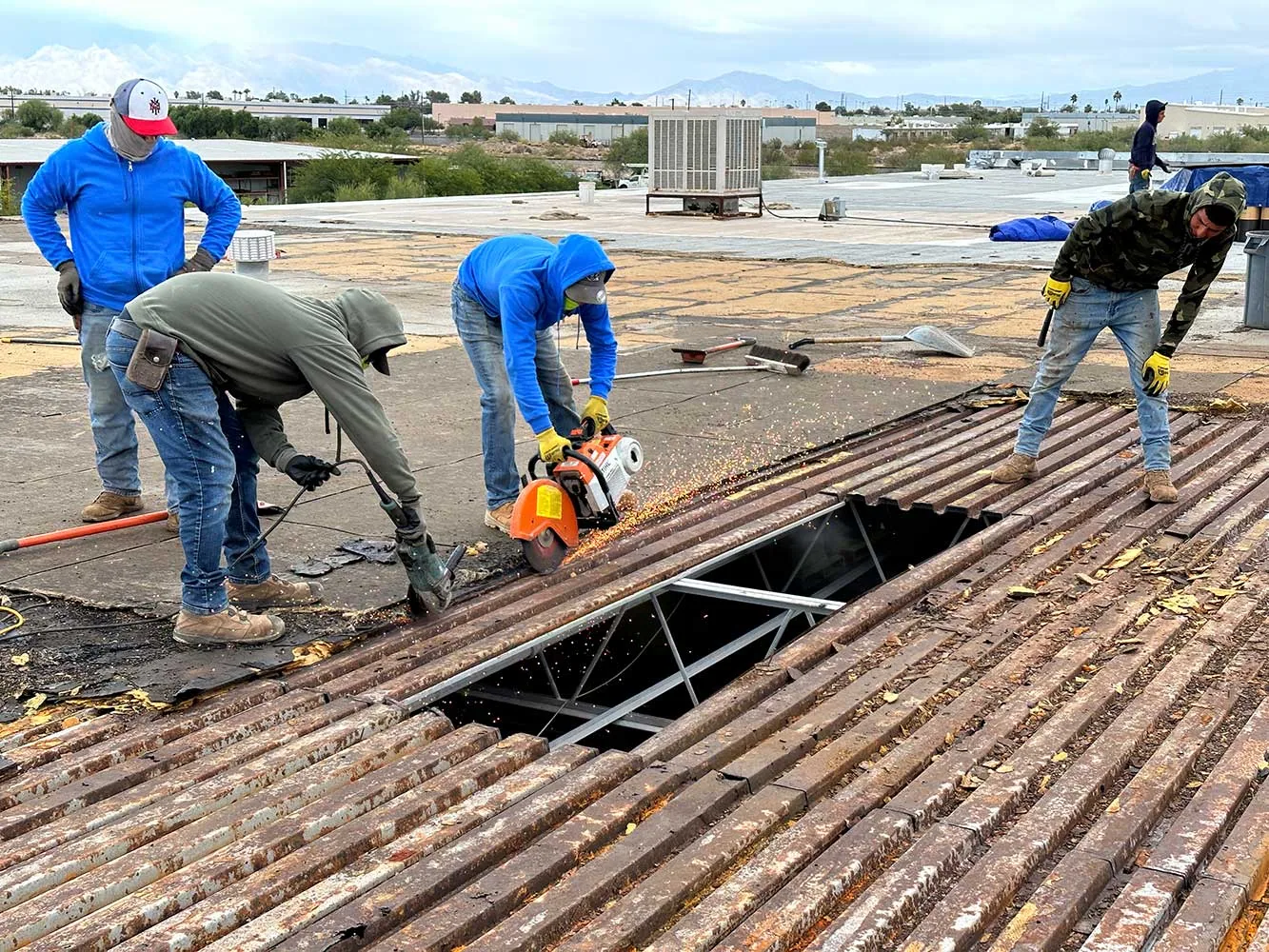
Repair open seams and damaged flashing before application. Reinforce details only as specified for the chosen system, including compatible fabric at corners, penetrations, and transitions where required. Confirm that fasteners are secure and that metal edges do not have active corrosion or perforation. At parapets and curbs, check the termination and counterflashing so coating is not expected to replace a mechanical connection.
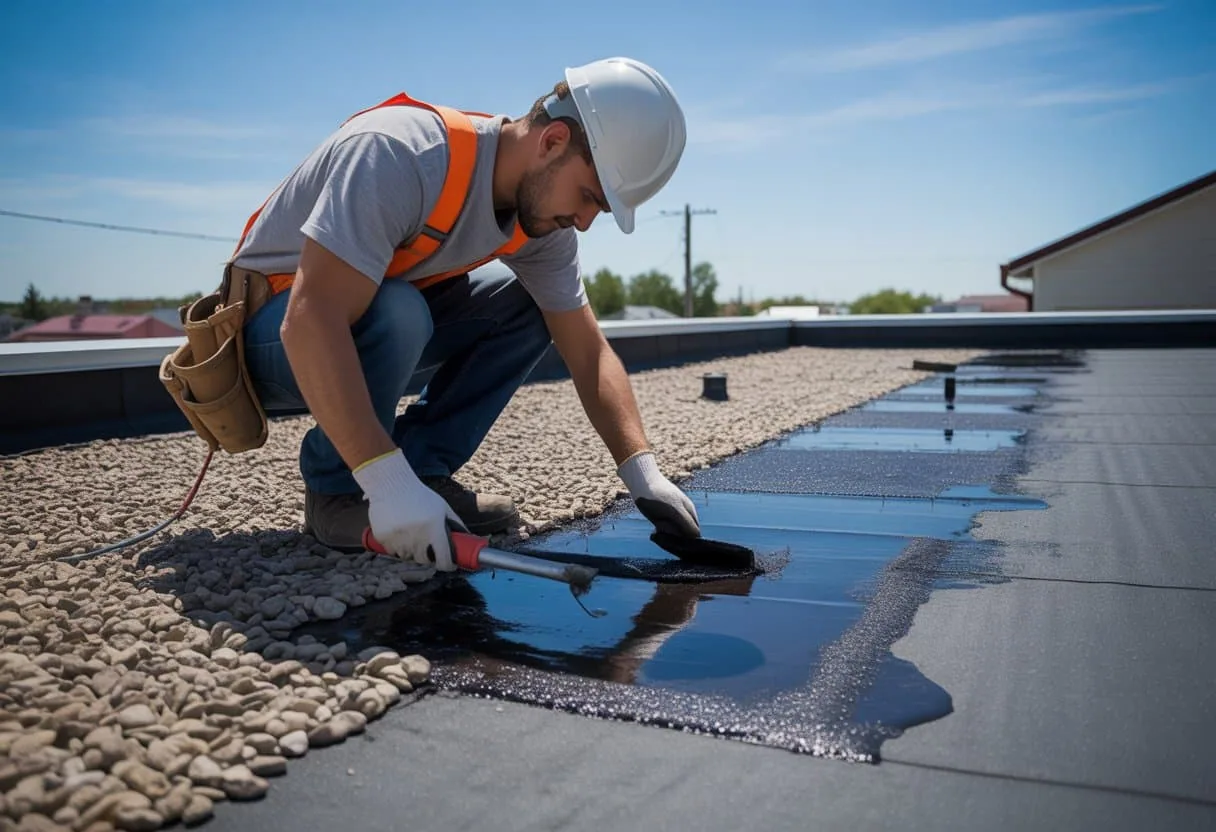
Preparation may require removing loose coating, cleaning dust or oil, treating rust, and applying primer. Let the roof dry and verify the surface before proceeding. Different substrates can require different preparation even on the same building. A repair scope should identify which seams, fasteners, cracks, and flashings are included rather than using a single broad line item.
Coating thickness, coverage, and reinforcement vary by product and roof condition. State the required quantity and detail treatment based on current technical guidance. Include vertical areas and transitions where needed, and protect gutters, air intakes, adjacent equipment, and walking paths from overspray. If another coating is present, an adhesion test can show whether it should remain or be removed.
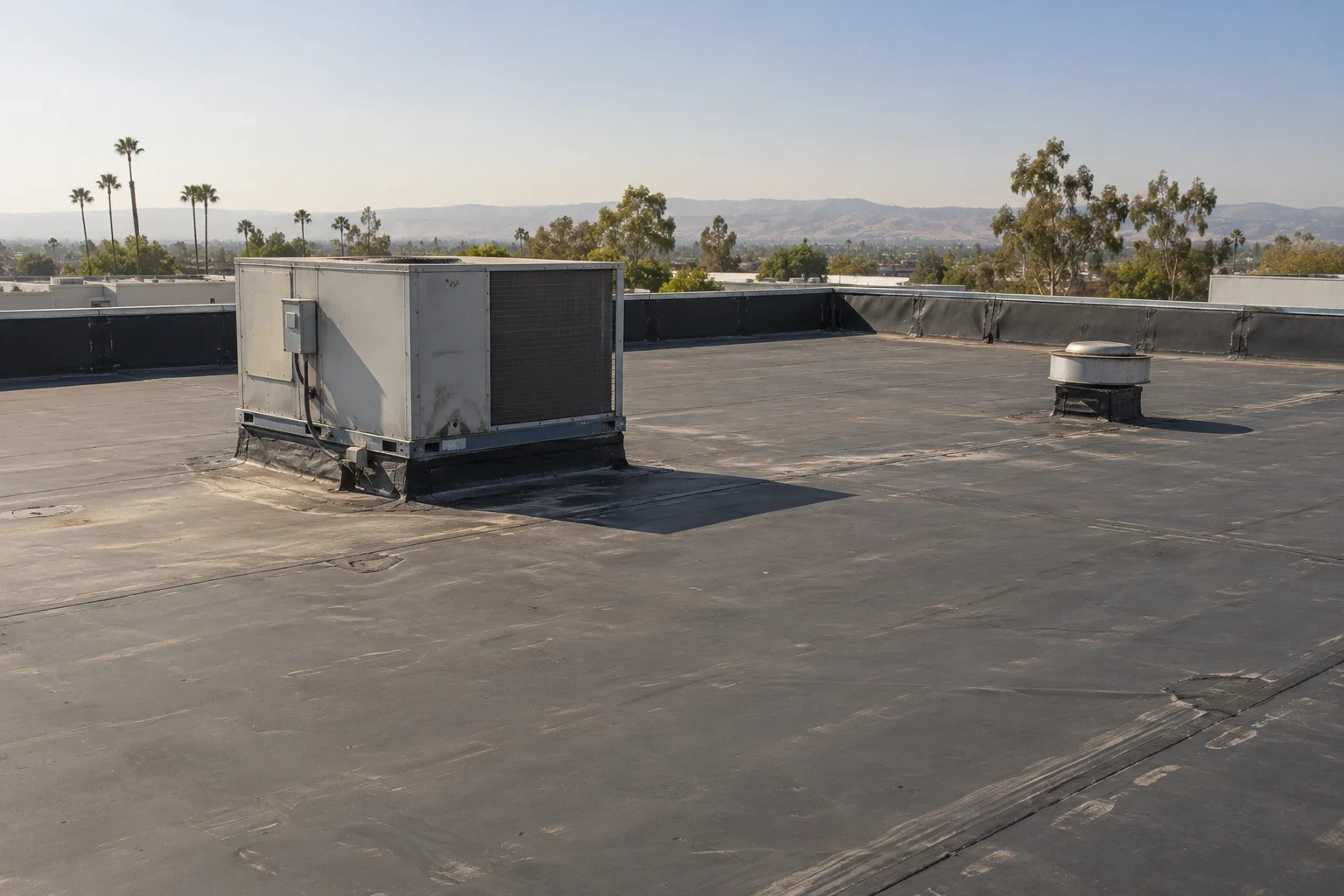
Compare acrylic with other restoration options
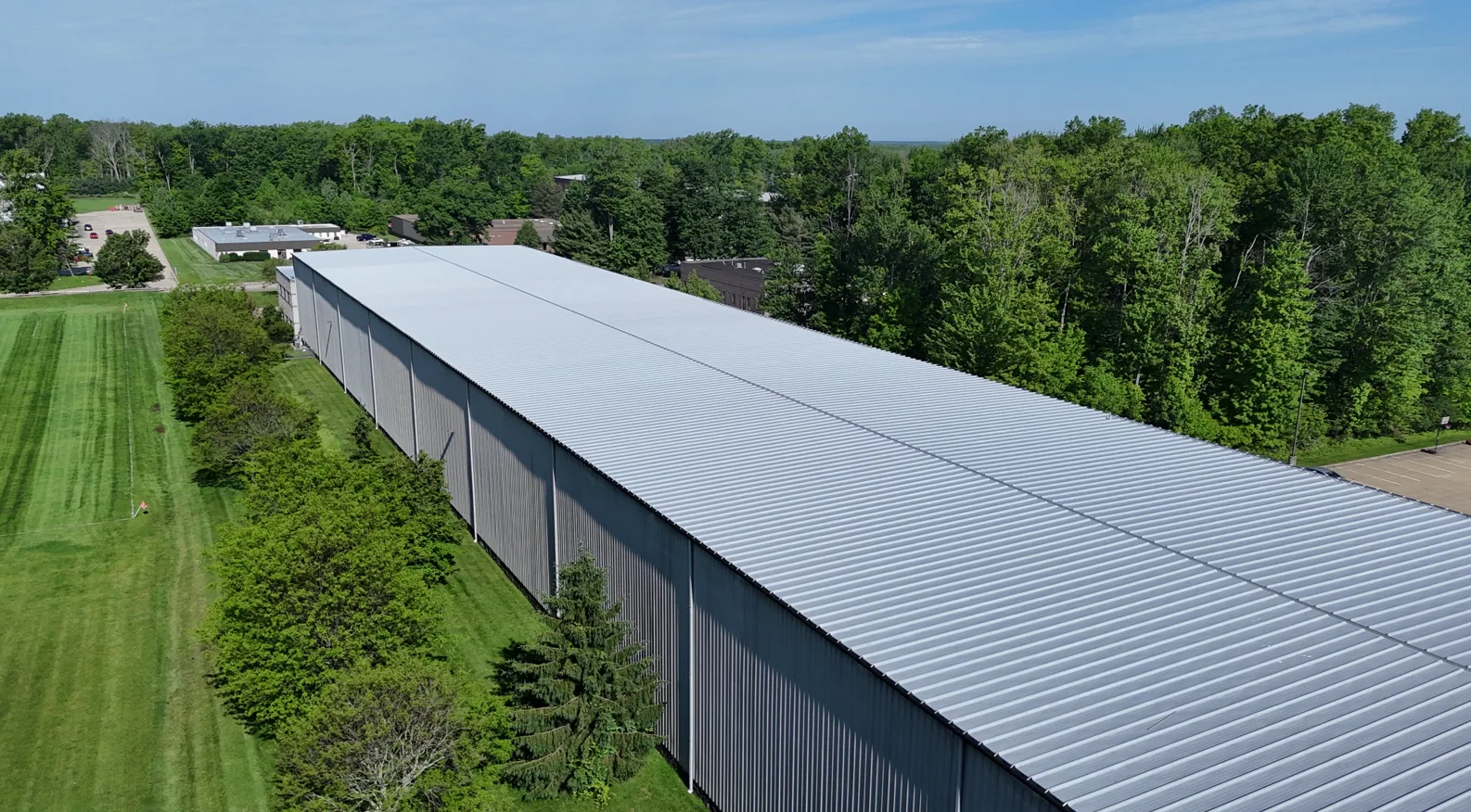
Acrylic coating can suit a prepared surface where drainage, adhesion, and exposure fit the product. Silicone systems have different water-exposure characteristics and maintenance considerations. A silicone coating comparison should account for ponding, compatibility, surface cleanliness, and future recoating rather than a simple product preference.
On an SPF assembly, inspect foam and its protective layer together. Repair damaged foam before applying a compatible finish. A spray polyurethane foam roof needs specific review of profile, coating wear, and moisture below the surface; it is not the same as coating a sound metal or single-ply roof.
If substrate damage is widespread, a coating may not be an appropriate substitute for replacement. Compare results of moisture and adhesion testing with repair limits, roof height, drainage, and operational needs. A replacement scope should set tear-off limits, substrate repairs, insulation assumptions, edge details, and the daily dry-in sequence. State what remains untested or excluded.
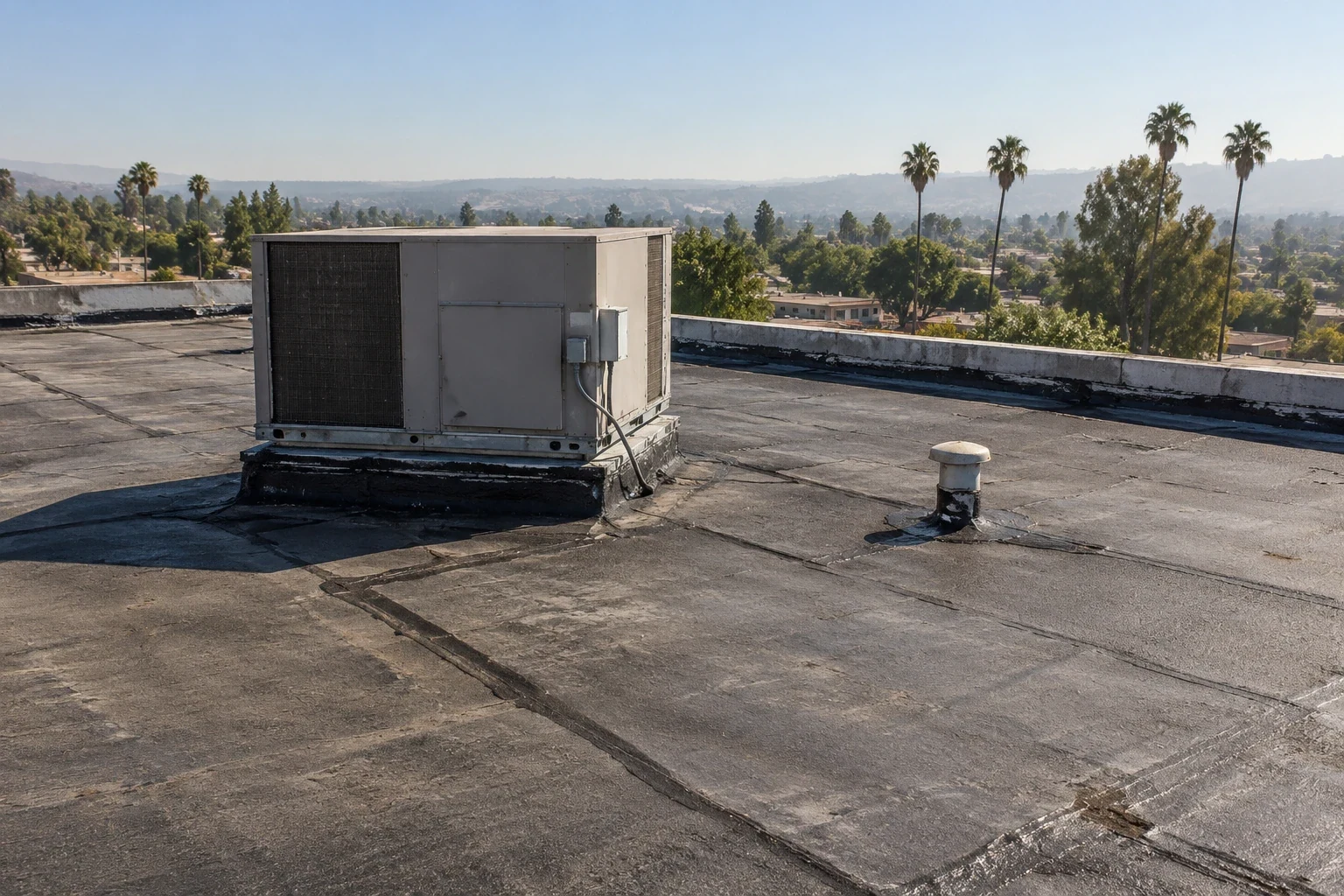
Coordinate coating around operations
Confirm rooftop access, staging, ventilation intakes, vehicles, and pedestrian routes before work. Protect air-handling equipment where overspray or odor could affect occupants. Set the application boundary, tell tenants which doors or loading spaces will be affected, and keep emergency routes clear. If a weather delay occurs, secure the surface and record the planned restart conditions.
Chula Vista's coastal and inland terrain can bring different work conditions. Check the actual roof surface, wind, and product requirements at the site. Late-season heat and dry winds in eastern areas may change application timing; regional winter rain makes dependable closure important. Work should follow observed conditions and product instructions rather than a generic calendar.
Occupied properties need daily handoffs. A phased work plan should identify application hours, access restrictions, interior protection, and who accepts each area. Near the Bayfront, confirm the site's particular loading or tenant schedule with management. Verify actual conditions at an employment property in eastern Chula Vista instead of assuming all businesses follow the same operating pattern.
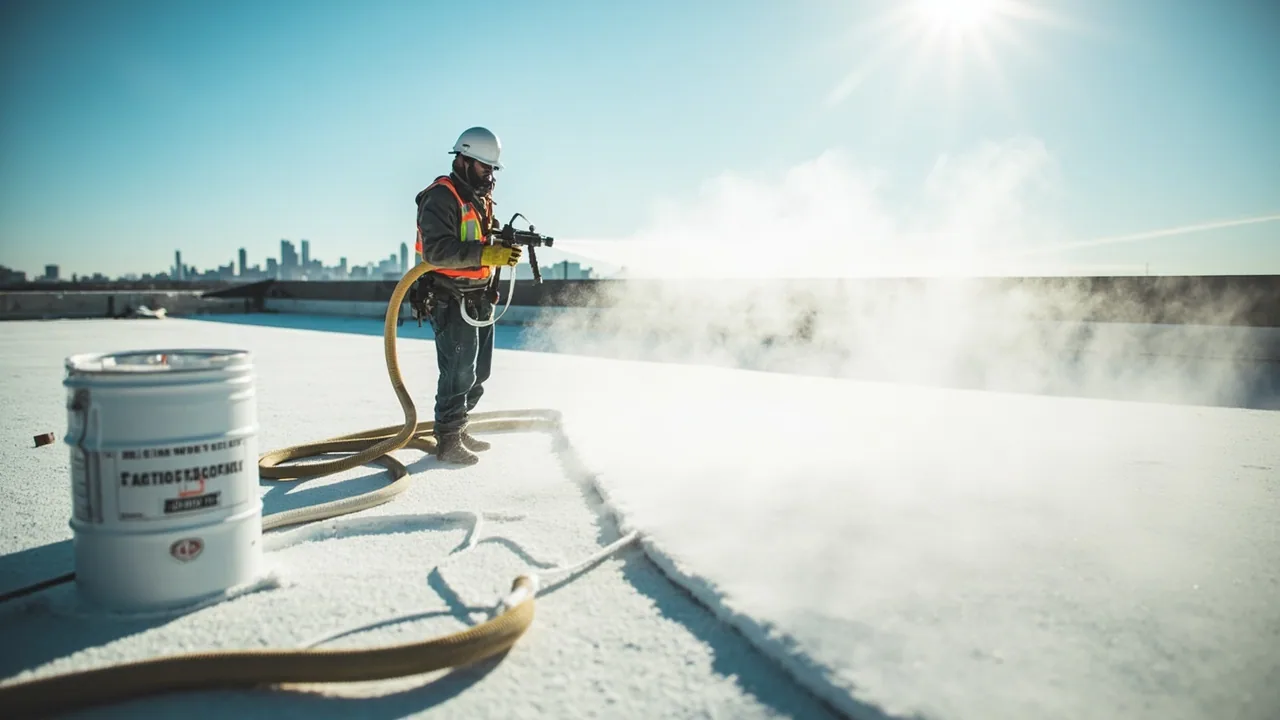
Verify the finish and plan maintenance
At completion, check coverage, film continuity, seams, reinforced details, flashings, and termination points. Confirm drains remain clear and walk the defined roof area for missed sections or damage. Photograph representative field and detail work, mark coated limits on the roof plan, and record products, preparation, and test results.
Maintenance visits should look for punctures, peeling, cracks, worn areas, debris, blocked outlets, and damage after rooftop service. Clean the roof with methods approved for the finish. Repair isolated damage with compatible materials and document each return visit. A new layer should not be applied over an unknown or poorly bonded coating.
To review an acrylic coating project, share the property location, roof assembly, access contact, leak history, and product or repair records. We can assess the surface, drainage, and details, then explain the preparation and repairs needed before a coating scope is ready.