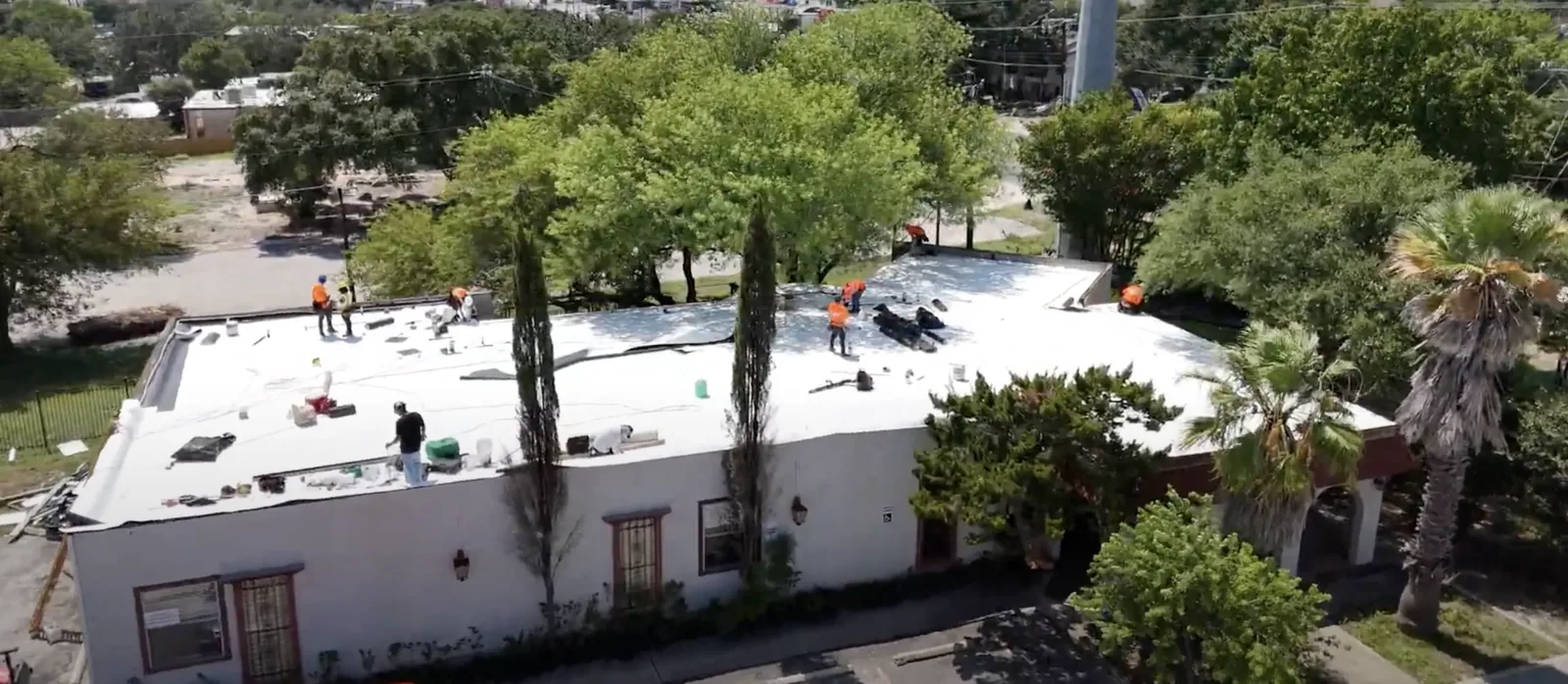
Inspect coating and foam together
Identify the foam thickness where records or accessible edges allow, then review its surface and protective coating. Look for exposed or friable foam, cracks, open seams, punctures, blisters, and areas where coating has worn thin. Discoloration calls for a closer look at the foam profile and protective coating to distinguish surface staining from deterioration. Mark the condition and confirm its depth before setting a repair limit.
SPF is usually protected by an elastomeric coating. The coating's type, age, adhesion, and previous maintenance matter when selecting a compatible renewal product. Check whether an old coating is chalky, brittle, peeling, or contaminated. A roof inspection should distinguish coating wear from damaged foam and identify test areas where adhesion is uncertain.
At parapets, drains, curbs, and penetrations, inspect foam shaping and coating continuity. Look for abrupt transitions, thin coverage at edges, cracks where movement occurs, and sealant that has separated. A coating cannot compensate for a loose curb or failed drain connection. The roof condition record should map these details so repair quantities correspond to the actual roof zones.
Find moisture and correct the water route
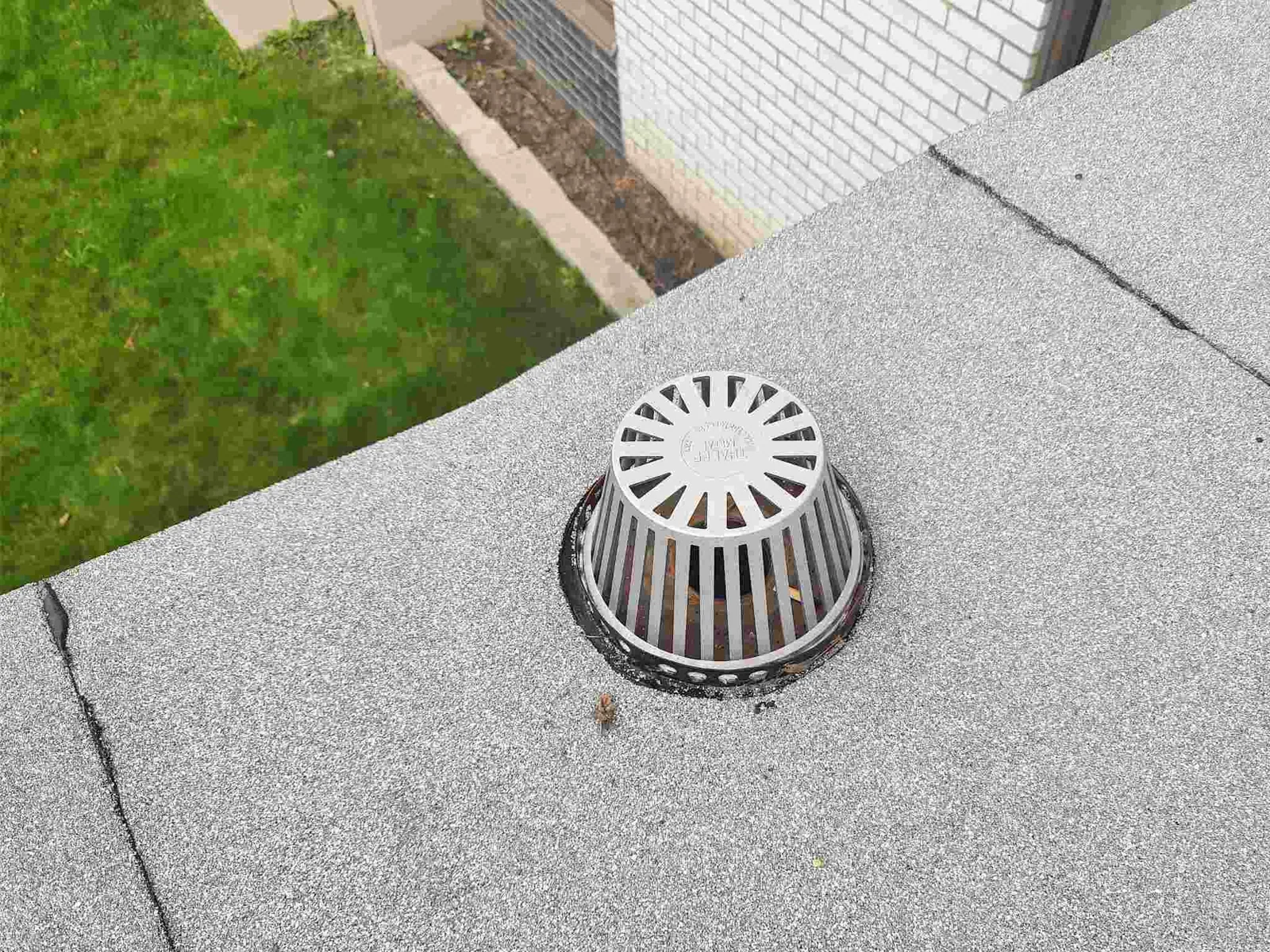
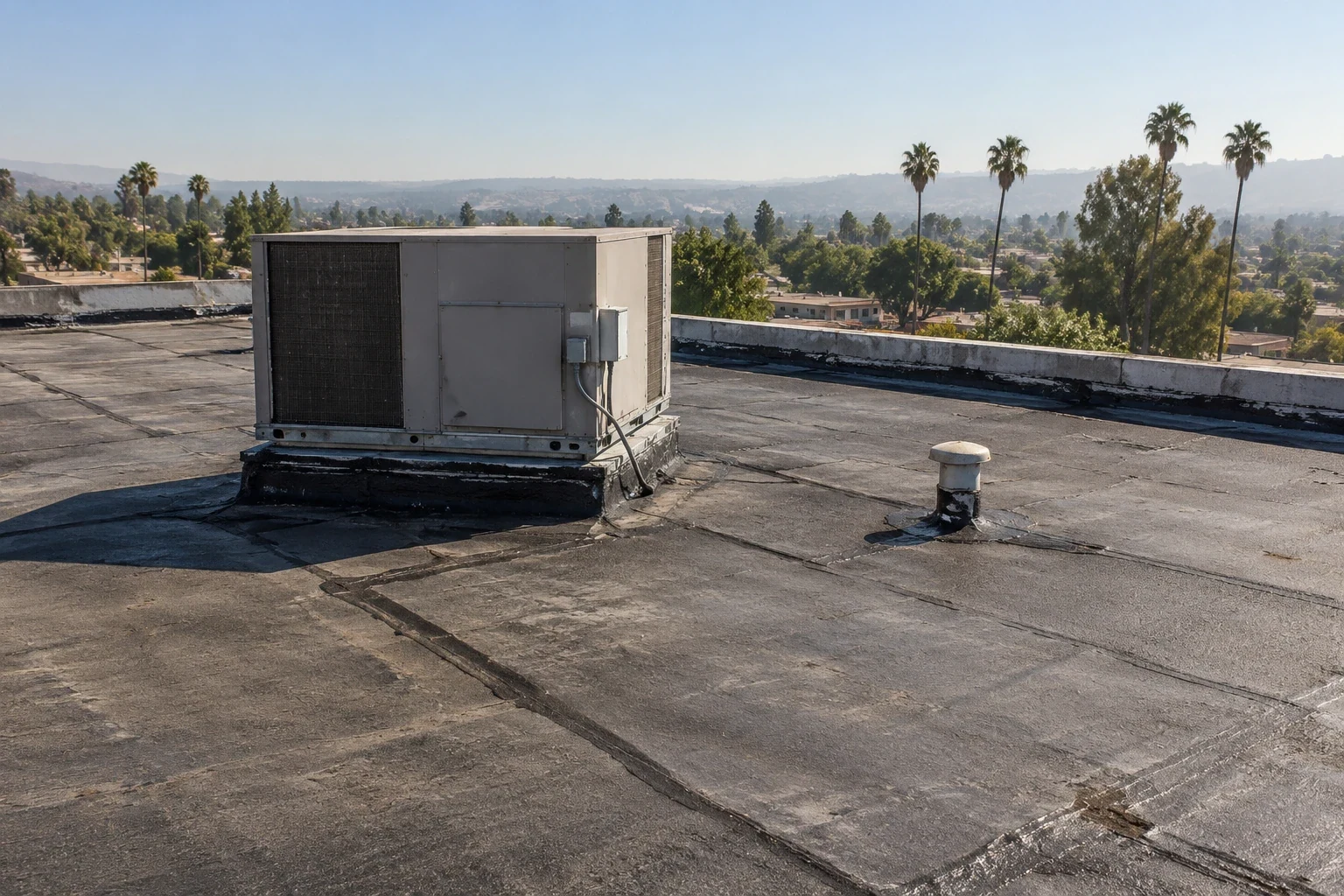
Water should drain without remaining in depressions or against a curb. Check slope, drain bowls, scuppers, overflows, strainers, and the coating around each outlet. SPF can be shaped to improve drainage, but low areas need a defined correction, not another coat applied indiscriminately. A drainage review can determine whether an obstruction, outlet detail, or roof contour is driving the problem.
Trace interior reports across the roof plan. Moisture can travel below the coating before it becomes visible indoors, and a pinhole may be difficult to spot in a large roof field. Use appropriate moisture checks and confirm suspicious areas before closing them. If foam is wet or deteriorated, remove it to sound material and rebuild the profile before applying the protective layers.
Most regional rain falls in winter. Schedule coating and foam work only when substrate, air, and weather conditions satisfy the selected product requirements. Set a daily boundary, keep drains clear, and protect exposed foam if conditions change. At the end of each shift, inspect the temporary closure and tell the building contact which areas are complete or awaiting a suitable application window.
Repair damage before recoating
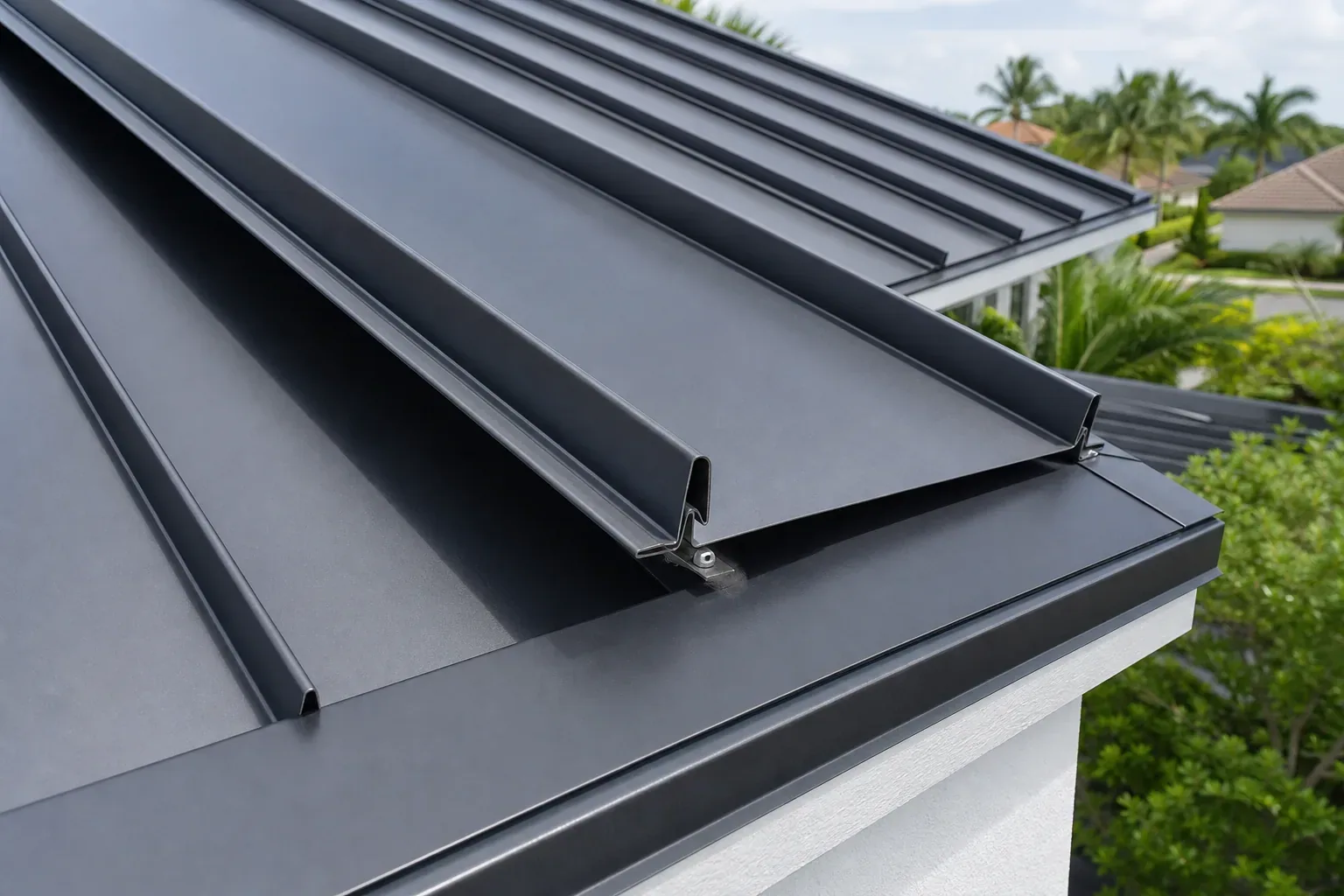
Small punctures may be repaired when foam around them is dry and sound. Cut back damaged material to a stable edge as required, rebuild the profile, and restore compatible coating across the repair. Do not fill a soft or wet cavity and seal it over. Larger areas of erosion, blistering, or widespread coating loss may require multiple test cuts and a broader restoration plan.
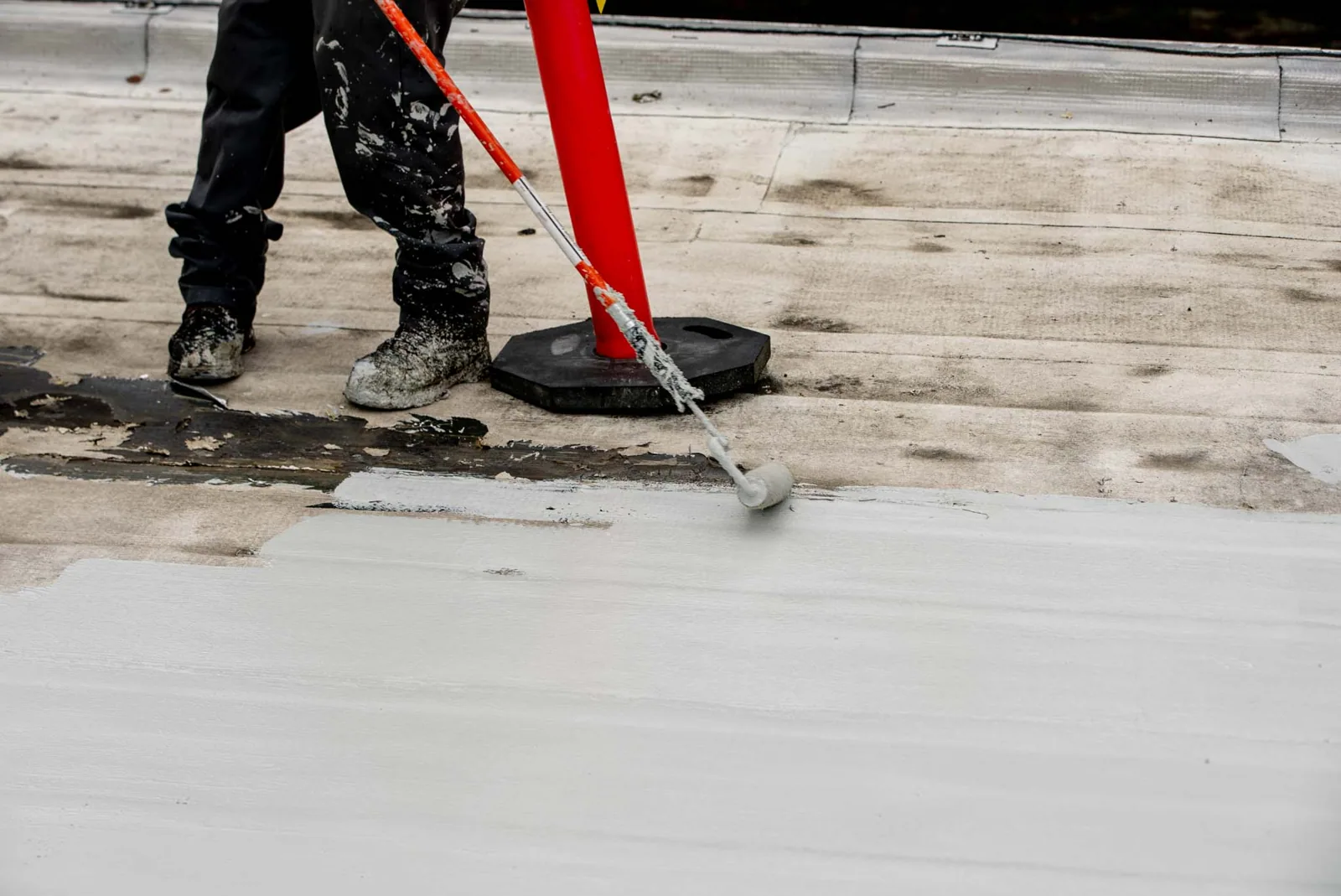
Before recoating, remove loose coating and contamination, prepare the surface, and complete repairs to foam and details. Verify adhesion on representative areas. A new layer should meet required coverage and cure conditions, including at vertical surfaces and flashings. Silicone coating and acrylic coating have different properties; select based on slope, ponding exposure, compatibility, and the system requirements rather than a generic preference.
Keep the coating plan tied to the existing roof condition. If the foam is sound but the topcoat is depleted, renewal can be targeted. If the substrate is wet, cracked, or detached, coating over it may trap the defect. A roof repair scope should identify removal depth, profile rebuilding, reinforcement, coating coverage, and any work left outside the limits.
Plan work for the building and weather
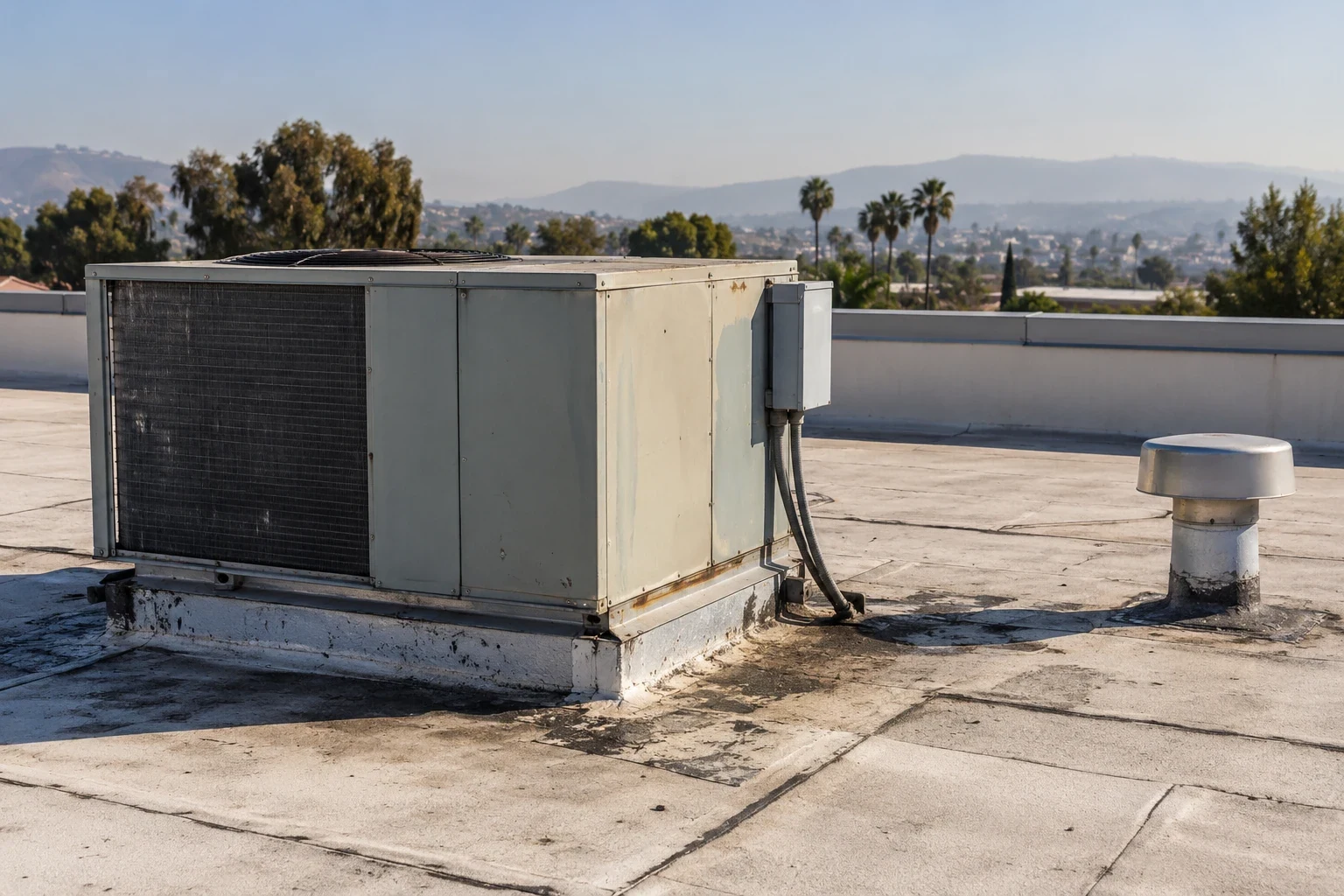
Confirm access, rooftop equipment, ventilation intakes, adjacent properties, and areas needing protection before spraying. Control overspray risk and keep vehicles, windows, air intakes, and pedestrian routes clear. Establish who shuts down or protects equipment if the work area approaches an intake. Material staging and hose routes should not block emergency or delivery access.
Chula Vista's coastal and inland terrain brings varied exposure. Hot dry-wind periods in eastern areas can change application conditions, while winter rain requires a reliable closure plan. Check measured surface conditions and manufacturer limits during the work rather than scheduling solely by month. If wind or moisture makes application unsuitable, secure the area and resume when the coating can cure as intended.
Occupied properties benefit from defined work zones and advance notice. The occupied-site sequence should cover spraying windows, ventilation, access restrictions, noise, and daily dry-in points. Near the Bayfront, coordinate with loading and marine operations; at EastLake Business Center, plan the visit around tenant schedules and keep active routes open.
Compare restoration with replacement
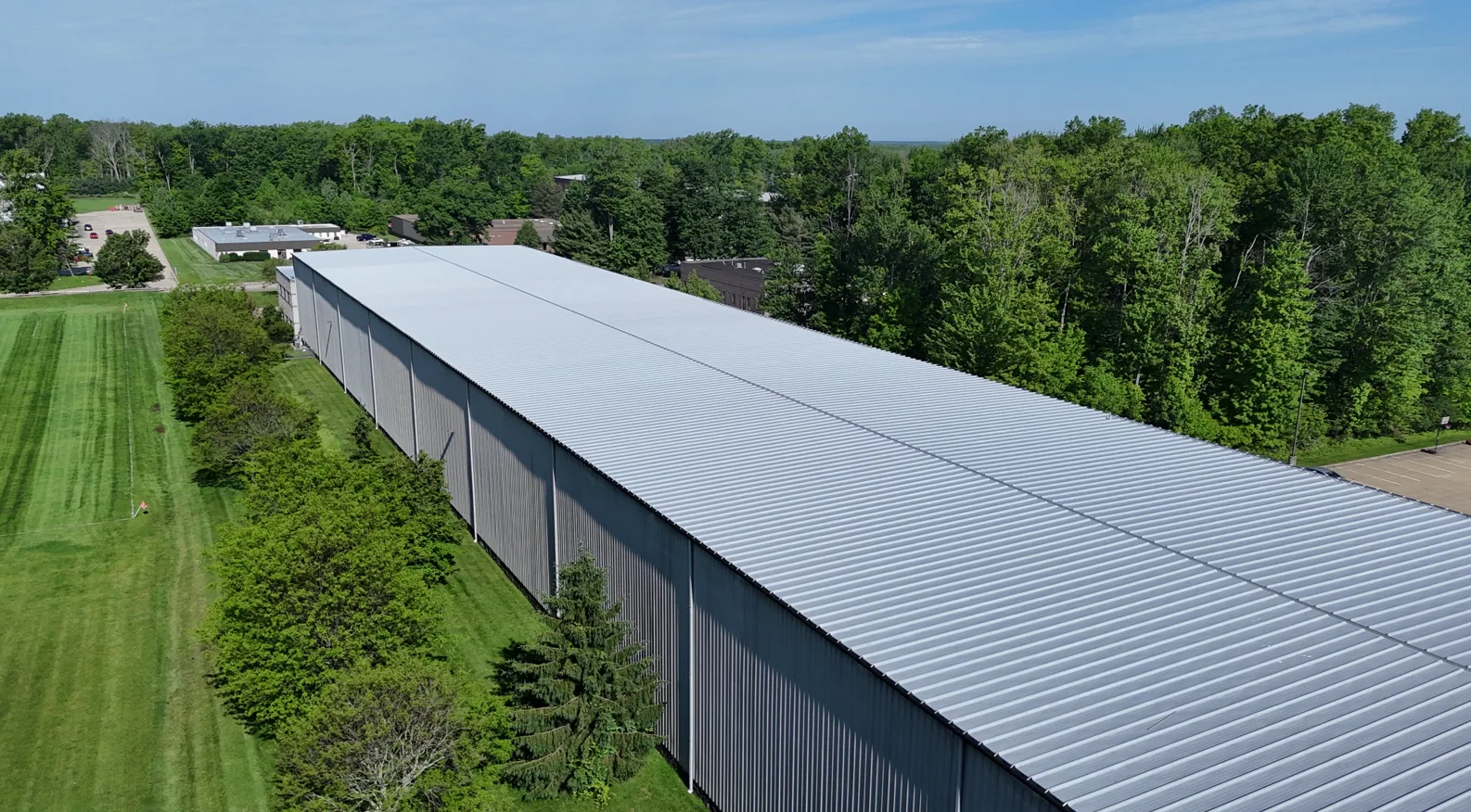
SPF restoration may be practical when foam remains dry, attached, and structurally sound, and the surface can accept a compatible coating. Widespread wet foam, separation, or persistent movement may require removal or replacement. Map test results and repair areas, then compare restoration and replacement using the same roof boundaries and access assumptions.
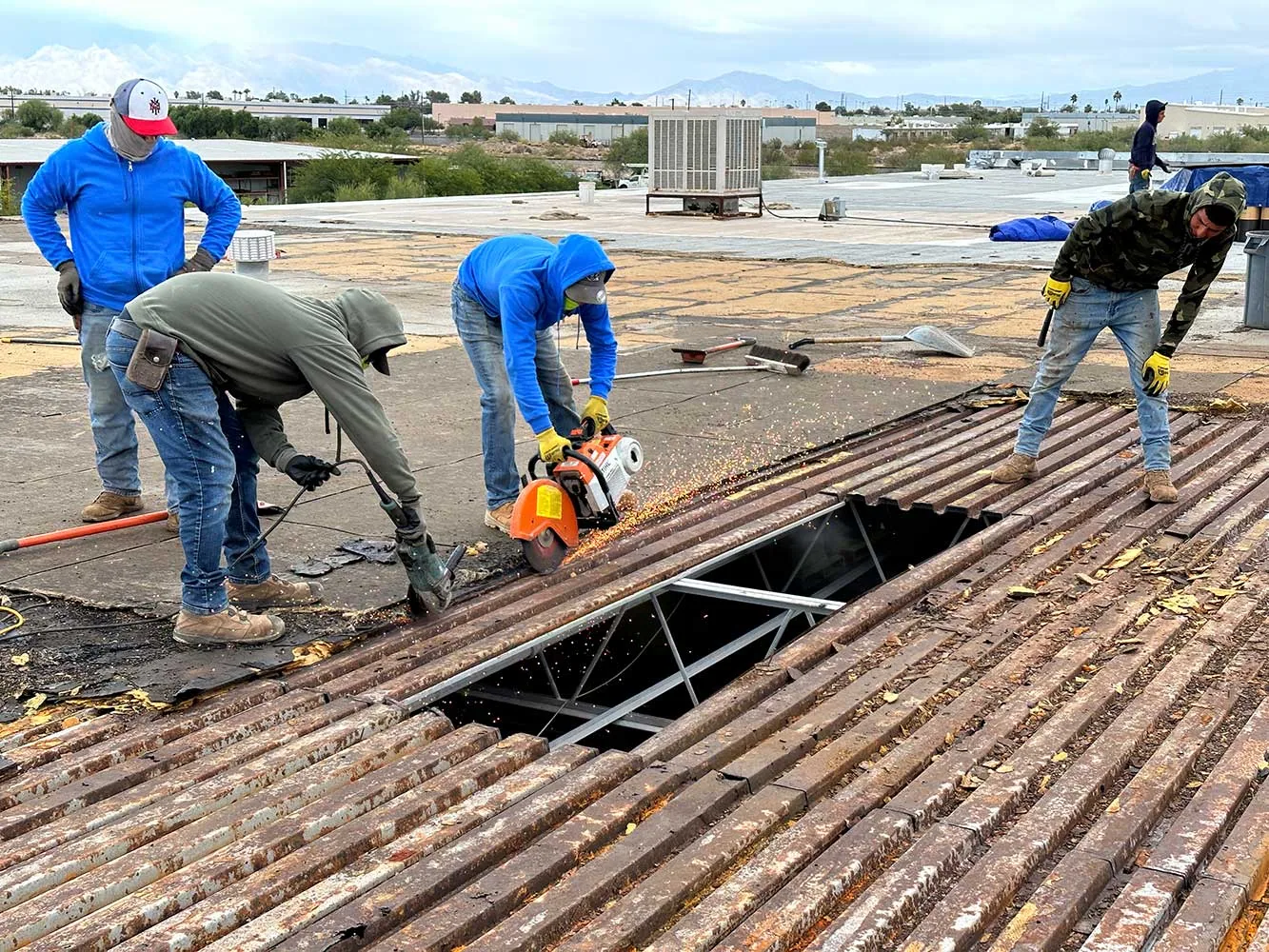
Replacement can correct failed substrate and drainage but introduces tear-off, debris, and temporary protection. A recover may add a system over the existing surface only when moisture, adhesion, load, finished height, and compatibility support it. A replacement scope should include foam removal limits, deck repairs, slope adjustments, drains, curbs, and the sequence for keeping the building dry.
Keep assumptions visible. Record which areas were tested, the test method, inaccessible equipment zones, and locations excluded from the scope. If conditions change after removal, define a review step before additional work proceeds. This gives the owner a clear basis for comparing the original proposal with field discoveries.

Maintain the coating and repair record
At closeout, inspect coating continuity, repaired foam, penetrations, vertical transitions, and drains. Photograph each test and repair area, mark it on the roof plan, and record products and preparation. Record cure limitations or areas requiring a return visit. Keep coating data and maintenance records together so future crews can match materials and avoid incompatible patches.
Routine inspections should look for worn coating, exposed foam, new punctures, cracks, debris, blocked outlets, and damage after mechanical work. Address water entry promptly and compare findings with prior photographs. A small, dry repair is easier to define than a broad area where moisture has traveled beneath the surface.
To request an SPF review, share the building location, roof access contact, affected area, leak history, and available installation or coating records. We can inspect the foam and protective layer, explain any tests needed, and outline a restoration or replacement path supported by the findings.