Protect the Aircraft and Clear Span
Hangar work must separate the roof zone from aircraft movement. We ask where aircraft are parked, when they move and which doors must remain clear. A lift or material drop cannot interfere with tow paths. The facility contact identifies staging and the exclusion zone; we plan protection for sensitive equipment below.
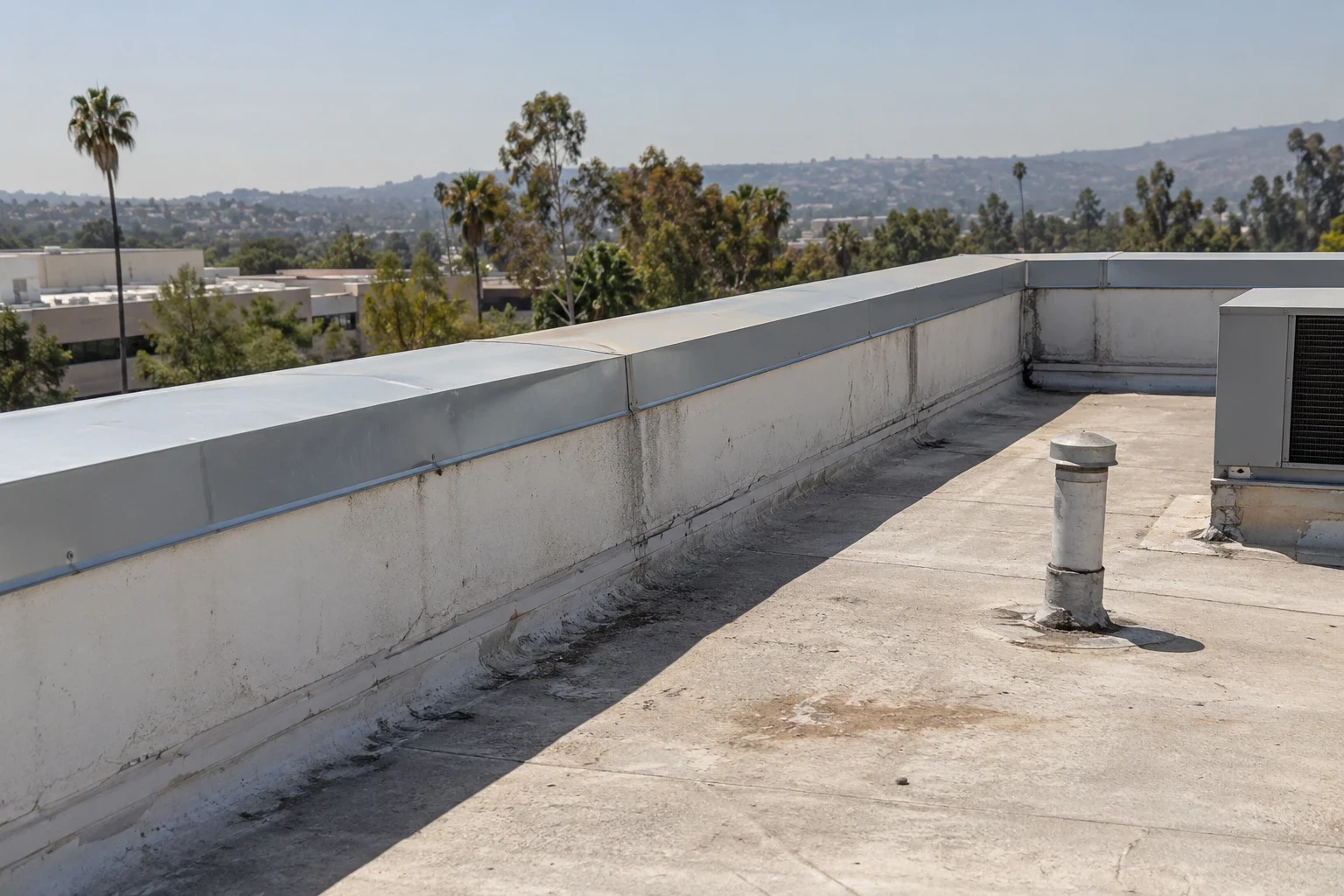
A large hangar door creates a tall perimeter and wide opening. We inspect the head, jambs and adjoining roof panels for gaps, then keep the door operable and the aircraft route clear. Wind can push rain through a transition while the main field stays intact, so we check the full connection and runoff.
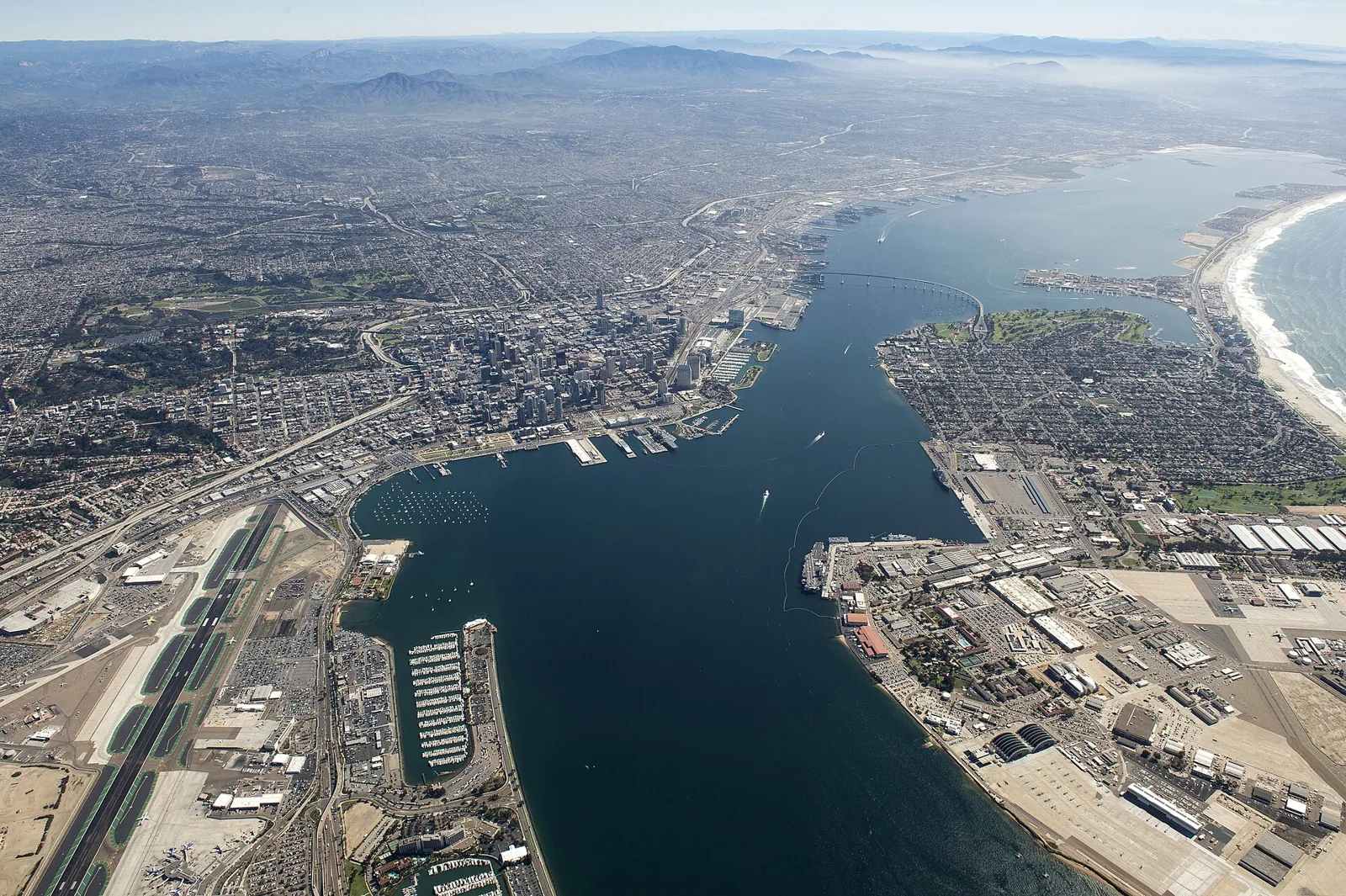
At Naval Outlying Landing Field Imperial Beach, hangars support aviation operations on the South Bay coast near Imperial Beach. More broadly, San Diego Bay’s working waterfront includes shipyards, cargo operations and industrial suppliers. Those regional uses bring vehicle, equipment and delivery movements into roof access planning, but each hangar requires its own gate, escort and work authorization. If the property is a military installation, base access, badging and scheduling must follow the site’s procedures. Military installation roofing requires coordination with the authorized facility representative.
Find the Opening Along the Span
A leak may start at a seam, ridge, wall transition or later penetration. We ask where water appears and whether wind-driven rain is involved, then compare the report with roof geometry. A stain along a column line can reflect water from another bay, so a marked plan ties findings to panels and supports.
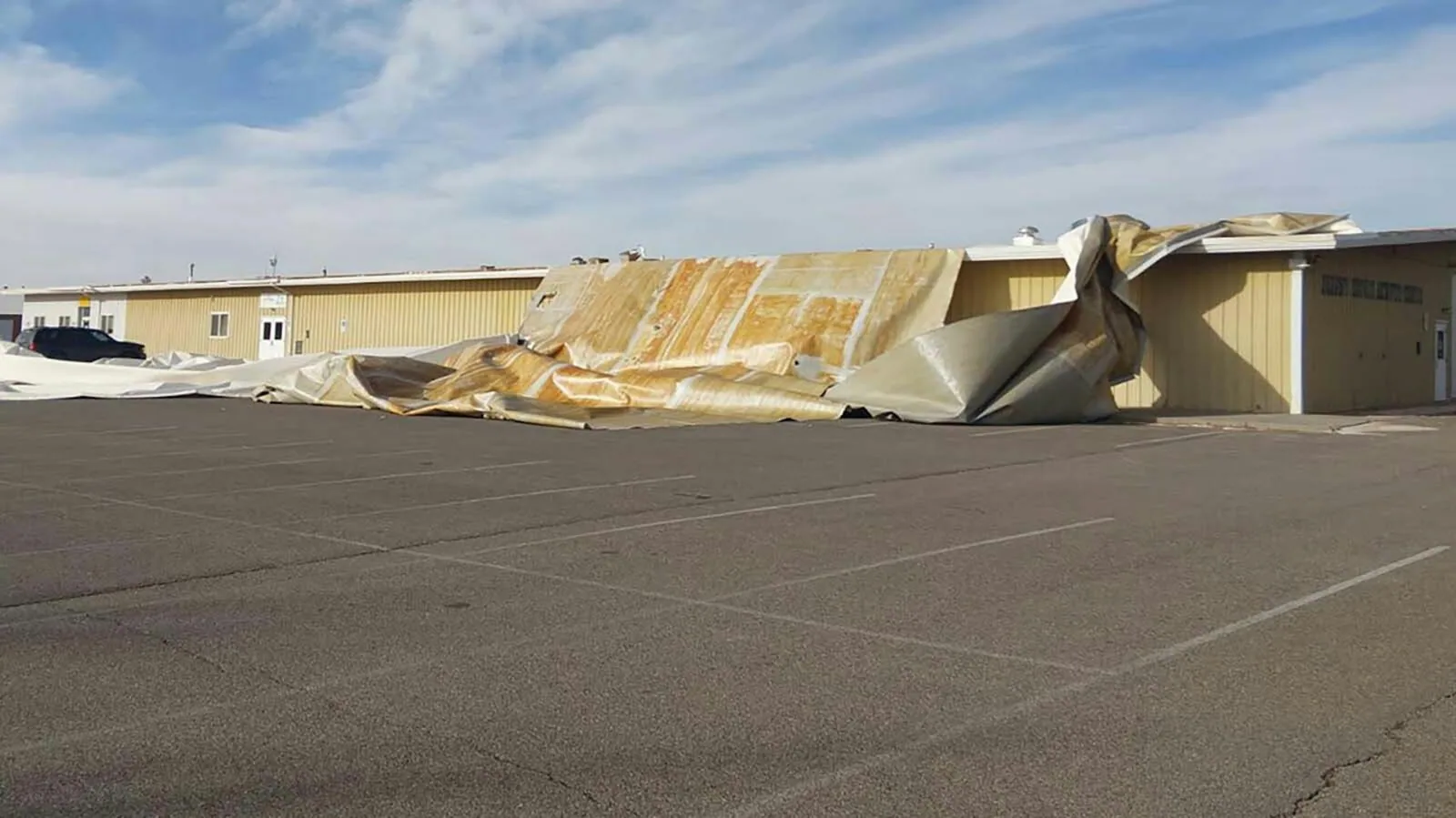
Roof type matters. Standing-seam metal has panel joints, clips and ridge details; a membrane roof has field seams, penetrations and flashing. We inspect the system before choosing material so a repair does not trap water behind a new edge or restrict panel movement. At fasteners and laps, we check for backed-out screws, damaged washers, open seams and corrosion. On a membrane roof, we inspect welds, curb corners, perimeter edges and exposed reinforcement. A wind-damage inspection can include edge metal and uplift details after a strong event.
Most San Diego-area rain falls during winter, while totals vary. Wind-driven rain tests a door connection differently from a roof drain. We inspect the overflow, ridge and equipment curbs. A moisture survey can guide closer inspection when conditions support it; a controlled opening establishes what is present at that location.
Respect Panel Movement and System Compatibility
Metal panels expand and contract with temperature. A repair that locks a moving joint or fills a drainage channel can create stress. We inspect clips and seams, then choose a detail that allows movement. Corrosion that has thinned a panel may require a larger replacement; coating cannot restore metal thickness or structural support.
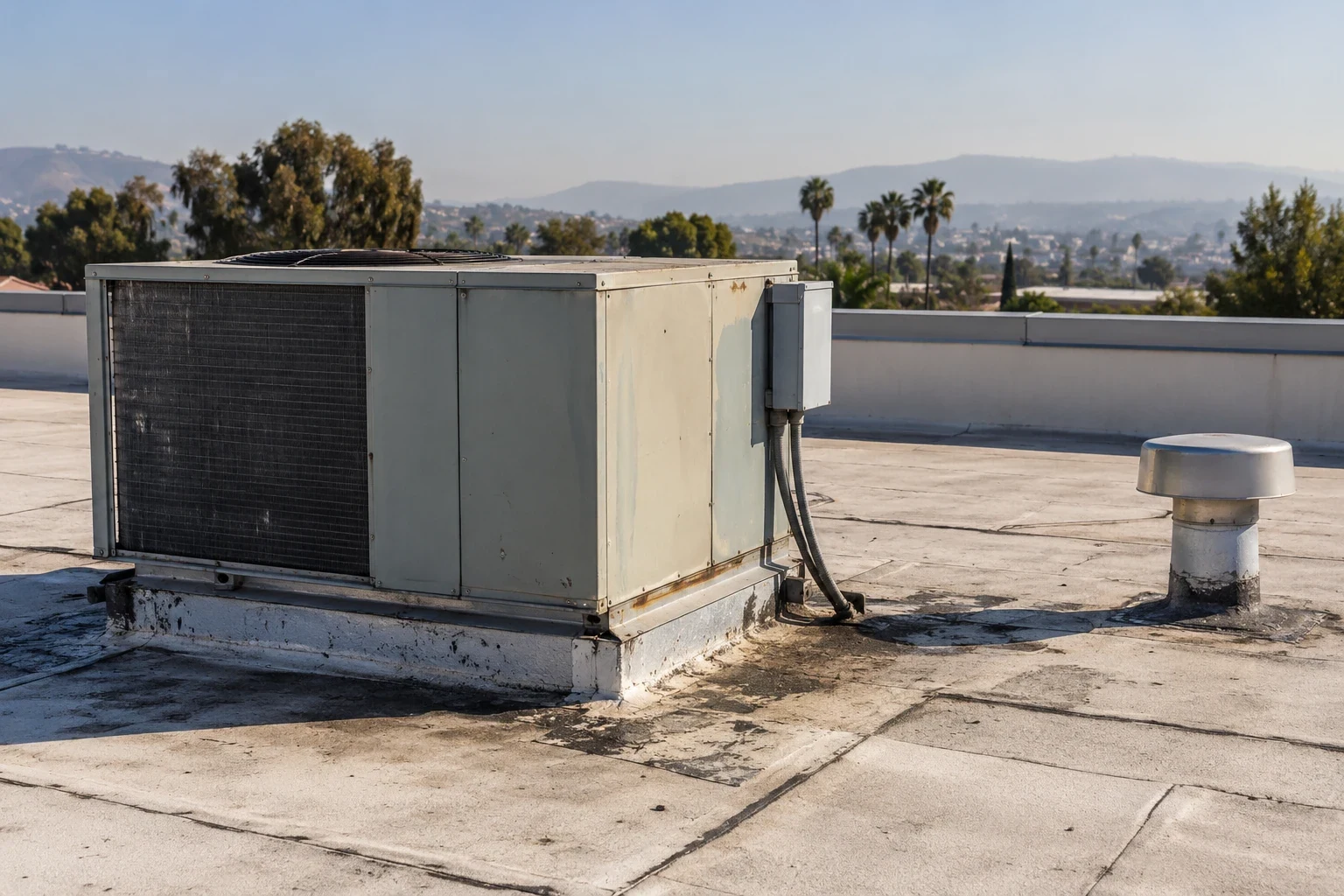
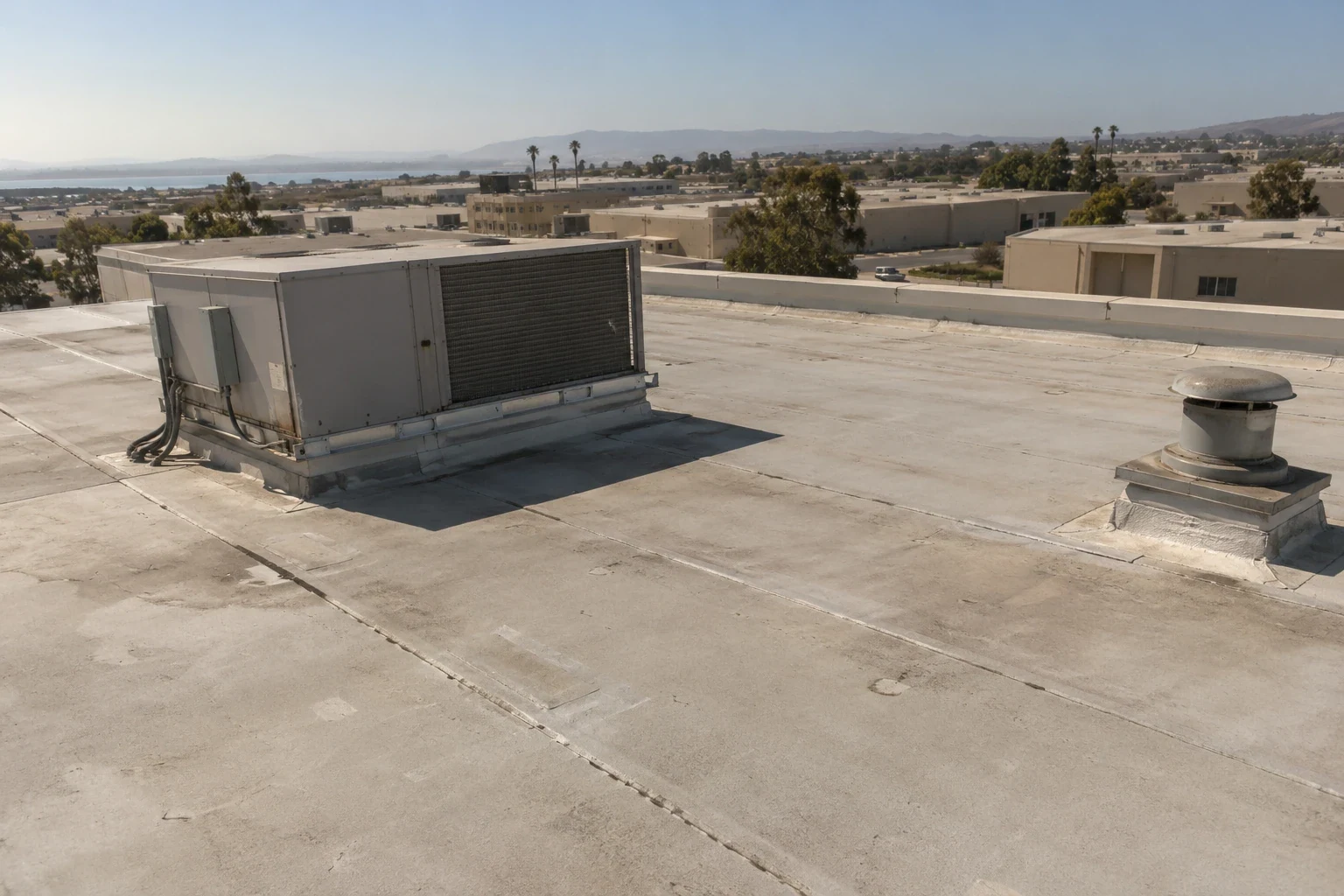
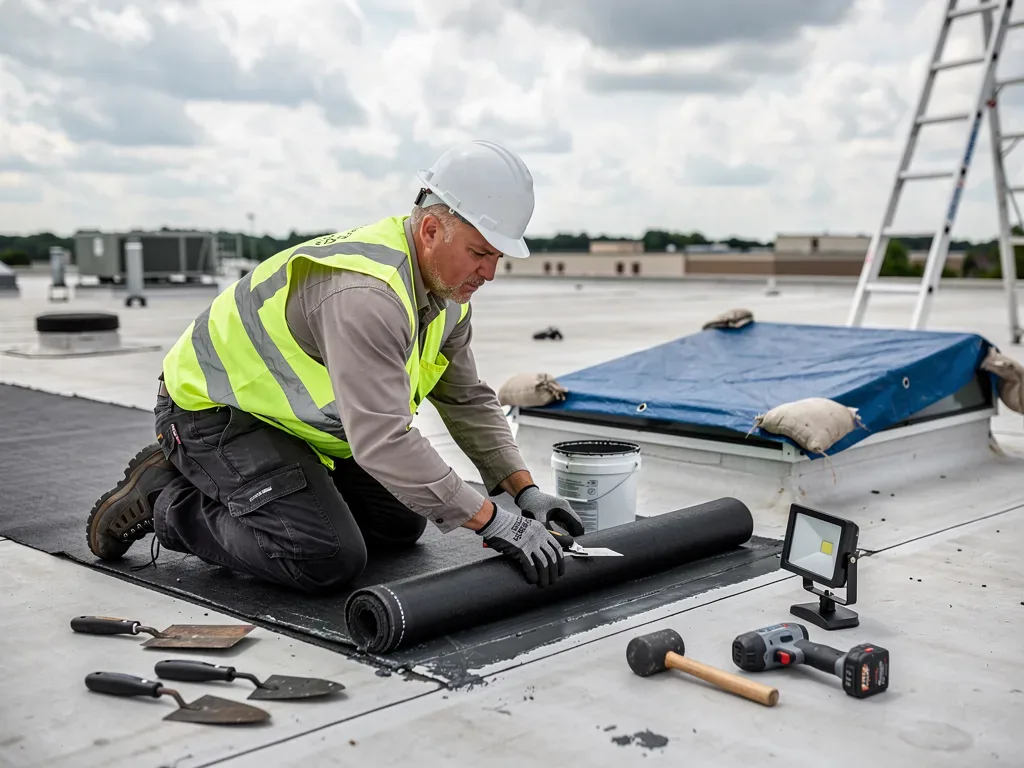
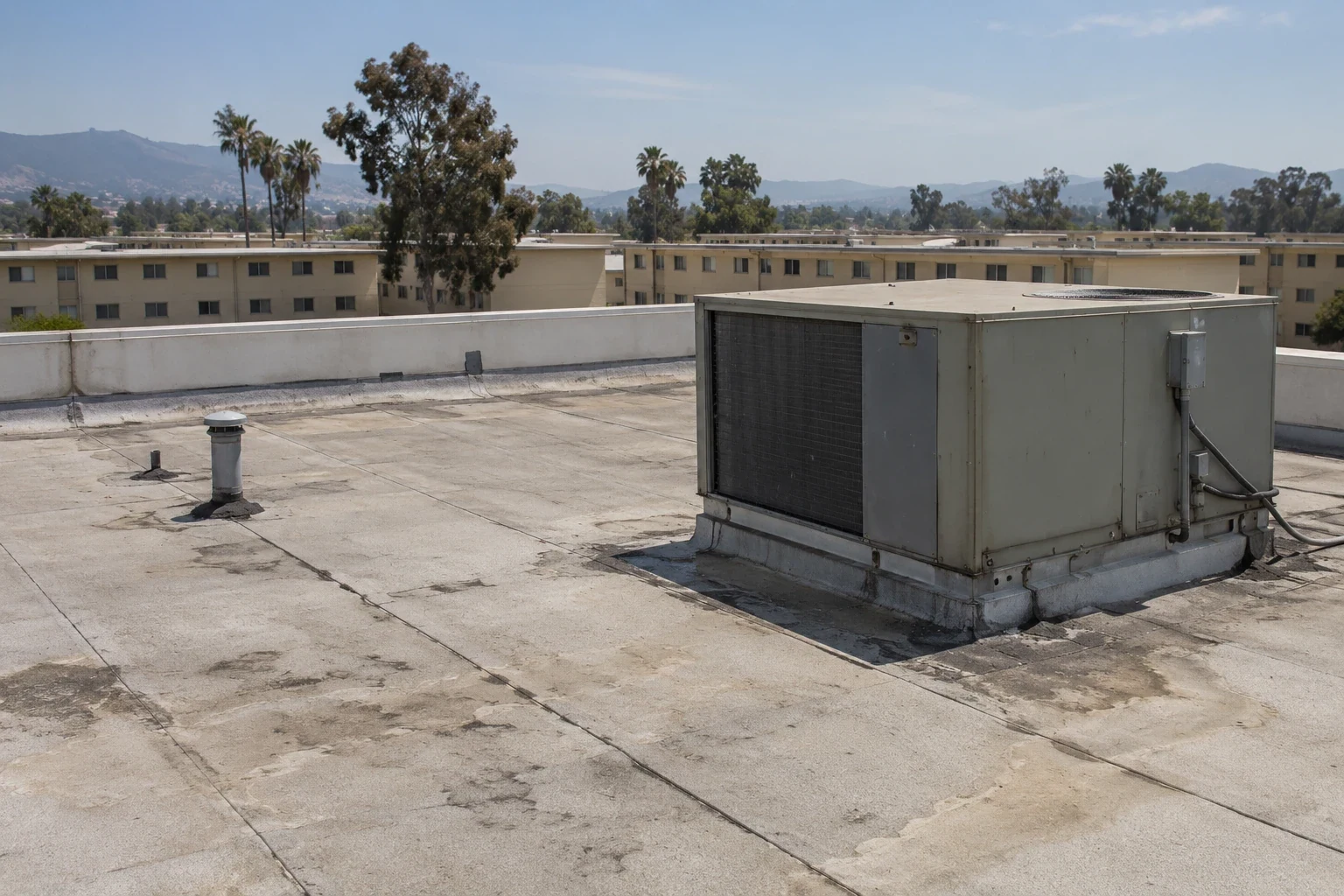
Membrane hangars need compatible patches and flashing at fans, skylights and equipment. We check substrate beyond the opening. Wet insulation, deck corrosion or loose attachment changes the boundary; covering it leaves the cause in place. Curb flashing must rise above the water path, and wall counterflashing needs more than a sealant bead.
Hangar door systems also need a sound roof connection. We examine the header, side transitions, canopy or overhang, and any drainage path that directs water toward the opening. If the door requires adjustment, that work belongs to the door specialist; the roofing scope records where membrane or flashing intersects the assembly. Edge metal and coping repairs can restore a roof perimeter, while a full replacement addresses widespread deterioration and failing layers.
Set the Work Window Before Mobilization
Before ordering materials, we confirm door hours, aircraft movement, escort rules, lift location, overhead wiring and roof-entry authority. Work can shift to a clear window if maintenance needs the floor. Exterior staging preserves interior space when wind and truck access permit it.
For a large project, we divide the roof into sections with clear dry-in points and open only what can be made watertight in that shift. If weather changes or hidden damage appears, we secure the exposed zone and review any added work. Before leaving, we clear drainage and remove loose fasteners and debris from the roof and apron.
Emergency response for active entry is available around the clock, including weekends and holidays. The immediate objective is to limit water exposure and protect the aircraft area below. Temporary cover is recorded separately from permanent repair, and the schedule for a compatible tie-in is set once access and materials are confirmed. When the property has military access controls, response timing also depends on the authorized entry process and site rules.
Document the Hangar Roof by Bay
The roof record identifies the bay, panel or membrane zone, door or equipment relationship and repair material. Photos show the original condition, boundary and tie-in. If an area stayed closed, the record explains the limit and what would prompt another visit.
Cost and timing depend on roof height, system, lift access, panel length, door operation and hidden damage. A ridge repair differs from replacing corroded panels or wet insulation. Roof condition reporting keeps repair boundaries together. Manufacturing plants and warehouses also need equipment access, while a hangar must account for aircraft movement.
Share the hangar bay, affected roof detail, aircraft schedule, door restrictions and access contact. We will trace the water path and define the work boundary before materials or equipment are mobilized.