Distinguish the S and G Configurations
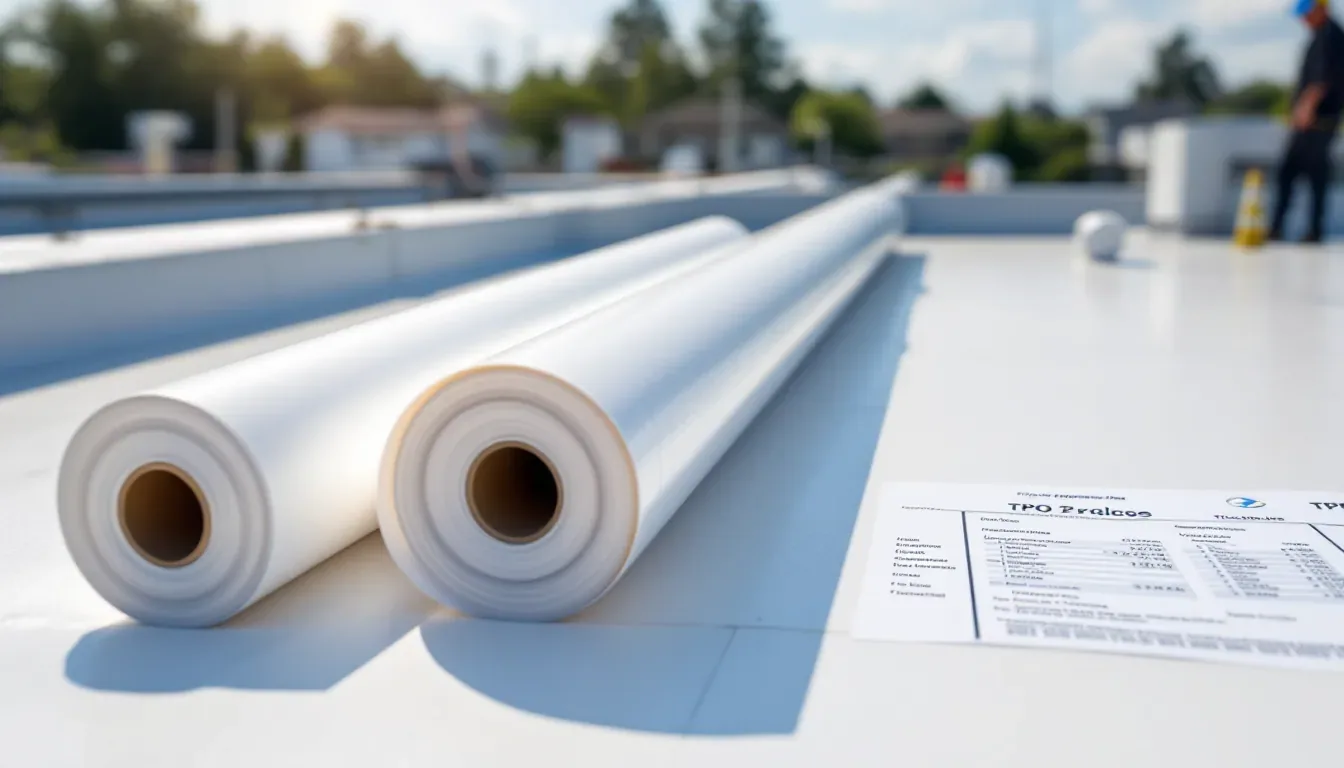
Sarnafil G membranes are designed for adhered systems and include fiberglass reinforcement; S membranes use polyester reinforcement and are used in mechanically attached systems. The product family must be matched to the membrane and attachment installed on the building. We compare product documents, sheet markings, seam layout, and visible attachment details. If those do not agree, we record the uncertainty before selecting a patch or estimating replacement.
Both configurations use PVC sheets with heat-weldable seams. The repair still has to account for membrane thickness, backing, substrate, attachment, and the specific flashing detail. A GAF PVC assembly or Duro-Last membrane system may have similar broad categories, yet the matching components and published details differ. We work from Sika’s product information for the installed Sarnafil material rather than assume another brand’s accessory is suitable.
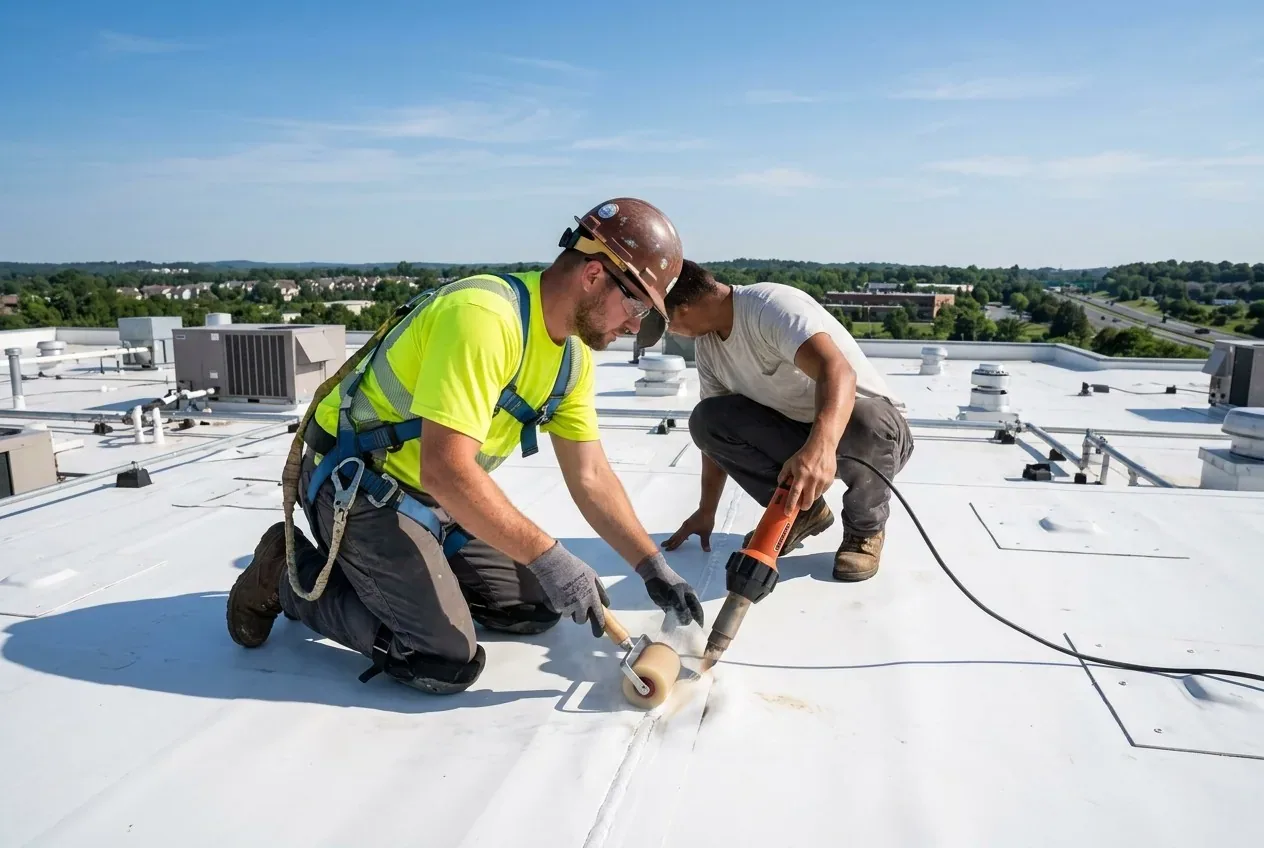
Test the Seam, Not Just Its Appearance
A weld can look continuous and still have a weak section where speed, heat, pressure, or surface preparation changed. We probe representative seams where the project permits, check laps around repairs, and photograph any opening or fishmouth. The test helps set the repair boundary. We also look for trapped water, dirt, coating, or an earlier patch that might affect the bond.
Where a leak appears below a Sarnafil roof, we trace it across the roof plane instead of assuming it entered directly overhead. Curbs, roof drains, expansion joints, and wall flashings can redirect water. If moisture could be trapped in insulation, selective openings or a moisture survey may be needed to establish extent. The report separates visible membrane damage from a suspected condition below the sheet.
We can provide a documented roof inspection with photos, roof-zone labels, and records about areas that were inaccessible. An on-roof repair addresses a bounded defect after the membrane and substrate are confirmed. When several zones show similar separation, the pattern may call for a broader evaluation before a patch plan is repeated.
Keep Flashing and Drainage Connected
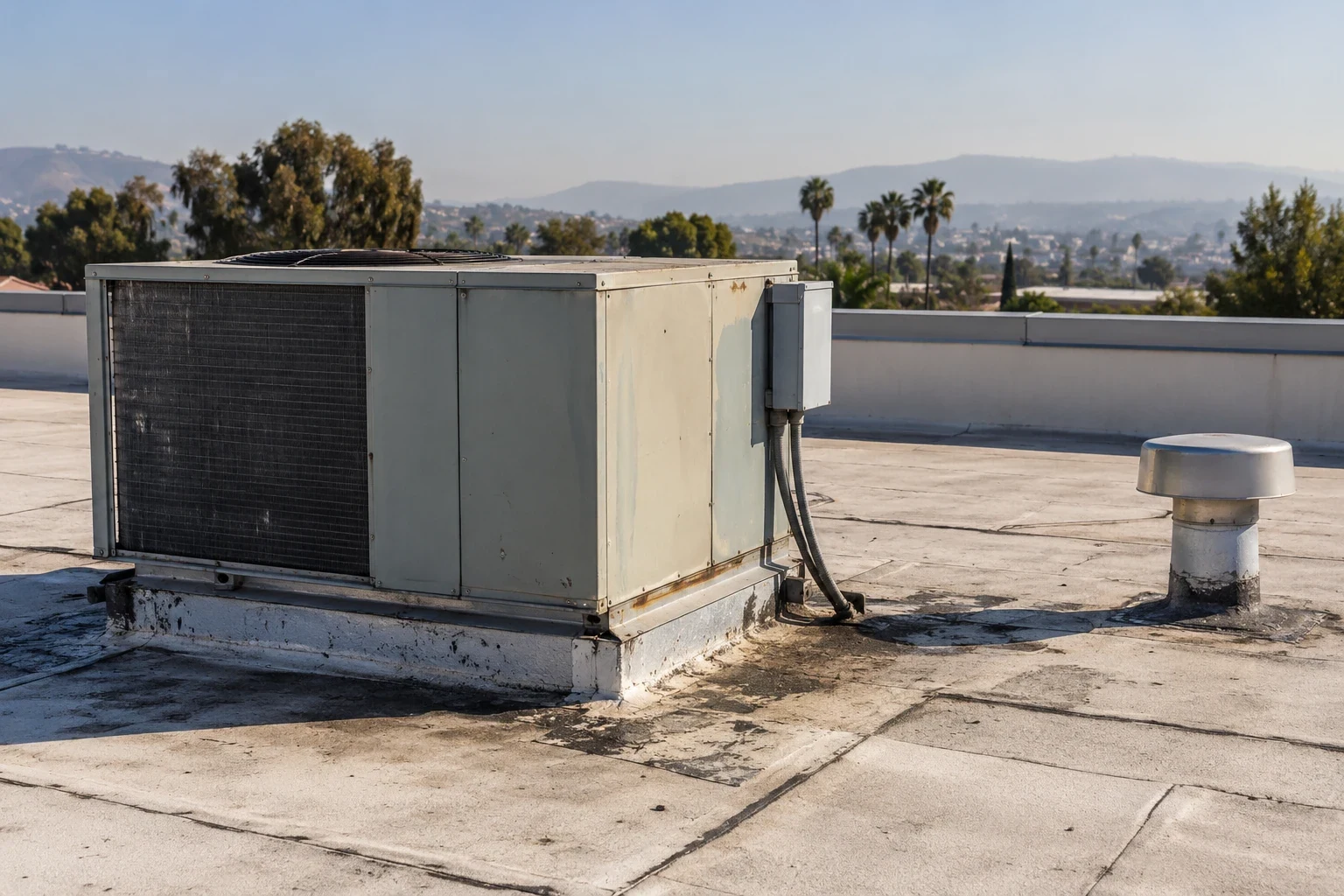
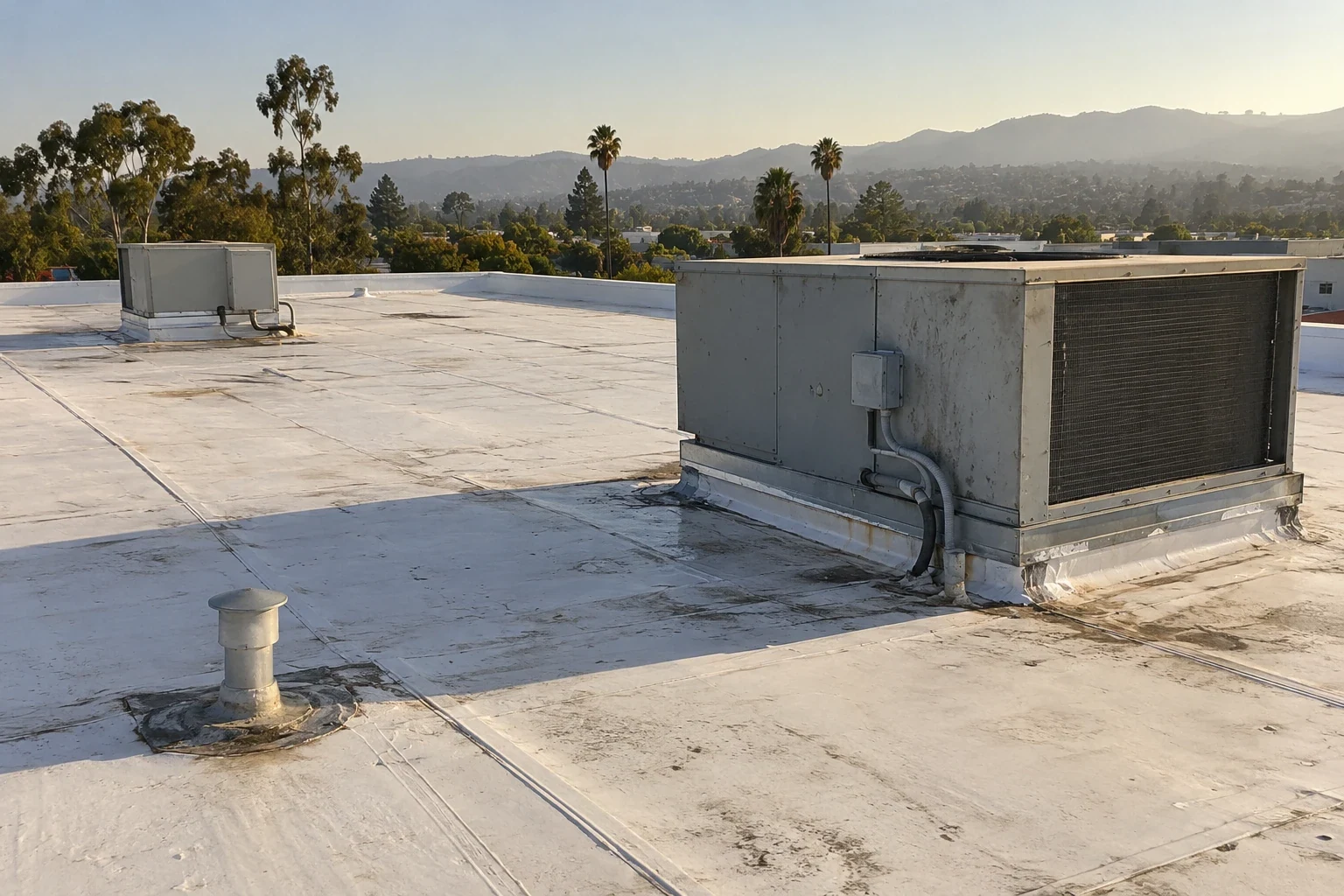
At a drain, the membrane, clamping ring, strainer, and roof slope all affect how water leaves the assembly. We remove debris only when it is the issue and check for movement or deterioration at the connection. A repair that seals the top of a wet bowl can obstruct the drainage detail or conceal a loose flange. The scope identifies the drain component and the tie-in rather than calling all water entry a membrane problem.
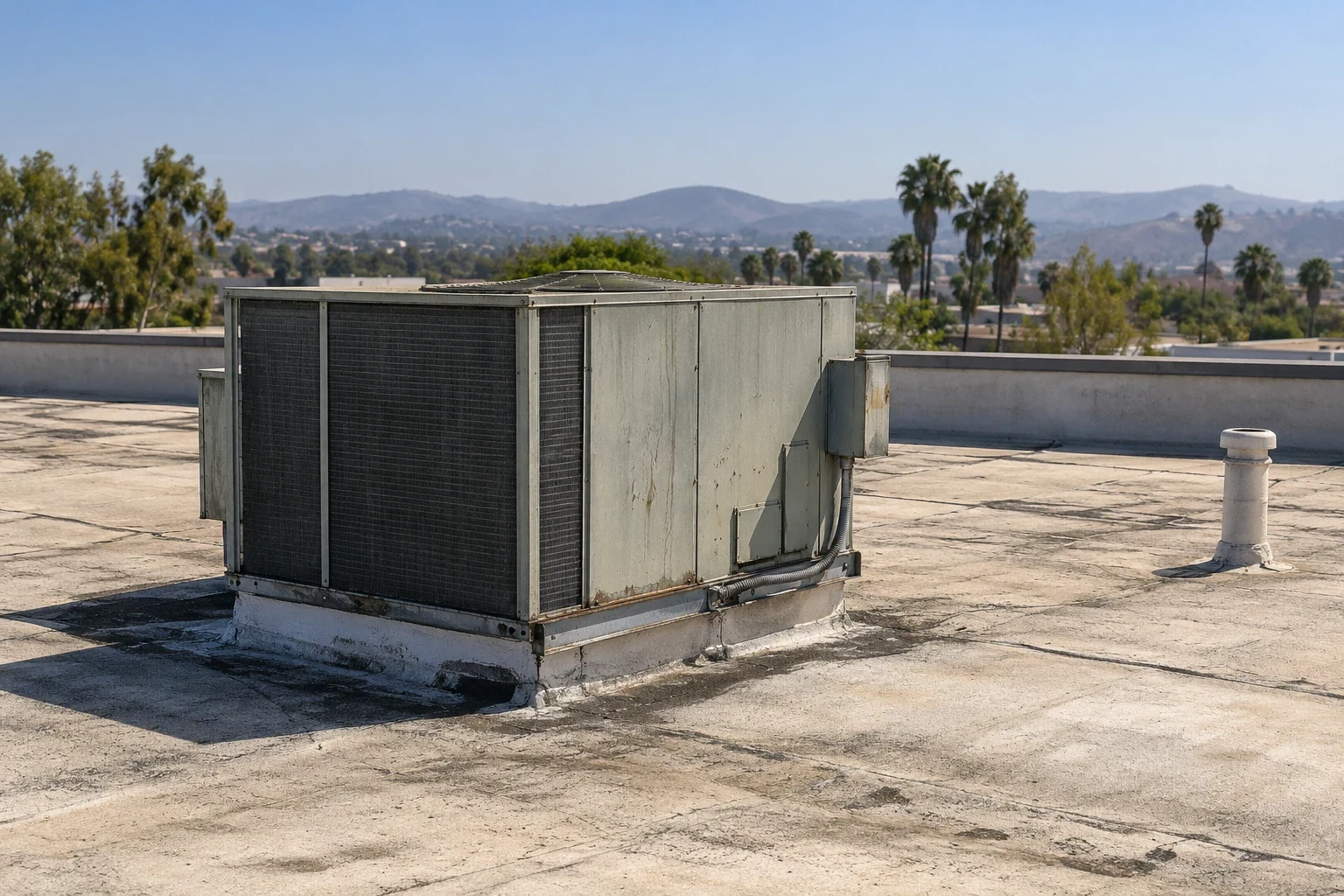
Chula Vista’s eastern plan area includes Otay Ranch village centers alongside employment and commercial uses. A roof visit there may require separate access for equipment yards, office areas, or tenant entrances. The property’s route determines how we stage tools and materials; it does not predict the membrane’s condition. We ask for an access contact and confirm which hatches, ladders, or roof zones can be released.
Set a Safe Boundary for Each Shift
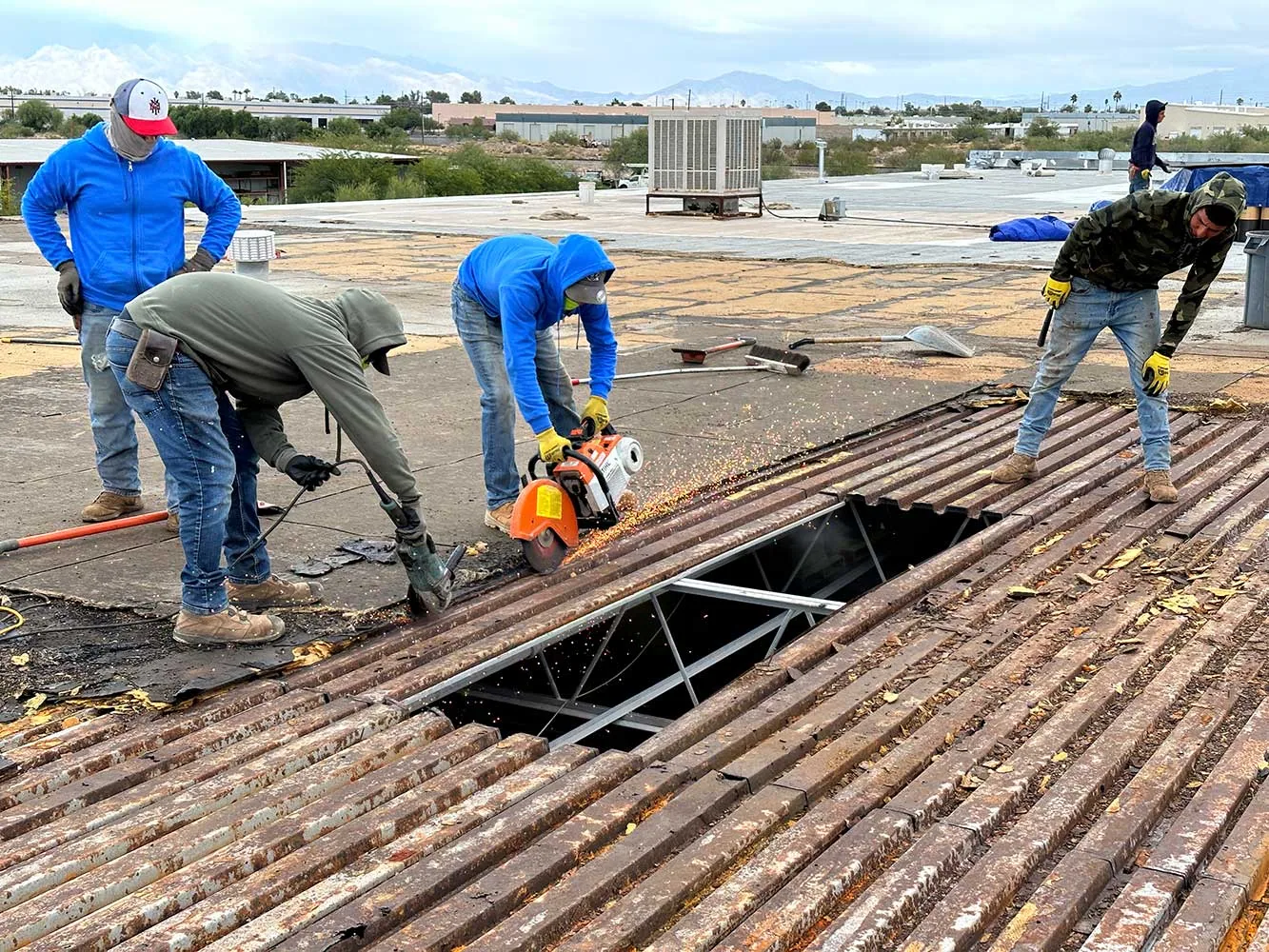
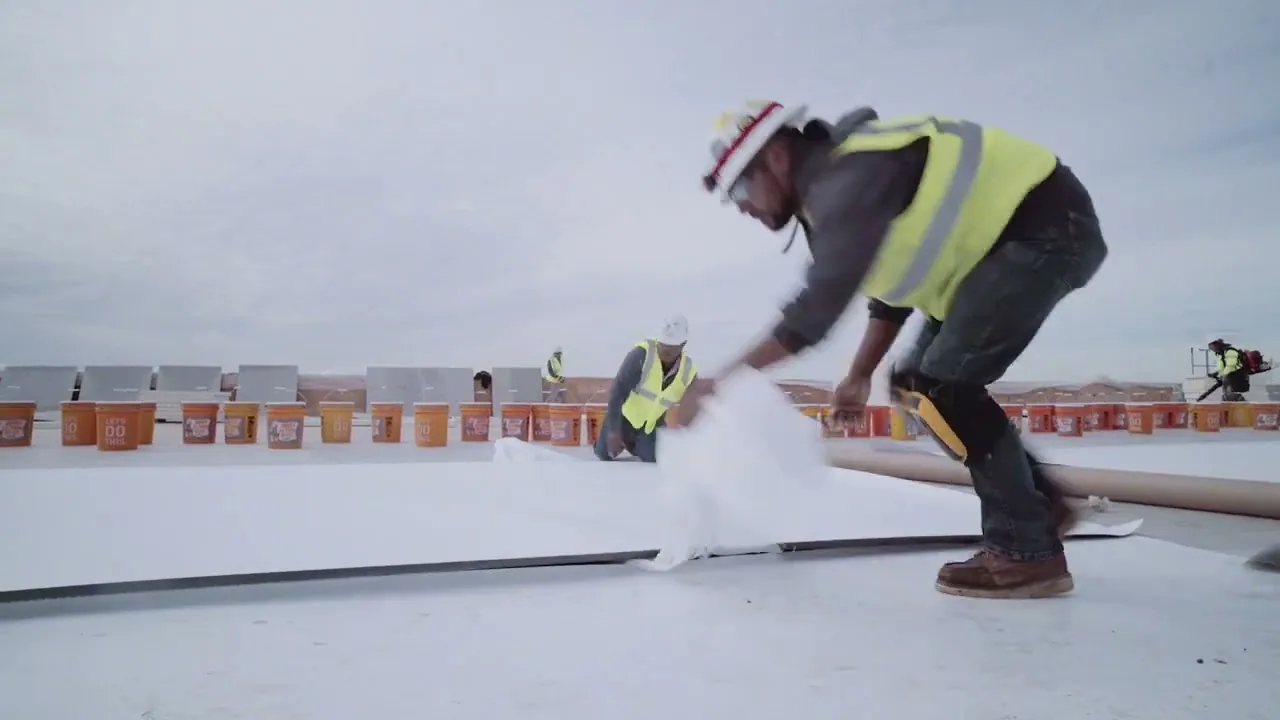
A reroof plan states how far removal can proceed before the new assembly is installed and sealed. We plan around the weather, material access, roof geometry, and operations underneath. If an opened section shows wet insulation or a weak deck, we protect the area and review added quantities before continuing. The crew and facilities contact share a clear stopping point at each transition so no exposed section is left without a dry-in plan.
Emergency calls are handled around the clock, including holidays and weekends. The immediate visit can limit water entry and identify the active area, but temporary protection is not the finished repair. Once the roof is dry enough to work, we verify the Sarnafil configuration and prepare a permanent detail using matching components and the actual substrate condition.
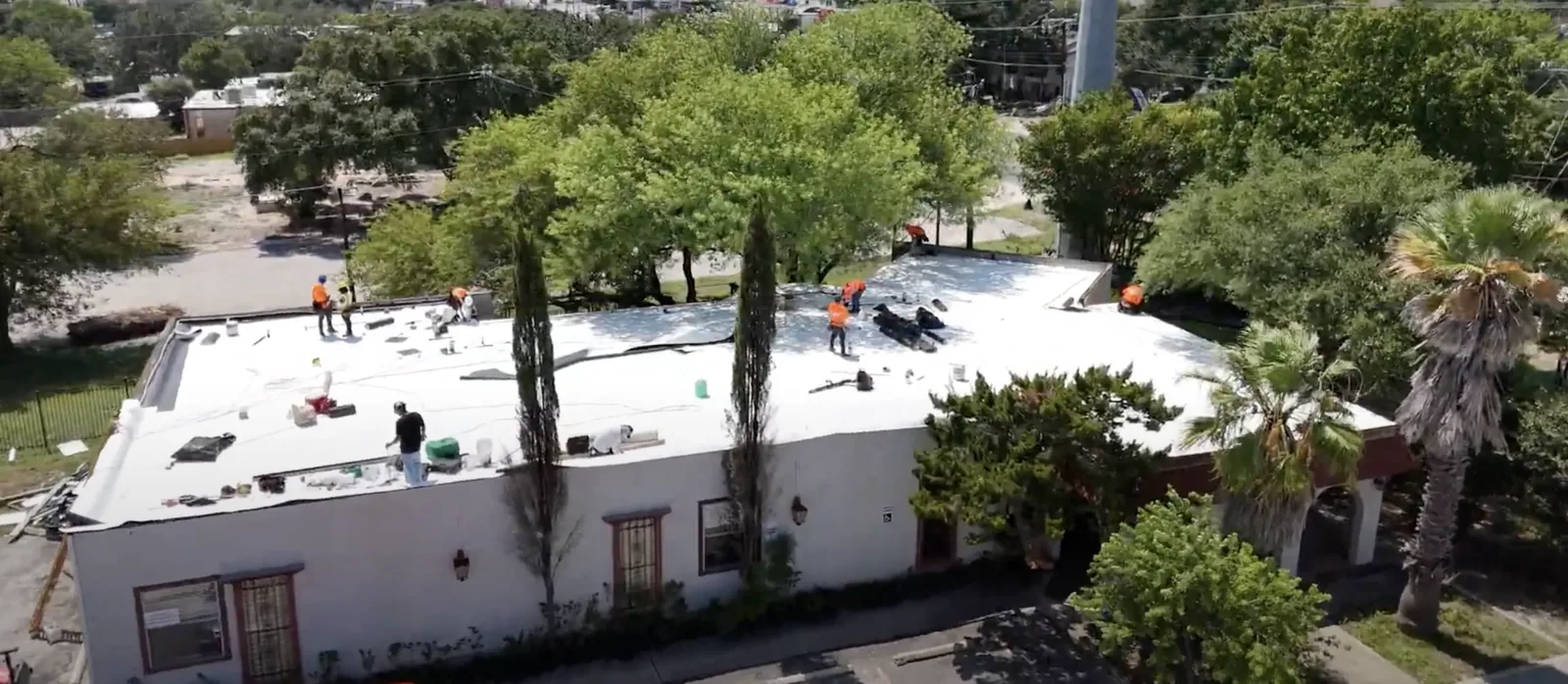
For occupied buildings, we coordinate roof entry, work noise, lifts, loading areas, and mechanical service access. A phased replacement may help maintain operations when the building layout and sequence allow it. We identify when tenants need notice, where foot traffic changes, and which interior areas require protection before work begins.
Use Local Conditions to Set the Work Window
Winter accounts for most regional precipitation, although annual totals are variable. We check the live forecast, rooftop drainage, and protection plan before deciding how much PVC to remove in one shift. Hotter dry easterly periods can reach eastern San Diego in September and October, so actual surface temperature matters when a repair method has material limits. Work follows current conditions and published installation requirements, not a calendar assumption.
The Bonita Road Commercial Area is one of the eastern Chula Vista activity corridors. On a property along that route, deliveries or customer access may affect the staging point, while the repair detail must match the installed membrane. Near Otay Ranch, varied planned uses can mean different operating hours across neighboring buildings. We confirm the contact and service window for the actual property.
Use Field Evidence to Set the Scope
A single loose corner over dry insulation may support a local PVC repair. Widespread weld separation, moisture below the membrane, or failed attachment can shift the decision toward removal or replacement. A recover also requires checking existing layers, roof height, drainage, and compatibility. We explain what the current inspection establishes and what a test opening would add before recommending a larger scope.
Budget and timing depend on repair area, thickness and backing, substrate preparation, curb count, perimeter length, removal depth, equipment access, and building use. We list allowances separately from measured quantities. A replacement scope describes the proposed Sarnafil assembly and tie-ins; a maintenance program can revisit repaired seams, drains, and flashings on an agreed schedule.
Send available Sika product records, roof plans, prior repair records, the affected area, and an access contact. We will inspect the relevant zones, confirm what can be seen, and return photos with the repair boundary and the next decision. That record can support maintenance or future capital planning without assigning an unverified condition to the entire roof.