Keep the Resident Route Clear
Before opening a roof section, we identify what sits below it. A resident room, medication area, kitchen, therapy room and public corridor each need a different protection plan. We confirm which entrances remain in use, where a lift can stand, whether deliveries share the same drive, and who can authorize access to the roof. These details shape daily sequencing. A repair crew can often work above an occupied building, but the path from gate to ladder and the area below the work must be agreed before material arrives.
Inside, floor protection and a marked boundary help staff guide residents around work. If ceiling material must be removed, we coordinate the opening and temporary cover with the facility contact. Tools stay out of resident paths, loose items are secured at shift end, and doors and fire routes remain available. Occupied-building work requires sequencing across each area, not merely a calendar date.
Third Avenue and Broadway are established western Chula Vista business corridors, while Otay Ranch and Eastlake combine commercial areas with village centers. We ask staff about resident activities, meal service, clinic appointments and quiet periods, then set work where it causes the least disruption.
Trace Moisture Beyond the Ceiling
A ceiling stain is a location clue, not a roof diagnosis. Water may enter at a curb, wall transition or open seam, then travel along insulation joints or deck flutes before reaching a room. We compare the report time with rainfall and equipment operation, then inspect the roof area around the interior mark. The drain bowl, overflow, penetrations and nearby repair edges all matter. Photographs connect the indoor report to a roof zone, so the repair does not stop at the visible symptom.
Most San Diego-area precipitation falls in winter, though seasonal totals vary. A storm may expose an opening, while a blocked outlet can hold water around an intact detail. We inspect the drain and slope, check for membrane separation and look for soft or displaced insulation. If moisture may be concealed, a targeted survey or controlled opening can establish what lies below. An infrared moisture survey can focus follow-up when conditions suit the method.
For active entry that threatens occupied space, we can respond at night, on weekends and through holidays. Temporary protection limits exposure while we arrange a permanent repair, and the staff contact receives the covered area and follow-up plan.
Match the Repair to the Assembly
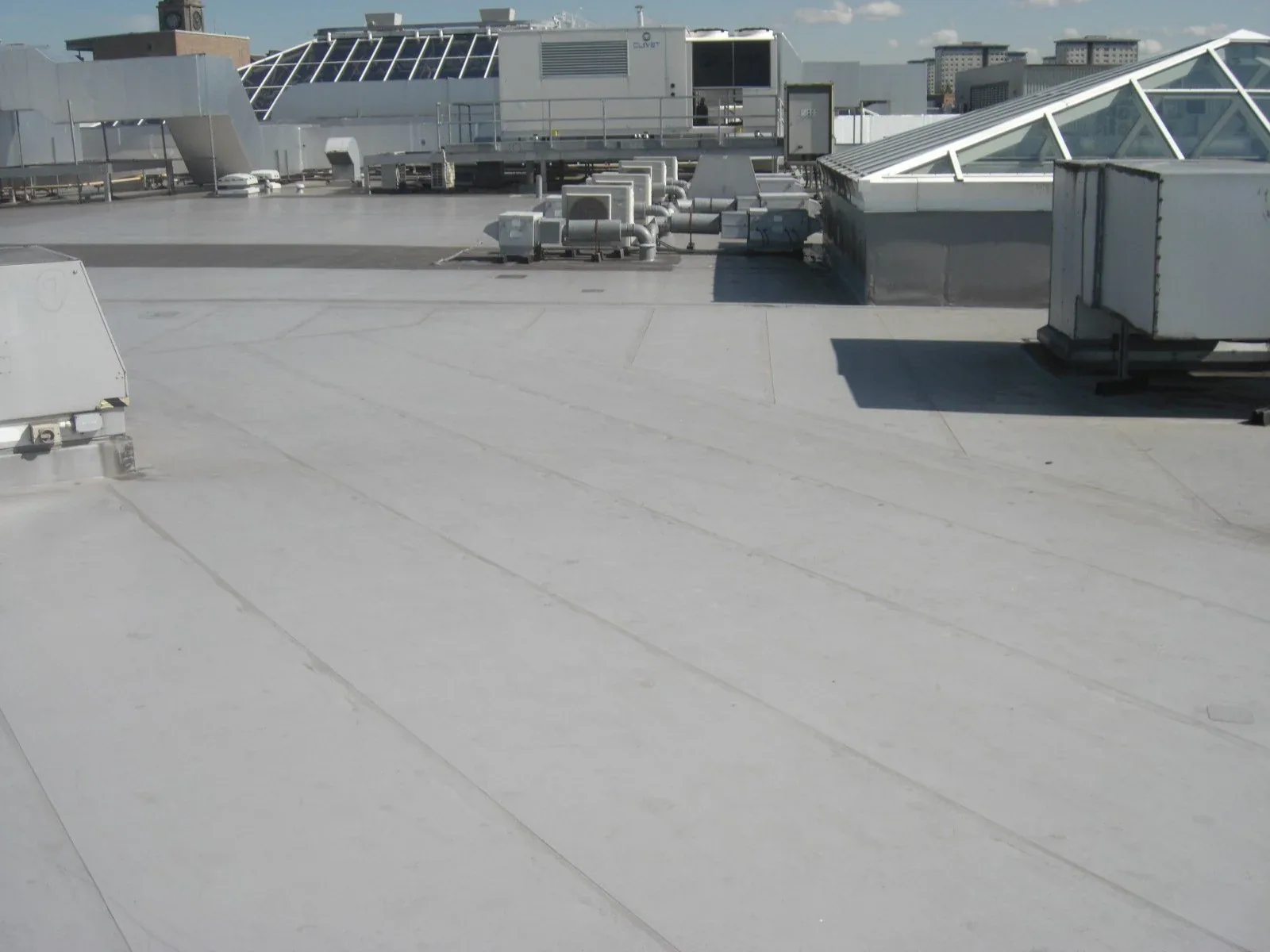
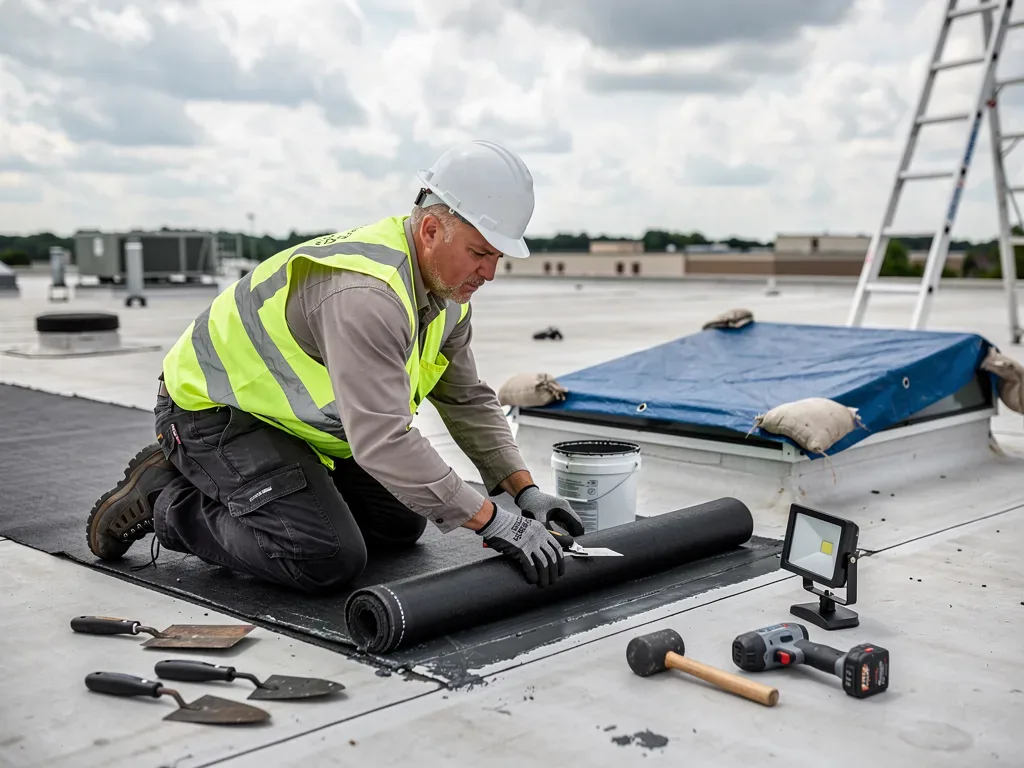
Different roof systems need different repair materials and preparation. A single-ply membrane may need a welded patch, while modified bitumen or built-up roofing calls for a compatible surfaced repair. We identify the assembly, inspect old patches and test whether surrounding material is sound enough for a tie-in. A patch over wet insulation or a brittle edge can move the leak without resolving it. If the membrane type is unclear, we explain what a small opening would establish before adding it to the work.
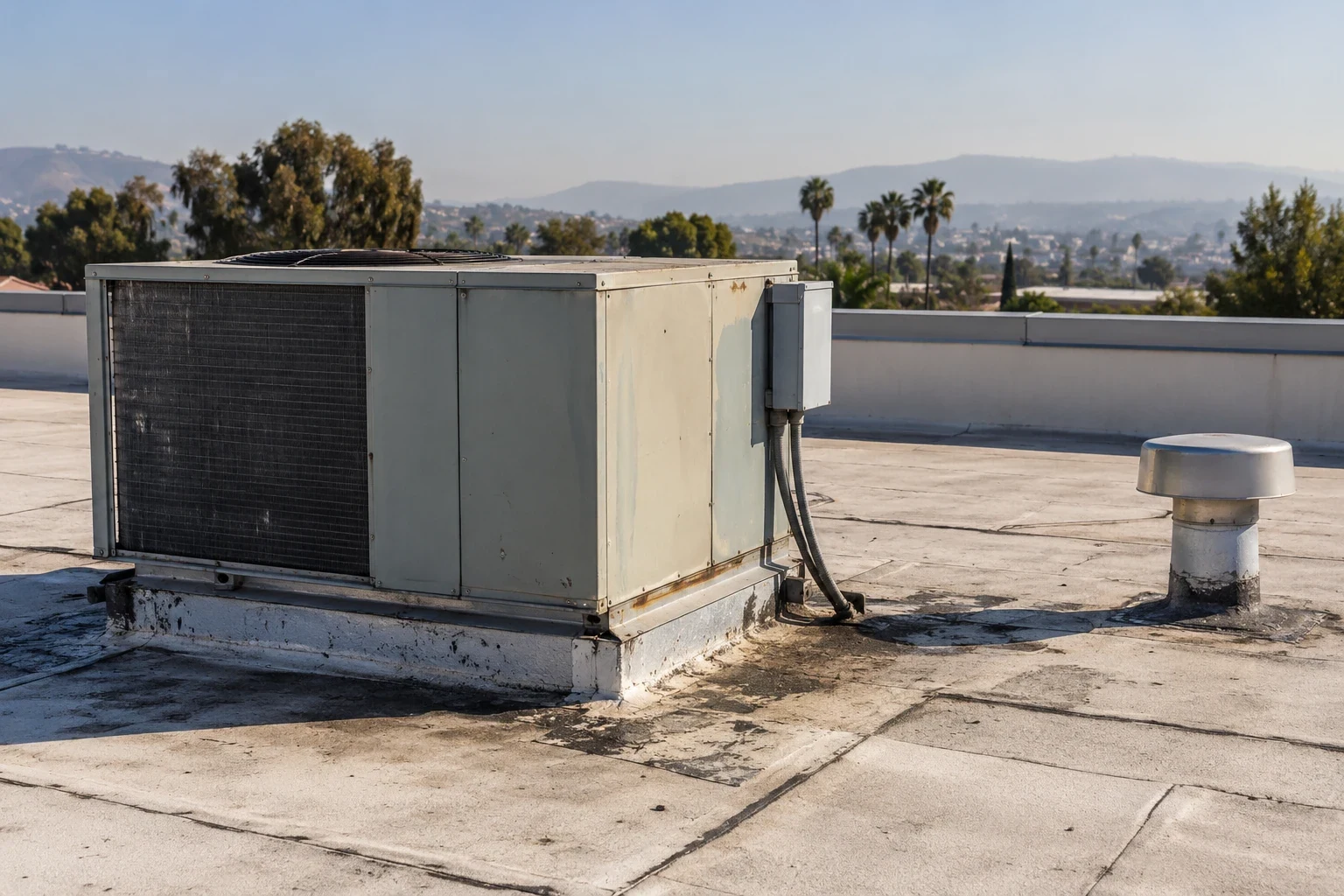
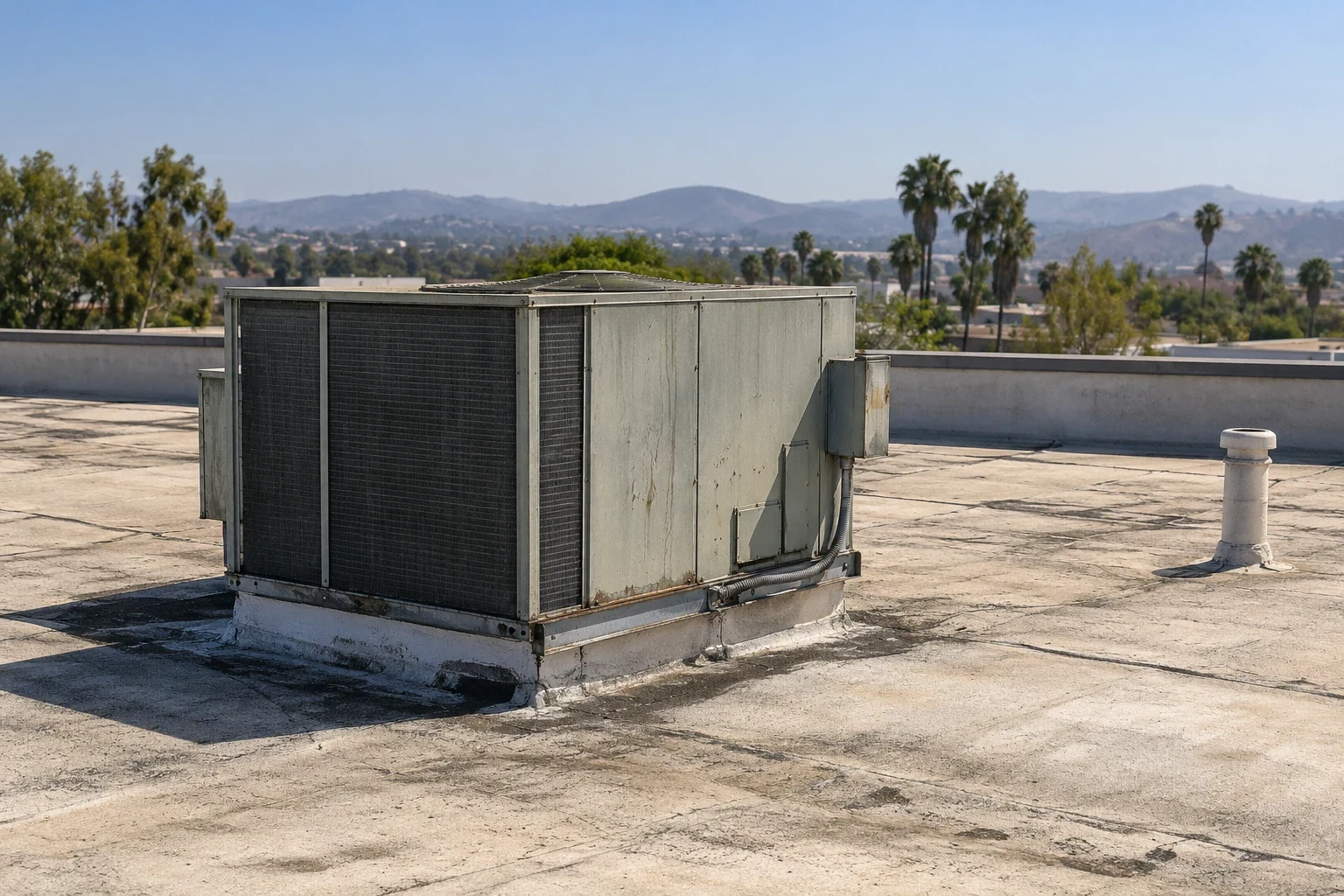
At a rooftop unit or vent, curb flashing must terminate cleanly, with the membrane protected from vibration and service traffic. At parapets and wall transitions, we check for open seams, loose metal and failed sealant. Debris, settled insulation or a restricted overflow can hold water against a repair. A confirmed defect receives targeted commercial roof repair; broad wet insulation or repeated failures may favor recover or replacement.
A coating suits only a roof that is dry enough, compatible and properly prepared. It does not solve saturated insulation or poor drainage. We compare the existing condition with a recover or replacement when those options better address exposed layers, then state what will be removed, retained and tied into the roof.

Stage Larger Work by Building Zone
Divide a larger roof into work zones tied to the rooms below. We map access points and weather protection before removal begins, then open only the area that can be dried in during the shift. If wet insulation or deck damage appears, we stabilize the exposed boundary and review the added scope with the facility representative.
Deliveries, crane placement and debris removal must avoid resident drop-off, emergency access and meal service. Work can move from one wing to another while staff retain a clear route through the building. A rooftop unit may need a shutdown or protected operating zone; the facility contact identifies who can authorize that step.
Eastlake and Otay Ranch combine commercial areas with village centers, while western sites often sit near established corridors. We confirm staging space and travel paths at the building. A replacement plan sets the sequence, protection and tie-in points before the existing roof is opened.
Give Staff a Usable Roof Record
Label photographs by building and roof zone, note the repair boundary and describe what remained concealed. The record can separate completed work from an area that needs monitoring or a test. If water reached a resident space, connect the interior report with the roof location and list any temporary protection still in place.
Cost and timing depend on the assembly, access, openings, hidden moisture, equipment coordination and interior protection. A curb repair may be direct once exposed; wet areas or damaged deck require a different scope. A roof condition report carries photos and repair notes into planning, while scheduled roof maintenance revisits drains, seams and equipment before winter rain. For related care properties, hospital roofing and medical office roofing also require careful sequencing around occupied rooms.
Share the building, affected room, access contact and resident-route restrictions. We will trace the water path, establish the work boundary and review the next decision with the person responsible for the property.